
Last updated September 23, 2026
Free visual inspection and a written scope of work before any mitigation begins - photos, moisture readings, and drying logs go in your claim file
The scope we write is the scope we bill. Anything new gets shown to you, in writing, before we touch it.
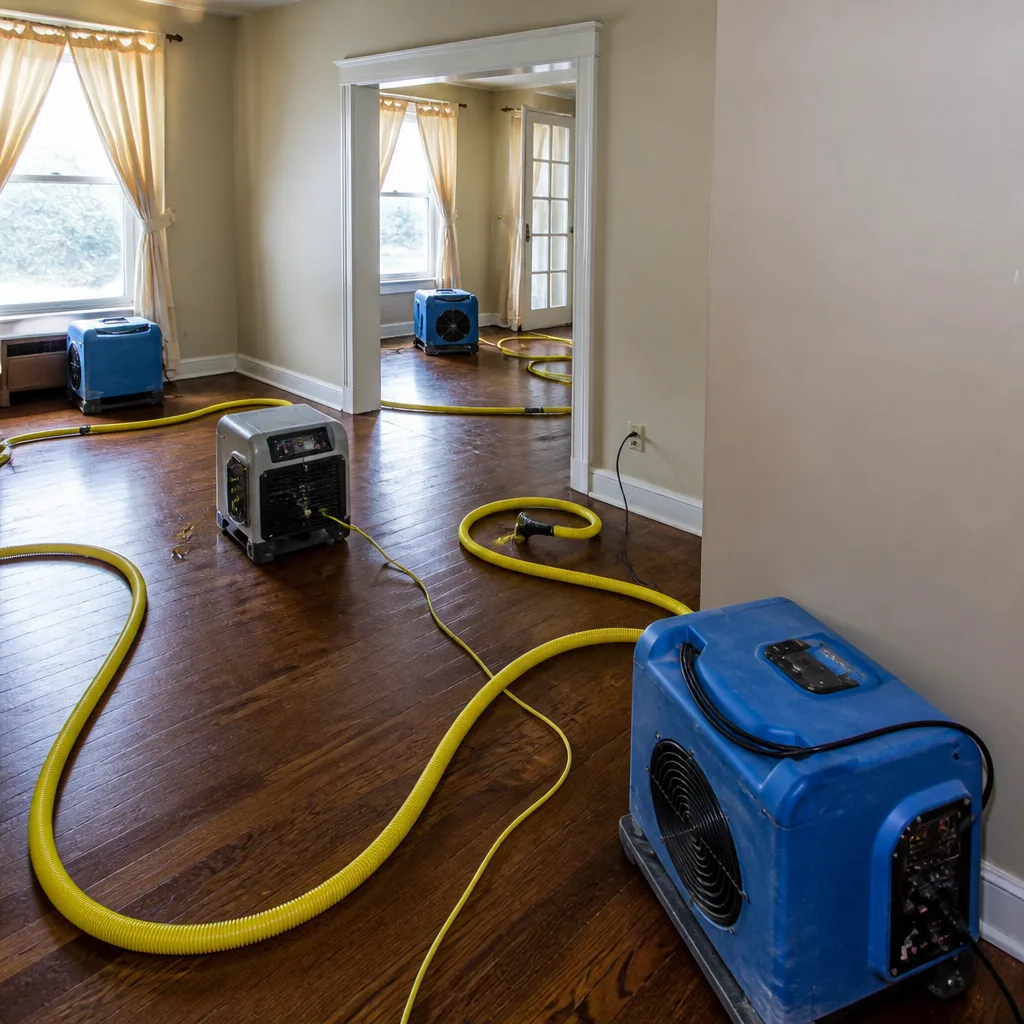
Storm response
 Before
 After
After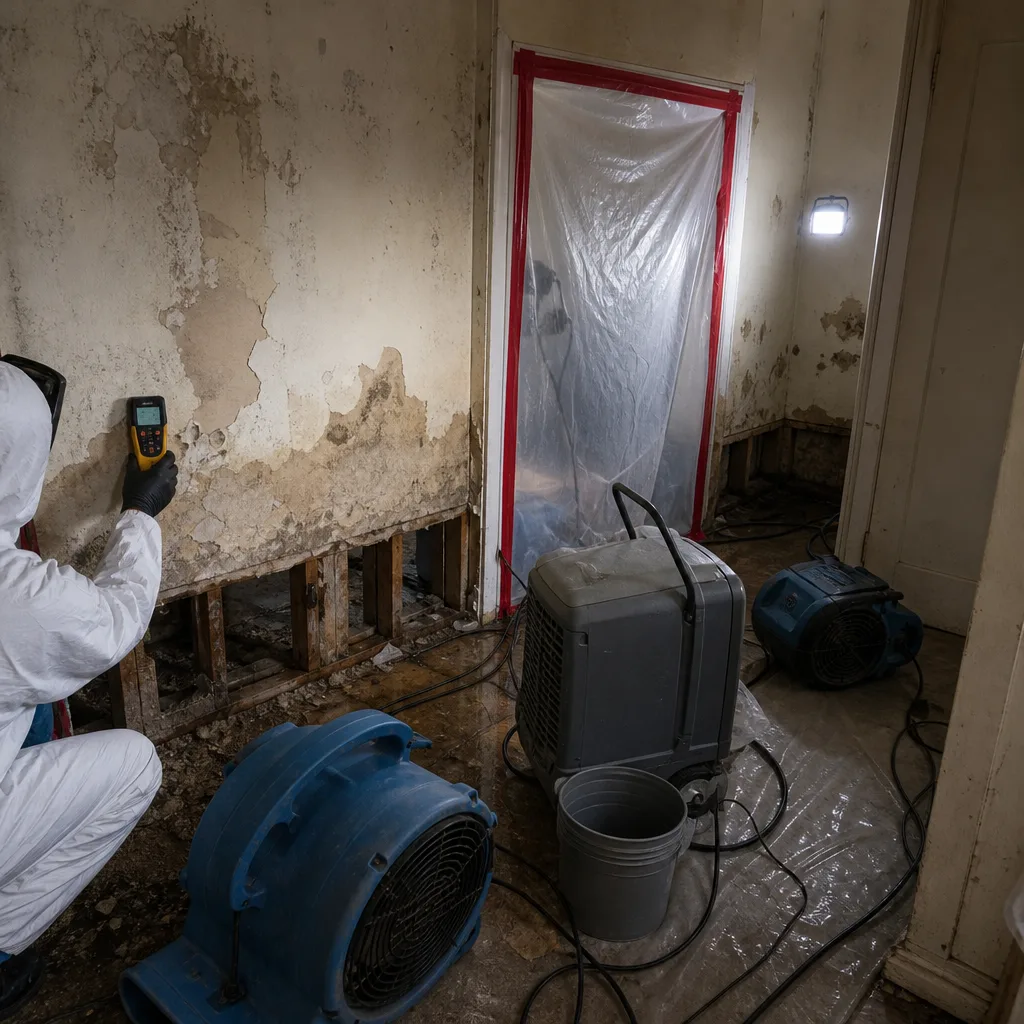 Before
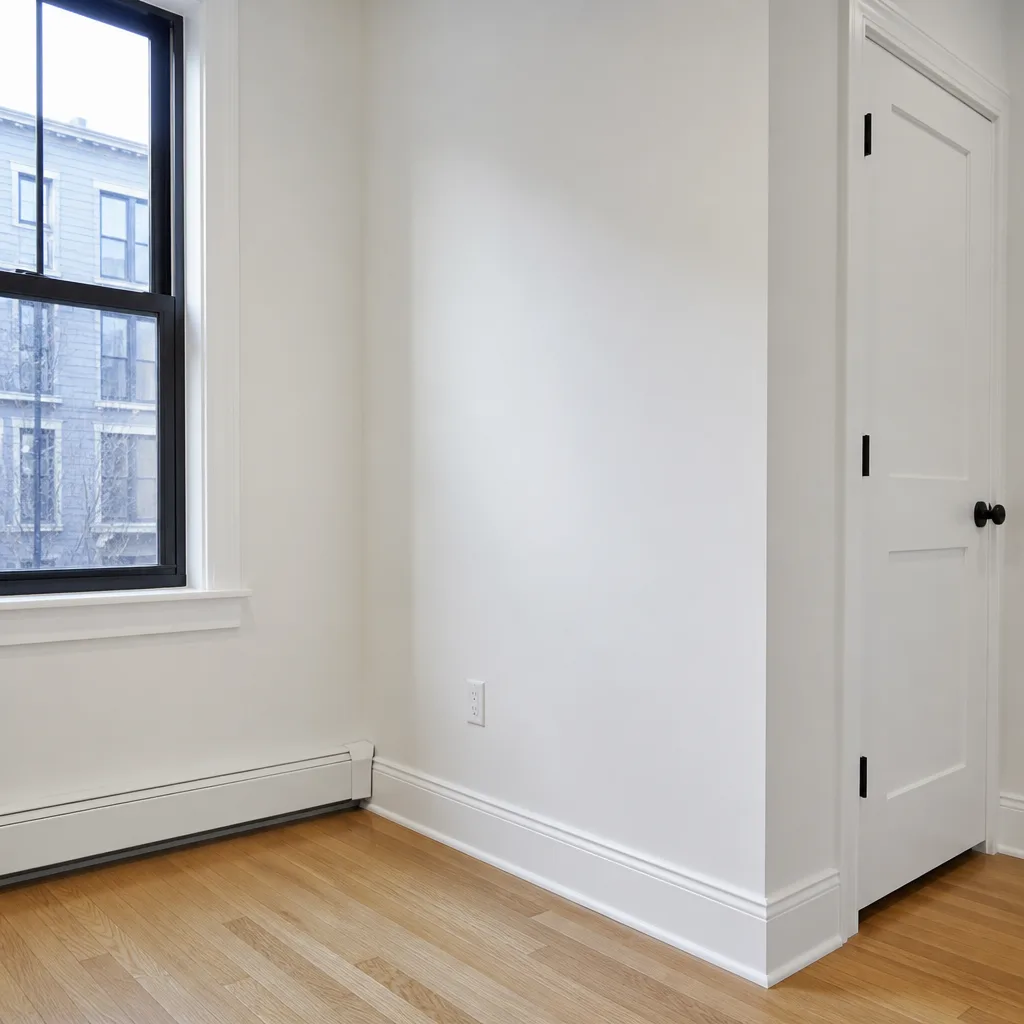 After
After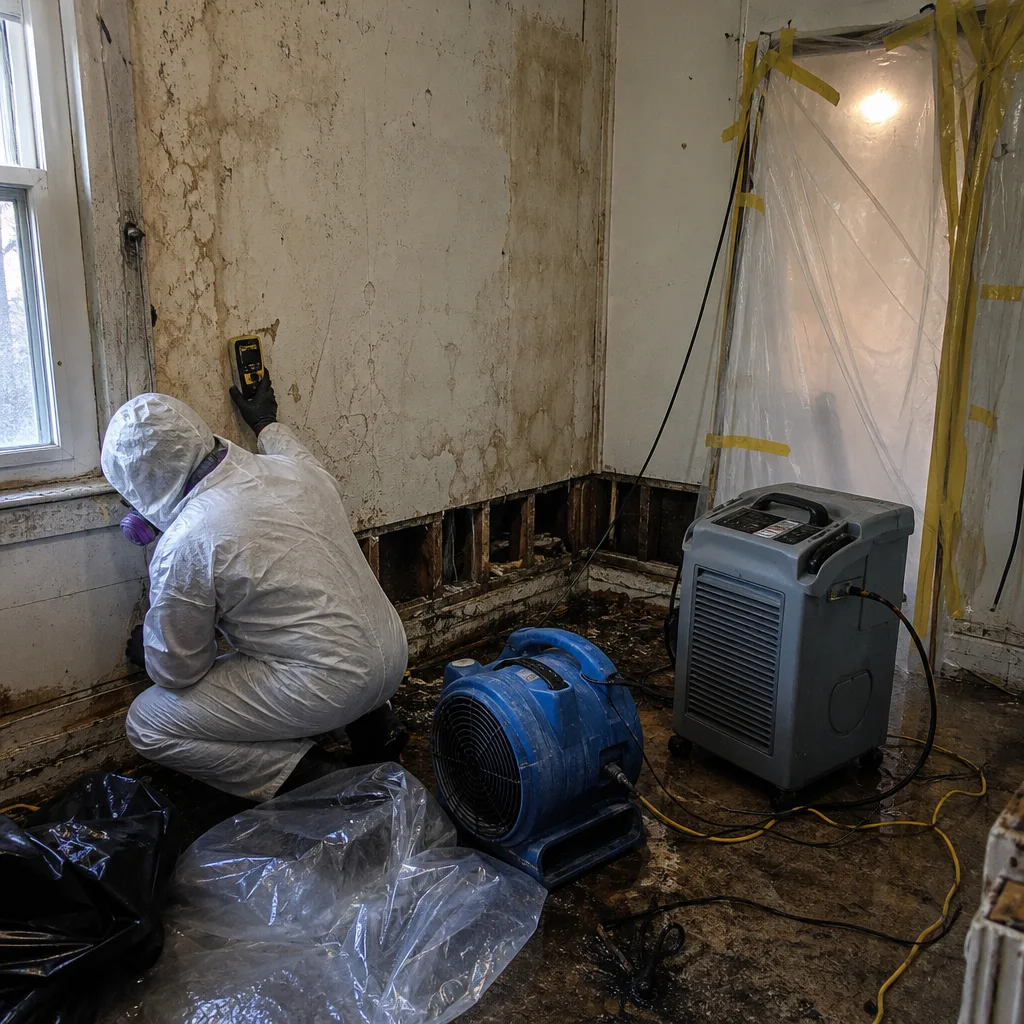 Before
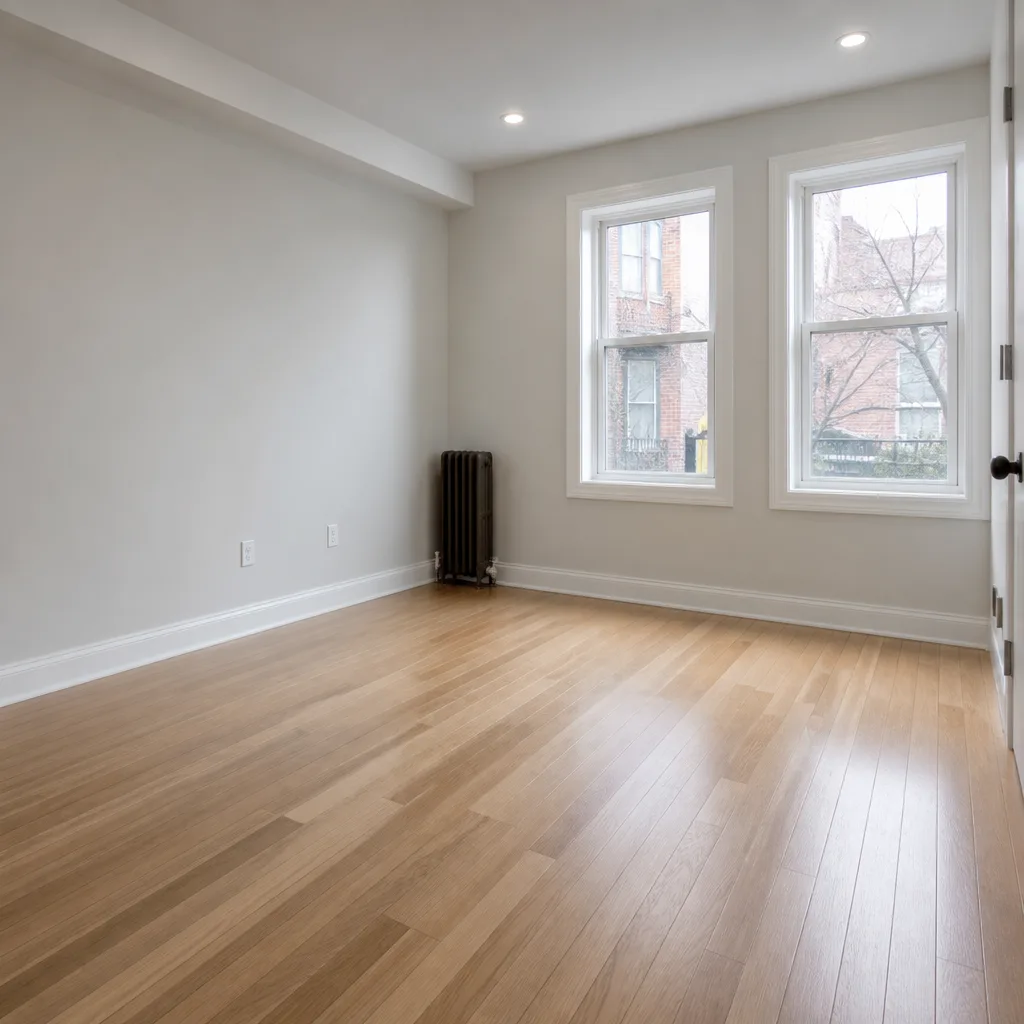 After
AfterThe Complete Guide to Damage Restoration in Astoria
A Queens adjuster can close a $40,000 water damage claim in 48 hours or drag it out for six months. The difference is almost never the damage itself. It’s whether the contractor produced a daily moisture log or a single paragraph invoice. In Astoria, where East River tidal surge and century-old building stock create restoration scenarios unlike anywhere else in Queens, the documentation trail created during cleanup determines whether your insurance claim pays in full, gets reduced, or gets denied entirely. This guide explains what Astoria homeowners need to document, when to document it, and why skipping a single step can cost thousands in uncovered repairs, with Damage Restoration Warning Signs: A Astoria Homeowner’s Reference Guide offering more on spotting trouble early.
Quick Answer
Damage restoration in Astoria is the process of returning a property to its pre-loss condition after water, fire, mold, storm, or biohazard damage, documented through pre-work photos, written scopes with line-item pricing, daily moisture logs, and final clearance readings. In Astoria’s flood-prone zones near the East River, restoration requires specialized protocols for saltwater intrusion and accelerated mold growth that inland contractors often miss. Proper documentation to IICRC standards is what turns a restoration invoice into a payable insurance claim.
Table of Contents
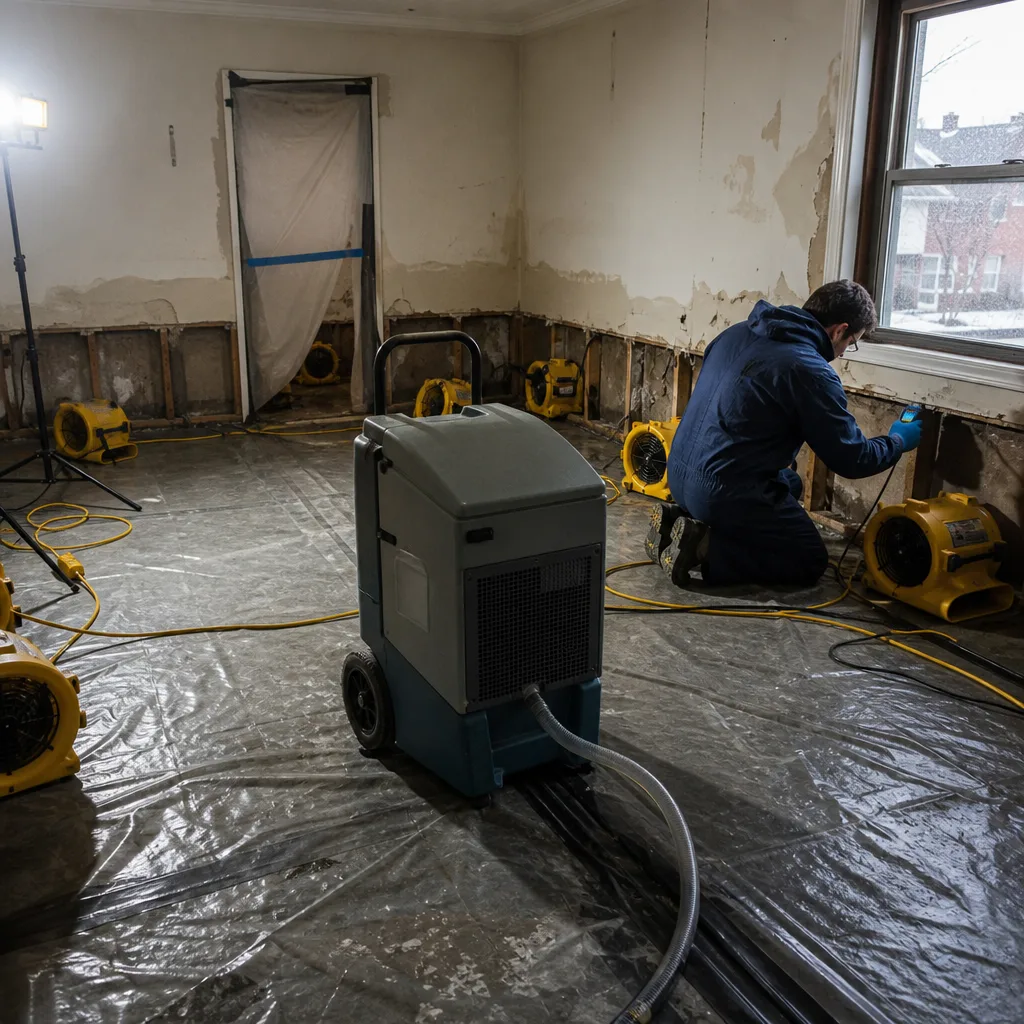
- Why Documentation Matters More Than the Drying Equipment
- How Astoria’s Location Creates Unique Damage Patterns
- The Exact Documentation Sequence Every Job Needs
- What a Written Scope of Work Must Contain
- Queens County Permits and Restoration Timelines
- Mitigation vs. Reconstruction: Two Invoices, Not One
- Equipment and Standards That Back Up the Paperwork
- Working With Adjusters: Photo Records and Direct Billing
BeforeAfterWhy Documentation Matters More Than the Drying Equipment
We’ve seen it hundreds of times since 2011. A homeowner in Astoria calls us after another company “finished” a water damage job. The walls look dry. The equipment is gone. But three months later, mold blooms behind the baseboards and the insurance company denies the secondary damage claim because the original contractor’s invoice reads: “Water damage mitigation – $4,200.” No photos. No moisture readings. No drying log. Just a number.
That single-paragraph invoice is an invitation to deny. Adjusters are trained to look for gaps. Without documented evidence that drying reached completion standards, they can classify subsequent mold or structural damage as “unrelated” or “pre-existing.” The homeowner pays twice.
The equipment matters, of course. But any contractor can rent dehumidifiers. What separates a payable claim from a denied one is the paper trail that proves the equipment did its job. At DryMark Restoration Astoria, we built our entire operation around this gap. Our founder spent years as a claims adjuster watching homeowners lose legitimate claims because contractors treated documentation as an afterthought. That’s why every job we perform in Astoria includes:
- Pre-work photos of all affected areas, time-stamped and geo-tagged
- A written scope of work with line-item pricing, signed before equipment placement
- Baseline moisture readings for every affected material, recorded by species (oak hardwood reads differently than pine, gypsum board differently than lath-and-plaster)
- Daily drying logs tracking temperature, relative humidity, and specific humidity at each dehumidifier location
- Final clearance readings proving materials returned to acceptable moisture content
- A photo record on every visit, included as standard deliverable
This documentation package is what we hand to your adjuster. It’s also what we use to enforce our 365-Day Done Right Promise under The Haven Standard. If something wasn’t done right, we can prove what was done, when, and to what standard. Without that proof, a warranty is just words.
How Astoria’s Location Creates Unique Damage Patterns
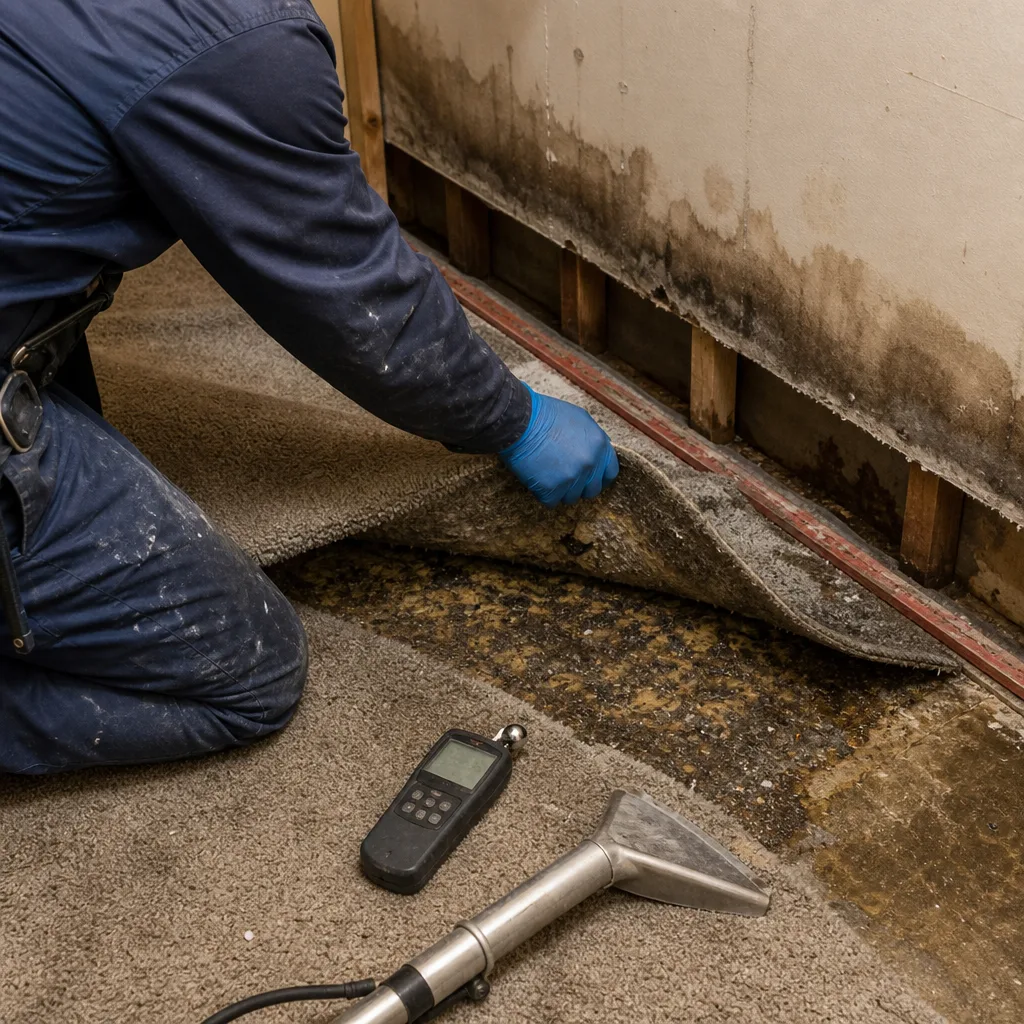
Astoria sits on a peninsula between the East River and Newtown Creek, with elevations ranging from sea level to roughly 100 feet at its highest points. This geography creates restoration scenarios that contractors from inland Queens or Nassau County often misunderstand.
Saltwater intrusion from tidal surge. When storm surge pushes East River water into basements and ground floors, the damage pattern differs fundamentally from freshwater flooding. Saltwater corrodes metal fasteners, electrical components, and HVAC equipment faster than fresh water. It also leaves chloride residues that continue attracting moisture after visible drying completes. Standard moisture meters can’t detect this residual hygroscopicity. We use specialized chloride testing and extended drying protocols with Injectidry cavity drying systems to address it. A contractor who treats saltwater damage like a burst pipe will leave behind a structure that reads “dry” on standard instruments while continuing to degrade.
Accelerated mold timelines. Astoria’s proximity to water, combined with dense housing stock and limited cross-ventilation in many pre-war buildings, creates humidity conditions that accelerate mold colonization. In summer months, we’ve documented Stachybotrys growth beginning 48-72 hours after water intrusion in unconditioned Astoria basements. Inland contractors working to standard timelines often arrive too late for surface remediation alone. Mold remediation in Astoria frequently requires full containment and negative air pressure systems, not just wiping and spraying.
Building age and material complexity. Much of Astoria’s housing stock dates to the 1920s-1940s, with construction methods that complicate modern drying. Horsehair plaster over wood lath behaves differently than drywall. Multiple layers of flooring, often with asbestos-containing adhesives, can’t simply be removed and discarded without abatement documentation. We’ve worked on Ditmars Boulevard properties with four layers of flooring, each requiring separate material classification and disposal documentation for insurance purposes.
Combined sewer overflow risk. Astoria’s older sewer infrastructure, particularly in areas near Newtown Creek, faces higher risk of sewage backup during heavy rain events. Category 3 water damage requires not just drying but antimicrobial treatment and specific documentation of contamination boundaries. An adjuster will scrutinize whether the contractor properly classified the water source and documented the decontamination protocol.
The Exact Documentation Sequence Every Job Needs
Skip a step, and you create a gap. Adjusters are trained to find gaps. Here’s the sequence we follow on every water damage restoration in Astoria, documented to IICRC S500 standards:
- Emergency contact and initial assessment. Our live dispatch, available 24 hours a day, 7 days a week, gathers preliminary information: water source, affected areas, duration of exposure, and whether electrical systems are compromised. No voicemail trees. A person answers, takes notes, and dispatches.
- On-site inspection with photo documentation. Before touching anything, we photograph the full extent of visible damage, including adjacent unaffected areas for comparison. These photos establish the pre-loss condition baseline that insurance policies require.
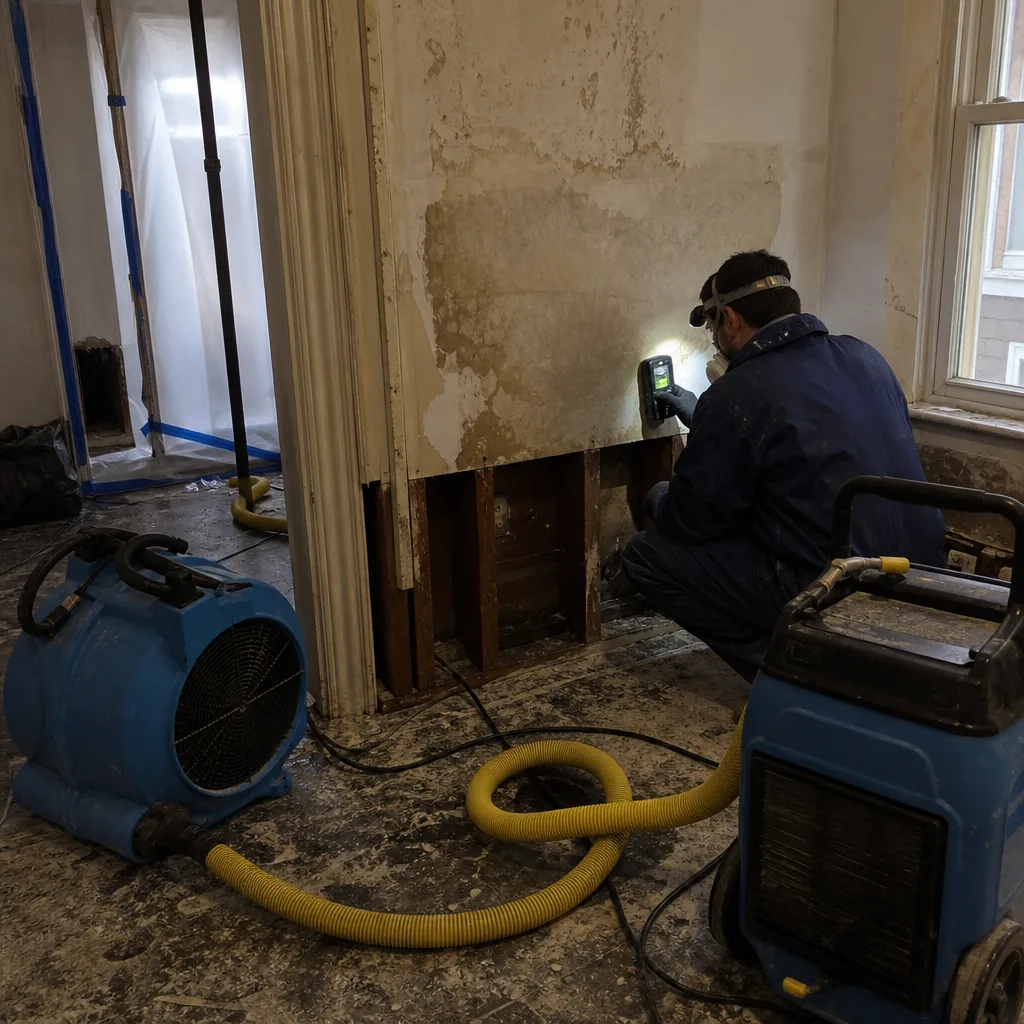
- Moisture mapping and baseline readings. We use penetrating and non-penetrating moisture meters to establish quantitative readings for every affected material. Oak flooring at 16% moisture content reads differently than pine at the same percentage. We record species, location, and reading. This is your proof that damage existed and was measured, not assumed.
- Written scope of work with line-item pricing. Haven Standard, Clause 1: written price before work begins. Every affected room, every material classification, every piece of equipment, every labor hour. Signed by the homeowner before any equipment is placed. No scope-creep additions once the crew is inside.
- Equipment placement with psychrometric calculations. We calculate the required dehumidification capacity based on cubic footage, class of water damage, and vapor pressure differential (the force that drives moisture from wet materials into the air). Equipment is documented by serial number and location.
- Daily monitoring and drying logs. Every 24 hours, we record: temperature, relative humidity, specific humidity, and moisture content readings at established test points. These logs prove progressive drying and justify equipment rental duration. An adjuster who sees three days of flat readings knows to question whether equipment was properly sized or maintained.
- Tertiary drying and cavity verification. When surface readings reach acceptable levels, we verify concealed cavities with Injectidry systems or borescope inspection. Wall cavities that read dry on the surface can harbor moisture at the plate level for weeks.
- Final clearance readings and photo documentation. All materials at or below established dry standards, documented with photos showing meter readings in frame. This package, combined with daily logs, creates an unbroken chain of evidence.
- Written completion certificate and warranty. The 365-Day Done Right Promise, signed and dated, with reference to The Haven Standard clauses covering both workmanship and documentation.
We’ve restored over 12,000 homes since 2011. Every single one followed this sequence. The jobs where adjusters paid without dispute were the ones where this documentation was complete. The disputed jobs, almost always performed by others, were missing steps three, six, or eight.
What a Written Scope of Work Must Contain
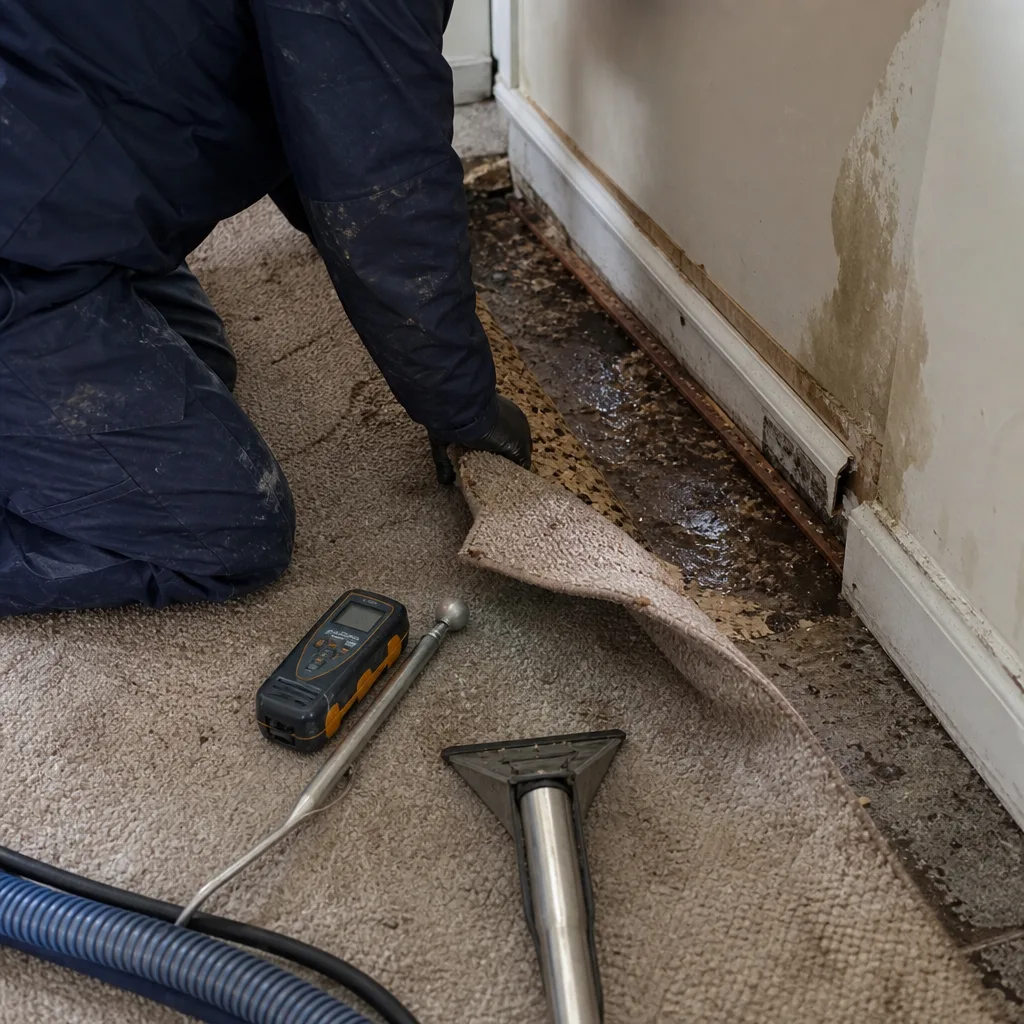
Haven Standard, Clause 1 exists because “we’ll figure it out as we go” is how homeowners get surprised by $3,000 additions on day three. A proper scope of work is a contract, a project plan, and an insurance document simultaneously. Before any equipment touches your Astoria property, you should see:
- Property identification: Address, unit number, insurance claim number if assigned, date of loss, and type of loss (Category 1, 2, or 3 water; fire with smoke; mold with affected square footage)
- Room-by-room affected square footage: Not “approximate” or “TBD.” Measured. For water damage, we classify by material: carpet and pad, hardwood, tile over concrete, tile over wood subfloor, gypsum wallboard, plaster, etc. Each has different removal and drying requirements.
- Line-item equipment list: Number, type, and capacity of each dehumidifier, air mover, air scrubber, or specialized system (negative air, Injectidry, etc.), with daily rental rate and estimated duration
- Line-item labor: Hours by task: extraction, demolition, equipment placement, daily monitoring, equipment removal, cleaning
- Material removal decisions: Specifically which materials are salvageable versus requiring removal, with justification based on contamination level, structural integrity, or drying feasibility
- Antimicrobial treatment specification: Product name, application method, and EPA registration number if required for Category 2 or 3 water
- Total price, payment terms, and authorization signature lines: No blanks to be filled later. No “plus materials” clauses. The price is the price.
We provide this scope in writing, every time, with no exceptions. If another contractor hands you a one-page estimate with a single total and no material breakdown, that’s not a scope. It’s a guess, and guesses get disputed.
Our Free Second Opinion on Any Written Estimate exists precisely for this situation. Bring us a competitor’s written scope and we’ll review it at no charge. Often we find missing line items that would have generated change orders later, or equipment specifications inadequate for Astoria’s building types.
Queens County Permits and Restoration Timelines
Restoration work in Astoria intersects with New York City building codes and Queens Community Board procedures in ways that can delay or derail a project if undocumented; see our Damage Restoration Permits, Codes & Inspections in NY: What You Need to Know for specifics. Understanding this intersection protects both your property and your claim.
Permit triggers. Any structural repair, electrical replacement, or plumbing modification requires a Department of Buildings permit. Water damage that compromises load-bearing walls, fire damage requiring joist sistering or replacement, or mold remediation involving demolition of more than 10 square feet in a single room triggers NYC Department of Environmental Protection notification requirements. A contractor who begins demolition without proper permits creates liability that your insurer may refuse to cover.
The documentation-permit link. Your insurance adjuster will request proof that permits were obtained and inspections passed. We photograph permit postings, inspector sign-offs, and final approvals as part of our standard photo record. This prevents the common scenario where a homeowner completes restoration only to discover their insurer won’t release reconstruction funds without permit documentation the contractor never obtained.
Undocumented structural drying risks. Some contractors attempt to dry structural elements in place to avoid permit-triggering demolition. This is particularly common in Astoria’s older buildings with plaster and lath systems. But drying wood framing to acceptable moisture content while enclosed by intact plaster is often impossible without creating secondary mold conditions. The proper documentation sequence, moisture logs, and material removal decisions should drive the work, not permit avoidance. When we encounter this situation, we document the moisture readings that justify removal, include the permit requirement in the written scope, and coordinate with the homeowner’s adjuster on timeline and coverage.
Co-op and condo board documentation. Many Astoria buildings, particularly along 30th Avenue and Steinway Street corridors, are co-ops or condos with alteration agreements and insurance requirements beyond the homeowner’s policy. We document compliance with building-specific requirements, including certificate of insurance naming the building, work-hour restrictions, and elevator protection, as part of our standard pre-work package.
Mitigation vs. Reconstruction: Two Invoices, Not One
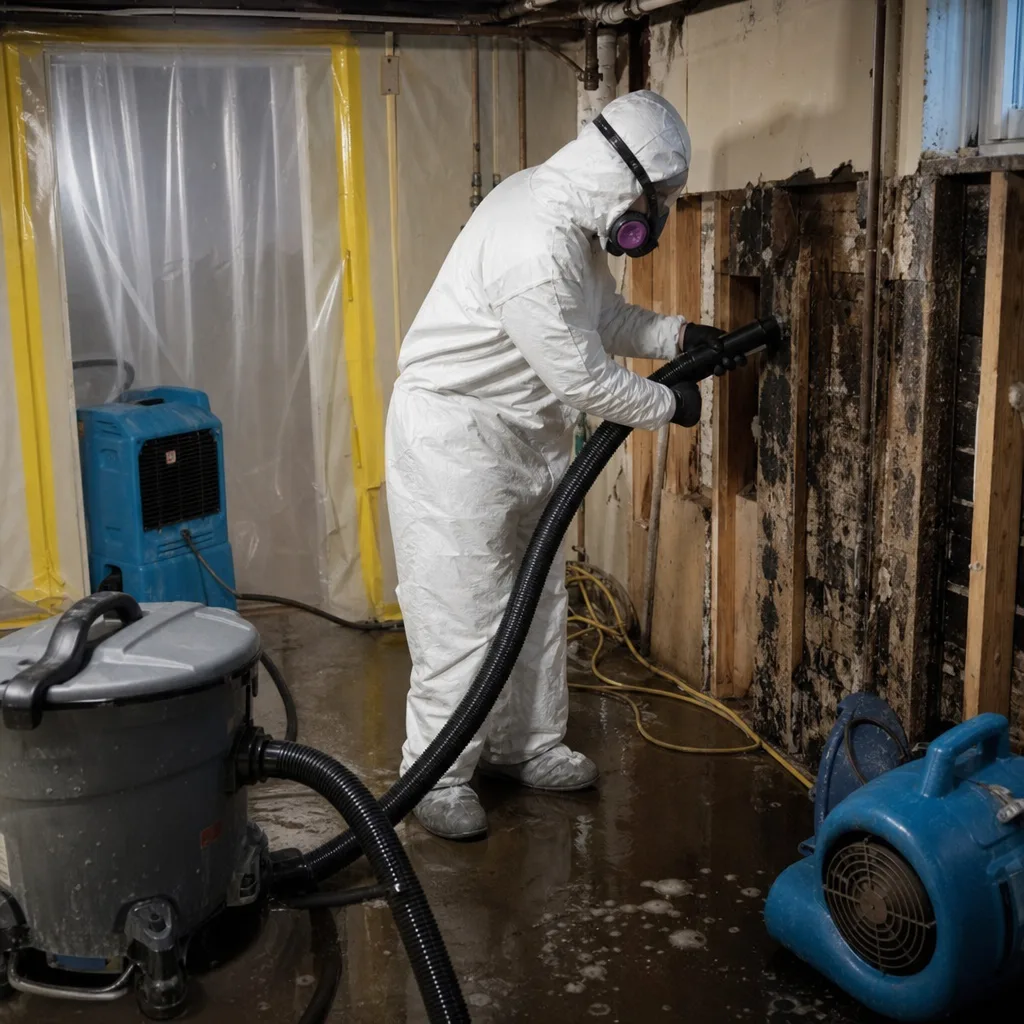
This distinction costs Astoria homeowners more claim disputes than almost any other issue. Mitigation is emergency work to prevent further damage: water extraction, drying, demolition of unsalvageable materials, antimicrobial treatment. Reconstruction is the build-back: new drywall, flooring, painting, fixture replacement. These are separate trades, separate billing structures, and often separate insurance coverages.
Why it matters for your claim. Most homeowners policies cover mitigation under “additional living expense” or dwelling coverage with relatively straightforward documentation requirements. Reconstruction falls under dwelling coverage with depreciation, code upgrade provisions, and contractor bid requirements. When a single contractor combines both phases on one invoice, the adjuster often applies the more restrictive reconstruction rules to the entire amount, reducing the mitigation portion or delaying payment pending multiple bids.
The Astoria pattern. We’ve seen this repeatedly in Astoria’s dense housing stock, where water damage in a single unit often affects multiple apartments or common areas. A contractor who performs emergency mitigation, then begins reconstruction without separate documentation and separate adjuster approval, creates a situation where the insurer can argue the homeowner “selected” a reconstruction contractor without competitive bidding, voiding policy provisions.
At DryMark Restoration Astoria, we separate these phases explicitly. Our mitigation invoice includes only emergency services, documented with drying logs and moisture readings. When mitigation is complete, we provide a separate reconstruction scope with line-item pricing for build-back work. The homeowner can engage us for reconstruction, obtain competing bids, or use a contractor of their choice. The documentation from our mitigation phase, including photo records and drying logs, transfers to whichever reconstruction contractor the homeowner selects. This preserves claim integrity and homeowner choice simultaneously.
For fire and smoke damage restoration in Astoria, this separation is even more critical. Mitigation involves emergency board-up, soot removal, and deodorization. Reconstruction may involve structural repair, electrical replacement, and full interior finish. These phases can be months apart, with different adjusters, different coverage limits, and different documentation requirements.
Equipment and Standards That Back Up the Paperwork
Documentation without effective equipment is just fiction. The drying logs must reflect real performance. We deploy professional-grade systems from XPOWER, B-Air, and Injectidry, selected and sized for each specific loss condition.
Dehumidification. LGR (low grain refrigerant) dehumidifiers from Phoenix and Dri-Eaz remove moisture at low specific humidity levels, critical for final drying stages when conventional units become ineffective. We document unit capacity in pints per day at AHAM conditions, matched to the calculated moisture load.
Air movement. XPOWER and B-Air centrifugal air movers create vapor pressure differential at wet surfaces, accelerating evaporation. Placement follows IICRC S500 protocols: one per 50-70 square feet of affected wet floor area, with specific angles for wall, corner, and cabinet drying.
Cavity and specialty drying. Injectidry systems deliver heated, dehumidified air into wall cavities, ceiling plenums, and hardwood flooring sub-surfaces. In Astoria’s plaster-and-lath construction, this is often the only method that achieves drying without destructive removal. We document cavity moisture readings before and after Injectidry deployment.
Air filtration. HEPA air scrubbers during mold remediation and fire restoration, with documented air changes per hour calculations and negative pressure maintenance logs.
All work is documented to IICRC (Institute of Inspection Cleaning and Restoration Certification), RIA (Restoration Industry Association), and IFA (Indoor Air Quality Association) standards. These aren’t marketing affiliations. They’re the specific protocols adjusters recognize and expect to see referenced in documentation.
Working With Adjusters: Photo Records and Direct Billing
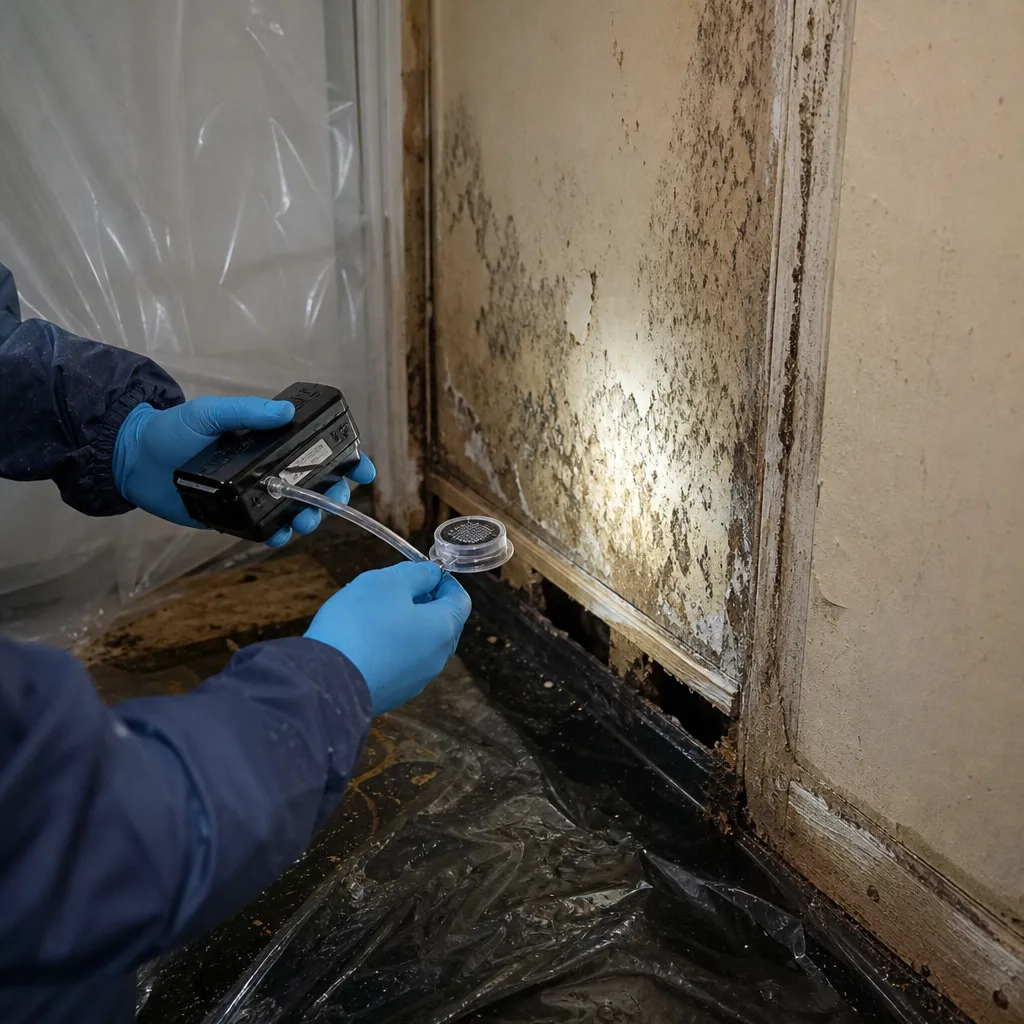
The final documentation package doesn’t sit in a file. It’s delivered to your adjuster in a format designed for claim processing efficiency. Our photo records are organized by room, date, and documentation type: pre-loss, moisture mapping, equipment placement, daily monitoring, and final clearance. Each photo includes embedded metadata: date, time, and GPS coordinates.
We offer direct insurance billing where policy provisions allow, with our documentation package transmitted electronically to expedite payment. For homeowners who prefer to pay and seek reimbursement, we provide the same package in PDF format suitable for claim submission.
The key point: our documentation is built for adjuster review from day one. We know what questions they’ll ask because our founder asked them. We know what gaps trigger denial because we saw them trigger denials. Every moisture reading, every photo, every signed scope exists to answer a specific question before it’s asked.
This is why our 365-Day Done Right Promise under The Haven Standard is more than a warranty. It’s a commitment that our documentation will support your claim, protect your coverage, and prove our work if any question arises.
Common Mistakes to Avoid
- Starting work before a written scope is signed. Haven Standard, Clause 1 exists because verbal agreements disappear when disputes arise. Every Astoria homeowner should have a signed, line-item scope before equipment placement.
- Accepting a single total without material breakdown. Adjusters reduce or deny claims when they can’t verify that individual line items were necessary and properly priced. Demand specificity.
- Ignoring saltwater contamination signs. East River flooding leaves chloride residues that standard drying won’t address. If your contractor isn’t testing for salt content and adjusting protocols, you’re likely facing secondary corrosion or mold issues.
- Allowing mitigation and reconstruction on one invoice. This common error triggers coverage confusion, depreciation disputes, and payment delays. Separate the phases, separate the documentation, separate the billing.
- Failing to document pre-loss condition. Without photos of unaffected adjacent areas, an adjuster can argue damage was pre-existing. We photograph everything, every time.
- Skipping final clearance readings. Equipment removal without documented proof of dry standards leaves you exposed if mold or structural damage appears later. We don’t remove equipment until readings prove completion.
- Using unpermitted contractors for structural work. NYC Department of Buildings violations can void insurance coverage and create resale disclosure issues. Verify permits, document inspections.
When to Call a Professional
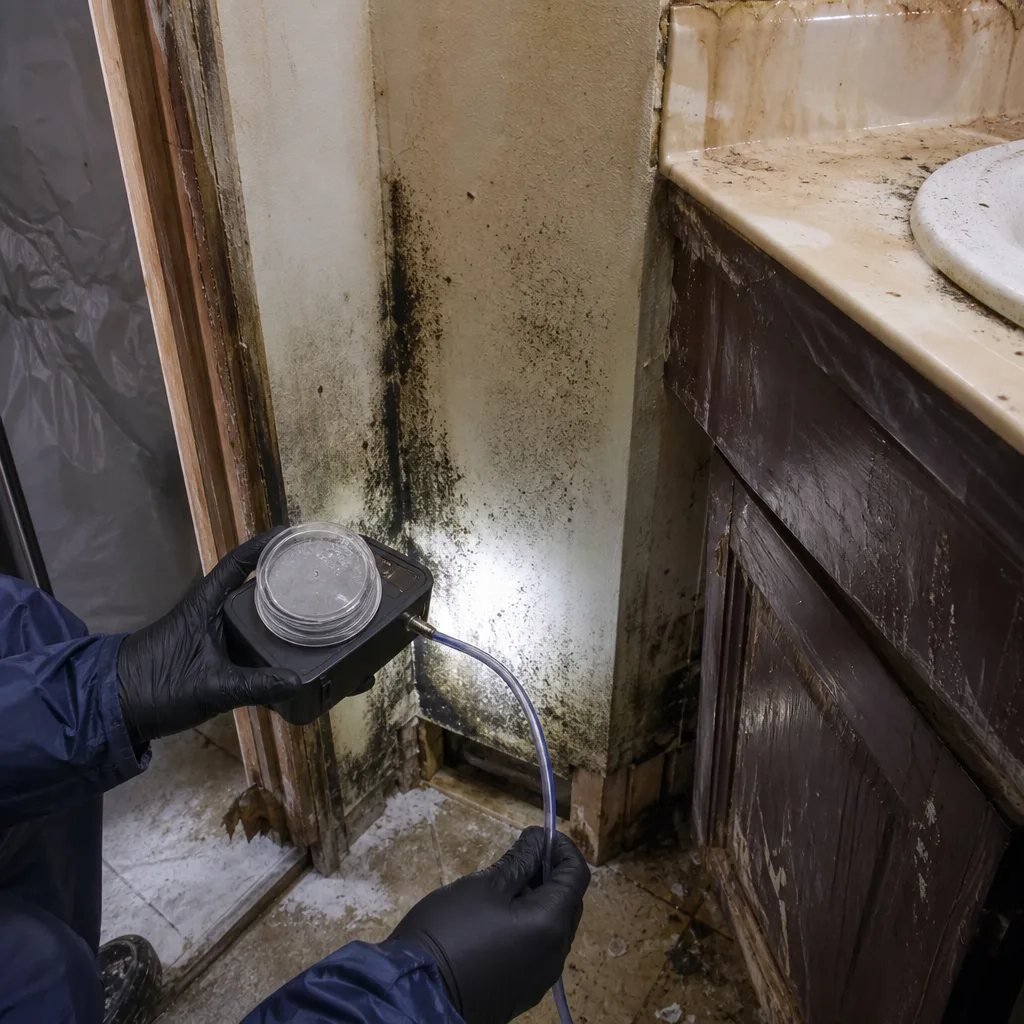
Call immediately for Category 2 or 3 water damage (gray or black water), any fire or smoke damage, mold growth exceeding 10 square feet, or sewage backup. These conditions pose health risks and documentation requirements beyond DIY capability. For Category 1 clean water damage, professional assessment is still advisable if affected area exceeds a single room, if water has been present more than 24 hours, or if building materials include hardwood, plaster, or multiple flooring layers common in Astoria homes.
DryMark Restoration Astoria offers free estimates in Astoria. Our live dispatch answers 24 hours a day, 7 days a week. Call (862) 281-7710 for emergency response or to schedule an assessment. We also provide a Free Second Opinion on any competitor’s written estimate.
Frequently Asked Questions
Water damage mitigation in Astoria typically ranges from $1,200 for limited Category 1 extraction and drying to $8,500+ for whole-unit Category 3 flooding with demolition and antimicrobial treatment; our Damage Restoration Cost Breakdown: The Astoria Homeowner’s Reference for 2026 details typical scenarios. Mold remediation averages $15-$30 per square foot of contained area, with containment complexity driving the upper range. Fire and smoke restoration varies widely based on structural involvement, but initial mitigation typically starts at $2,500. Reconstruction is priced separately after mitigation completion. Every job receives a written, line-item scope before work begins under Haven Standard, Clause 1. Call (862) 281-7710 for a specific estimate, estimates are free.
Most homeowners policies cover sudden and accidental water damage, fire damage, and storm damage, but coverage varies by cause, policy type, and documentation quality. Flood damage from external sources typically requires separate flood insurance. The key factor in claim approval is documentation: pre-loss photos, moisture logs, written scopes, and final clearance readings. Our photo records and daily drying logs are specifically formatted for adjuster review to maximize coverage. We also coordinate directly with adjusters and offer direct billing where permitted. Call (862) 281-7710 to discuss your specific policy situation.
Our live dispatch answers every call immediately, 24 hours a day, 7 days a week, with no voicemail trees. Emergency response times in Astoria typically range from 45 minutes to 90 minutes depending on traffic and time of day. For water damage restoration and other mitigation emergencies, speed matters because mold colonization begins in 48-72 hours and water continues wicking into dry materials. Reconstruction work is scheduled, not dispatched, and follows scope approval and permit acquisition. Call (862) 281-7710 for current emergency availability.
Visible mold exceeding 10 square feet, mold resulting from Category 2 or 3 water damage, or mold in HVAC systems requires professional remediation with containment and negative air pressure. Small, isolated surface mold on non-porous materials may be cleanable with proper PPE and antimicrobial products, but Astoria’s humidity and building density make self-assessment risky. We offer free assessment to determine containment requirements and provide a written scope before any work. Call (862) 281-7710 for evaluation.
Mitigation invoices cover emergency services to prevent further damage: extraction, drying, demolition, antimicrobial treatment. Reconstruction invoices cover build-back: new materials, finishing, fixtures. Insurance policies often treat these differently, with separate deductibles, coverage limits, and documentation requirements. Combining them on one invoice can trigger payment delays or coverage disputes. We separate these phases explicitly, with distinct documentation packages for each. This protects your claim and preserves your choice of reconstruction contractor.
We document every job to adjuster-ready standards and transmit documentation packages directly upon request. Many homeowners prefer we coordinate directly with their adjuster, which we do with written authorization. Others manage adjuster communication themselves, using our documentation package as supporting evidence. Either approach works; the critical factor is having complete documentation from day one. Our photo records, moisture logs, and written scopes are formatted specifically for insurance review.
The Bottom Line
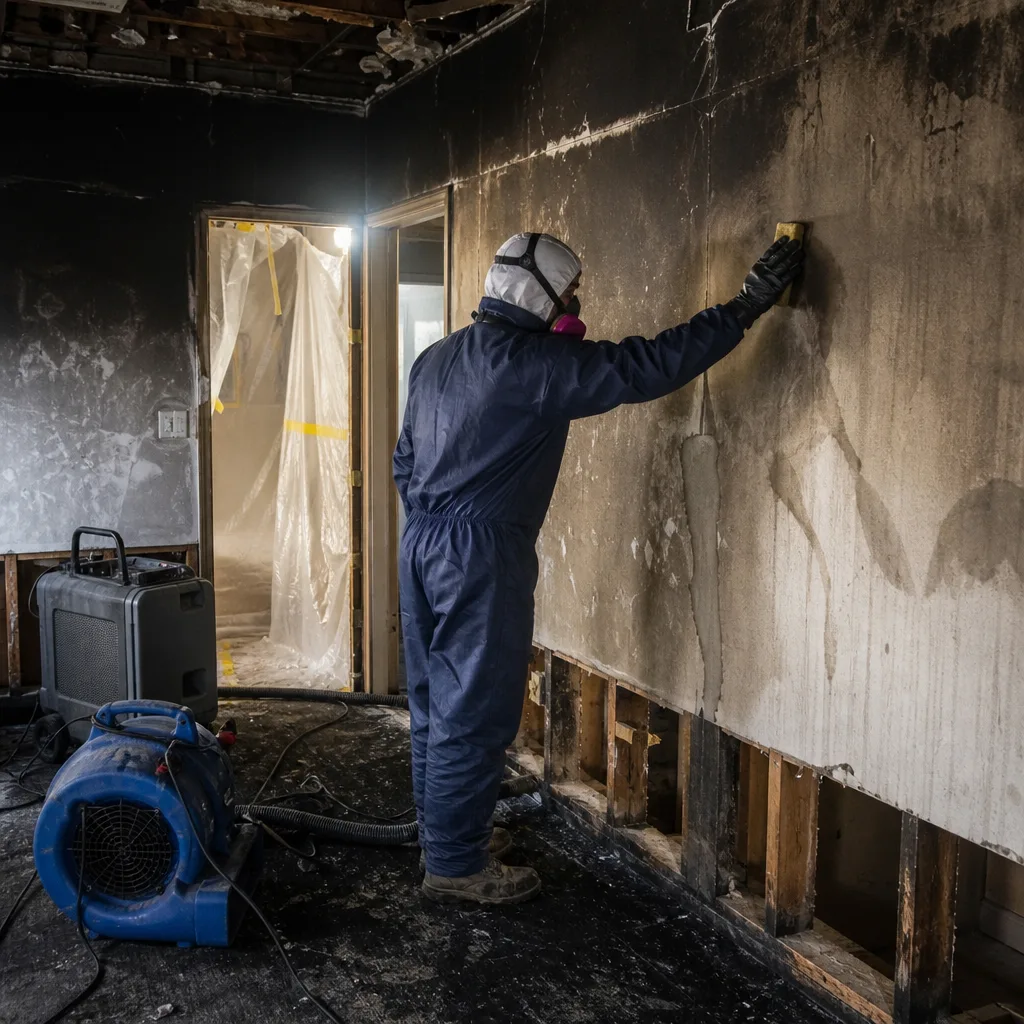
Damage restoration in Astoria is not primarily a repair job. It is a documentation process that happens to involve drying equipment, demolition tools, and reconstruction materials. The difference between a claim paid in full and a claim denied or reduced is almost never the severity of the damage. It is whether your contractor produced a daily moisture log or a single paragraph invoice. For more guides & resources on protecting your Astoria property, explore our blog.
The specific challenges of Astoria’s location, saltwater intrusion risk, accelerated mold timelines, and complex building stock make proper documentation even more critical than in inland markets. Queens County permit requirements, co-op and condo board rules, and the mitigation-reconstruction billing distinction create additional documentation requirements that inexperienced contractors routinely miss.
At DryMark Restoration Astoria, every job follows The Haven Standard: written price before work begins, photo record on every visit, daily drying logs, and a 365-Day Done Right Promise backed by documentation that proves what was done, when, and to what standard. Since 2011, we’ve restored over 12,000 homes with this approach. The claims that paid without dispute were the ones where the paper trail was complete.
Call (862) 281-7710 for a free estimate or emergency response. Live dispatch, 24 hours a day, 7 days a week. Free Second Opinion on any competitor’s written estimate.
Written by Alicia Brennan, Owner at DryMark Restoration Astoria, serving Astoria since 2011.