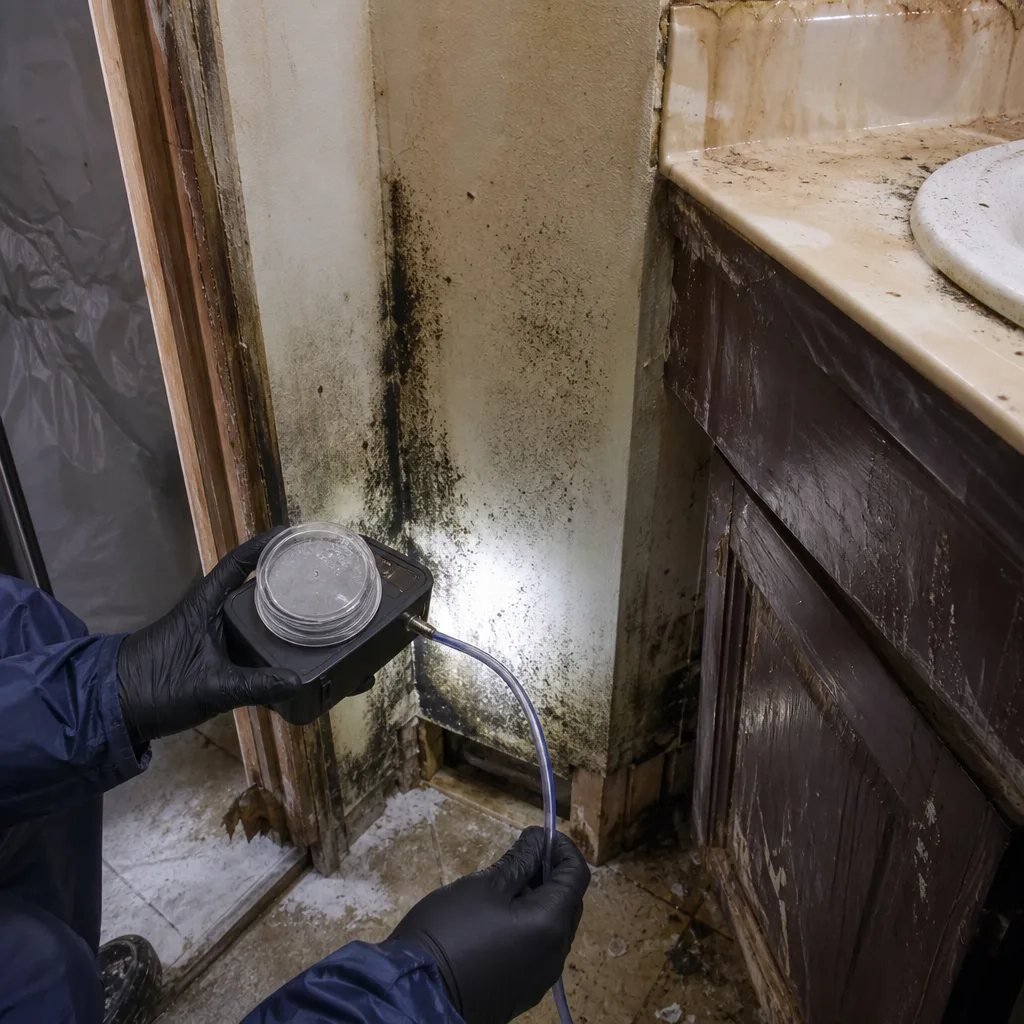
Free visual inspection and a written scope of work before any mitigation begins - photos, moisture readings, and drying logs go in your claim file
The scope we write is the scope we bill. Anything new gets shown to you, in writing, before we touch it.
Storm response
 Before
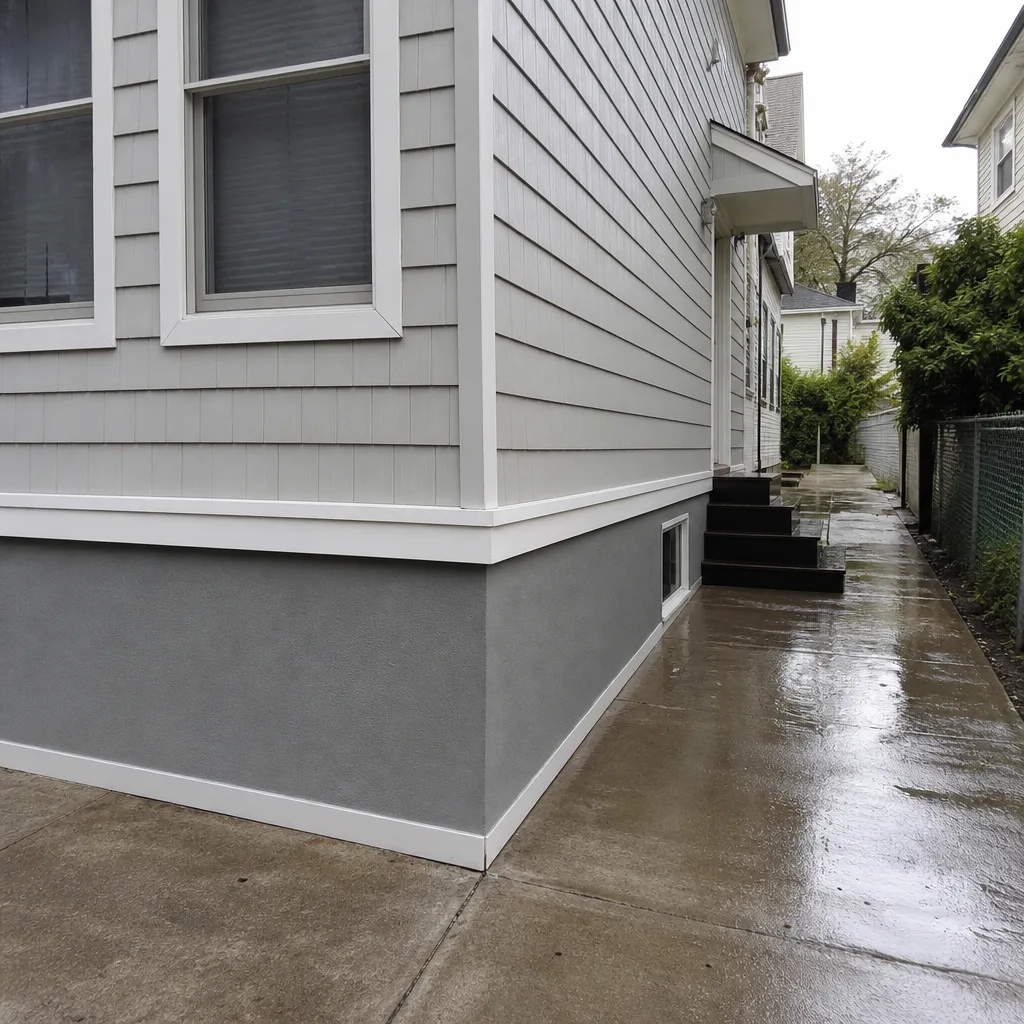 After
After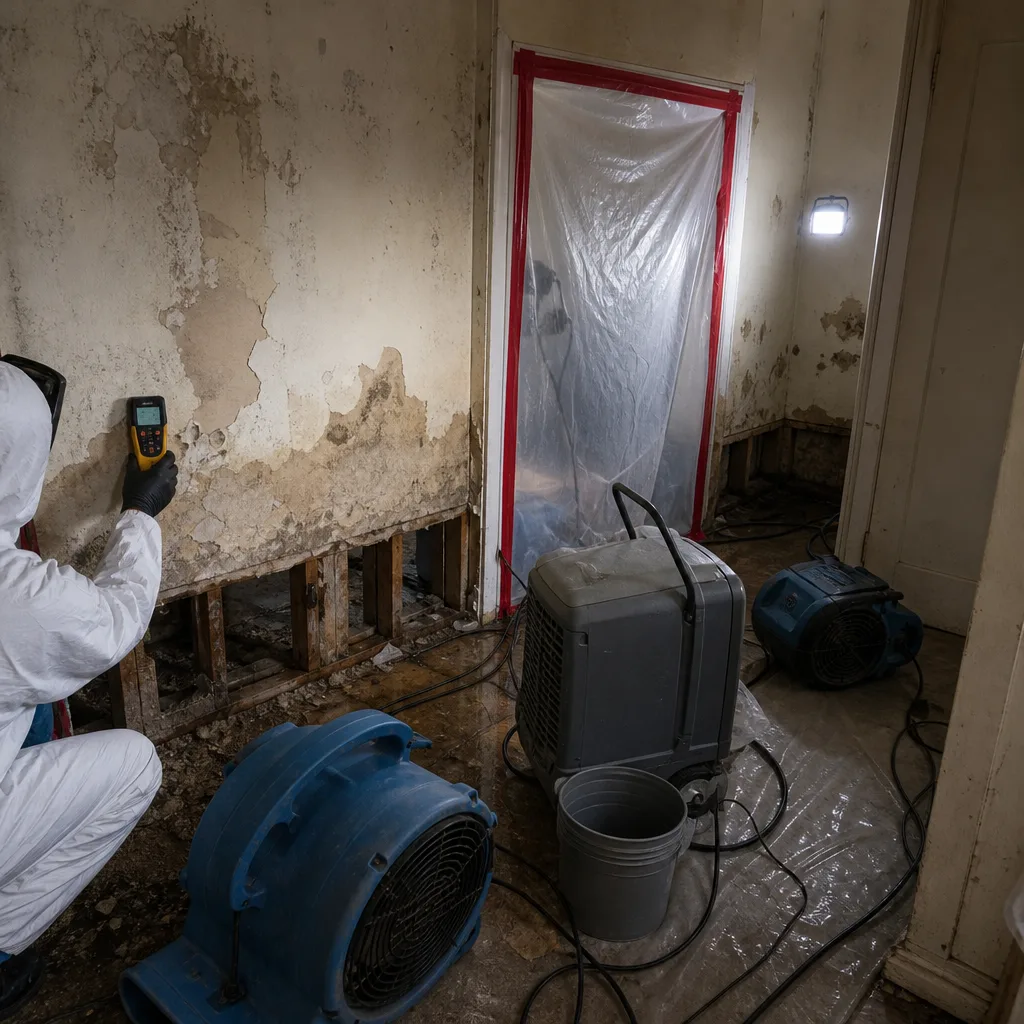 Before
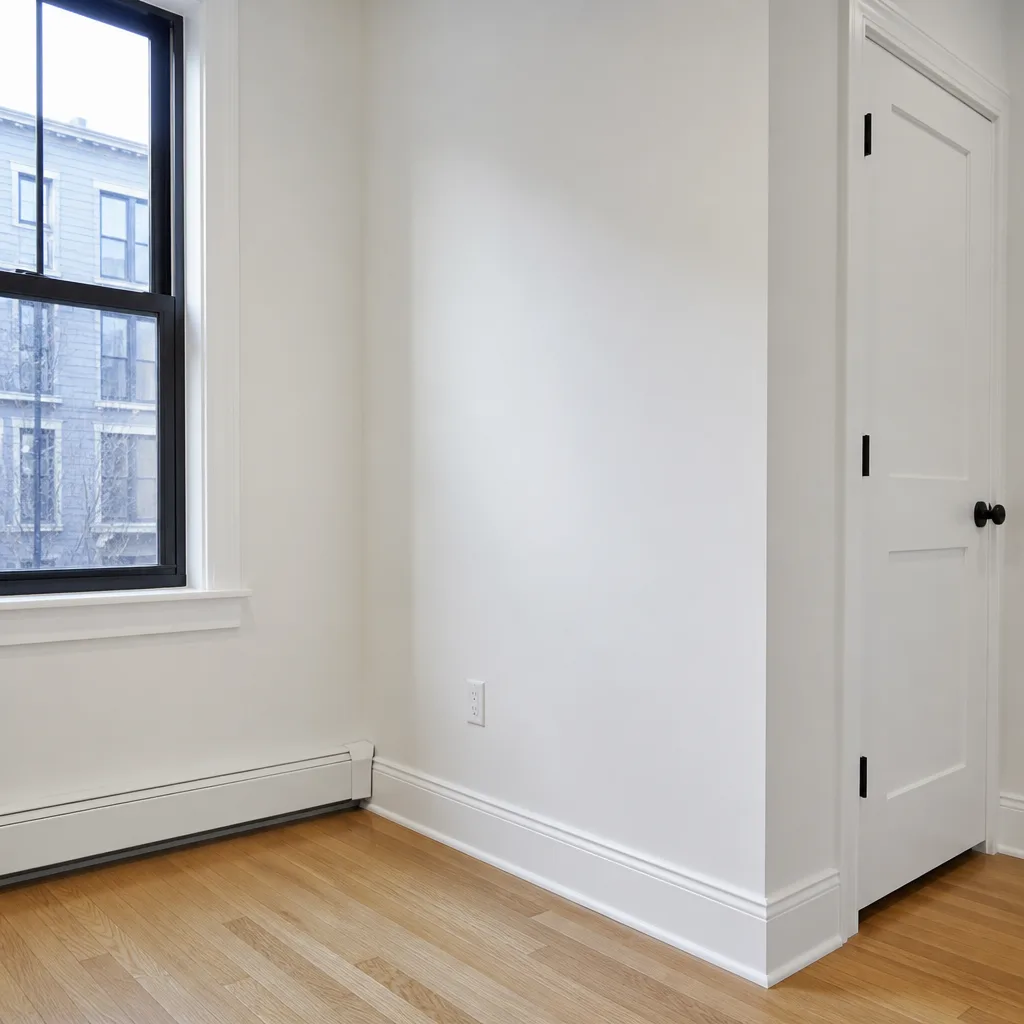 After
After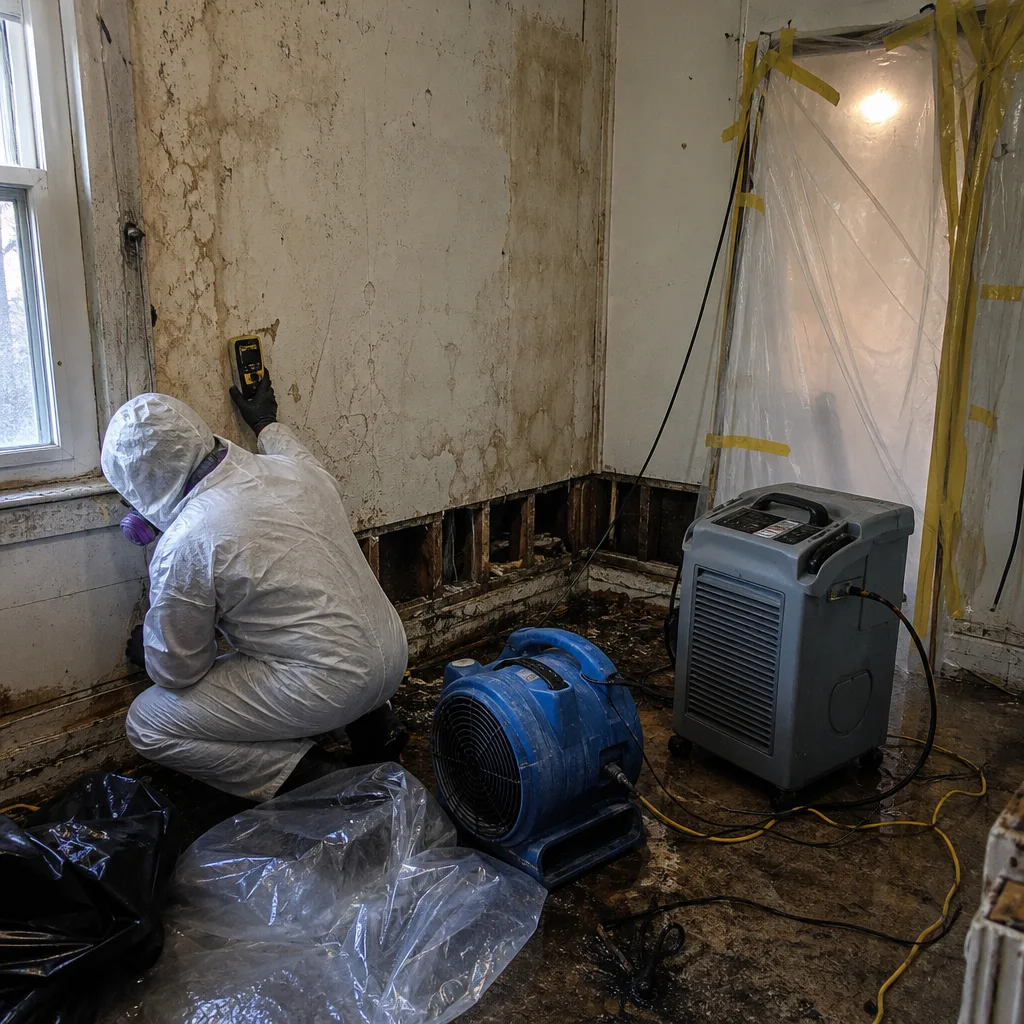 Before
 After
After24/7 Emergency Mold Remediation in Williamsburg
Mold remediation in Williamsburg typically runs $2,800-$7,500 for contained residential jobs, with full loft-scale masonry-and-concrete investigations reaching $12,000-$18,000 when hidden moisture has traveled through brick courses and under polished slabs. Our crews answer live at (862) 281-7710, 24 hours a day, with no voicemail trees, and we dispatch to Williamsburg within 45 minutes of your call. The first hour matters because mold colonies establish in 48-72 hours, but in Williamsburg’s converted industrial buildings, original brick and concrete substrates can wick and store water for days before any surface sign appears. A free visual inspection gives you a documented moisture map and a written scope before any work begins, Haven Standard, Clause 1.
Understanding Mold Remediation Severity in Williamsburg Properties
Mold severity in Williamsburg is not measured by what you can see. We classify contamination by affected square footage, substrate porosity, and whether the mold is active growth or dormant spore residue. Category 1 contamination covers less than 10 square feet on a non-porous surface, cleanable with HEPA vacuuming and antimicrobial treatment. Category 2 extends to 10-100 square feet with some porous material involvement, requiring containment and air scrubbing. Category 3 exceeds 100 square feet or involves HVAC systems, demanding full containment with negative air pressure, sealed egress, and third-party clearance testing.
Williamsburg’s housing stock skews the severity scale upward. Late-19th and early-20th century tenement walk-ups on streets like Bedford Avenue and Grand Street carry aging cast-iron drain lines, galvanized supply pipes, and original plaster-and-lath walls that fracture and hold moisture. The converted factory and warehouse lofts along the East River waterfront, particularly concentrated between Kent Avenue and the river, retain heavy timber, poured concrete, and exposed brick that standard residential moisture meters are not calibrated to read accurately. A Category 2 surface reading on drywall inland becomes a Category 3 substrate saturation here. Our crews carry masonry moisture probes, thermo-hygrometers, and thermal imaging calibrated for concrete and brick assemblies, not just stud-framed construction.
Why Williamsburg Property Owners Choose DryMark Restoration Astoria
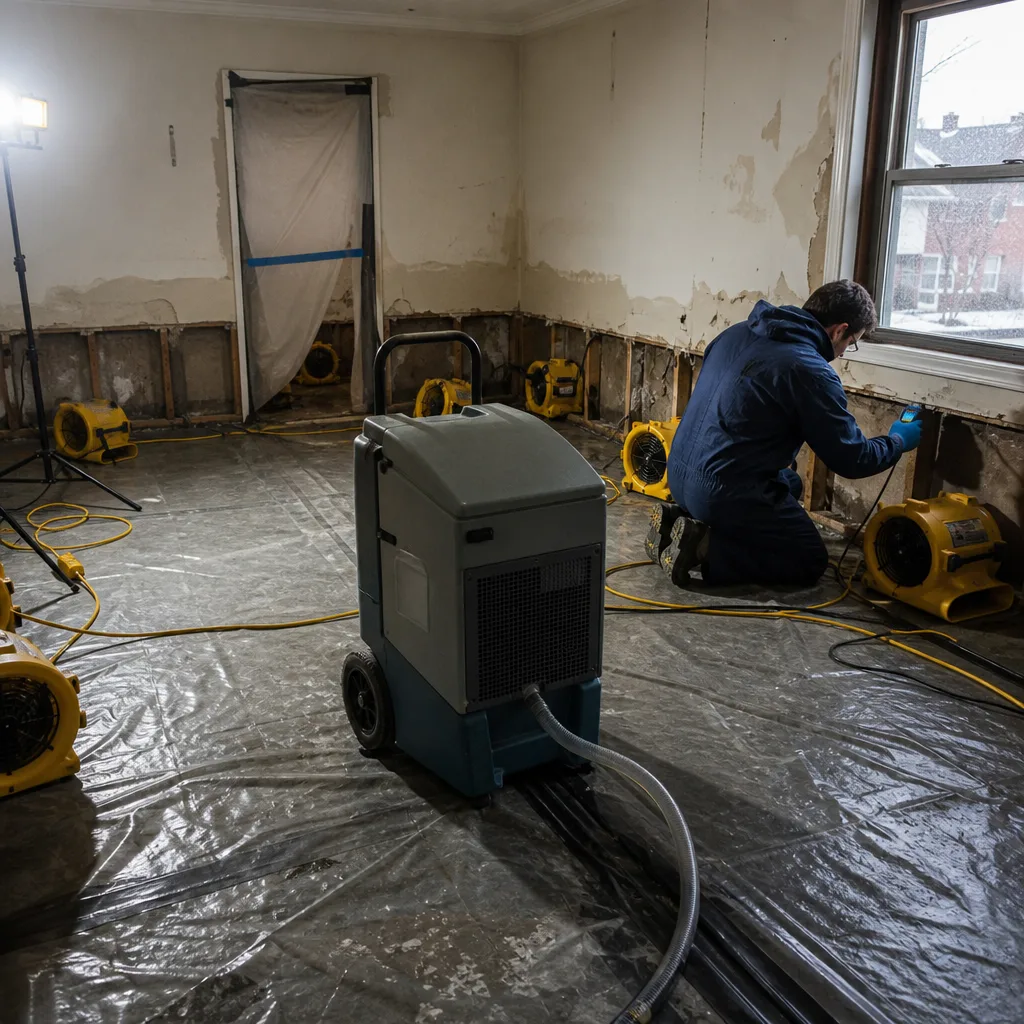
- 45-minute response commitment to any Williamsburg address, with crews staged for the riverfront loft corridor and the tenement blocks alike.
- 24/7 live answer, a real person, never an automated system - because mold does not observe business hours, and neither do we.
- IICRC-certified crews holding WRT (Water Damage Restoration Technician), AMRT (Applied Microbial Remediation Technician), and FSRT (Fire & Smoke Restoration Technician) credentials, with license numbers documented on every job file.
- Free visual inspection with thermal imaging and moisture mapping, producing a written scope before any equipment is deployed.
- Direct insurance billing with photo-documented drying logs and daily moisture readings that turn restoration invoices into payable claims.
- One team from containment through clearance testing, so the crew that scopes your brick-and-concrete assembly understands what they found when they return to verify it’s dry.
BeforeAfterOur Mold Remediation Process
1. Inspection & Assessment
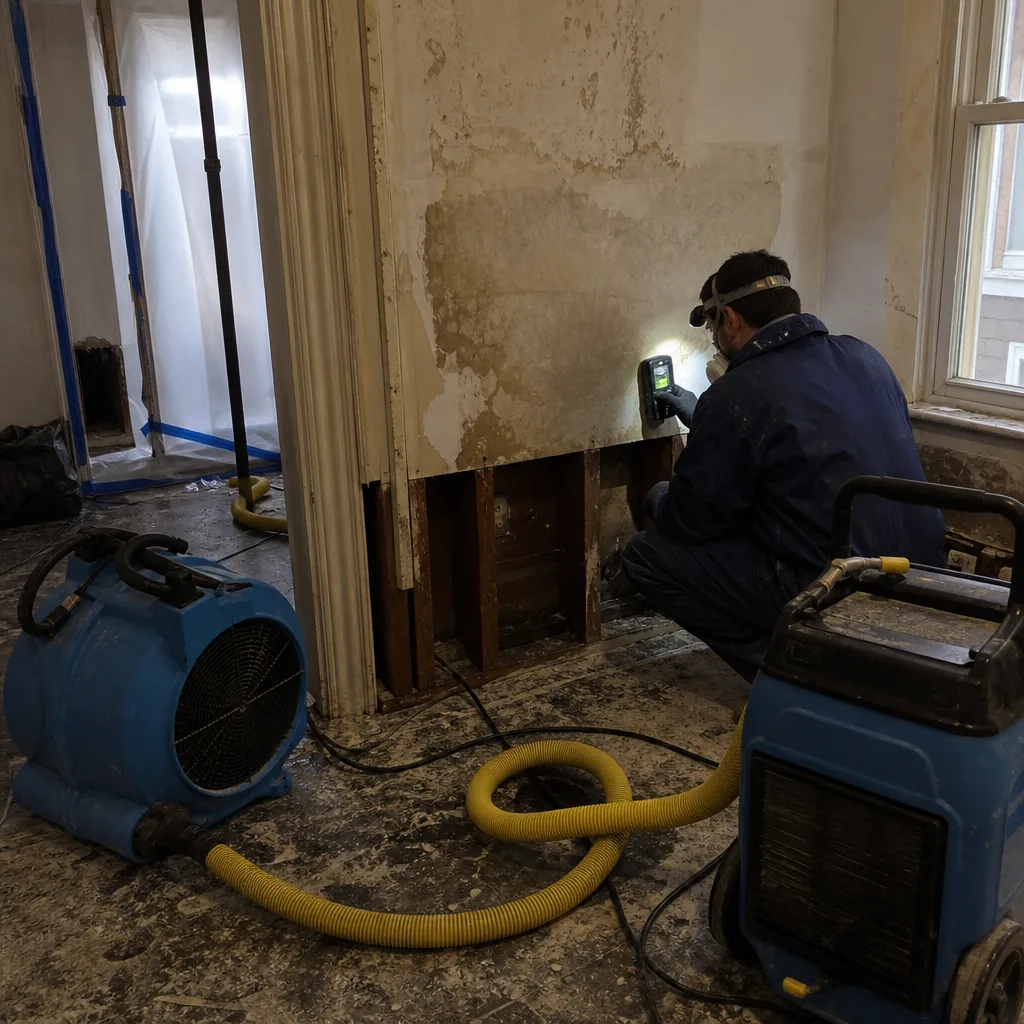
We map moisture with thermal imaging, pinless and pin-type meters, and masonry-specific probes. In Williamsburg’s converted lofts, we measure lateral travel through brick courses and sub-slab migration, not just surface readings. Every finding is photographed, logged, and written into the scope before work begins.
2. Containment & Air Scrubbing
Polyethylene containment seals the affected zone with negative air pressure maintained by HEPA-filtered air scrubbers. For open-plan loft layouts common along Kent Avenue and the Northside, we engineer larger containment footprints because wide floor plans allow spore migration across thousands of square feet.
3. Moisture Extraction & Stabilization
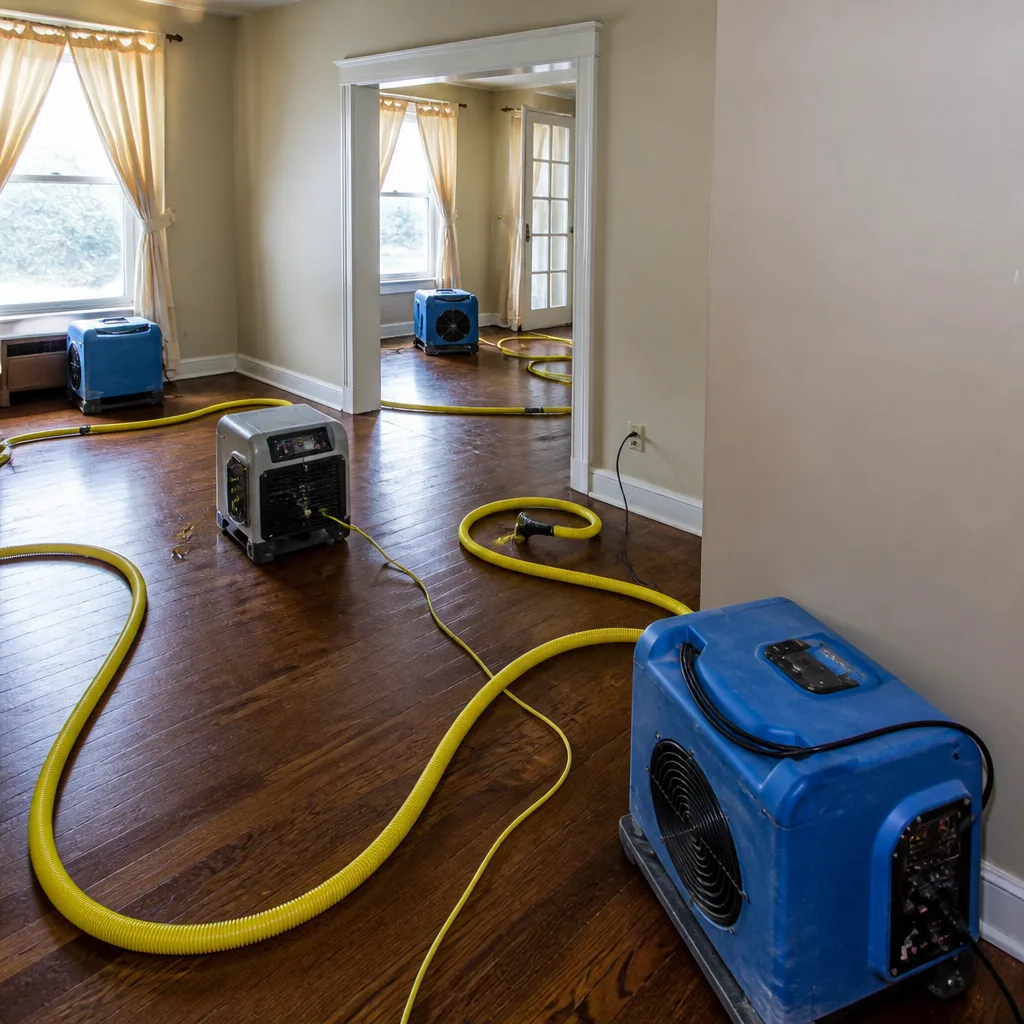
Injectidry directed drying systems pull moisture from within brick assemblies and concrete substrates without surface demolition. Dri-Eaz and Phoenix LGR dehumidifiers maintain vapor pressure differential, the measurable force that drives water from wet materials into dry air. Daily psychrometric data, temperature, relative humidity, and specific humidity, is logged to IICRC standards.
4. Cleaning & Sanitization
HEPA vacuuming removes spore residue from porous and semi-porous surfaces. Antimicrobial treatment follows, selected by substrate type: timber, brick, concrete, or remaining plaster. We do not apply one product to every surface.
5. Air Quality Restoration & Clearance Testing
Air scrubbers run through completion, with third-party clearance testing for spore count, particle concentration, and moisture content verification. In Williamsburg’s tight loft envelopes, we verify that mechanical ventilation balances properly after containment is removed, so humidity does not spike post-remediation.
6. Repairs & Moisture Control Setup
Our crew repairs any demolition required for access, then installs humidity monitoring or permanent dehumidification where the building’s original industrial envelope needs ongoing management. The 365-Day Done Right Promise, The Haven Standard, covers all work.
Need Emergency Mold Remediation in Williamsburg Now?
Crews minutes away, answering live 24 hours a day. The sooner we start, the less it costs.
Working With Your Insurance Company
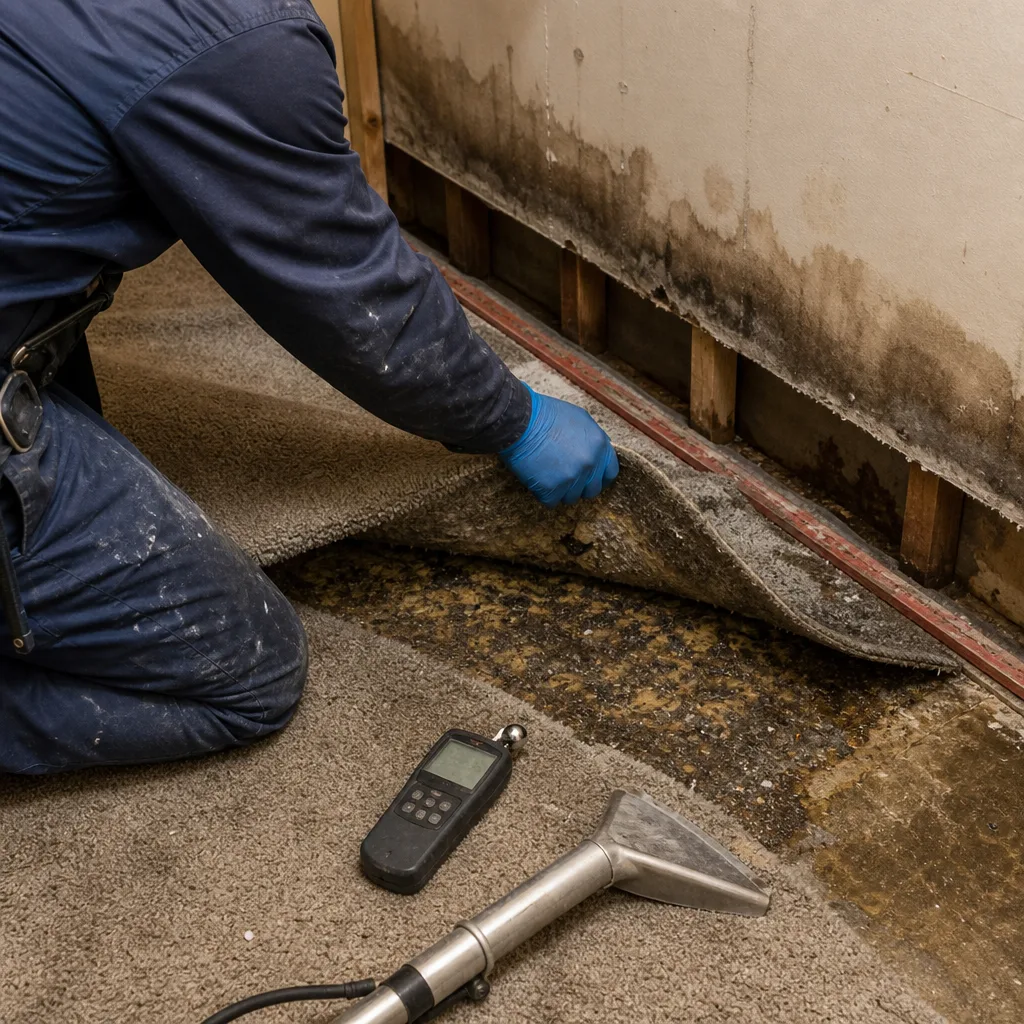
Insurance claims for mold in Williamsburg carry extra weight when prior-loss history exists, and many East River waterfront buildings carry Sandy-era flood documentation. We begin photo documentation on arrival, before any equipment is placed, and we maintain that record on every visit. Our estimates follow industry-standard pricing with line-item scopes that separate remediation from reconstruction, so your adjuster sees exactly what each phase costs and why.
Our Mold Remediation team coordinates directly with your carrier’s adjuster, providing the drying logs and moisture readings that justify every hour of dehumidifier runtime and every square foot of containment. We have handled claims where pre-existing mold from unreported Sandy damage was initially attributed to a current water loss; our documentation distinguished the two, protecting the homeowner from coverage denial. Alicia Brennan founded this company in 2011 after seeing how poor documentation cost homeowners their claims, and that origin shapes every file we build.
What We Provide Your Insurer
- Thorough documentation of the loss
- Photos of all damage, room by room
- Moisture readings and drying logs
- A detailed, line-item scope of work
- Direct coordination with your carrier
Built for Williamsburg’s Loss Calendar
January deep freezes split aging galvanized supply lines in tenement walk-ups on Driggs Avenue and Roebling Street, with pipe bursts hidden behind original plaster until the thaw reveals saturated lath. Spring brings basement seepage through century-old foundations as the water table rises, particularly in below-grade units east of Bedford Avenue. Summer humidity, compounded by the East River’s thermal mass, pushes relative humidity above 60% in unventilated loft spaces, activating dormant spores in timber beams that have carried them since the building’s industrial era.
Nor’easters and tidal surges remain a persistent threat for the FEMA-designated flood zones along the waterfront; even moderate storms push groundwater into sub-slab drainage systems that predate modern floodproofing. Fall’s temperature swings create condensation on exposed brick and concrete, the thermal mass of those original industrial materials lagging behind air temperature by hours. Each season produces a distinct moisture signature, and our crews read them before writing the scope.
Mold Remediation Across Williamsburg’s Neighborhoods
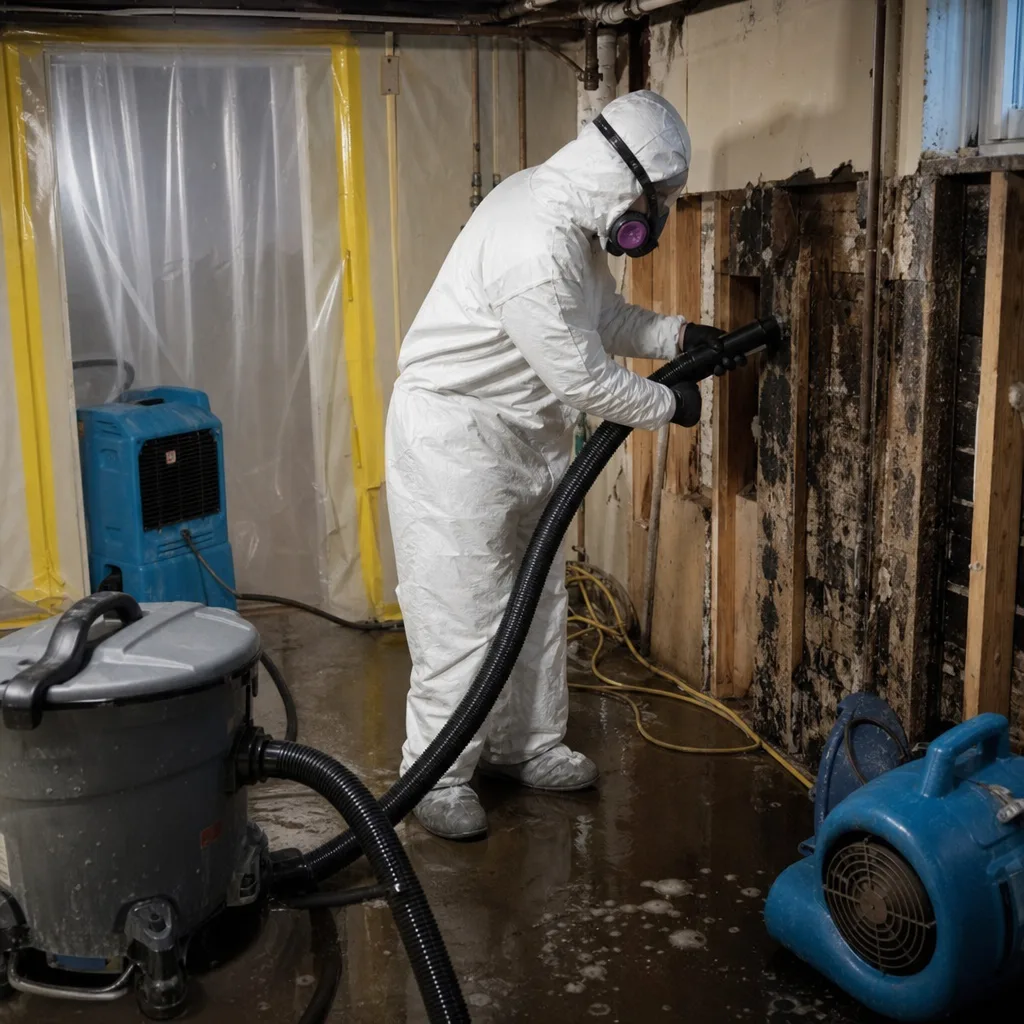
The Northside, roughly north of Grand Street toward McCarren Park, mixes converted warehouses with older frame and brick row houses. Mold calls here often trace to roof leaks in buildings where original slate or tar roofing has been patched repeatedly, with water traveling down party walls and emerging two floors below the breach. Our crews know to check the roofline first when a Northside caller reports a mystery stain.
The Southside, below Grand Street toward the Williamsburg Bridge, holds denser tenement stock with aging plumbing stacks and smaller units where humidity concentrates. Bathroom exhaust failures are common; we find mold in ceiling cavities above tiled bathrooms where decades of steam escaped through cracked plaster.
The East River waterfront from North 14th Street south to Broadway Triangle contains the highest concentration of converted industrial lofts. Kent Avenue buildings in particular present our most complex mold investigations: polished concrete floors that hide sub-slab moisture for weeks, exposed brick that wicks horizontally through entire floor plates, and open plans that challenge containment engineering. We stage additional HEPA scrubbers and larger dehumidifier capacity for waterfront calls because the substrate mass demands it.
The Broadway Triangle area, with its mix of industrial legacy buildings and newer residential construction, sees mold where old and new systems meet: modern HVAC ducting routed through unconditioned timber lofts, creating cold surfaces that condense moisture in summer. We inspect the interface, not just the symptom.
Specialized Mold Remediation Services We Offer in Williamsburg
Mold Inspection & Testing
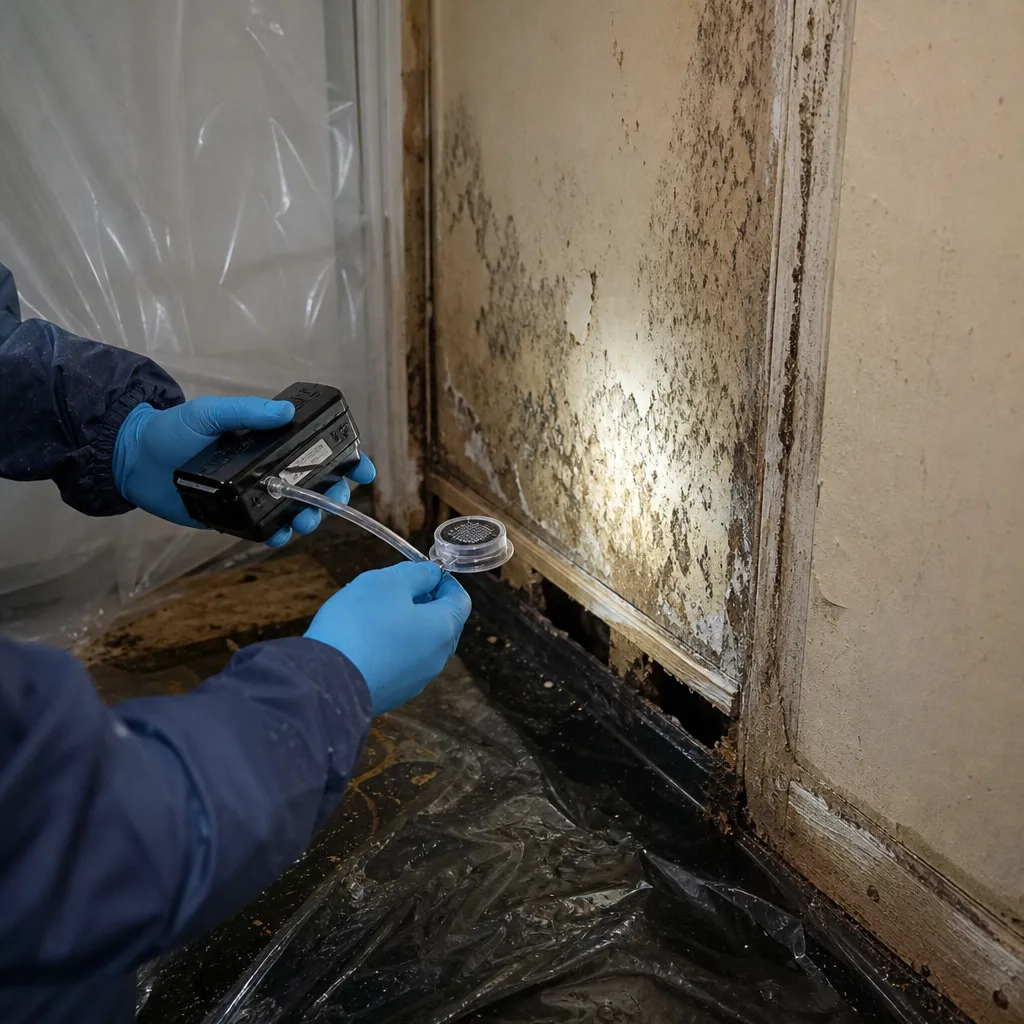
Our inspections in Williamsburg start with masonry-calibrated moisture probes, not surface meters. We sample air and surface spore counts, document visible growth with macro photography, and write a scope that distinguishes active colonization from dormant residue. In converted lofts, we test behind representative brick sections and at slab edges where moisture wicks. Typical inspection with testing in Williamsburg: $450-$850.
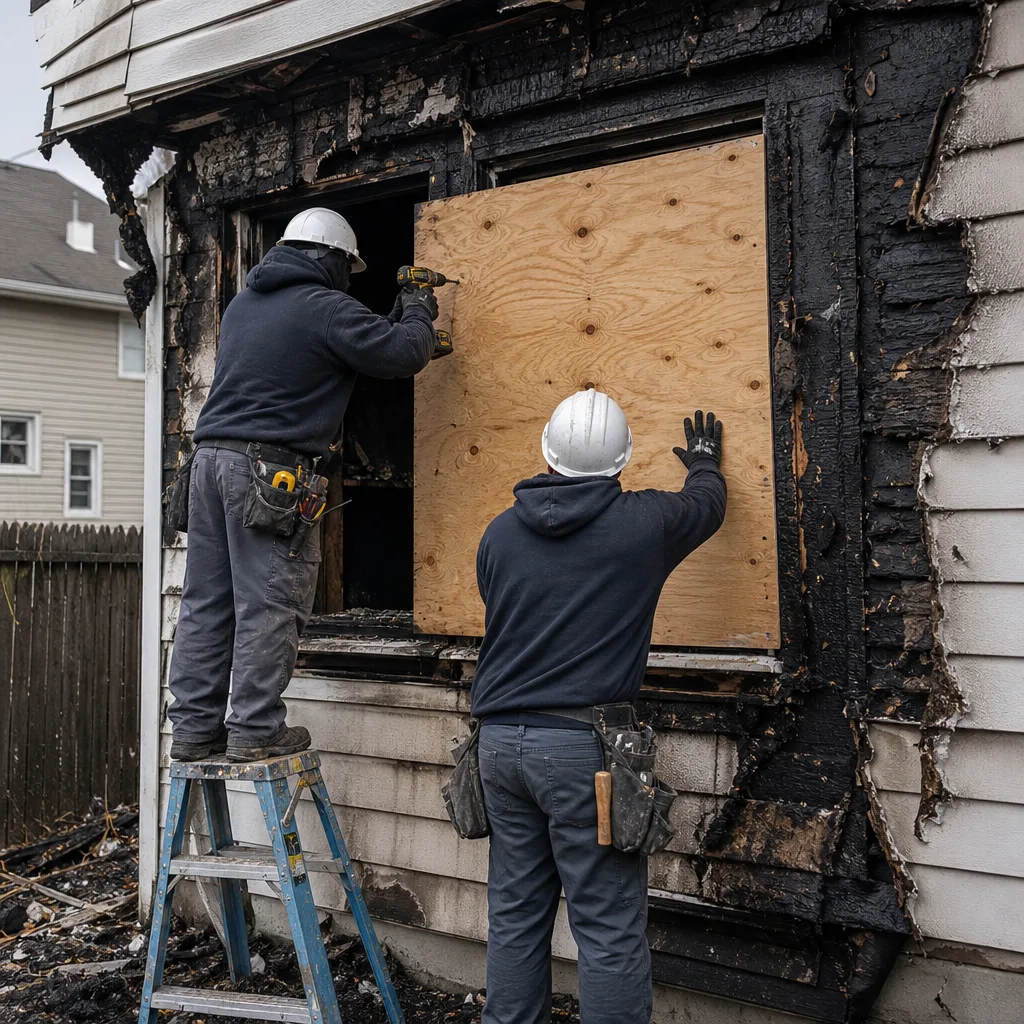
Mold Removal
Removal follows containment and air scrubbing, with substrate-specific methods: HEPA vacuuming and dry-ice blasting for timber, abrasive cleaning for exposed brick, and extraction with antimicrobial treatment for concrete. We do not remove more material than necessary, Haven Standard, Clause 1 demands the written scope define the work precisely. Typical contained removal in Williamsburg: $2,800-$5,500.
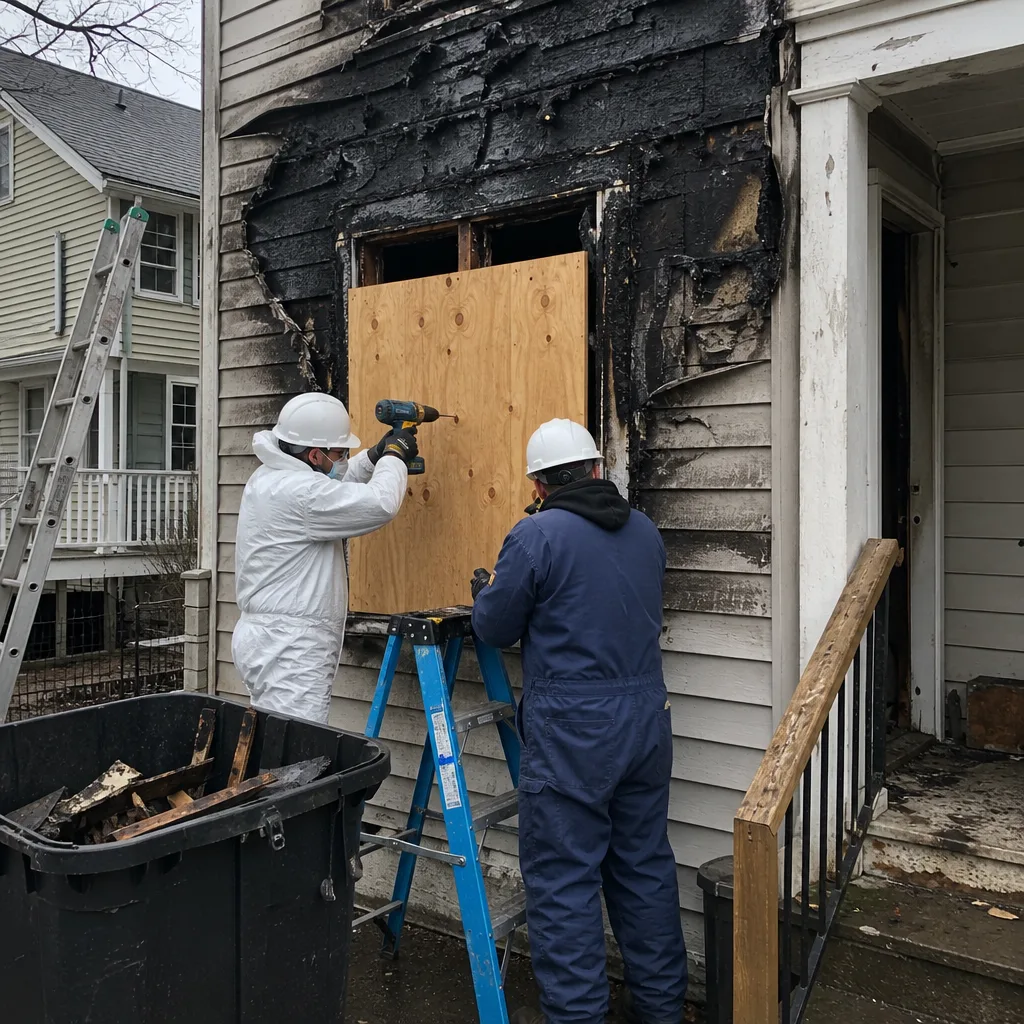
Black Mold Remediation
Stachybotrys and other toxigenic species require full containment with negative air pressure, sealed egress protocols, and disposable PPE. In Williamsburg’s older buildings with chronic humidity, we encounter these species in plaster cavities and behind original lath where long-term leaks went unreported. Remediation runs $4,500-$9,000 depending on containment footprint and disposal requirements.
Air Quality Restoration
Post-remediation, we restore breathable air through continued HEPA filtration, balanced mechanical ventilation verification, and third-party clearance testing for total spore count and species identification. In tight loft envelopes with minimal natural ventilation, this phase is critical. Air quality restoration as standalone service: $1,200-$2,400.
Crawl Space Treatment
Williamsburg’s limited crawl space inventory concentrates in below-grade units and partial-basement walk-ups, particularly in the Southside. We install vapor barriers, dehumidification, and sealed access where groundwater intrusion is chronic. Treatment runs $3,500-$7,000 for encapsulation with active drying.
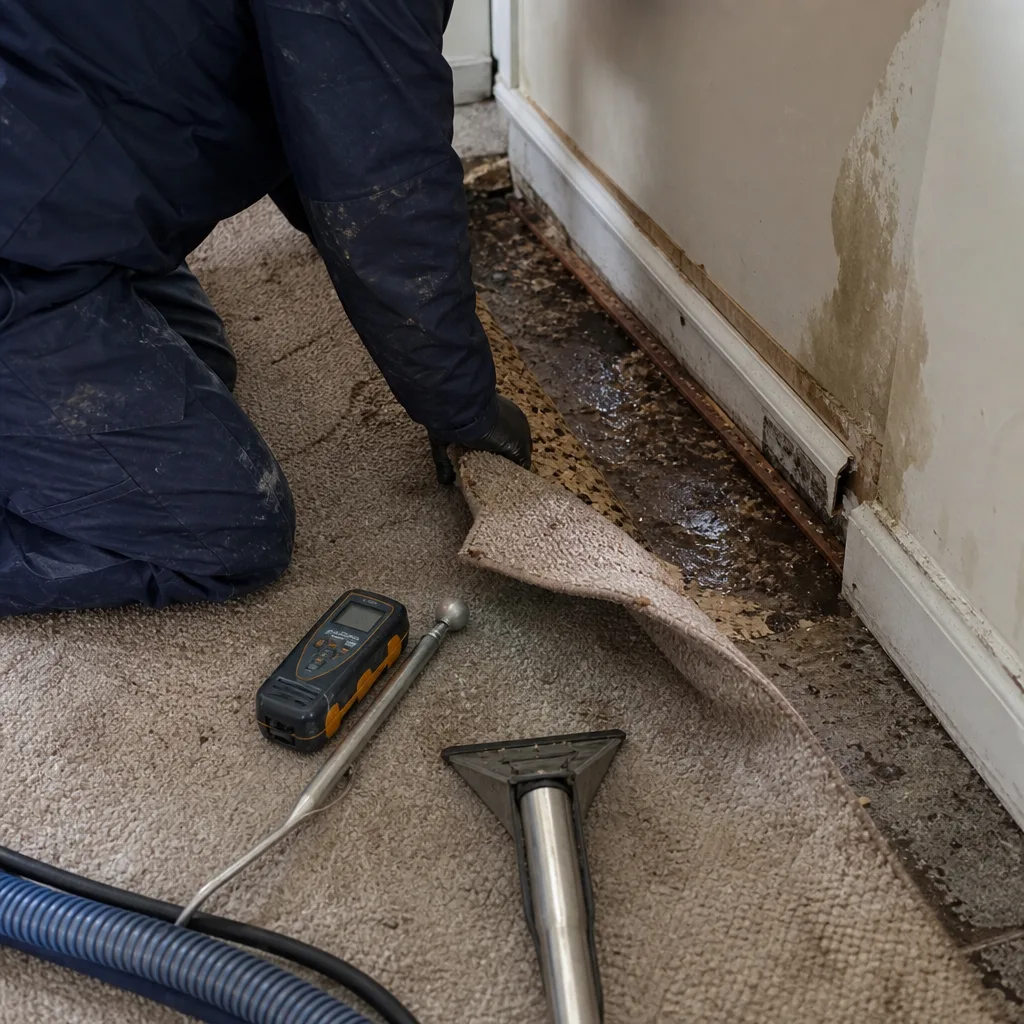
Moisture & Humidity Control
Our permanent humidity control installations for Williamsburg lofts include dedicated dehumidifiers sized for concrete and brick thermal mass, not standard residential load calculations. We monitor and adjust for seasonal riverfront humidity swings. System installation: $2,200-$4,800.
What happens when you call
- 1
A real person answersNo phone trees - you reach a local pro.
- 2
You get an upfront price rangeHonest numbers before anyone is dispatched.
- 3
A background-checked tech heads outLicensed & insured, dispatched right away.
- 4
You approve before work beginsNothing starts until you say go.
Mold Remediation Costs in Williamsburg, NY
| Service | Williamsburg Price Range |
|---|---|
| Mold inspection with testing | $450-$850 |
| Contained mold removal (drywall/stud) | $2,800-$5,500 |
| Black mold / toxigenic species remediation | $4,500-$9,000 |
| Loft-scale masonry/concrete investigation | $12,000-$18,000 |
| Air quality restoration | $1,200-$2,400 |
| Crawl space encapsulation | $3,500-$7,000 |
| Permanent humidity control system | $2,200-$4,800 |
What moves the price: substrate type (brick and concrete demand longer drying cycles than drywall), hidden lateral extent (thermal imaging often reveals 2-4x the visible area in loft buildings), containment complexity (open plans require more material and air scrubbing capacity), and whether third-party clearance testing is required. Insurance typically covers mold remediation when it results from a covered water loss, but not when it stems from long-term maintenance neglect; our documentation distinguishes the two for your adjuster. Every job begins with a free visual inspection and a written price before work starts, Haven Standard, Clause 1. Call (862) 281-7710 for your exact scope.
We Also Serve Cities Near Williamsburg
Our crews respond from the New York City office to Williamsburg and surrounding neighborhoods including Astoria, Upper East Side, Long Island City, and Jackson Heights. Each area carries distinct building stock and moisture patterns, and we scope accordingly.
Serving Williamsburg, NY - Our Local Coverage Area
We’re based in the Williamsburg area and know this community well. Use the map below to see our service coverage - if you’re nearby, we can almost certainly help.
Williamsburg Mold Remediation Questions, Answered
Why does mold show up in Williamsburg loft buildings days after a small leak?
Exposed brick and polished concrete in converted industrial lofts wick and store water for days, not the 24-48 hours typical of drywall assemblies. By the time surface signs appear, moisture has traveled laterally through brick courses and under concrete slabs, creating hidden colonization zones that activate when humidity rises. We map this hidden travel with thermal imaging and masonry probes before writing the scope. Call (862) 281-7710 for a free inspection with moisture mapping.
How do you find hidden mold behind brick or under a concrete floor in a Williamsburg conversion?
We use thermal imaging to detect temperature differentials where moisture has massed in brick courses or sub-slab, then confirm with pin-type and masonry-specific moisture probes. In one Kent Avenue loft, readings extended 4 to 6 feet beyond the visible damp patch into the party wall and under the slab. Surface-only inspection misses this; our protocol does not. Call (862) 281-7710 to schedule.
Does the East River flood zone change how you handle a mold job in Williamsburg?
Yes. FEMA-designated flood zones along the waterfront mean many buildings carry prior-loss history from Sandy-era surge, complicating both remediation scope and insurance negotiation. We research documented loss history, test for pre-existing mold that may have been dormant since prior flooding, and document our findings so your current claim is not denied as maintenance neglect. Our drying logs and photo records separate old damage from new. Call (862) 281-7710 to discuss your building’s history.
Can you dry a Williamsburg loft’s brick and concrete without ripping out the high-end finishes?
Often yes. Injectidry directed drying systems pull moisture from within masonry and sub-slab assemblies through small injection ports, without demolishing exposed brick or polished concrete. Dri-Eaz and Phoenix dehumidifiers maintain the vapor pressure differential that drives drying. We preserve finishes when the substrate will allow it, and we tell you honestly when demolition is unavoidable, with that decision written into the scope before work begins. Call (862) 281-7710 for an assessment.
What steps keep mold from coming back in a converted warehouse unit?
Permanent humidity control sized for concrete and brick thermal mass, not standard residential calculations; sealed vapor barriers where groundwater intrusion exists; and balanced mechanical ventilation that prevents condensation on massive structural elements. We install monitoring equipment where needed and verify post-remediation humidity stays below 60% year-round. The 365-Day Done Right Promise covers return visits if moisture rebounds. Call (862) 281-7710 to discuss ongoing control for your unit.
How fast can your crew actually get to a Williamsburg address?
We commit to 45 minutes from call to arrival anywhere in Williamsburg, with crews staged for both the tenement blocks and the riverfront loft corridor. Live answer 24 hours a day, no voicemail. For active water feeding mold growth, speed limits the colonization area and reduces final cost. Call (862) 281-7710 now if you have active moisture.
Will my insurance cover mold remediation, or is this out of pocket?
Insurance covers mold remediation when it results from a sudden, covered water loss, burst pipe, storm intrusion, or appliance failure. It typically does not cover mold from long-term humidity or maintenance neglect. Our documentation, photo records, moisture logs, and written scopes, distinguishes sudden loss from chronic conditions for your adjuster. We bill carriers directly and coordinate with adjusters. Call (862) 281-7710 and we will review your situation.
What should I do in the first 30 minutes after discovering mold?
Stop the water source if it is active, do not disturb the visible growth (disturbing it releases spores), increase ventilation if outdoor humidity is lower than indoor, and call (862) 281-7710. Do not apply bleach; it does not kill mold in porous substrates and can complicate professional remediation. Our crew arrives with containment and begins documentation immediately.
We were called to a converted riverside loft on Kent Avenue along the East River waterfront after a tenant reported a musty smell and a small damp patch near a brick party wall; moisture mapping with thermal imaging and pin meters showed readings 4 to 6 feet laterally beyond the visible spot, into brick courses and under the polished concrete slab. Using Injectidry directed drying on the masonry and Dri-Eaz dehumidification with containment on the open floor plan, our crew stabilized the Category 3 water, logged daily moisture readings in our drying logs, and confirmed clearance before any rebuild.
That job is why we treat every Williamsburg loft call as a masonry-and-concrete moisture investigation first. The visible damage is rarely the full damage. Our written scope reflects what we find, not what we guess, and our photo record proves it. Twelve thousand homes restored since 2011, every one with a written price before work started and a documented record when the crew left.
Call (862) 281-7710 for a free visual inspection and written scope. Or bring a competitor’s written estimate; we provide a Free Second Opinion at no charge, Haven Standard, Clause 1.
Written by Alicia Brennan, Owner at DryMark Restoration Astoria, serving Williamsburg since 2011.
Mold Remediation in Nearby Areas