
Free visual inspection and a written scope of work before any mitigation begins - photos, moisture readings, and drying logs go in your claim file
The scope we write is the scope we bill. Anything new gets shown to you, in writing, before we touch it.
Storm response
 Before
 After
After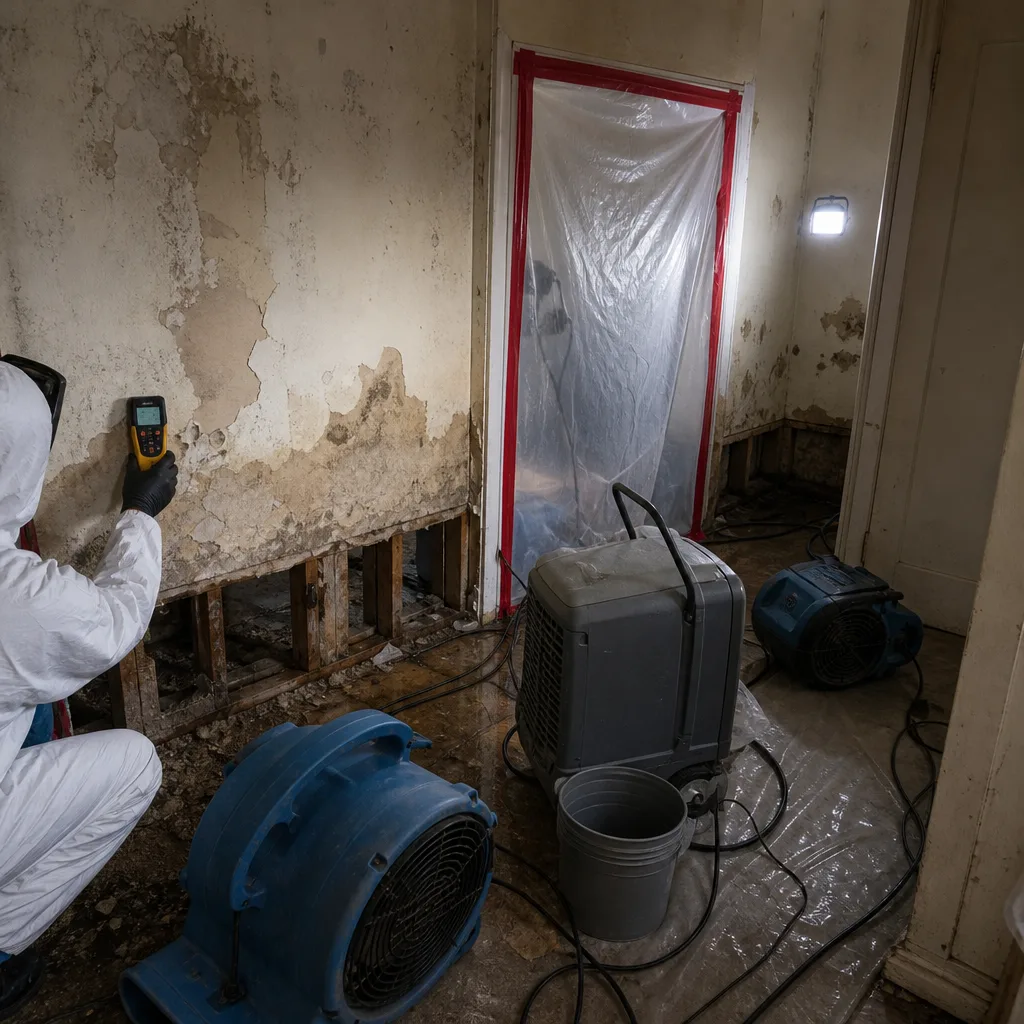 Before
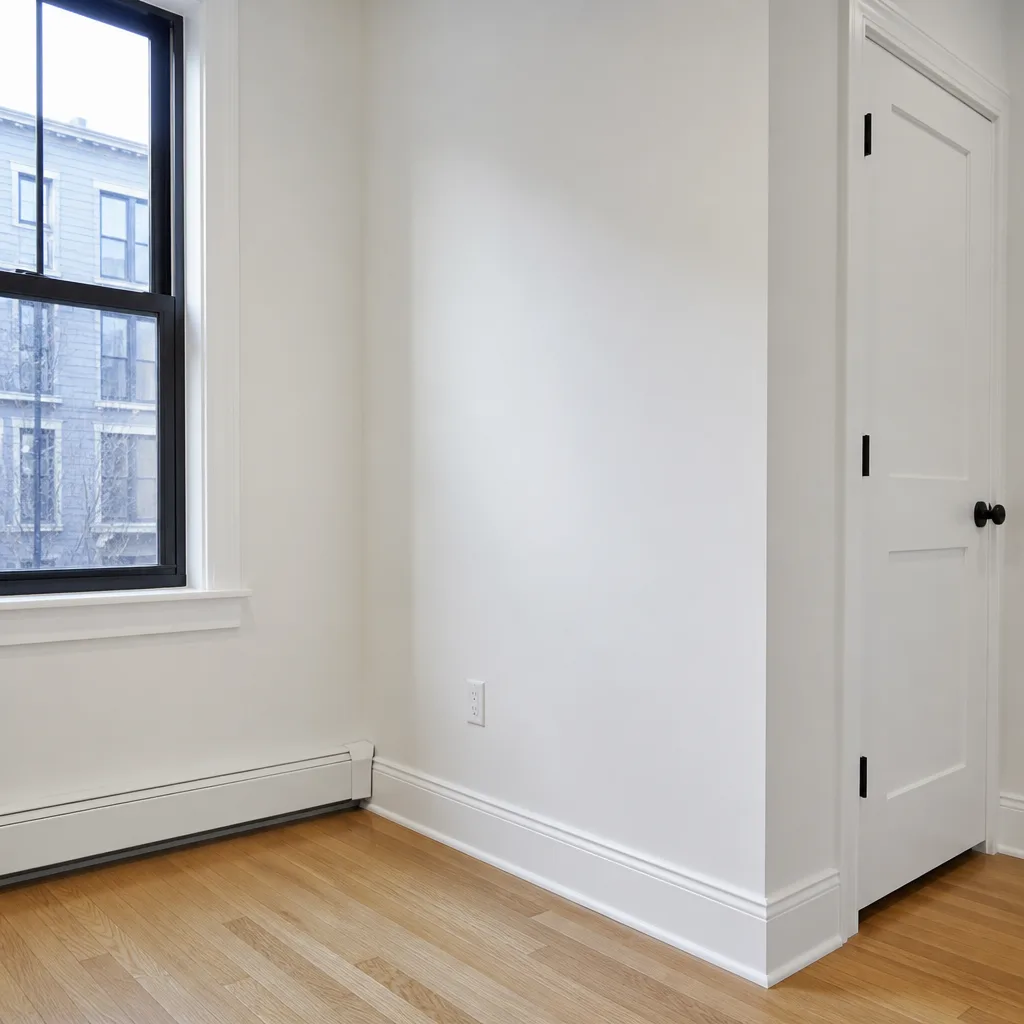 After
After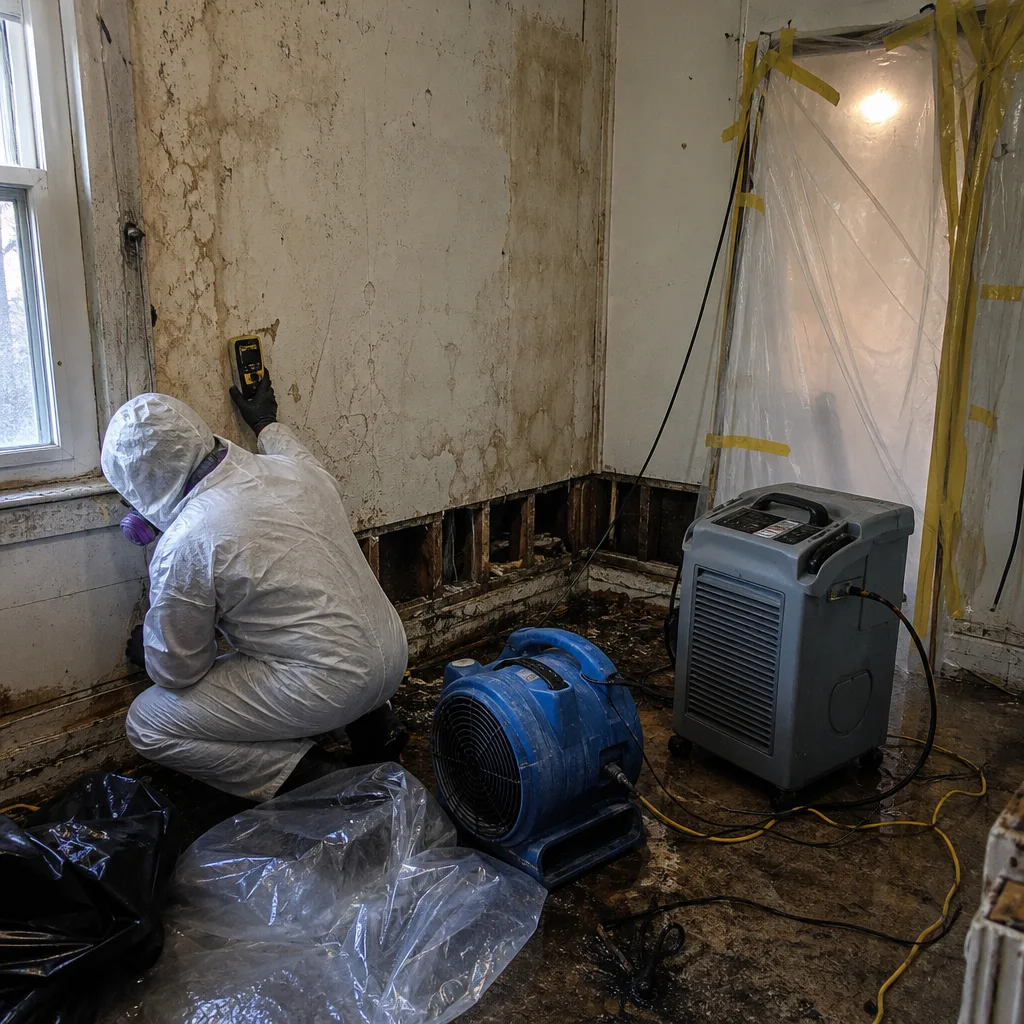 Before
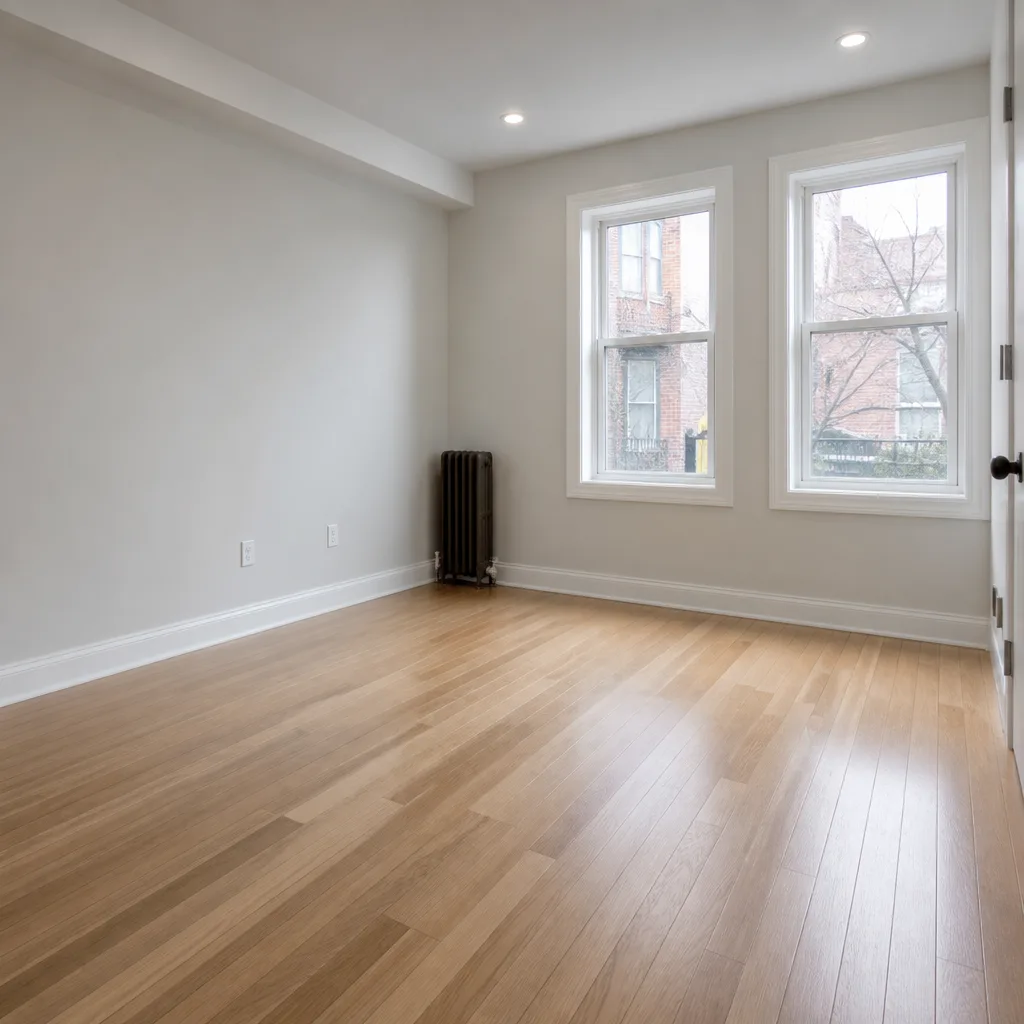 After
After24/7 Emergency Mold Remediation in Upper East Side
Mold remediation in Upper East Side properties typically costs $2,800-$7,500 for contained residential jobs and $8,000-$18,000+ for multi-unit co-op losses with plaster and parquet restoration. Crews are dispatched from our New York City office and can be on-site anywhere from Carnegie Hill to Lenox Hill within 45 minutes. Call (862) 281-7710 now - a live person answers every emergency line, 24 hours a day, with no voicemail trees.
The first 48 hours after Upper East Side Water Damage Restoration begins are when mold colonizes horsehair plaster and saturated parquet subflooring. In Upper East Side pre-war buildings, steam radiator failures and cast-iron riser leaks can push Category 2 or 3 water through 8-12 stacked units before anyone notices. That hidden migration means by the time you see staining on a ceiling, mold has often amplified behind walls where standard surface cleaning won’t reach. We offer free visual inspection and moisture mapping to find the true perimeter of the damage.
Understanding Mold Remediation Severity in Upper East Side Properties
Mold severity in Upper East Side buildings is classified by affected square footage, material porosity, and whether the water source was Category 1 (clean supply), Category 2 (gray water from radiator or appliance), or Category 3 (black water with sewage or long-standing stagnation). Our crews assess contamination level, then build containment with negative air pressure and HEPA scrubbing before any disturbance - critical in co-ops where a single unit’s remediation can expose adjacent shareholders.
The building stock here changes the risk profile. Horsehair plaster walls and ceilings in 1910s-1940s buildings along Fifth, Park, and Madison Avenues are highly porous once wet; they wick moisture vertically and horizontally through lathe cavities, supporting mold growth invisible until surface staining appears. Parquet wood floors over original subflooring create vapor-pressure differentials that trap moisture underneath, requiring psychrometric data - temperature, relative humidity, and vapor pressure readings - to determine when tertiary drying is complete. Steam heating systems, still standard in most pre-war Upper East Side buildings, add another variable: radiator supply connections and expansion joints under floors fail silently during peak winter demand, saturating multiple stacked units before discovery.
Why Upper East Side Property Owners Choose DryMark Restoration Astoria
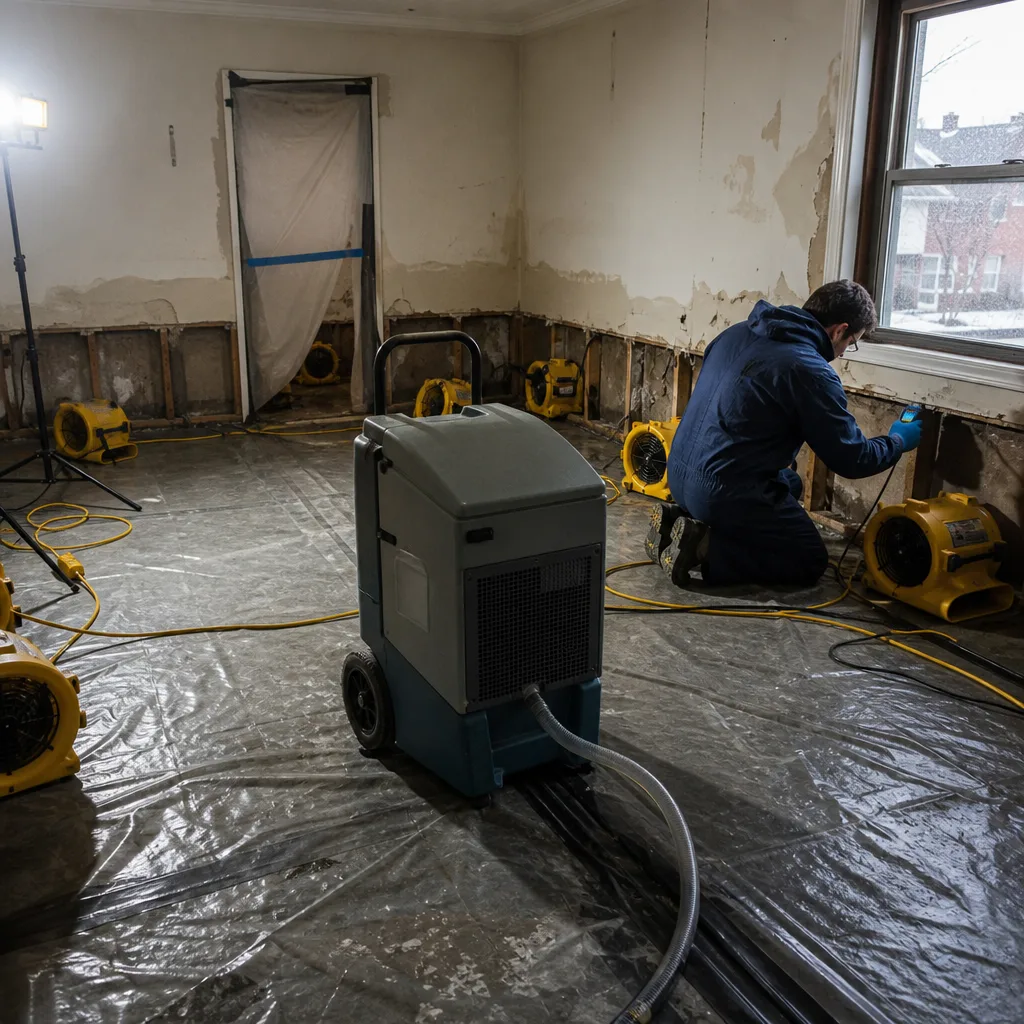
- 45-minute response commitment to any Upper East Side address, from the East 90s to Carnegie Hill, because mold colonizes plaster lathe within 48 hours of saturation.
- 24/7 live answer - a real person, never an automated system or next-business-day callback, on every emergency line.
- IICRC-certified crews holding WRT (Water Damage Restoration Technician), AMRT (Applied Microbial Remediation Technician), and FSRT (Fire & Smoke Restoration Technician) certifications where cross-training applies.
- Free visual inspection with moisture mapping and thermal imaging to establish the true perimeter of hidden mold before any work is proposed.
- Direct insurance billing with photo-documented drying logs and written scopes that adjusters recognize and pay without dispute.
- One team from containment to reconstruction - no handoffs between remediation and finish crews, critical for co-op boards requiring vendor continuity.
BeforeAfterOur Mold Remediation Process
1. Inspection & Assessment
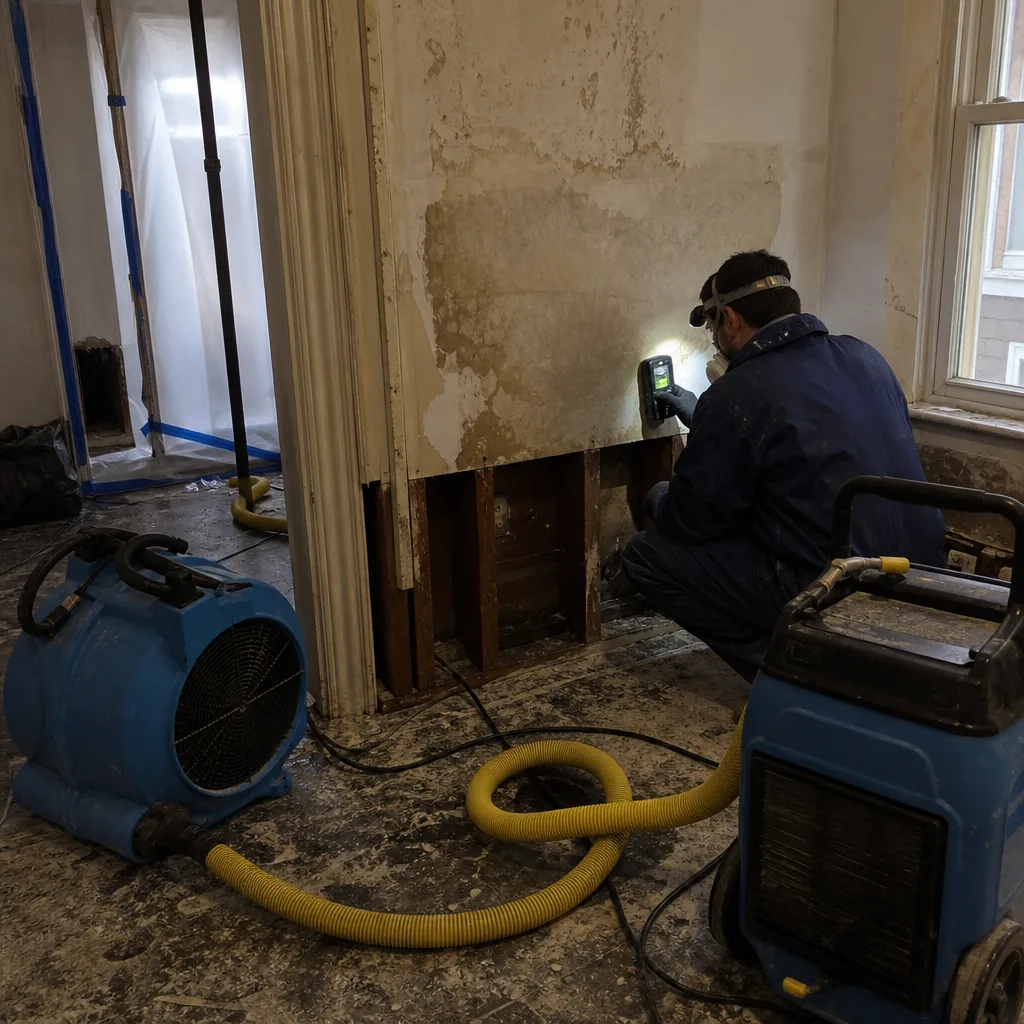
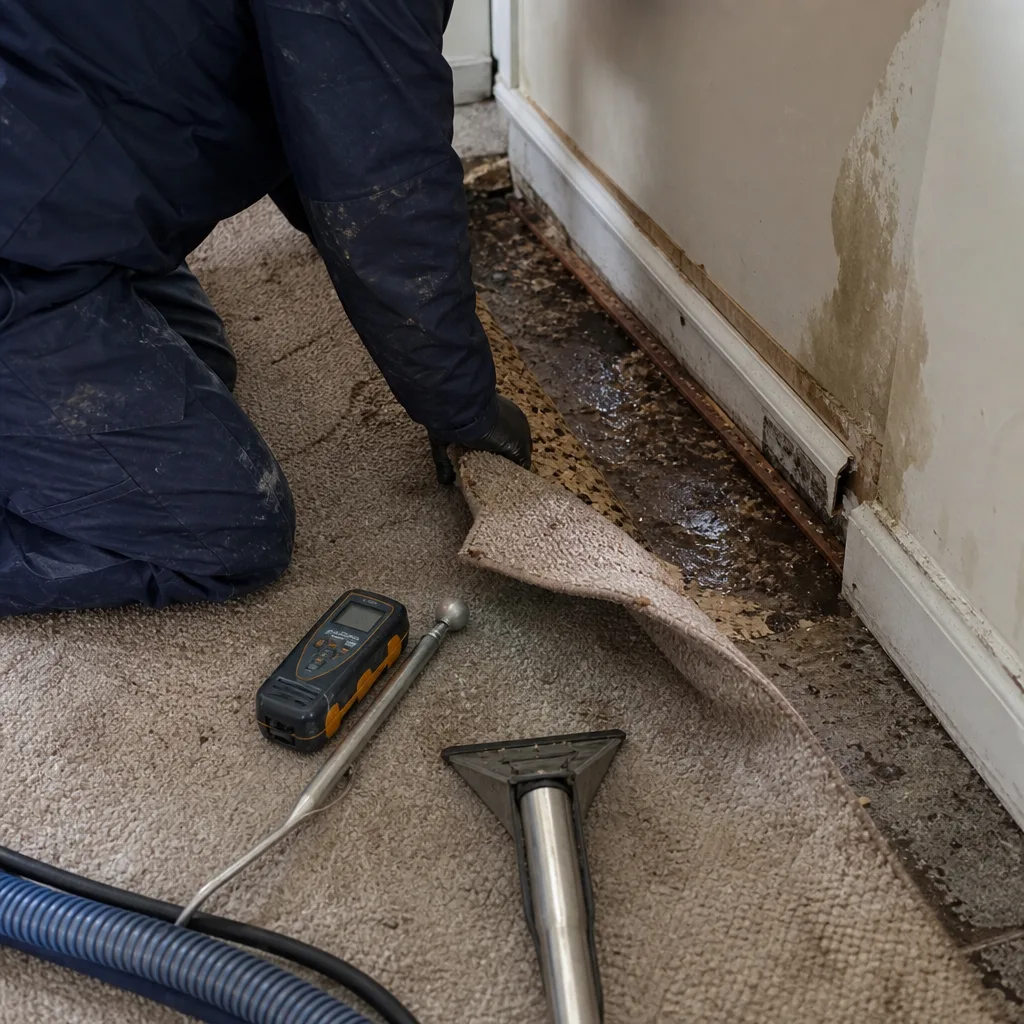
We map moisture with thermal imaging, hygrometers, and non-penetrating meters to find hidden colonization behind horsehair plaster and under parquet flooring. In Upper East Side co-ops, we also review the building’s proprietary lease to confirm whether in-wall risers fall under co-op or shareholder responsibility - this determines who signs the work authorization and which insurance policy responds.
2. Containment & Air Filtration
We erect polyethylene containment barriers with negative air pressure using HEPA air scrubbers, typically Phoenix or Dri-Eaz units rated at 99.97% efficiency at 0.3 microns. This prevents cross-contamination to adjacent units during disturbance - non-negotiable in buildings where shareholders share HVAC risers and hall air.
3. Moisture Control & Drying
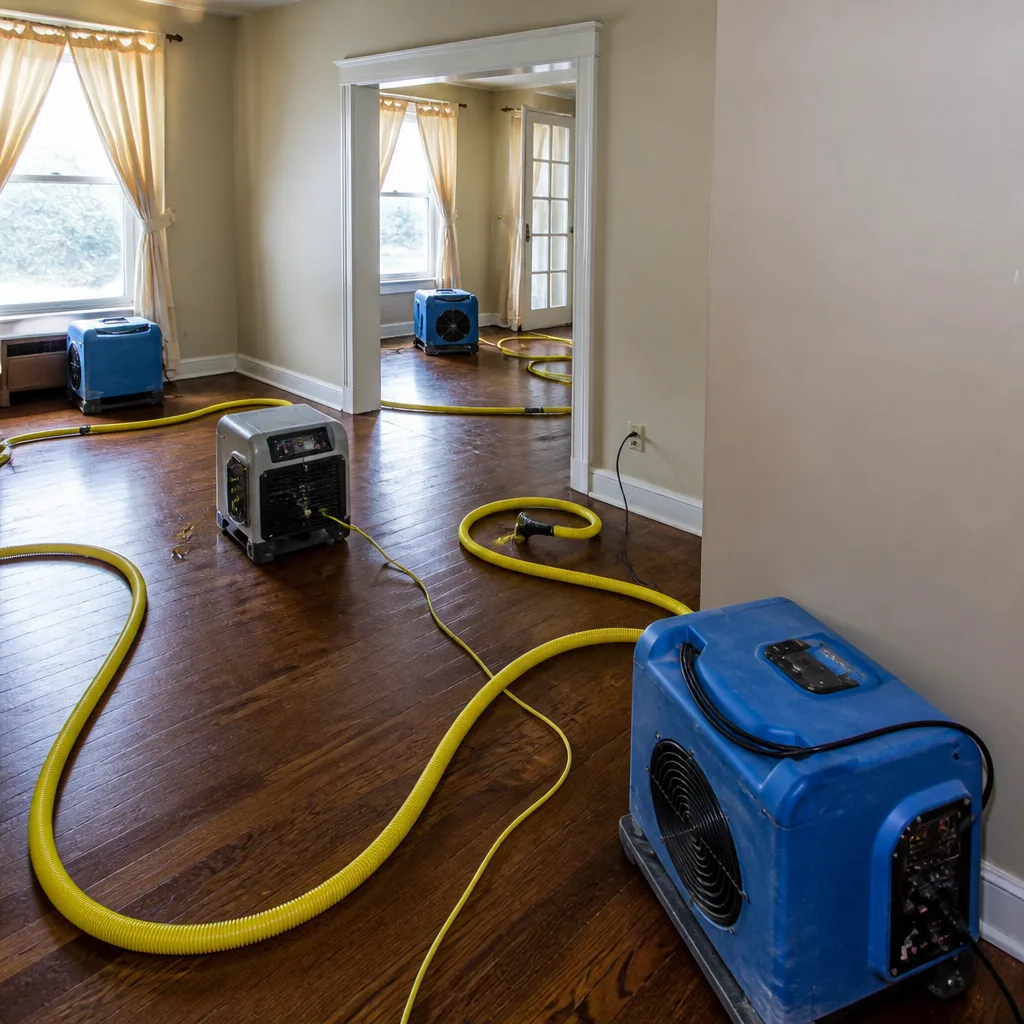
We deploy LGR dehumidifiers and targeted drying systems: Injectidry mats for hardwood floors, wall-cavity injection for plaster lathe, and air movers positioned to create vapor pressure differentials that pull moisture from deep substrate. Daily psychrometric readings document progress until materials reach established dry standards.
4. Mold Removal & Cleaning
HEPA vacuuming, damp-wiping with antimicrobial agents, and selective removal of non-salvageable materials. In Upper East Side pre-war buildings, we preserve original horsehair plaster and ornamental millwork wherever moisture readings permit, avoiding the alteration agreements and landmark review triggers that demolition would require in Carnegie Hill and historic districts.
5. Air Quality Restoration & Clearance
Post-remediation, we run continuous HEPA filtration and collect air samples for third-party lab analysis. Clearance testing confirms spore counts at or below outdoor baseline and compliant with IICRC S520 standards before containment is removed and occupancy resumes.
6. Repairs & Moisture Control Upgrades
We restore affected finishes with materials matching original specifications and install humidity monitoring or ventilation improvements where building systems create recurring risk. Written scope, photo record, and drying logs are delivered for insurance submission and co-op board records.
Need Emergency Mold Remediation in Upper East Side Now?
Crews minutes away, answering live 24 hours a day. The sooner we start, the less it costs.
Working With Your Insurance Company
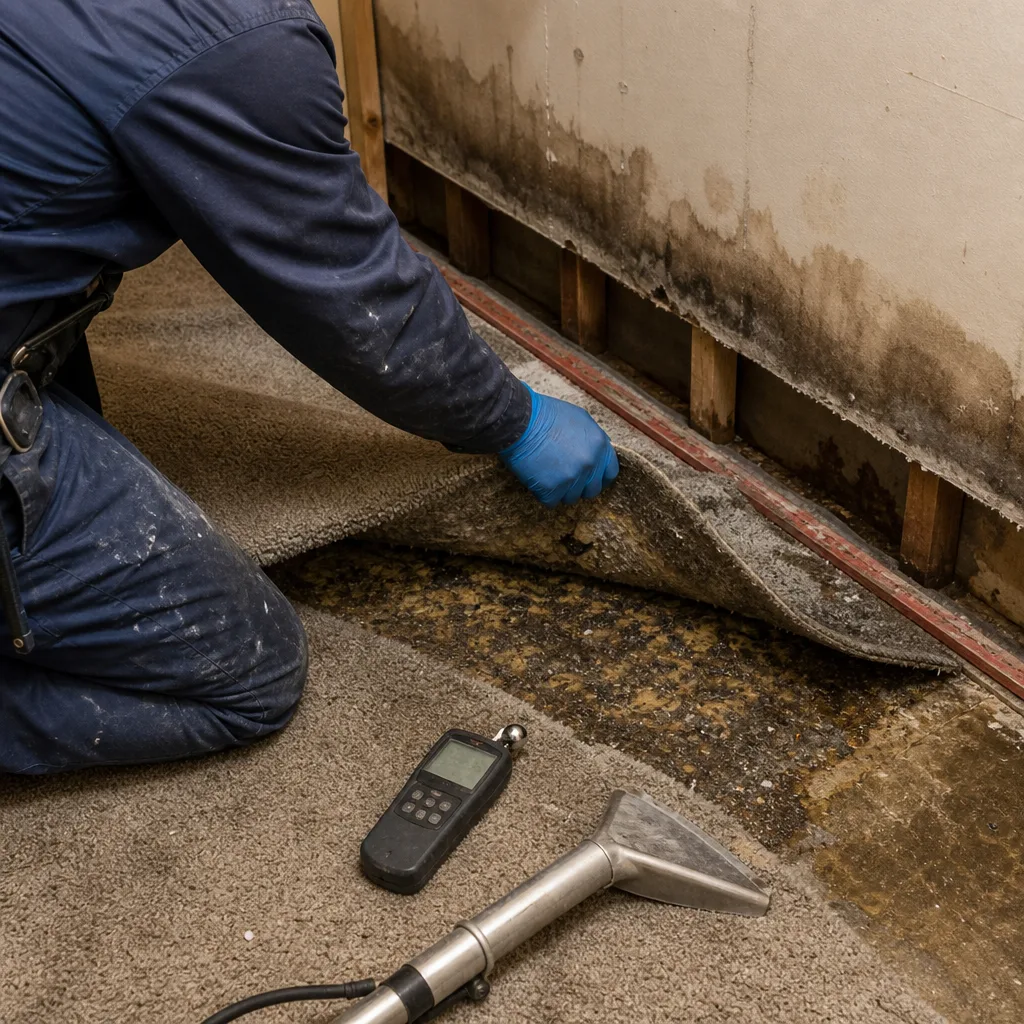
Documentation starts when our technician arrives, not when the adjuster calls back. We photograph pre-loss condition, moisture readings, containment setup, daily progress, and post-remediation clearance - all time-stamped and geotagged. Our estimates follow industry-standard Xactimate pricing with line-item detail that carriers recognize. We coordinate directly with your adjuster, submit drying logs that justify equipment days, and resolve scope questions before they become coverage disputes.
In Upper East Side co-ops, the insurance picture is rarely simple. The co-op corporation’s master policy covers in-wall risers and common elements; the shareholder’s HO-6 covers interior finishes and personal property. When a riser leak causes mold in multiple units, we document each unit’s damage separately, attribute causation to the originating failure, and provide the building’s managing agent with the technical documentation needed to allocate responsibility under the proprietary lease.
What We Provide Your Insurer
- Thorough documentation of the loss
- Photos of all damage, room by room
- Moisture readings and drying logs
- A detailed, line-item scope of work
- Direct coordination with your carrier
Built for Upper East Side’s Loss Calendar
January deep freezes crack cast-iron risers and radiator supply connections in pre-war buildings along Park and Madison Avenues, sending steam-heated water through multiple floors while residents are away for the holidays. Spring thaw reveals masonry facade deterioration from freeze-thaw cycling - wind-driven rain penetrates at cornices and window lintels, saturating exterior walls and breeding mold behind horsehair plaster before summer humidity arrives.
July and August bring the highest indoor relative humidity in Upper East Side apartments, where aging window air conditioners or inconsistent central cooling create condensation on cool plaster surfaces. September nor’easters and tropical remnants test already-compromised flashing and parapets. October through December, buildings fire up steam systems that have been dormant for months; expansion joints and valve packing that dried and cracked over summer fail under renewed pressure. Each season produces a distinct mold risk profile, and our crews carry the equipment to address each: Injectidry systems for winter parquet saturation, desiccant dehumidifiers for summer humidity spikes, and masonry moisture meters for fall facade intrusion.
Mold Remediation Across Upper East Side’s Neighborhoods
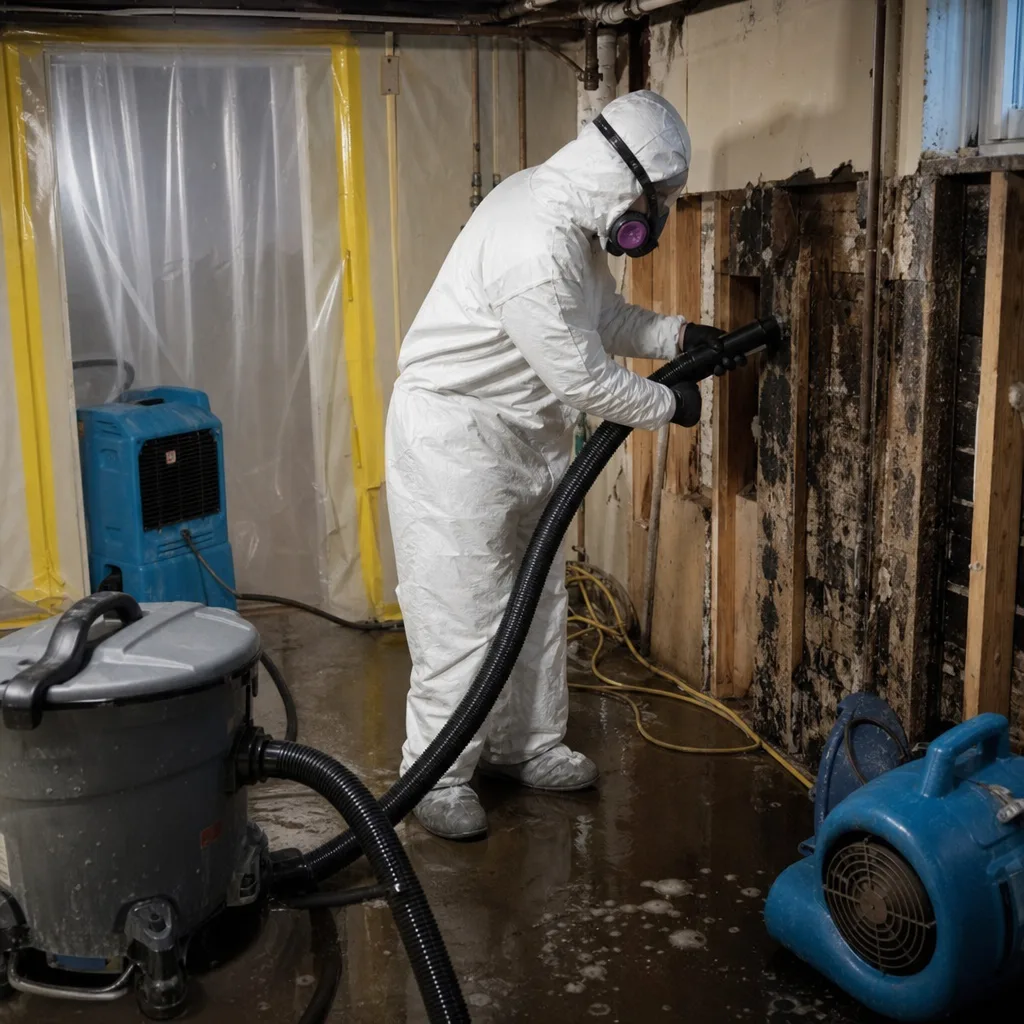
Carnegie Hill, roughly East 86th to East 96th Streets east of Fifth Avenue, contains some of the most architecturally significant pre-war housing in Manhattan. Landmark district protections here mean any material removal or replacement triggers Landmarks Preservation Commission review. Our Mold Remediation teams document original conditions with detailed photography and specify in-kind restoration materials to satisfy both co-op boards and LPC requirements. We’ve dried original herringbone parquet in Carnegie Hill co-ops using Injectidry mat systems that extract moisture without board removal, preserving finishes that cannot be replicated.
Lenox Hill, from East 60s to East 77th Streets, mixes luxury high-rises with older mid-rise co-ops and rental buildings. The high-rise segment presents different challenges: centralized HVAC systems can distribute mold spores floor-to-floor through shared risers, requiring coordination with building engineers before containment is established. The smaller pre-war buildings here often lack freight elevators, so equipment staging and debris removal require advance planning with superintendents.
Yorkville, east of Third Avenue to the river, includes more post-war construction but also pockets of 1920s walk-ups and tenement-law buildings with minimal ventilation and chronic humidity issues. Mold in these buildings often stems from aging plumbing in shared walls and inadequate bathroom exhaust, creating recurring problems that surface remediation alone won’t solve.
The East 90s corridor, particularly near the 92nd Street Y and along Lexington Avenue, sees concentrated co-op density with active, engaged boards. Pre-approved vendor lists are strictly enforced; our Mold Remediation in Upper East Side work includes maintaining current certificates of insurance, worker’s compensation, and board-specific safety protocols to ensure access when emergencies strike.
Specialized Mold Remediation Services We Offer in Upper East Side
Mold Inspection & Testing
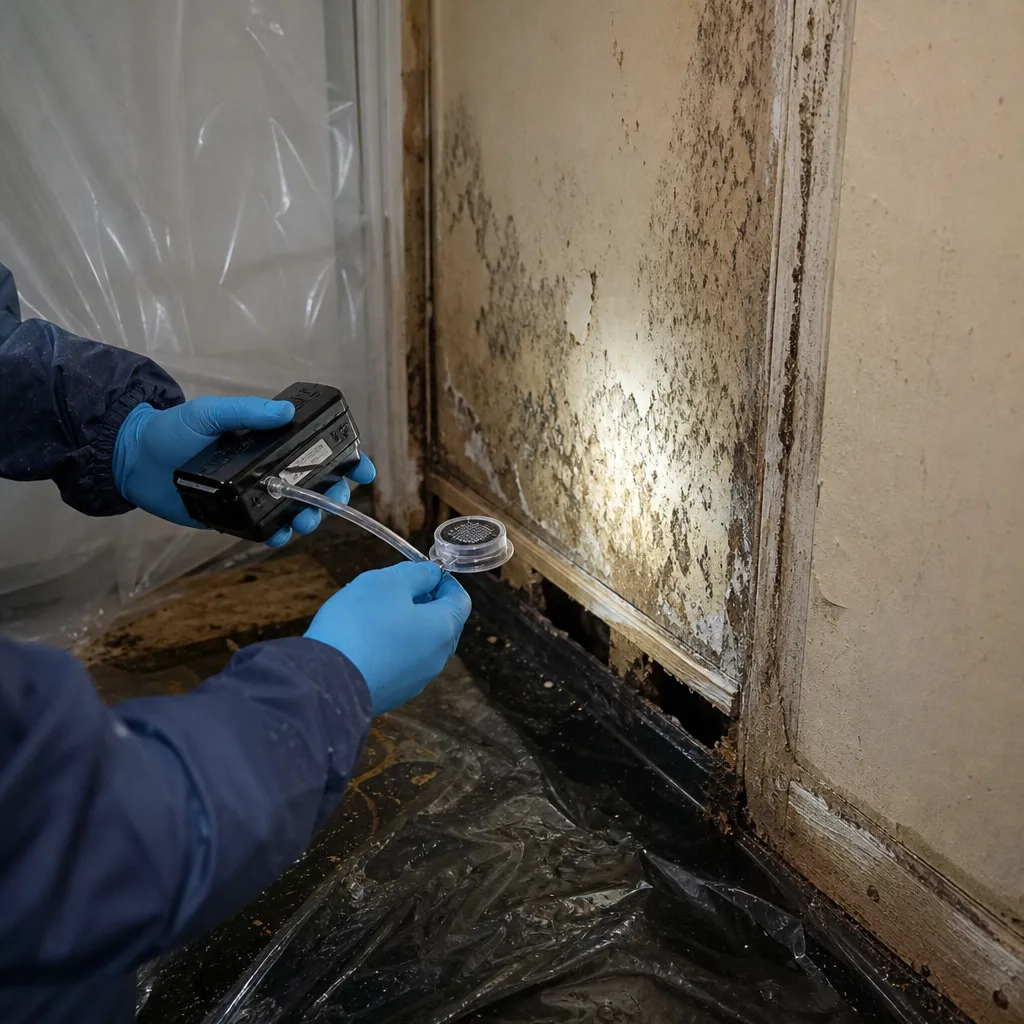
We begin with moisture mapping and air sampling to establish the true perimeter of colonization, not just visible growth. In Upper East Side co-ops, we inspect adjacent units and common-wall cavities when riser leaks are suspected - the leak origin is rarely the only affected space. Third-party lab analysis identifies species and concentration, informing containment level and clearance criteria.
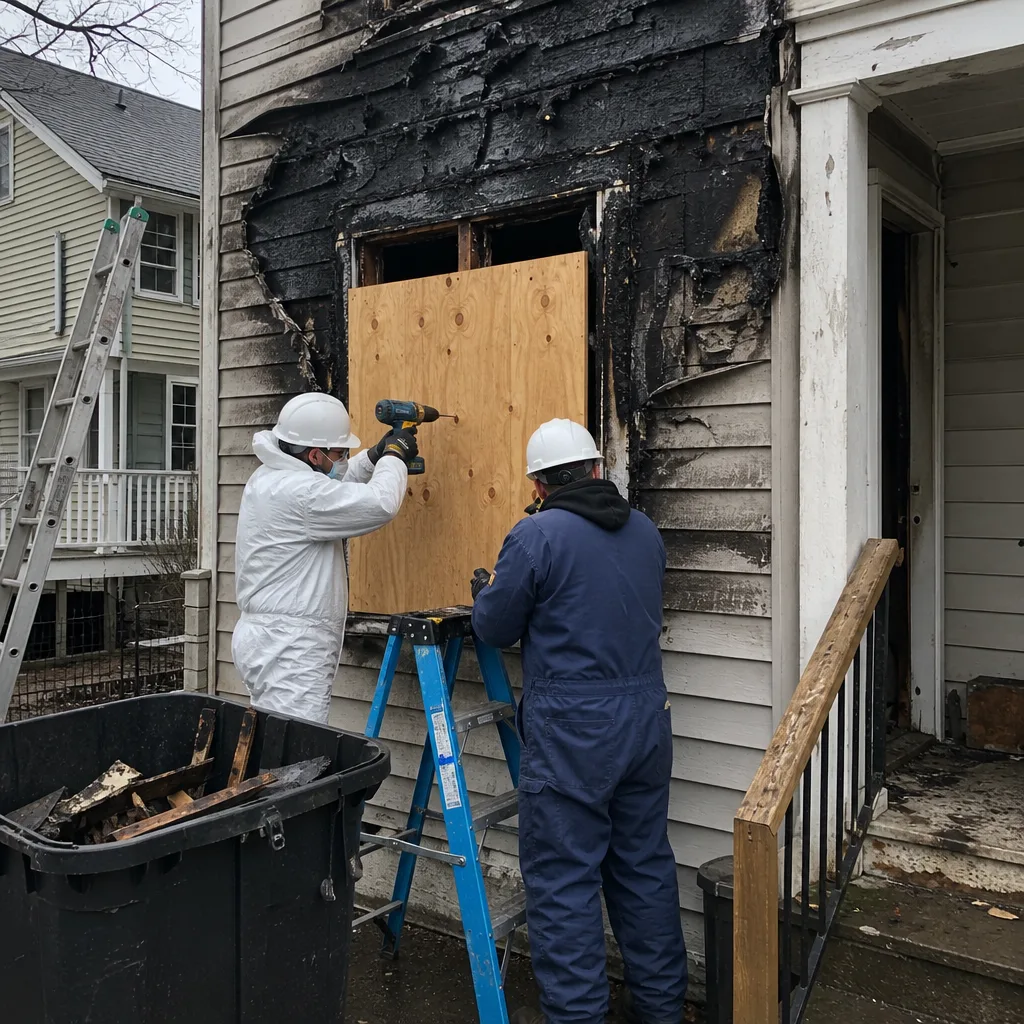
Mold Removal
Selective removal of non-salvageable materials with HEPA-contained disturbance. In pre-war Upper East Side buildings, we prioritize preserving original horsehair plaster, ornamental plaster moldings, and parquet flooring where moisture readings and structural integrity permit. Demolition is the last option, not the default.
Black Mold Remediation
Stachybotrys and other toxigenic species require enhanced containment, full-face respirator protocols, and extended HEPA scrubbing. We follow IICRC S520 and New York City Department of Health guidelines for abatement of fungal contamination, with clearance testing by independent laboratories before reoccupancy.
Air Quality Restoration
Post-remediation, we restore breathable air quality through continuous HEPA filtration, duct and HVAC component cleaning where systems were exposed, and final air sampling confirming spore counts at or below outdoor baseline. Critical in Upper East Side buildings where shareholders share ventilation infrastructure.
Crawl Space Treatment
While rare in high-rise co-ops, brownstone and rowhouse basements in Carnegie Hill and side-street pockets require sub-grade moisture control. We install vapor barriers, dehumidification, and drainage improvements to prevent recurring mold in chronically damp foundation spaces.
Moisture & Humidity Control
We identify and correct the source conditions that enabled mold growth: steam system leaks, facade infiltration, inadequate ventilation, or failed waterproofing. In Upper East Side pre-war buildings, this often means coordinating with the building’s engineer on riser repairs or masonry restoration concurrent with our interior work.
What happens when you call
- 1
A real person answersNo phone trees - you reach a local pro.
- 2
You get an upfront price rangeHonest numbers before anyone is dispatched.
- 3
A background-checked tech heads outLicensed & insured, dispatched right away.
- 4
You approve before work beginsNothing starts until you say go.
Mold Remediation Costs in Upper East Side, NY
A contained single-room mold remediation in an Upper East Side apartment typically runs $2,800-$4,500. Multi-room jobs with plaster and parquet preservation climb to $5,500-$9,000. Co-op-wide losses involving 8-12 stacked units after riser failure, with full documentation for multiple insurance claims and board-managed common-area repairs, range from $12,000 to $35,000+ depending on floors affected and finish complexity.
What moves the price: square footage of contained area, material type (horsehair plaster requires slower, more careful drying than drywall), accessibility for equipment staging, and whether clearance testing and third-party air sampling are required by the building or insurance. Most Upper East Side mold losses stemming from sudden water events are covered under HO-6 or master policy provisions, subject to deductible. Out-of-pocket costs typically apply when mold results from long-term maintenance neglect or when claims exceed policy limits.
We provide a written price before any work begins, every time - Haven Standard, Clause 1. No exceptions. Call (862) 281-7710 for a free visual inspection and firm scope.
We Also Serve Cities Near Upper East Side
Our New York City office dispatches crews throughout the metro area. We regularly respond to mold emergencies in Upper East Side and neighboring communities including Astoria, Long Island City, Jackson Heights, and East Harlem - each with distinct building stock and loss patterns that our teams know from repeated field experience.
Serving Upper East Side, NY - Our Local Coverage Area
We’re based in the Upper East Side area and know this community well. Use the map below to see our service coverage - if you’re nearby, we can almost certainly help.
Upper East Side Mold Remediation Questions, Answered
A pipe burst in my Upper East Side co-op and my neighbor below has mold - who is responsible for remediation?
Responsibility depends on what burst and where. The co-op corporation owns in-wall risers and common plumbing; shareholders own their unit interiors under the proprietary lease. If a riser failed inside the wall, the co-op’s insurance typically covers common-area remediation and often the initial restoration of affected shareholder units, though lease language varies building by building. If the burst was in a shareholder-owned fixture or appliance line, that shareholder’s HO-6 policy responds. We review the proprietary lease with the managing agent before scoping to confirm who authorizes and pays - then document everything for both parties’ carriers. Call (862) 281-7710 and we’ll walk through your building’s specific situation.
Can you dry original horsehair plaster and herringbone parquet after a steam radiator leak, or does it all have to be removed?
Original materials can often be preserved if drying begins within 48-72 hours of saturation and moisture readings confirm salvageability. We use Injectidry mat systems to extract moisture from parquet without board removal, and wall-cavity injection with controlled dehumidification to dry horsehair plaster lathe without disturbing ornamental finishes. Removal becomes necessary when plaster has delaminated from lathe, wood has crowned or buckled beyond sanding recovery, or mold colonization is too extensive for surface remediation. We test and document before recommending demolition - Haven Standard, Clause 1 means you see the written scope with all options priced before anyone starts work.
Why does mold remediation take longer in pre-war UES buildings than in newer construction?
Three factors: material density, building governance, and hidden pathways. Horsehair plaster and solid-wood subflooring hold more moisture and release it more slowly than modern drywall and plywood, extending drying time by 30-50%. Co-op boards require pre-approval for access, insurance verification, and often witness inspections at key milestones. And the stacked-unit construction means we must verify mold hasn’t migrated through shared walls or floor cavities before declaring the job complete. A typical Upper East Side co-op remediation runs 7-14 days versus 3-5 days in newer buildings. Call (862) 281-7710 for a timeline specific to your loss.
What moisture readings indicate mold risk behind UES co-op walls after a leak?
We use non-penetrating meters and probe attachments to measure moisture content in plaster, wood, and air cavities. Wood moisture above 16% and plaster above 1% moisture content by weight indicate conditions favorable to mold growth. Relative humidity inside wall cavities above 60% sustained for 48+ hours is the colonization threshold we watch most closely. Thermal imaging reveals evaporative cooling at wet areas before surface staining appears. We log all readings daily and share them with you and your adjuster. If you’re concerned about a recent leak, call (862) 281-7710 for a free moisture assessment.
Do you handle air quality restoration and antimicrobial treatment in occupied UES apartments?
Yes, with containment protocols designed for occupied spaces. We seal the work area with negative air pressure, run HEPA scrubbers continuously, and schedule intensive work when residents are out when possible. Antimicrobial agents are applied with low-pressure misting to avoid overspray, and we select products with minimal residual odor. Post-remediation air sampling confirms safe reoccupation. In buildings with vulnerable residents - children, elderly, immunocompromised - we coordinate with managing agents on temporary relocation during the most disruptive phases. Call (862) 281-7710 to discuss your household’s specific needs.
How fast can you actually get to an Upper East Side building?
Our 45-minute response commitment covers all Upper East Side addresses from our New York City dispatch office. Live answer 24/7 means your call reaches a person who can authorize crew dispatch immediately, not a callback queue. Actual arrival depends on traffic and building access - co-ops with 24-hour doormen are faster than buildings requiring superintendent notification after hours. We maintain pre-approved status with major Upper East Side managing agents to reduce access delays. For active water intrusion, call (862) 281-7710 now; for mold concerns without active water, we schedule inspection same-day or next-day.
Will insurance cover mold remediation, or is it always out of pocket?
Sudden water events - burst pipes, radiator failures, facade leaks - are typically covered under standard HO-6 and master policy forms, with mold remediation included as part of the water damage claim. Long-term leaks, maintenance neglect, or flood events may be excluded or limited. We document causation and timeline to support coverage arguments, and we provide the written scope and drying logs that adjusters need to approve payment. Our direct billing means you’re not paying out of pocket and waiting for reimbursement. Call (862) 281-7710 and we’ll review your policy situation at no charge.
What should I do in the first 30 minutes after discovering mold in my Upper East Side apartment?
Stop the water source if you can identify it safely. Do not disturb visible mold - agitation releases spores. Turn off HVAC if the unit serves the affected area. Document with photos from multiple angles. Call (862) 281-7710 for immediate guidance and crew dispatch. Do not attempt DIY removal on extensive colonization; improper disturbance can spread contamination and void insurance coverage. Our live dispatcher will walk you through immediate containment steps while crews are en route.
We were called to a Carnegie Hill co-op off Madison Avenue after a steam radiator supply connection failed on the 7th floor, sending Category 2 water down through original herringbone parquet and horsehair plaster ceilings in three units below. Our techs ran moisture mapping across all three floors, set containment with negative air and dehumidification, and used Injectidry mats to dry the parquet without removal while HEPA-scrubbing the mold that had begun colonizing wet plaster lathe within 48 hours. Because the board required us on the pre-approved vendor list, we documented pre-loss condition and drying logs unit-by-unit to support the shareholder’s claim and the co-op’s riser repair scope.
Written by Alicia Brennan, Owner at Back to Dry Restoration, serving Upper East Side since 2011.