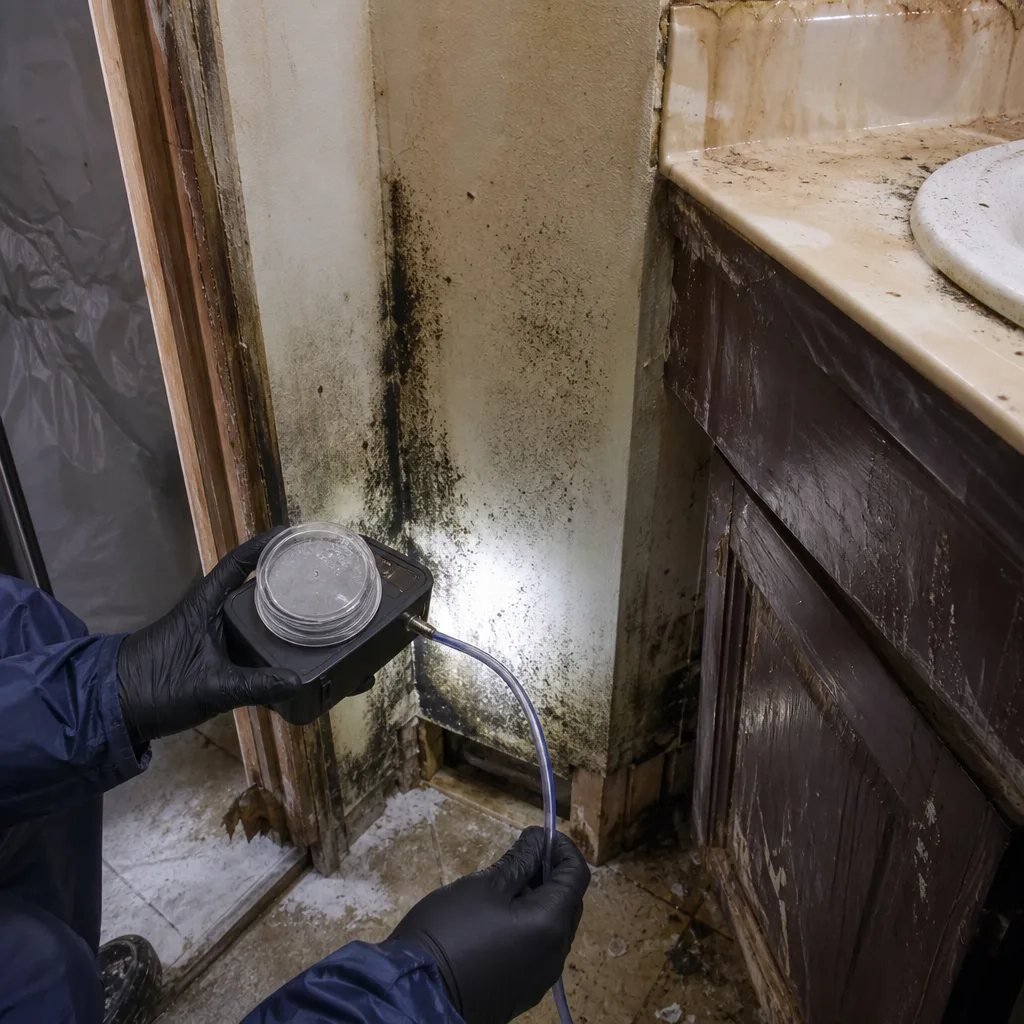
Free visual inspection and a written scope of work before any mitigation begins - photos, moisture readings, and drying logs go in your claim file
The scope we write is the scope we bill. Anything new gets shown to you, in writing, before we touch it.
Storm response
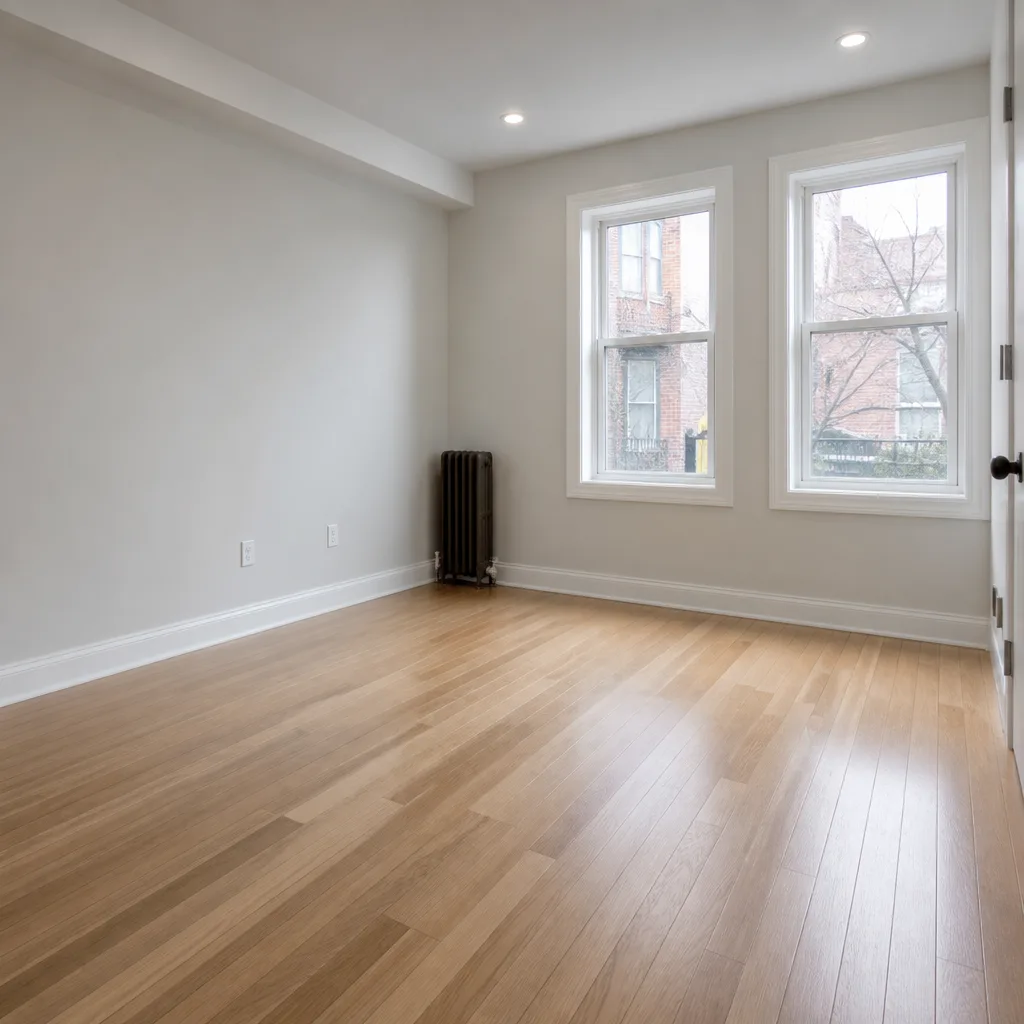
 Before
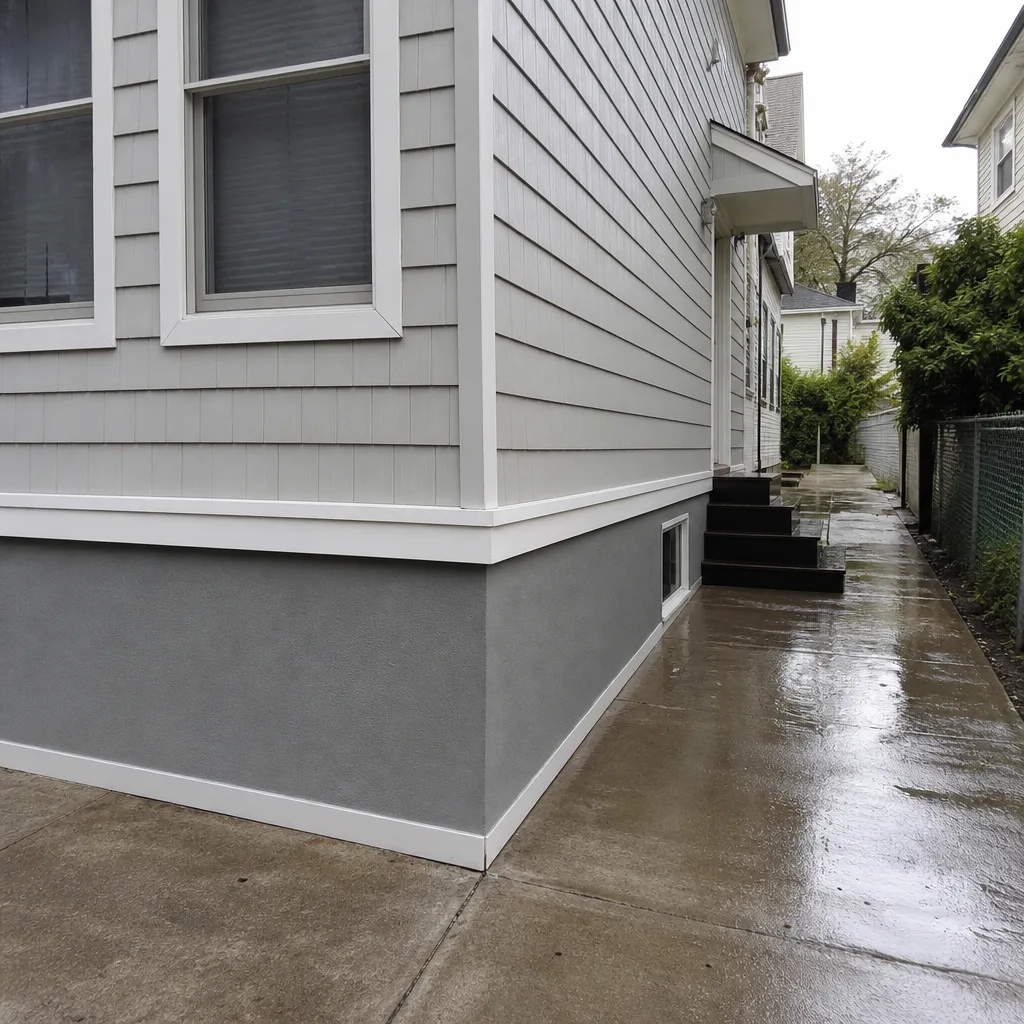 After
After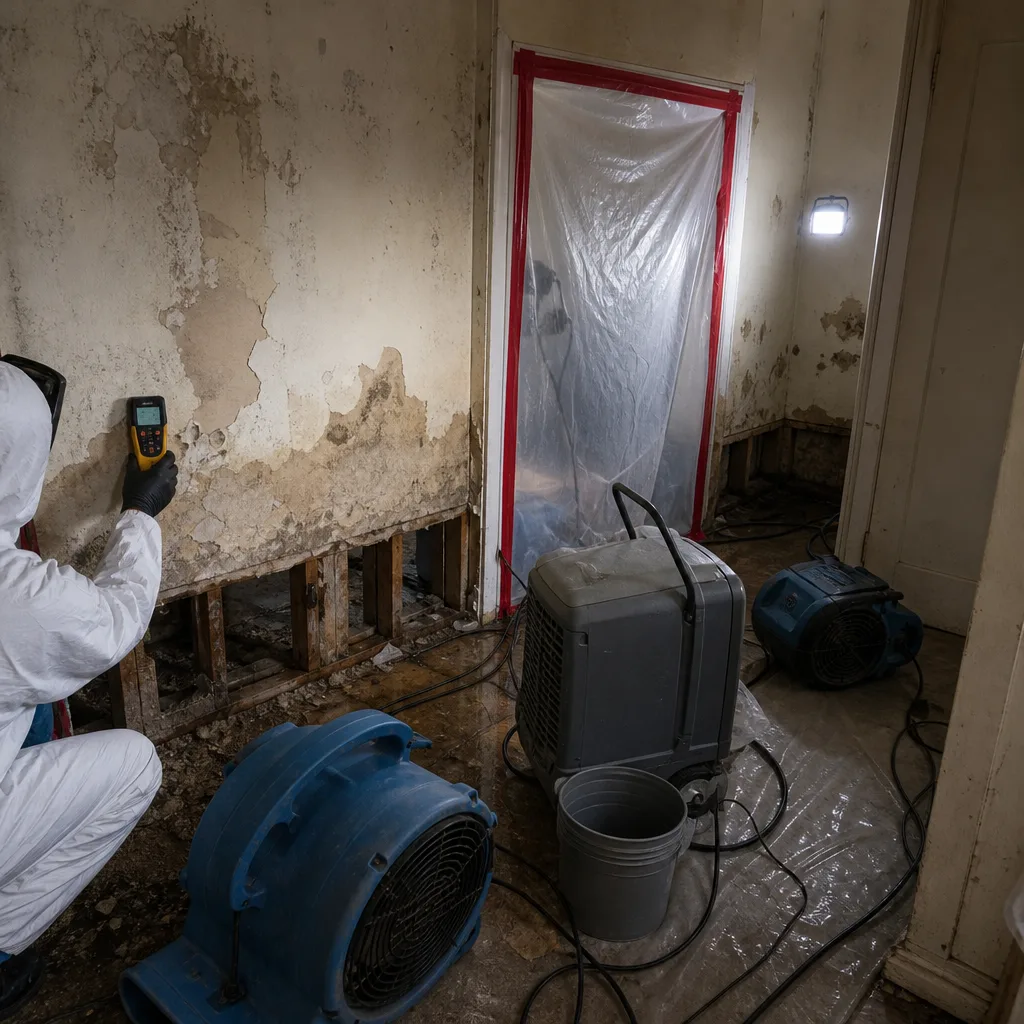 Before
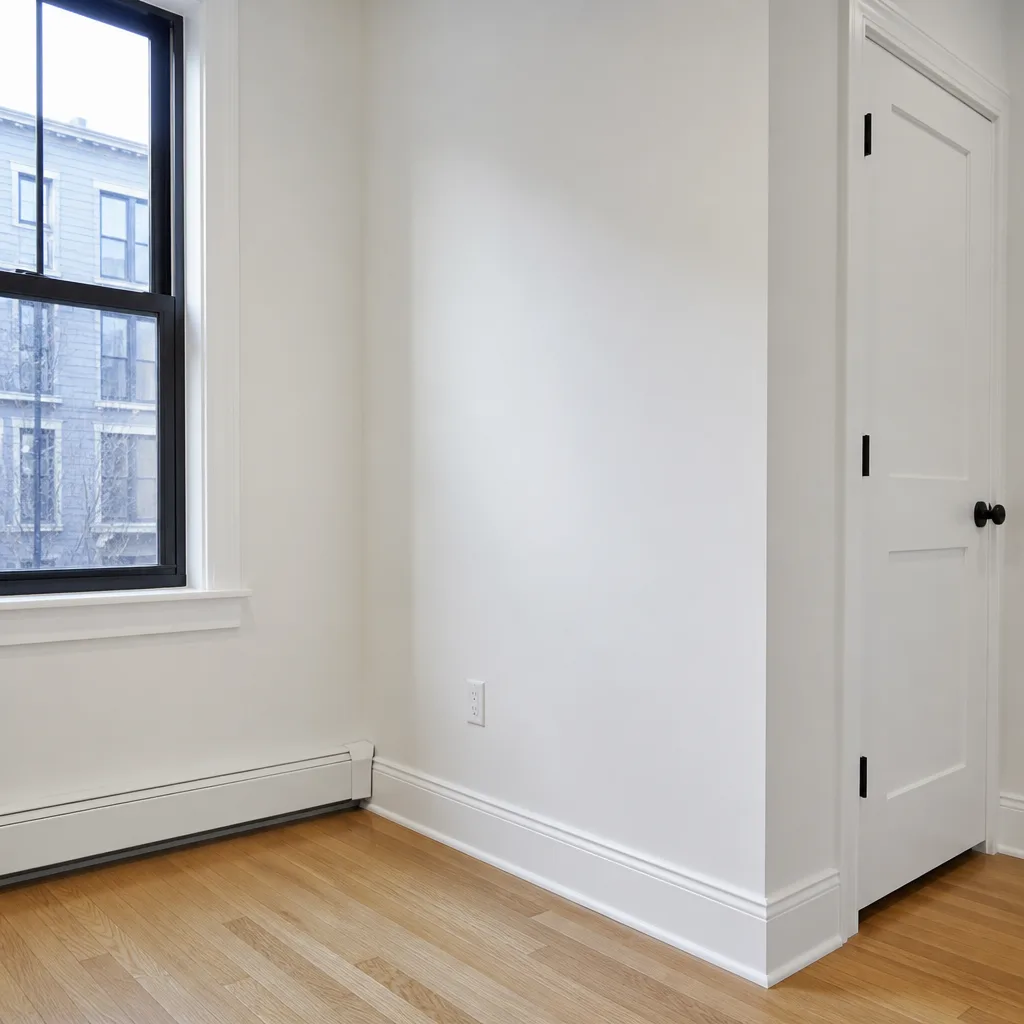 After
After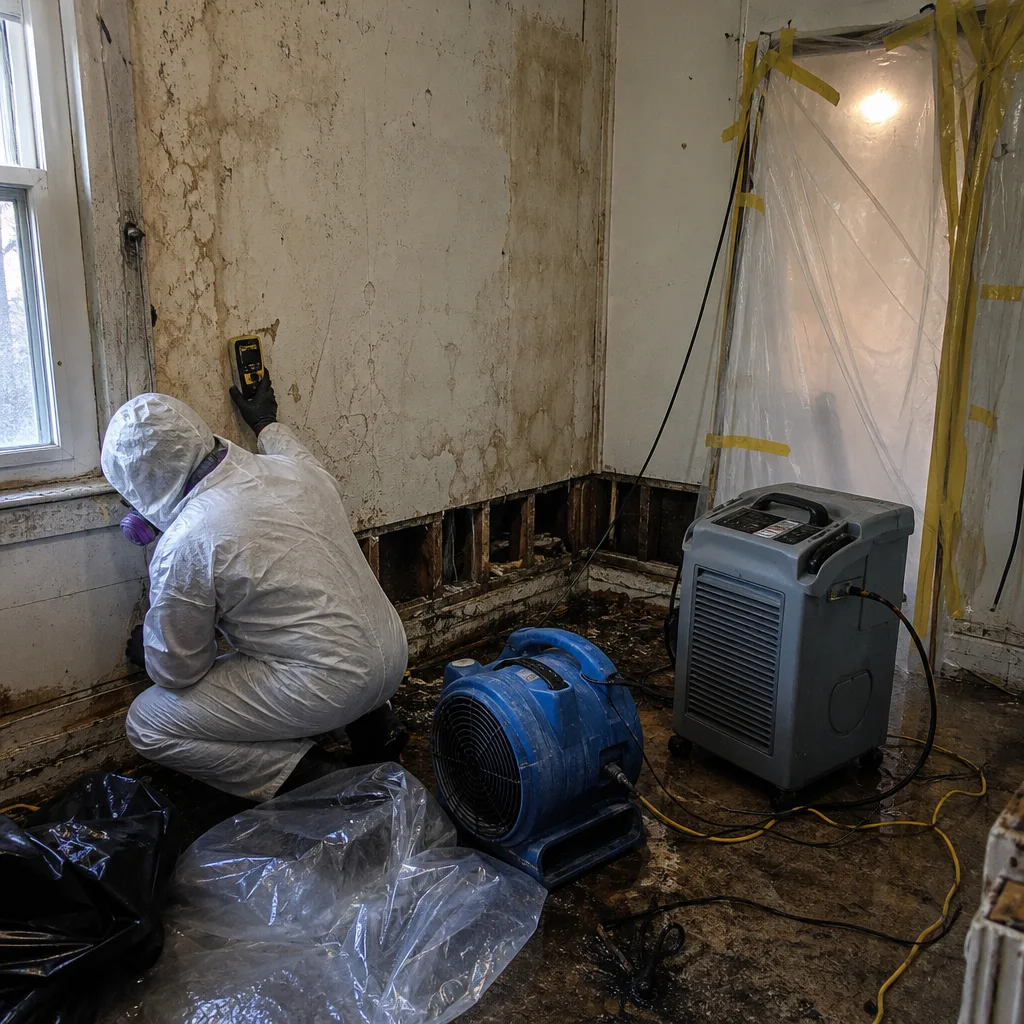 Before
 After
After24/7 Emergency Mold Remediation in Morningside Heights
Call (862) 281-7710 now and a live person answers, 24 hours a day, 7 days a week. No voicemail, no callback queue. Our crews dispatch throughout Morningside Heights within 45 minutes of your call, and we offer a free visual inspection to assess visible mold and moisture conditions before any work is discussed.
The first hour matters because mold establishes within 24 to 48 hours of water intrusion. In Morningside Heights’s pre-war masonry towers, original plaster-and-lath ceilings absorb water slowly and release it even slower, meaning a leak from Tuesday may not show visible mold until Friday, but the colonization started Wednesday morning. By the time you see staining, you’re already behind. We run thermal imaging and moisture mapping on every call to find what the surface hides.
Understanding Mold Remediation Severity in Morningside Heights Properties
Mold remediation severity is classified by affected square footage, material porosity, and whether the growth is confined to a single unit or has migrated through shared building cavities. In Morningside Heights, the defining complicating factor is the neighborhood’s building stock: 6-to-20-story pre-war masonry towers built between 1900 and 1940 with original plaster-and-lath interiors, cast-iron drain stacks, and aging galvanized or early copper supply lines.
Category 1 mold contamination (limited growth on non-porous surfaces in a single unit) is straightforward: HEPA-contained removal, antimicrobial treatment, and drying. Category 2 introduces porous materials like water-damaged plaster or drywall, requiring controlled demolition and air-scrubber negative pressure. Category 3 - what we see most often in Morningside Heights - involves multi-unit water cascades where a single upper-floor leak has wicked through 8 to 15 stacked units, carrying spores through shared stack chases and plaster-and-lath wall cavities. This demands full-building moisture mapping, multiple containment barriers, and coordination with building supers, management companies, and multiple insurance carriers. Asbestos-containing materials in original floor tile, pipe insulation, and joint compound add abatement protocols to nearly every demo scope.
Why Morningside Heights Property Owners Choose DryMark Restoration Astoria
- 45-minute response commitment to Morningside Heights from our New York City office - crews are staged for Manhattan dispatch, not crossing bridges from outer boroughs.
- 24/7 live answer: a real person, never an automated system, on every call at (862) 281-7710.
- IICRC-certified crews holding WRT (Water Damage Restoration Technician), AMRT (Applied Microbial Remediation Technician), and FSRT (Fire & Smoke Restoration Technician) credentials - the specific codes relevant to your loss type.
- Free visual inspection before any scope or pricing discussion; we document what we see and explain what it means.
- Direct insurance billing with photo-documented estimates, daily drying logs, and adjuster coordination - the documentation that turns restoration invoices into payable claims.
- One team from extraction to reconstruction: no handoffs between mitigation and rebuild contractors, no gaps in documentation.
BeforeAfterOur Mold Remediation Process
1. Inspection & Assessment
We start with thermal imaging and moisture mapping to locate hidden saturation in plaster-and-lath cavities, then collect air and surface samples for lab analysis. In Morningside Heights, we also identify whether your building falls under Columbia Facilities Management’s institutional approval chain, co-op board jurisdiction, or private landlord management - each requires different documentation and sign-off workflows.
2. Containment & Air Filtration
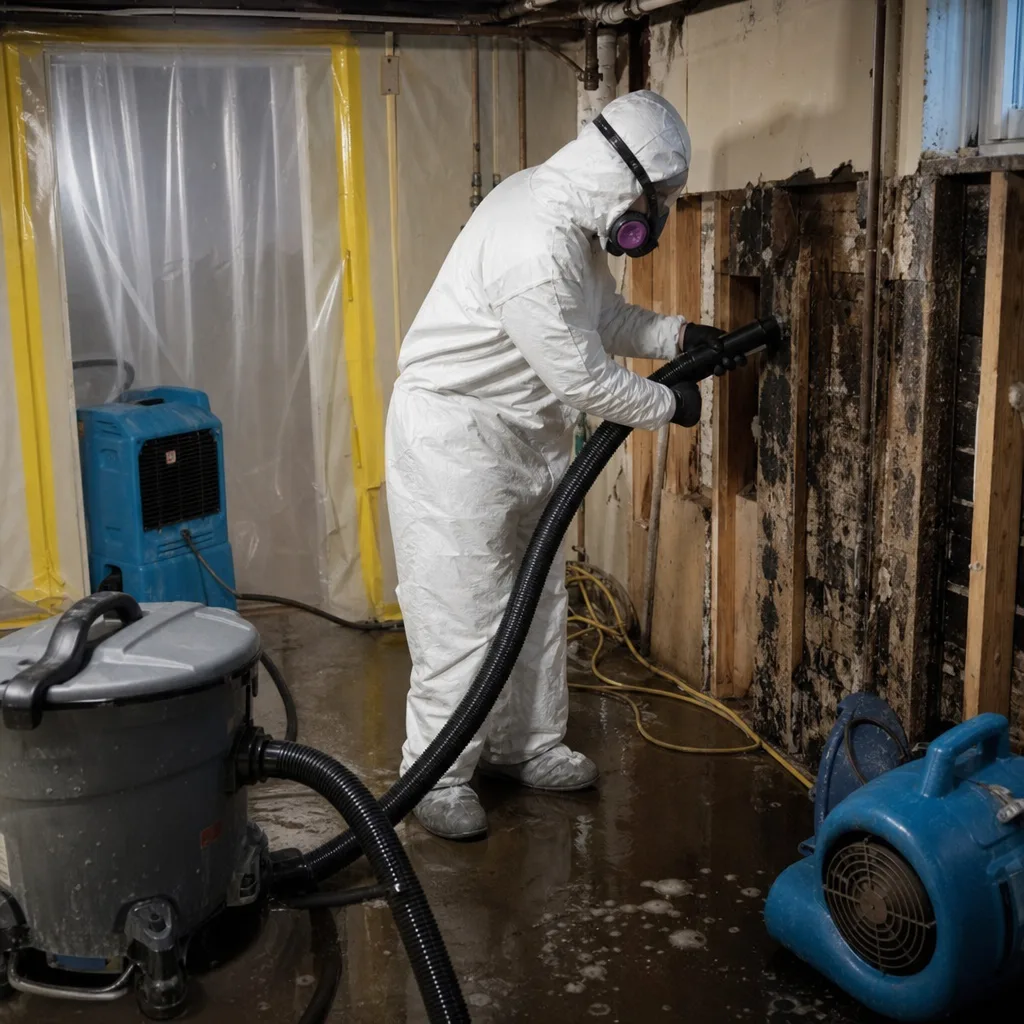
We build polyethylene containment barriers with negative-pressure HEPA air scrubbers to prevent spore migration through shared wall cavities and cast-iron stack chases. In multi-unit stacks, this step is non-negotiable; skipping or under-building containment is the most common failure mode we correct from other contractors.
3. Drying & Dehumidification
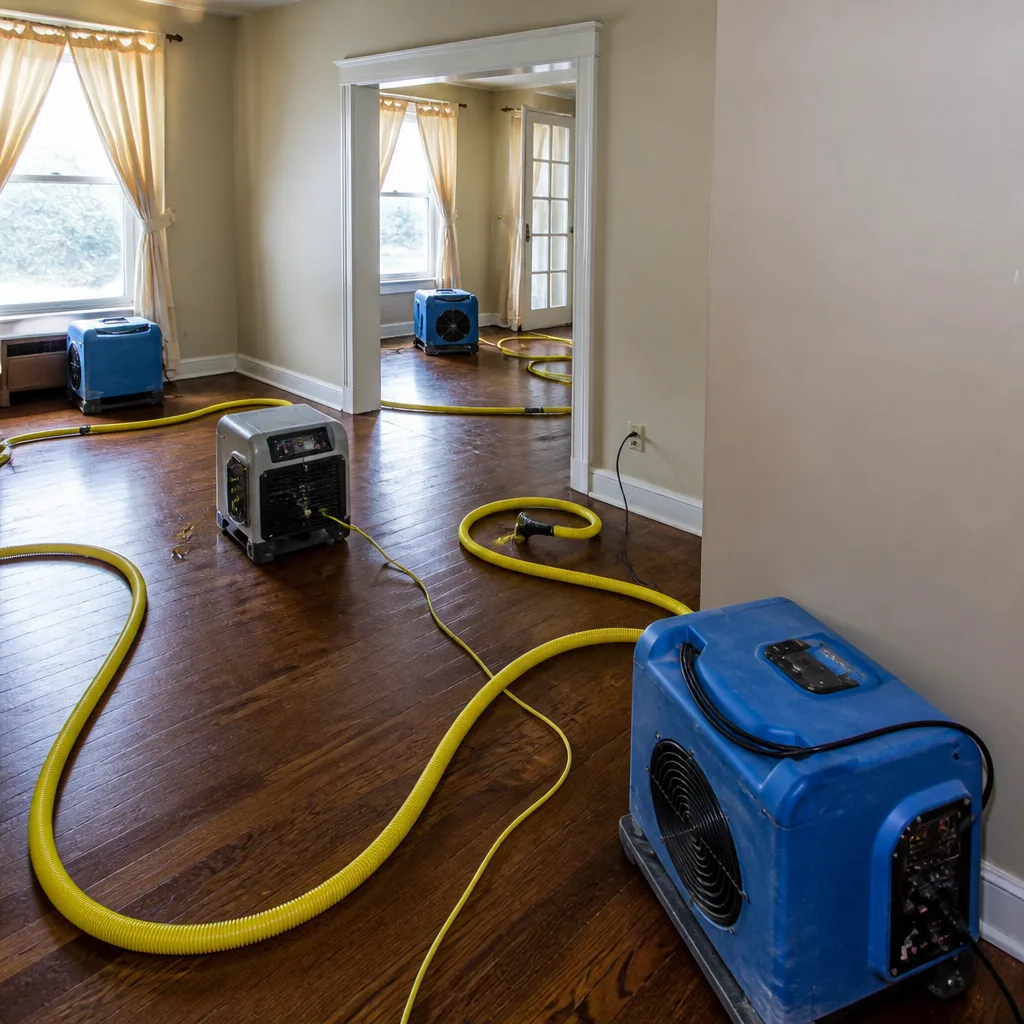
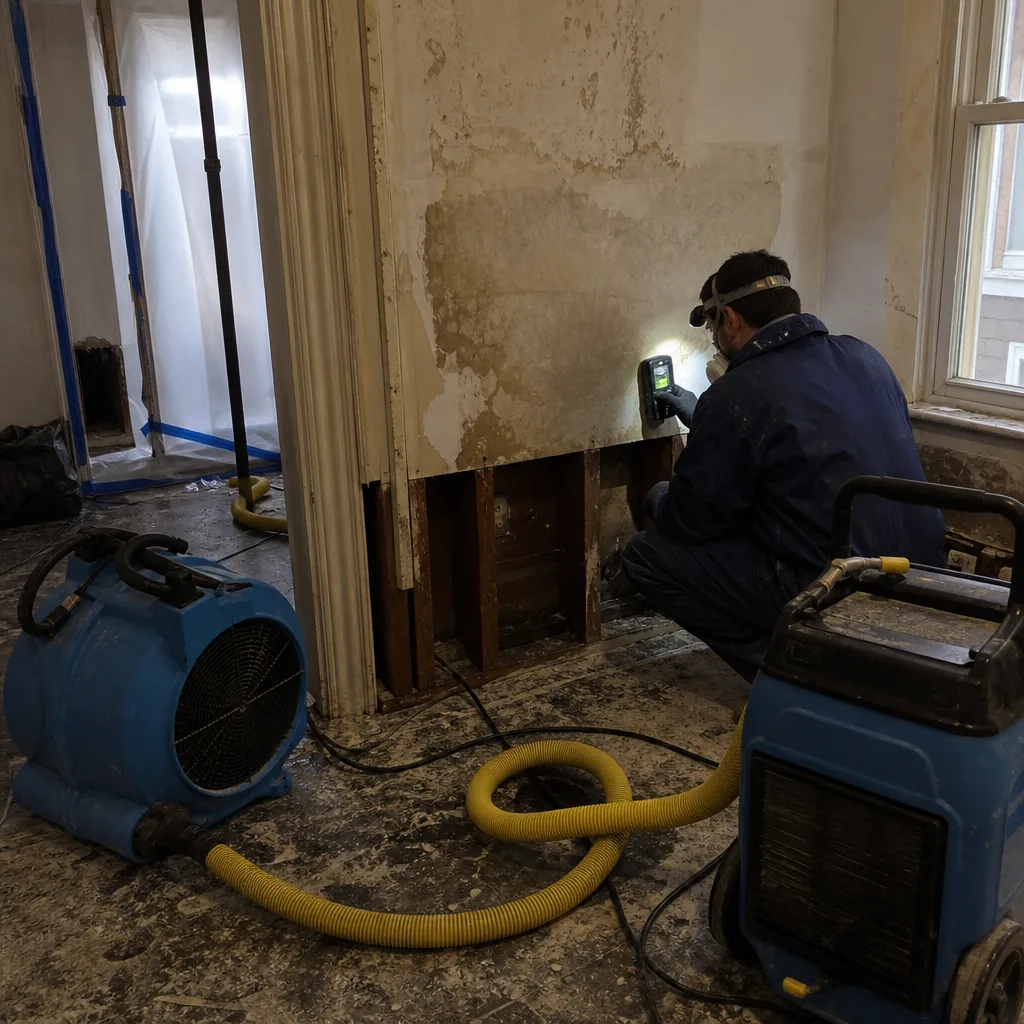
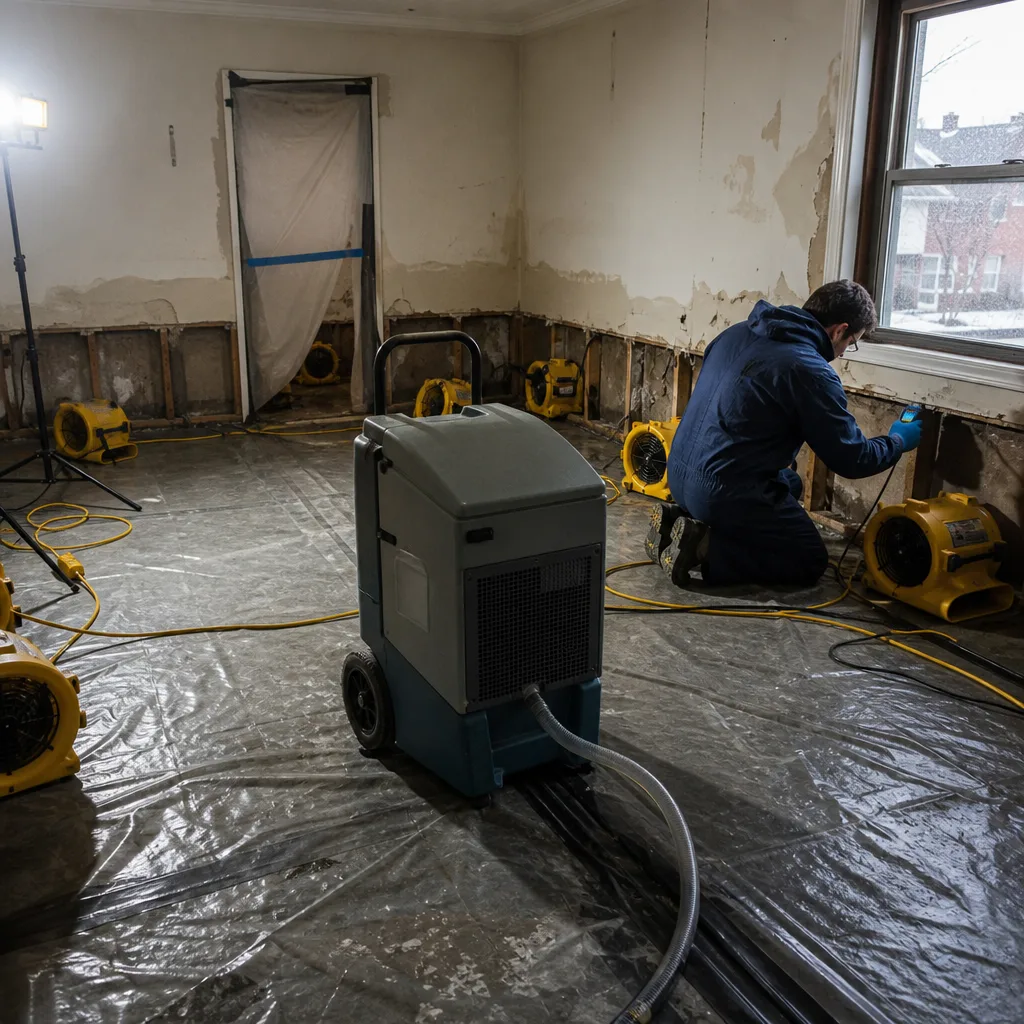
We deploy Dri-Eaz and Phoenix LGR dehumidifiers, XPOWER air movers, and Injectidry specialty drying systems to reduce vapor pressure differential - the force that drives moisture from wet materials into dry air. Psychrometric data (temperature, relative humidity, specific humidity) is logged daily to document progress for your insurer.
4. Cleaning & Antimicrobial Treatment
HEPA vacuuming and EPA-registered antimicrobial application on all affected surfaces. Where asbestos-containing materials are present in original floor tile or pipe insulation, abatement protocols are initiated before any demolition begins.
5. Air Quality Restoration & Clearance Testing
Post-remediation air sampling compares indoor spore counts to outdoor baseline levels. We use third-party lab analysis for clearance documentation, providing the independent verification that insurance adjusters and Columbia Facilities Management require before sign-off.
6. Repairs & Moisture Control
Controlled demolition and reconstruction of water-damaged plaster, drywall, and flooring, followed by moisture and humidity control system installation to prevent recurrence. Every job is covered by our 365-Day Done Right Promise under The Haven Standard.
Need Emergency Mold Remediation in Morningside Heights Now?
Crews minutes away, answering live 24 hours a day. The sooner we start, the less it costs.
Working With Your Insurance Company
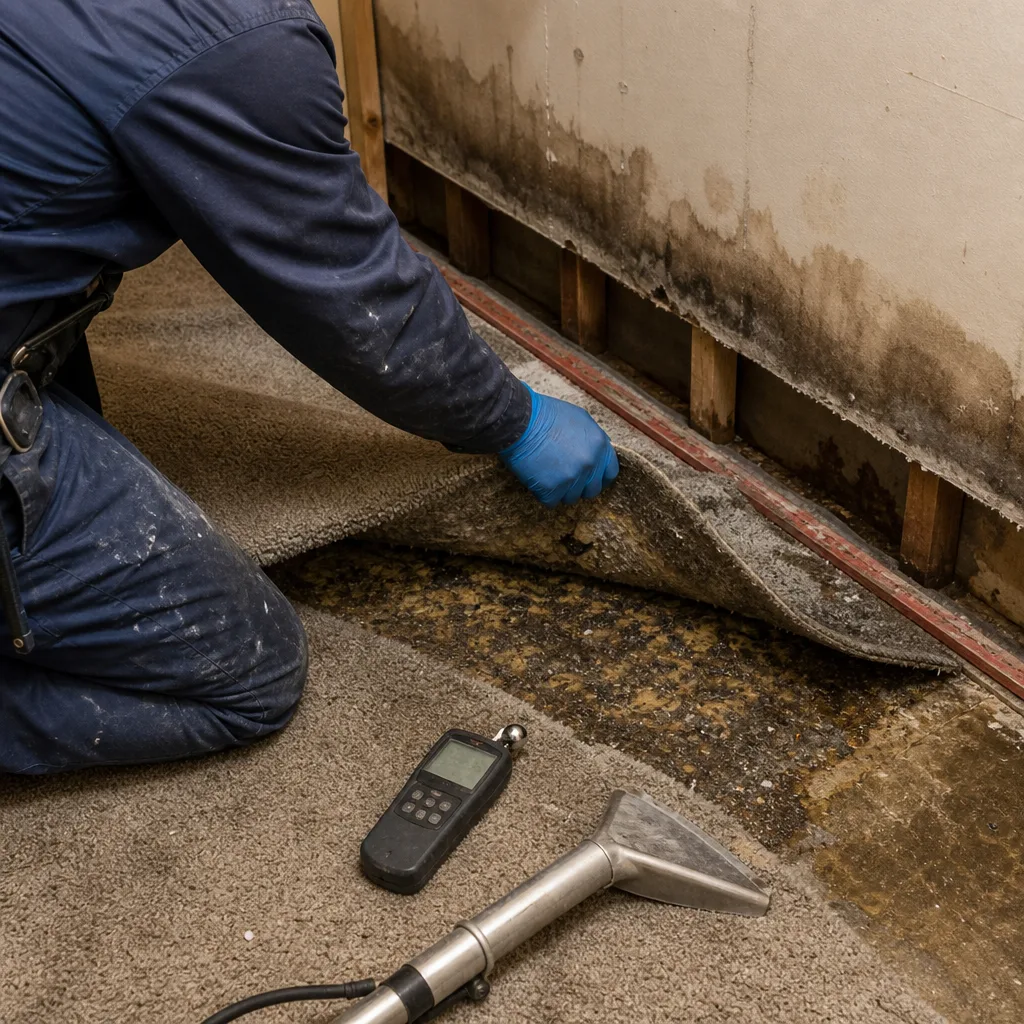
We document from the first hour because we know what adjusters need to see. Our estimates follow industry-standard Xactimate pricing, and we communicate directly with your carrier’s adjuster - not through you as a relay. This matters especially in Morningside Heights, where multi-unit losses involve multiple tenants’ policies, building master policies, and institutional purchase-order systems.
Our Mold Remediation team provides photo records on every visit, daily moisture logs with psychrometric readings, and written scopes before any work begins. Haven Standard, Clause 1: a written price before work starts, every time, with no scope-creep additions once the crew is inside.
What We Provide Your Insurer
- Thorough documentation of the loss
- Photos of all damage, room by room
- Moisture readings and drying logs
- A detailed, line-item scope of work
- Direct coordination with your carrier
Built for Morningside Heights’s Loss Calendar
January deep freezes burst aging galvanized supply lines in pre-war risers. February and March bring thaw cycles that stress flat-roof membrane seams. April through June, intense spring convective storms overwhelm internal roof drains - a particular vulnerability in Morningside Heights’s minimally sloped roofs - and pooled water finds any breach, wicking down through multiple floors of plaster before supers notice.
July through September, summer humidity peaks in non-air-conditioned common areas and basement mechanical rooms, accelerating mold growth in previously saturated cavities. October nor’easters drive the worst roof-drain backups; we’ve responded to losses on West 116th, West 120th, and along Broadway where a single blocked drain soaked 8 to 15 units. November and December freeze-thaw cycles crack parapet walls and roof flashings, setting up January’s pipe failures. The aging combined sewer laterals under these buildings also cause basement backups during heavy-rain events, a recurring source of Category 3 water and subsequent mold colonization.
Mold Remediation Across Morningside Heights’s Neighborhoods
West 116th Street and the Columbia University corridor present the institutional approval challenge: Columbia Facilities Management controls vendor credentialing, purchase orders, and scope sign-off for a significant portion of residential stock. We maintain active vendor status and understand their documentation requirements, which differ entirely from co-op boards on West 120th or private landlords near Morningside Park.
Buildings along Broadway and Amsterdam Avenue see the highest frequency of multi-unit cascades - the 1920s masonry towers here have original cast-iron drain stacks and plaster-and-lath ceilings that conceal moisture for weeks. Near Morningside Park, the elevated plateau means less street-level flooding than low-lying Manhattan neighborhoods, but the same flat-roof vulnerability and aging infrastructure drive losses.
The Cathedral Parkway corridor (West 110th Street) mixes pre-war co-ops with newer construction, but even the “newer” 1960s buildings here share the neighborhood’s combined sewer infrastructure. We adjust our moisture mapping scope based on building age, drainage system type, and whether the loss originated from a roof drain, supply line, or sewer backup.
On a call near West 116th and Broadway, our crew responded to a nor’easter-driven roof-drain backup on a 1920s masonry tower where water had wicked down through original plaster-and-lath ceilings and saturated the wall cavities of three floors before the super noticed. We ran moisture mapping and structural drying with Dri-Eaz and Phoenix dehumidifiers plus air movers, built containment around the affected units, applied antimicrobial treatment, and documented drying logs for each tenant’s carrier and Columbia Facilities Management’s vendor review. By day five, moisture readings had returned to pre-loss condition baselines across all three floors, and we cleared the pack-out for the displaced units.
Specialized Mold Remediation Services We Offer in Morningside Heights
Mold Inspection & Testing
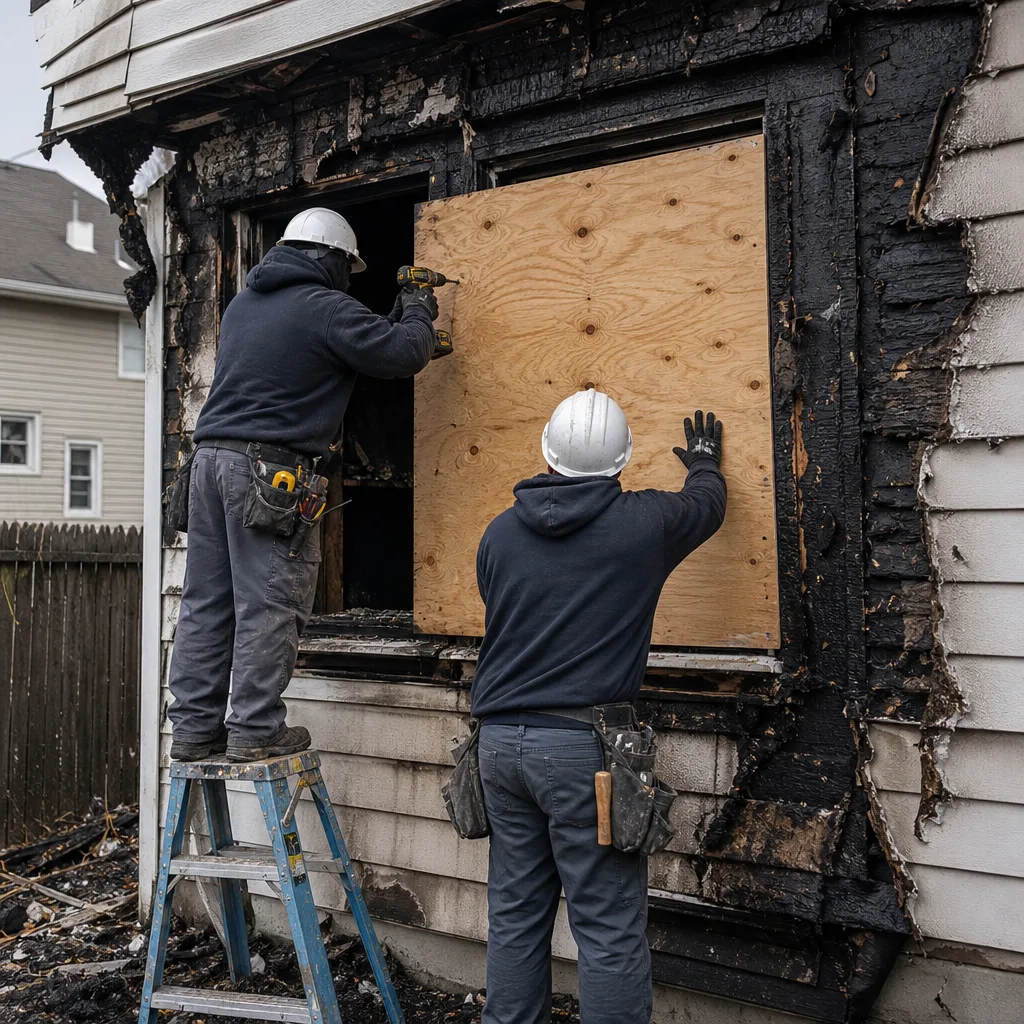
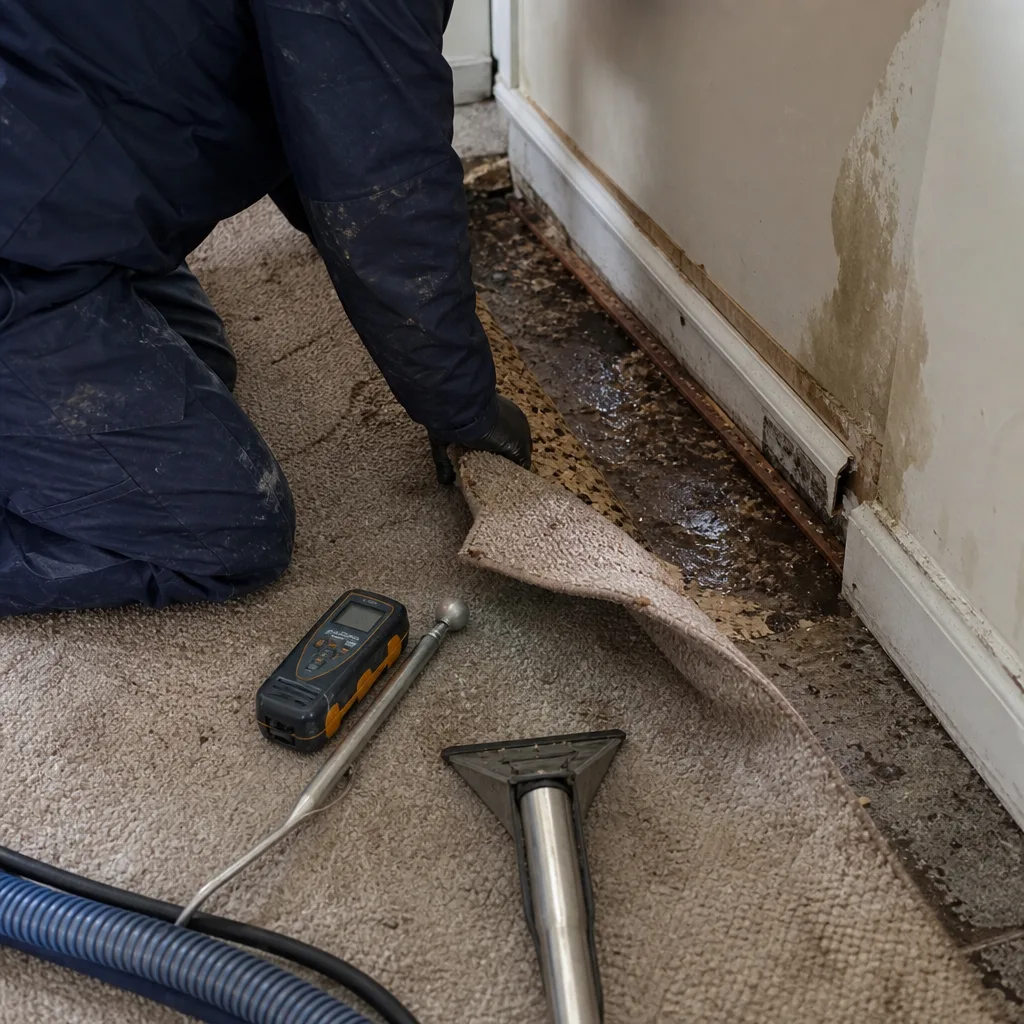
We use thermal imaging, moisture meters, and air/surface sampling to locate hidden colonization in plaster-and-lath cavities before visible damage appears. In Morningside Heights’s pre-war buildings, this early detection prevents the 8-to-15-unit cascades that occur when small leaks are left unaddressed. Typical inspection and testing in Morningside Heights runs $350-$650 for a single unit, $800-$1,400 for multi-unit stack assessments.
Mold Removal
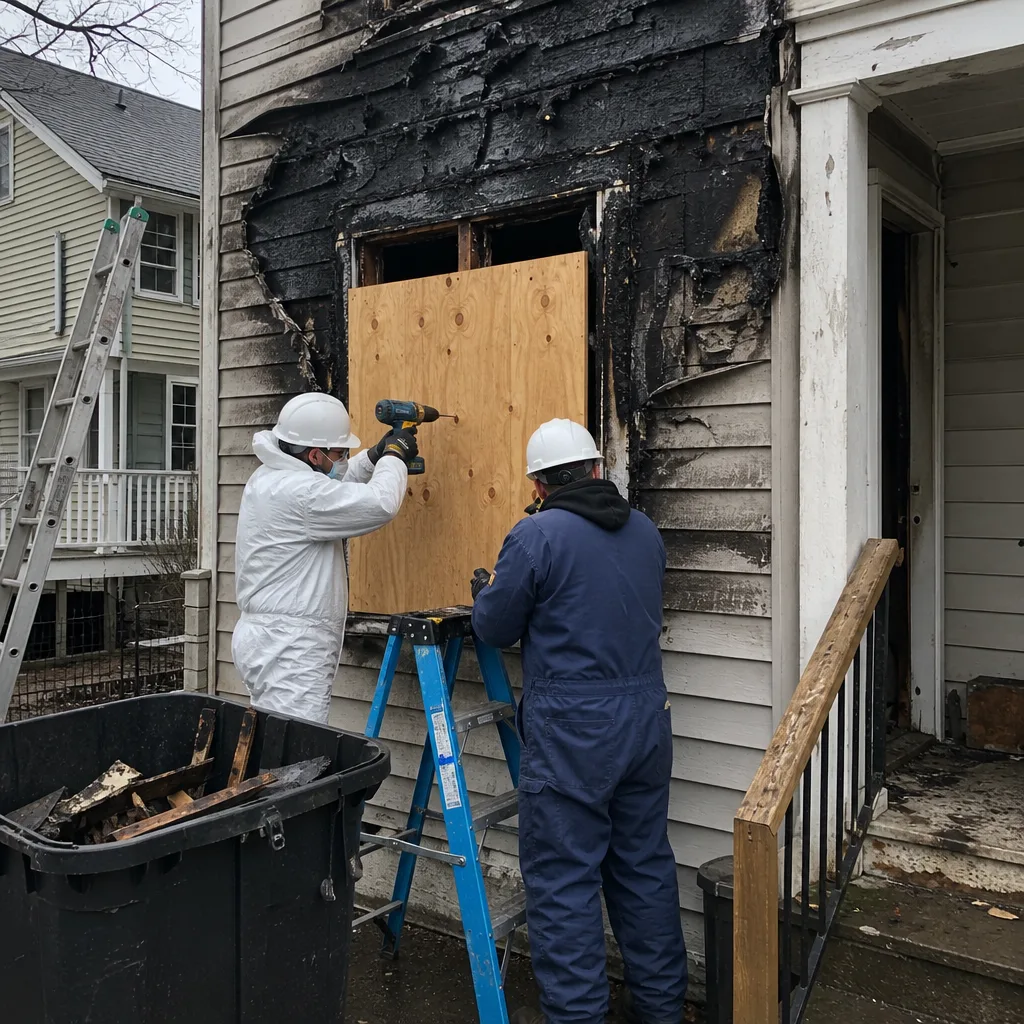
HEPA-contained removal of visible growth on porous and non-porous surfaces, with controlled demolition where plaster or drywall is non-salvageable. Asbestos abatement protocols are built into every scope where original building materials require testing. Single-room removal in Morningside Heights typically costs $1,200-$2,800; multi-unit stack remediation ranges $4,500-$12,000 depending on affected square footage and containment complexity.
Black Mold Remediation
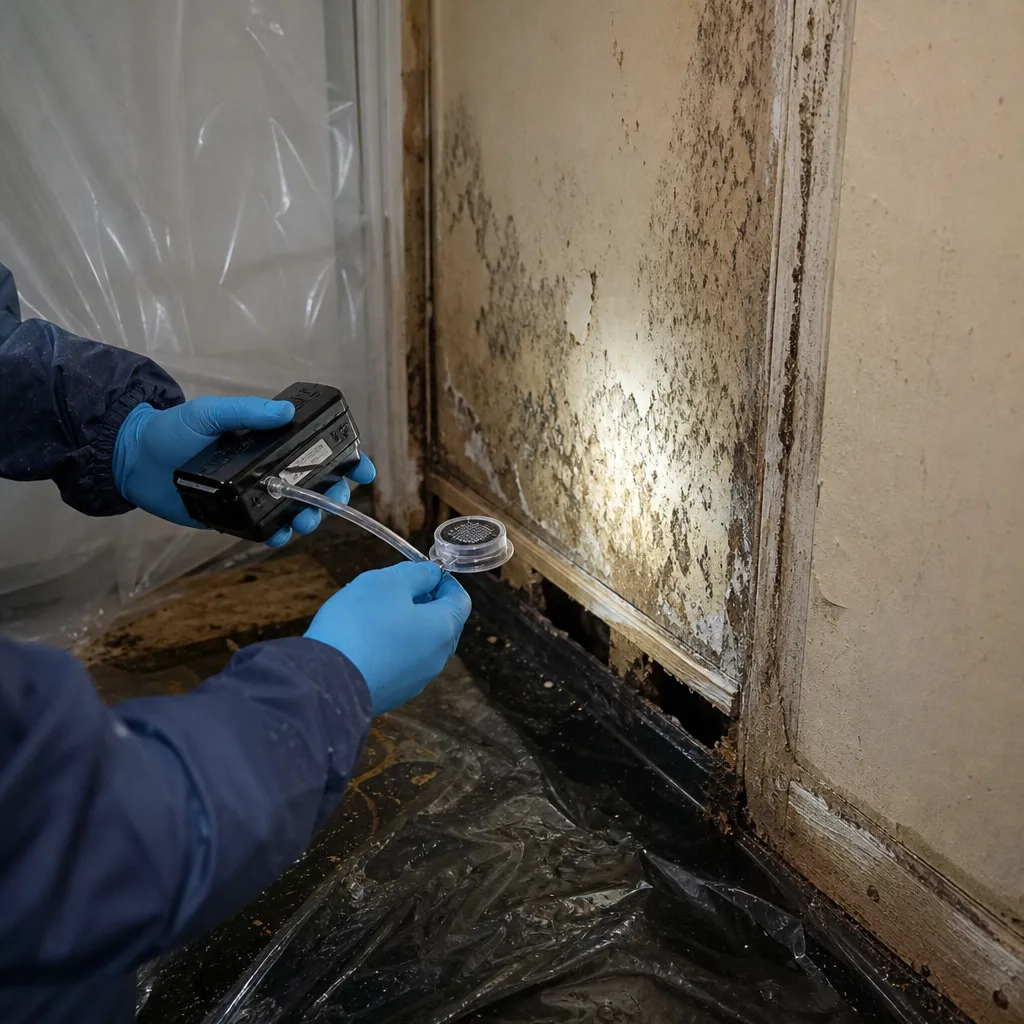
Stachybotrys and other toxigenic species require enhanced containment, negative-pressure engineering, and specialized antimicrobial protocols. We document clearance testing through third-party labs for insurance and institutional sign-off. Black mold remediation in Morningside Heights pre-war towers runs $2,500-$6,500 per unit, with multi-unit losses scaling proportionally.
Air Quality Restoration
Post-remediation HEPA filtration and air scrubbing to return indoor spore counts to outdoor baseline levels. This service is critical in Morningside Heights’s shared-building environment, where spore migration through stack chases and wall cavities affects units that were not part of the original water loss. Air quality restoration as a standalone service runs $800-$1,800; it’s included in full remediation scopes.
Crawl Space Treatment
While true crawl spaces are rare in Morningside Heights’s high-rise stock, basement mechanical rooms, elevator pits, and sub-cellar utility areas present similar moisture dynamics. We treat these spaces with dehumidification, vapor barrier installation, and antimicrobial application to prevent upward moisture migration into occupied floors.
Moisture & Humidity Control
Permanent dehumidification and ventilation solutions for chronically damp common areas, basement storage rooms, and mechanical spaces. In Morningside Heights’s pre-war buildings, humidity control in elevator machine rooms and trash compactor areas prevents recurring mold that would otherwise require annual remediation. System installation runs $1,500-$4,500 depending on square footage and existing HVAC integration.
What happens when you call
- 1
A real person answersNo phone trees - you reach a local pro.
- 2
You get an upfront price rangeHonest numbers before anyone is dispatched.
- 3
A background-checked tech heads outLicensed & insured, dispatched right away.
- 4
You approve before work beginsNothing starts until you say go.
Mold Remediation Costs in Morningside Heights, NY
Mold remediation in Morningside Heights carries pricing premiums compared to outer-borough markets because of building complexity, institutional approval chains, and the multi-unit coordination that most jobs require. Here’s what we see in this market:
| Service | Typical Range in Morningside Heights |
|---|---|
| Single-unit mold inspection & testing | $350 - $650 |
| Multi-unit stack inspection | $800 - $1,400 |
| Single-room mold removal | $1,200 - $2,800 |
| Black mold remediation (per unit) | $2,500 - $6,500 |
| Multi-unit stack remediation | $4,500 - $12,000 |
| Air quality restoration (standalone) | $800 - $1,800 |
| Moisture control system installation | $1,500 - $4,500 |
What moves the price: affected square footage, whether asbestos abatement is required, the number of units involved, and whether Columbia Facilities Management or a co-op board requires additional documentation or vendor credentialing. Insurance typically covers mold remediation when it’s secondary to a covered water loss; maintenance-related mold or long-term humidity issues may fall outside policy terms. We provide a written price before work begins, every time, with no exceptions. Haven Standard, Clause 1. Call (862) 281-7710 for your free visual inspection and firm scope.
We Also Serve Cities Near Morningside Heights
Our crews dispatch from the New York City office to Morningside Heights and surrounding Manhattan and Queens neighborhoods: Astoria for Queens-based losses, Upper East Side for similar pre-war high-rise mold issues, Long Island City for newer construction water damage, and Jackson Heights for the classic multi-family building stock of northwest Queens. Each market has distinct building ages, management structures, and insurance patterns; we adjust our documentation and coordination accordingly.
Serving Morningside Heights, NY - Our Local Coverage Area
We’re based in the Morningside Heights area and know this community well. Use the map below to see our service coverage - if you’re nearby, we can almost certainly help.
Morningside Heights Mold Remediation Questions, Answered
A roof-drain backup during a nor’easter soaked our pre-war Morningside Heights apartment - how fast does mold start, and what should we do first?
Mold colonization begins 24 to 48 hours after water intrusion, but in Morningside Heights’s plaster-and-lath construction, the clock starts before you see visible damage. Your first step is calling (862) 281-7710 for our 24/7 live answer; we’ll dispatch for a free visual inspection and begin moisture mapping immediately. Do not wait for visible mold - by then, colonization is established in wall cavities and may have migrated to adjacent units through shared stack chases.
Our building has original plaster-and-lath ceilings and cast-iron drain stacks - does that change how mold remediation is scoped here?
Yes. Plaster-and-lath absorbs water slowly and releases it over weeks, requiring extended drying cycles and full moisture mapping rather than surface checks. Cast-iron drain stacks create shared chases where spores and moisture migrate between units, so containment must be built to isolate entire stack sections, not just the visibly affected room. Asbestos-containing materials in original floor tile and pipe insulation also trigger abatement protocols before any demolition. Call (862) 281-7710 and we’ll explain how this applies to your specific building.
A pipe failure on an upper floor cascaded water through multiple units in our Morningside Heights co-op - who coordinates the mold remediation?
We do. Our project managers coordinate with building supers, co-op boards, management companies, and each affected unit’s insurance carrier. In Morningside Heights, we also handle Columbia Facilities Management’s institutional approval chain where applicable. We provide separate documentation packages for each tenant’s carrier and the building’s master policy, with moisture logs and photo records for every unit. The key is starting drying within the 24-to-48-hour mold window while documentation is being assembled, not after. Call (862) 281-7710 for immediate dispatch.
Is mold remediation in a Columbia-owned Morningside Heights building different from a standard co-op or rental job?
Yes. Columbia Facilities Management requires vendor credentialing, purchase orders, and scope sign-off before work begins - processes entirely unlike standard residential or management-company jobs. We maintain active vendor status and understand their documentation requirements, timeline expectations, and inspection protocols. Starting mitigation before this approval chain is complete is a common failure mode that delays drying and allows mold to establish. We coordinate this parallel to our technical response so no time is lost. Call (862) 281-7710 to confirm our current vendor status with Columbia.
After a summer convective storm, our basement took on water through an aging combined sewer lateral - is that a different kind of mold job?
Yes. Sewer lateral backups bring Category 3 water - grossly contaminated with pathogens requiring specialized cleaning, sanitization, and antimicrobial protocols beyond standard mold remediation. The mold species that colonize after sewage intrusion differ from clean-water losses and require more aggressive containment and clearance testing. In Morningside Heights’s pre-war buildings, these backups often affect basement storage, mechanical rooms, and elevator pits, with moisture wicking upward into occupied floors. We document the source category for your insurer and adjust our scope accordingly. Call (862) 281-7710 for immediate assessment.
How long does mold remediation take in a Morningside Heights pre-war building?
Single-unit remediation with no asbestos complications typically takes 3 to 5 days of active work plus 48 hours for clearance testing results. Multi-unit stack losses in plaster-and-lath buildings run 7 to 14 days because of extended drying cycles and the need to document each unit separately for multiple carriers. Columbia Facilities Management or co-op board inspections may add 24 to 48 hours to final sign-off. We provide daily moisture logs so you can track progress in real time. Call (862) 281-7710 for a timeline specific to your building.
Can we stay in our apartment during mold remediation?
It depends on contamination extent, occupant health sensitivity, and whether asbestos abatement is required. Single-room Category 1 or 2 remediation with proper containment often allows residents to remain in unaffected areas. Category 3 multi-unit losses, black mold remediation, or any asbestos work require temporary relocation - we coordinate pack-out and storage as part of our scope. We provide a written assessment of occupancy restrictions before work begins, not after. Call (862) 281-7710 to discuss your situation.
What certifications do your Morningside Heights mold remediation crews hold?
Our crews hold IICRC WRT (Water Damage Restoration Technician), AMRT (Applied Microbial Remediation Technician), and FSRT (Fire & Smoke Restoration Technician) credentials. All technicians are background-checked, uniformed, and licensed - license numbers provided on request. Work is documented to IICRC, RIA, and IFA standards with daily moisture logs, photo records, and written scopes. This documentation is what turns restoration invoices into payable insurance claims. Call (862) 281-7710 to verify current credentials.
Back to Dry Restoration, led by Alicia Brennan, has operated under The Haven Standard since 2011. Every job is quoted in writing before work begins, documented with a photo record on every visit, and covered by the 365-Day Done Right Promise. A Free Second Opinion on any competitor’s written estimate is available at no charge. Equipment deployed includes professional-grade drying systems from Dri-Eaz, Phoenix, XPOWER, B-Air, and Injectidry.
Written by Alicia Brennan, Owner at Back to Dry Restoration, serving Morningside Heights since 2011.
Mold Remediation in Nearby Areas