
Free visual inspection and a written scope of work before any mitigation begins - photos, moisture readings, and drying logs go in your claim file
The scope we write is the scope we bill. Anything new gets shown to you, in writing, before we touch it.
Storm response
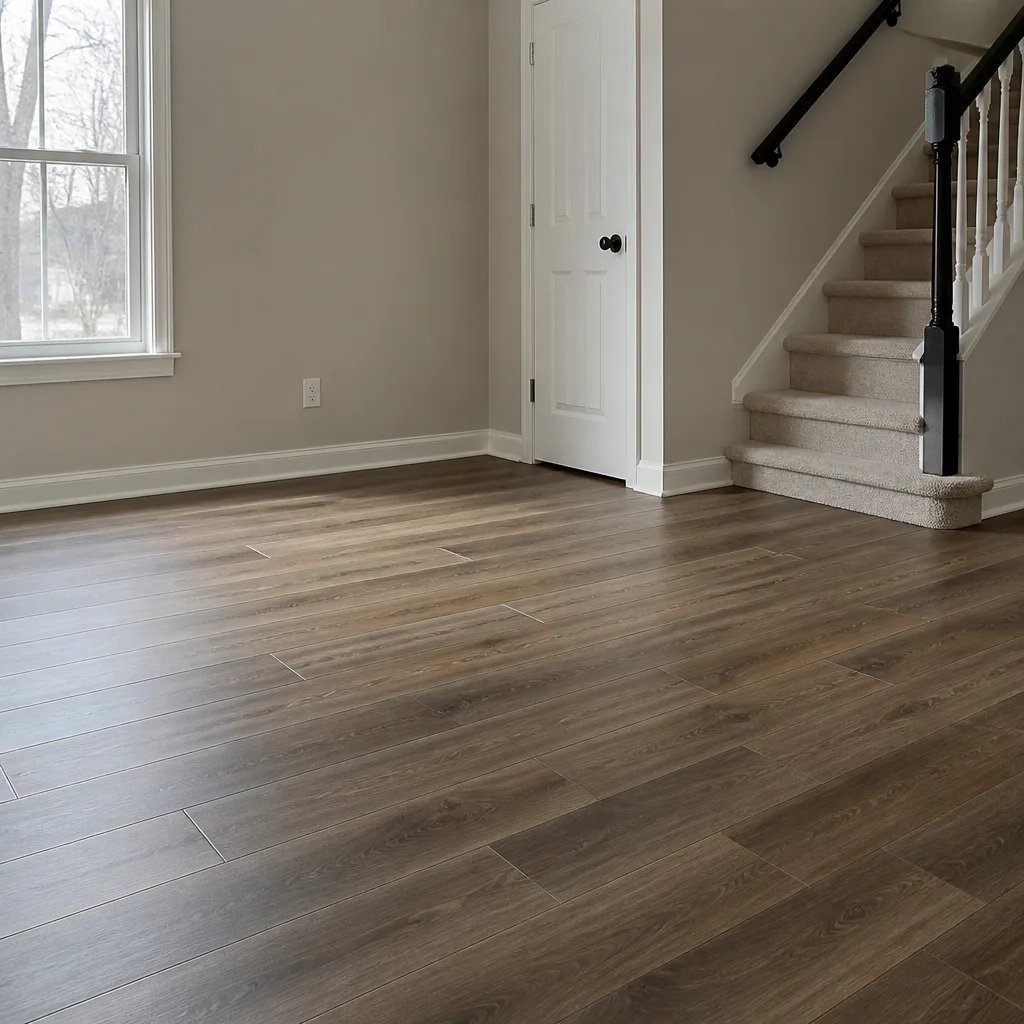
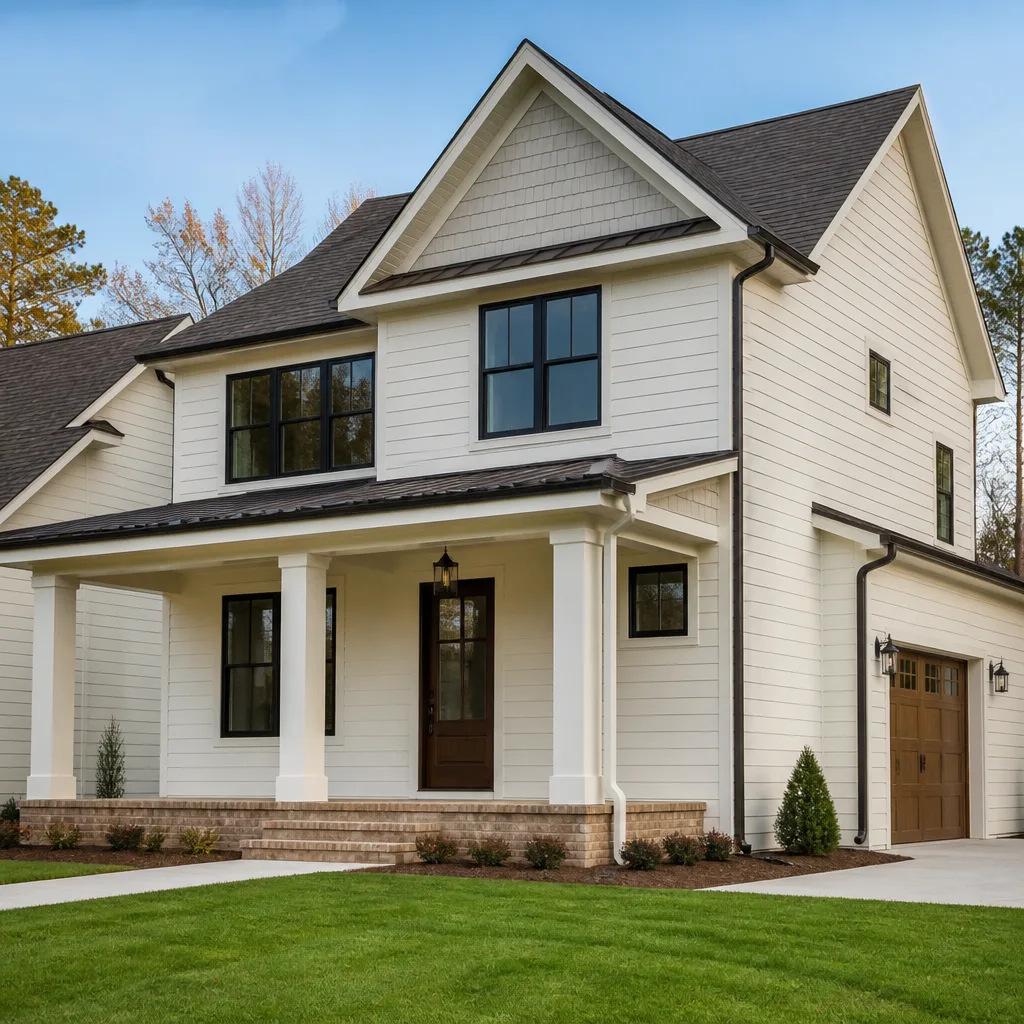
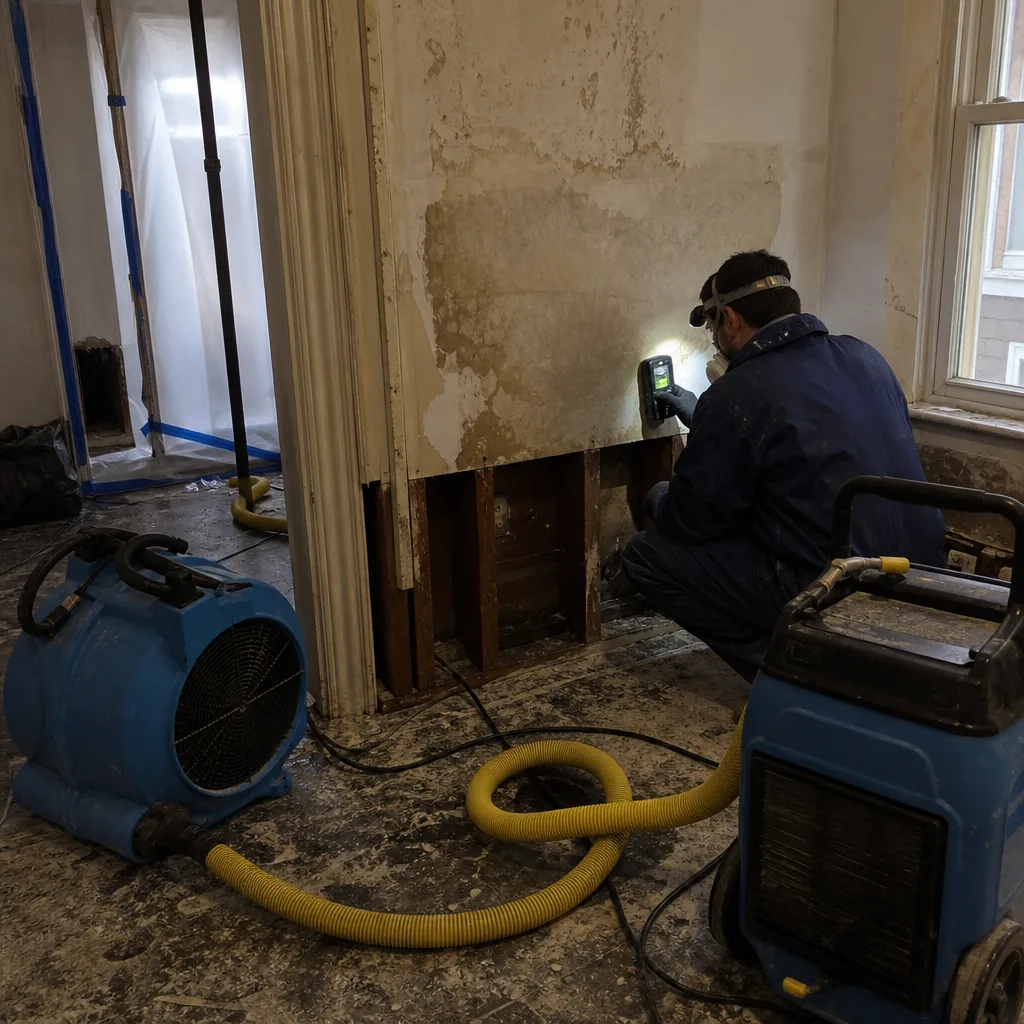 Before
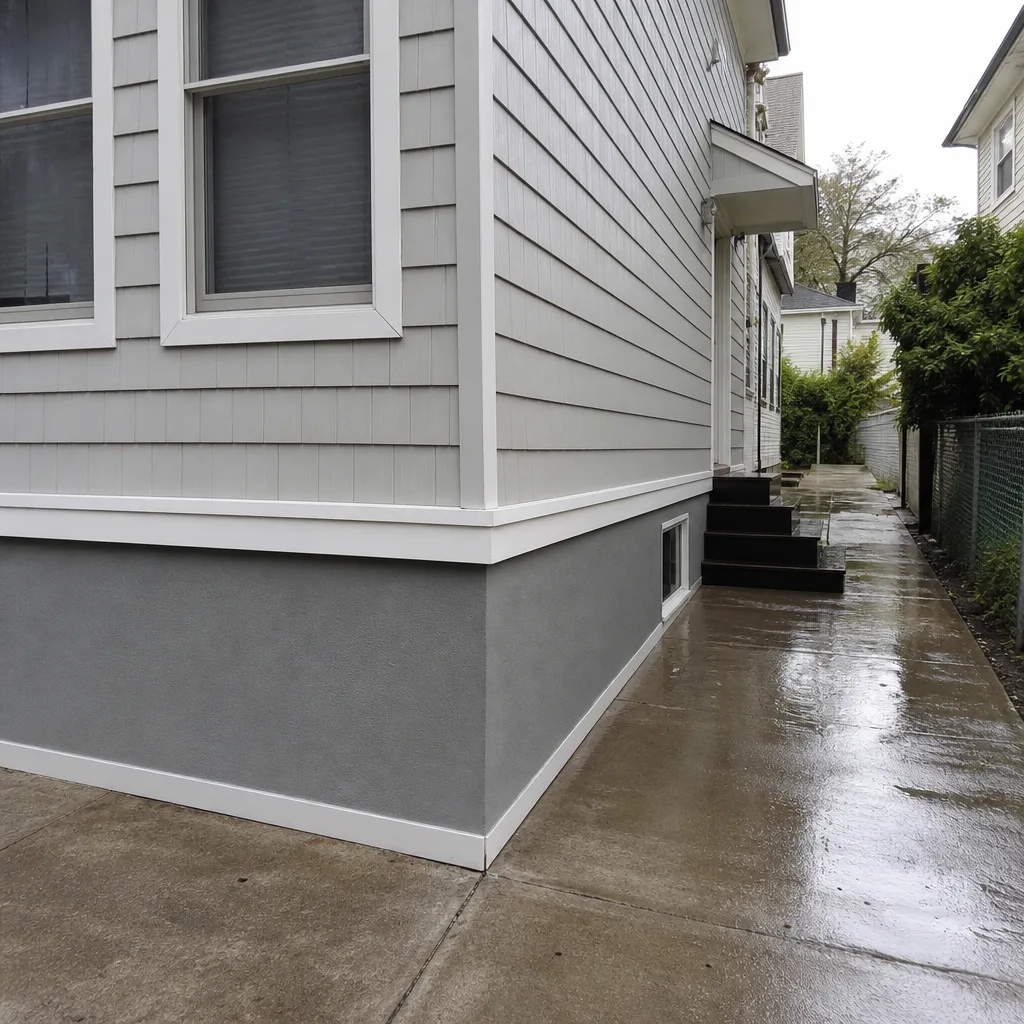 After
After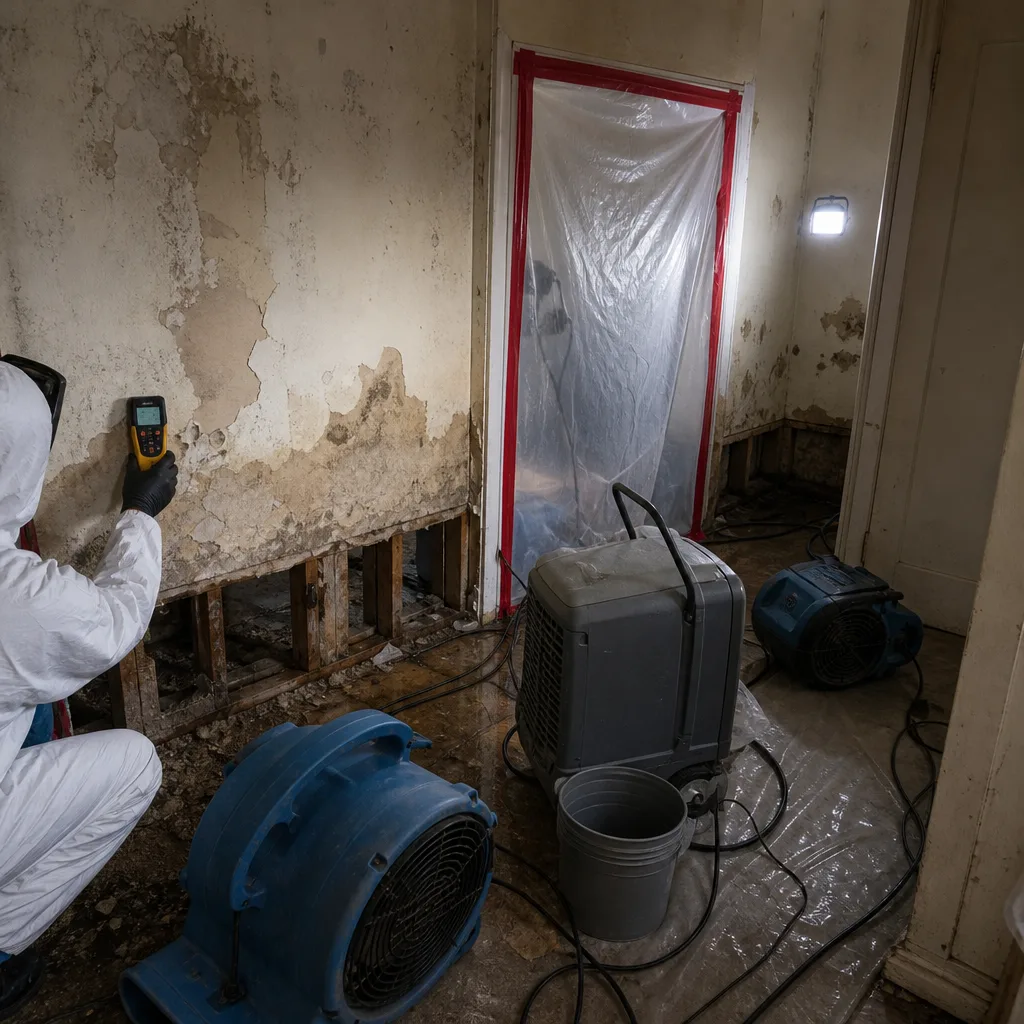 Before
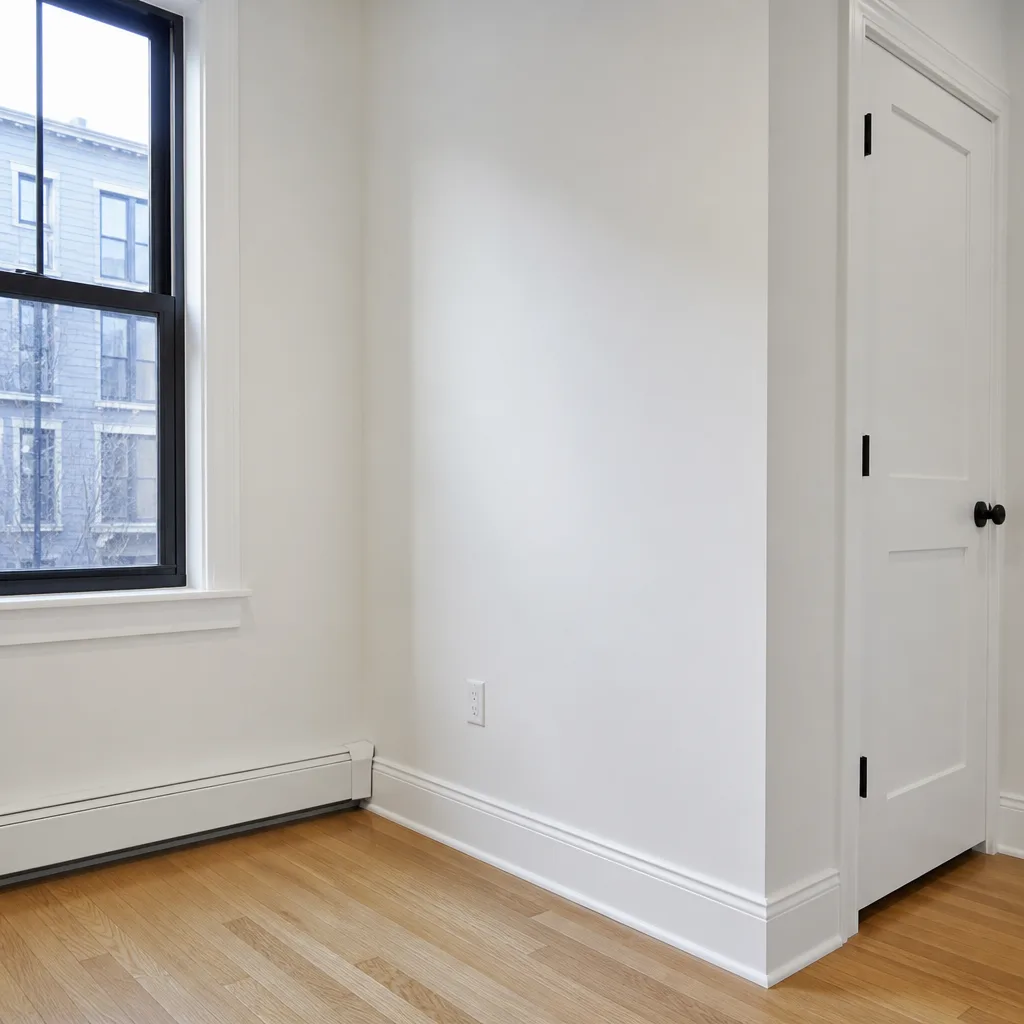 After
After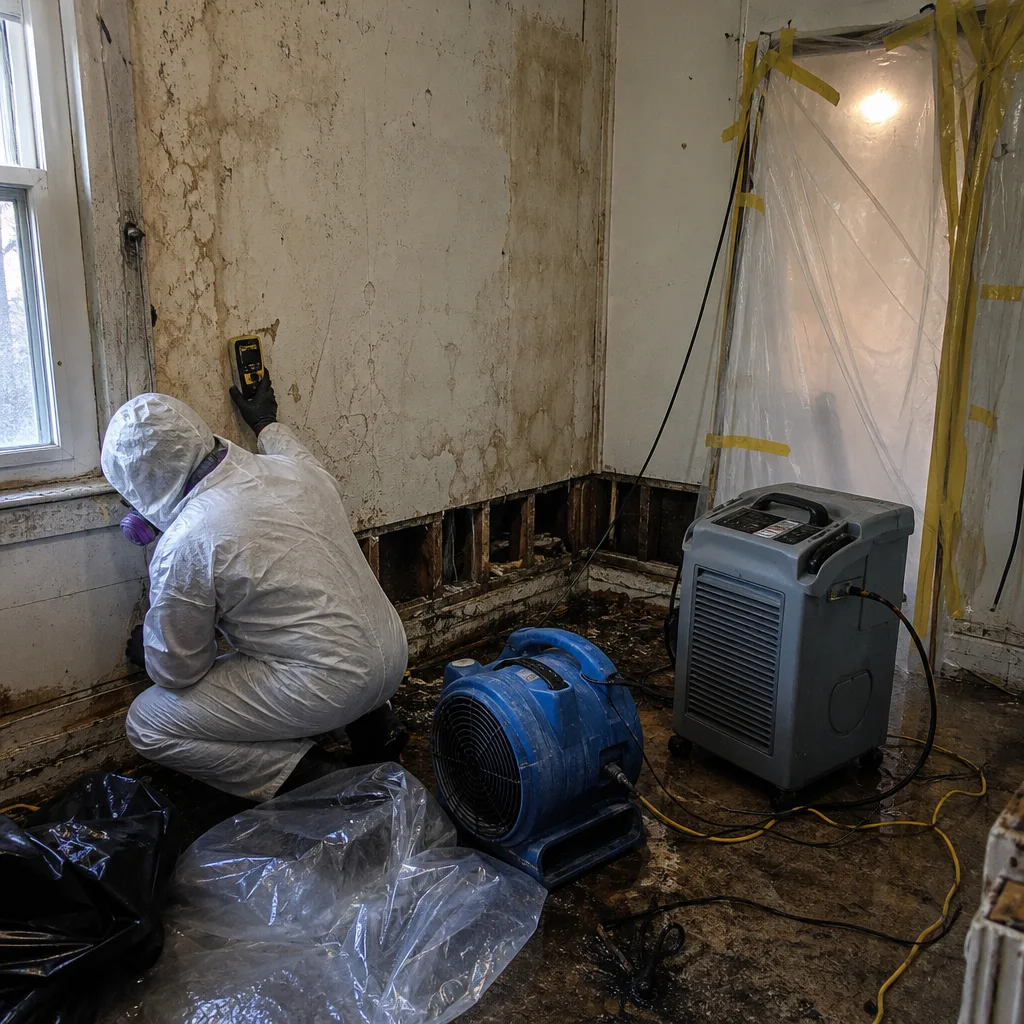 Before
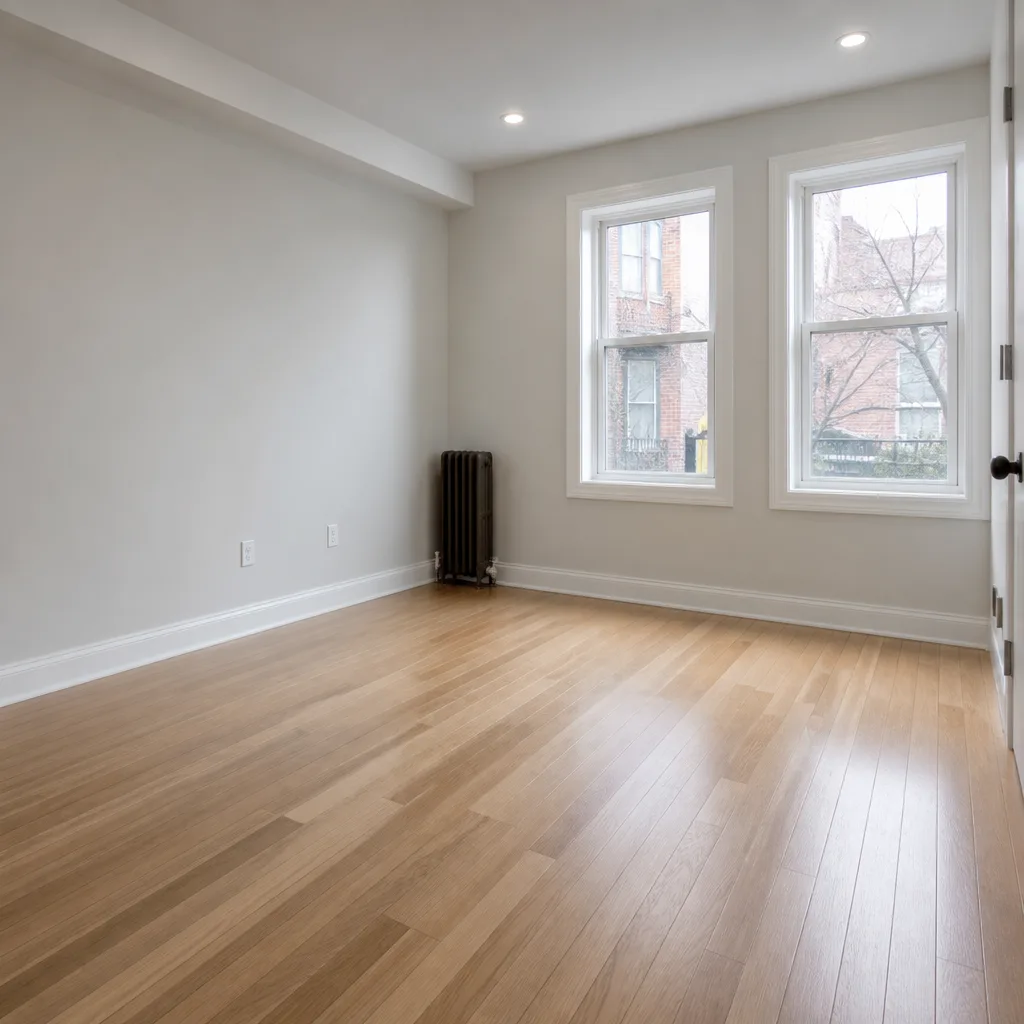 After
After24/7 Emergency Water Damage Restoration in Midtown Manhattan
Water damage restoration in Midtown Manhattan typically costs $2,800-$8,500 for most residential and commercial losses, with emergency extraction starting at $1,200-$2,400 and full structural drying running $3,500-$6,200 depending on affected square footage and building access. Our crews answer live at (862) 281-7710 24 hours a day, 7 days a week - no voicemail, no callback queues. We dispatch from our New York City office and can be on-site anywhere from the Garment District to Billionaires’ Row within 45 minutes of your call.
The first hour determines whether a water loss stays a drying job or becomes a reconstruction project. In Midtown’s high-rise buildings, water travels vertically through pipe chases and elevator shafts, affecting floors you haven’t even checked yet. We provide a free visual inspection on arrival, document moisture readings with thermal imaging, and deliver a written scope and price before any equipment runs - Haven Standard, Clause 1.
Understanding Water Damage Restoration Severity in Midtown Manhattan Properties
Water damage classification follows three categories set by the IICRC. Category 1 is clean water from a broken supply line or overflowing sink. Category 2 carries significant contamination - the burst riser pipe in a pre-war Midtown co-op that picks up sediment from decades-old galvanized steel. Category 3 is grossly contaminated: sewage backup, flooding from the East River, or water that has passed through building materials containing asbestos or other hazardous substances.
Midtown Manhattan’s building stock makes severity assessment complex. Pre-war steel-frame skyscrapers built between the 1920s and 1950s commonly contain asbestos in pipe insulation, floor tiles, and ceiling assemblies. When water damage disturbs these materials, standard drying protocols stop until NYC DEP asbestos abatement clears the area. Moisture mapping with thermal imaging and penetrating hygrometers becomes critical in these buildings because plaster-and-lath walls and ornamental millwork hold water differently than modern drywall. Our crews document every reading to IICRC S500 standards, producing the psychrometric data - temperature, relative humidity, and vapor pressure differential - that proves drying progress to your insurer.
Why Midtown Manhattan Property Owners Choose DryMark Restoration Astoria
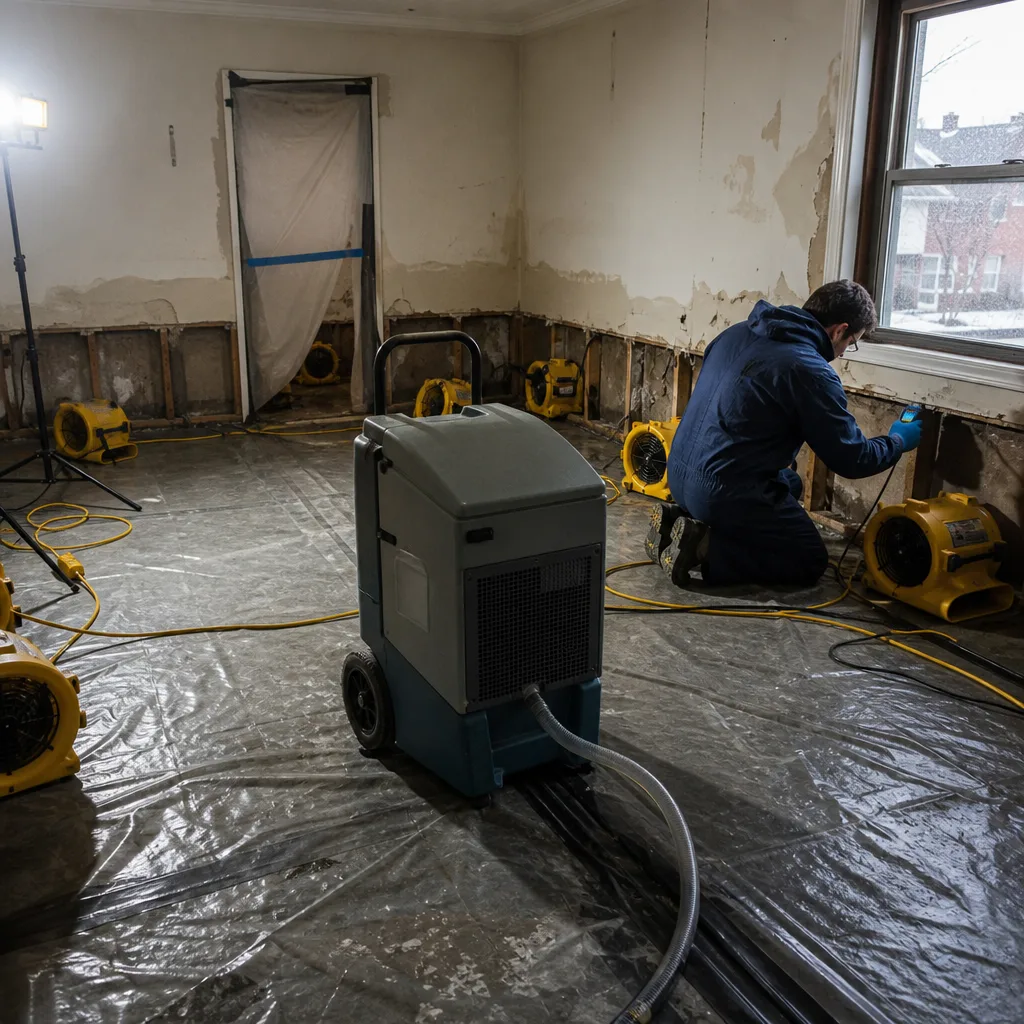
- 45-minute response commitment to any Midtown Manhattan address, from Murray Hill to the Theater District, because water in a high-rise doesn’t wait.
- 24/7 live answer by a real person, never an automated system - our dispatchers coordinate directly with building engineers and concierge desks while crews are en route.
- IICRC-certified crews holding WRT (Water Damage Restoration Technician) and ASD (Applied Structural Drying) certifications, with FSRT and AMRT specialists on call for complex losses.
- Free visual inspection on every call, with moisture readings and a documented photo record starting before any equipment is placed.
- Direct insurance billing and adjuster coordination - we speak the language of claims because our founder, Alicia Brennan, built this company after years of watching homeowners lose money to sloppy documentation.
- One team from extraction through reconstruction - no handoffs to unknown subcontractors, no gaps in your photo record or drying log.
BeforeAfterOur Water Damage Restoration Process
1. Inspection & Assessment
We arrive with thermal imaging cameras, penetrating and non-penetrating moisture meters, and hygrometers to map the full extent of water migration. In Midtown high-rises, this includes checking elevator pits, mechanical floors, and adjacent units - water travels farther than visible stains suggest. Every reading is logged with timestamp and location.
2. Extraction & Stabilization
Standing water is removed with truck-mounted and portable extraction systems. For Midtown’s commercial towers, we coordinate freight elevator access in advance - without it, our equipment never reaches the affected floor. We document pre-loss condition of all materials, especially custom millwork and ornamental plaster, before any disturbance.
3. Drying & Dehumidification
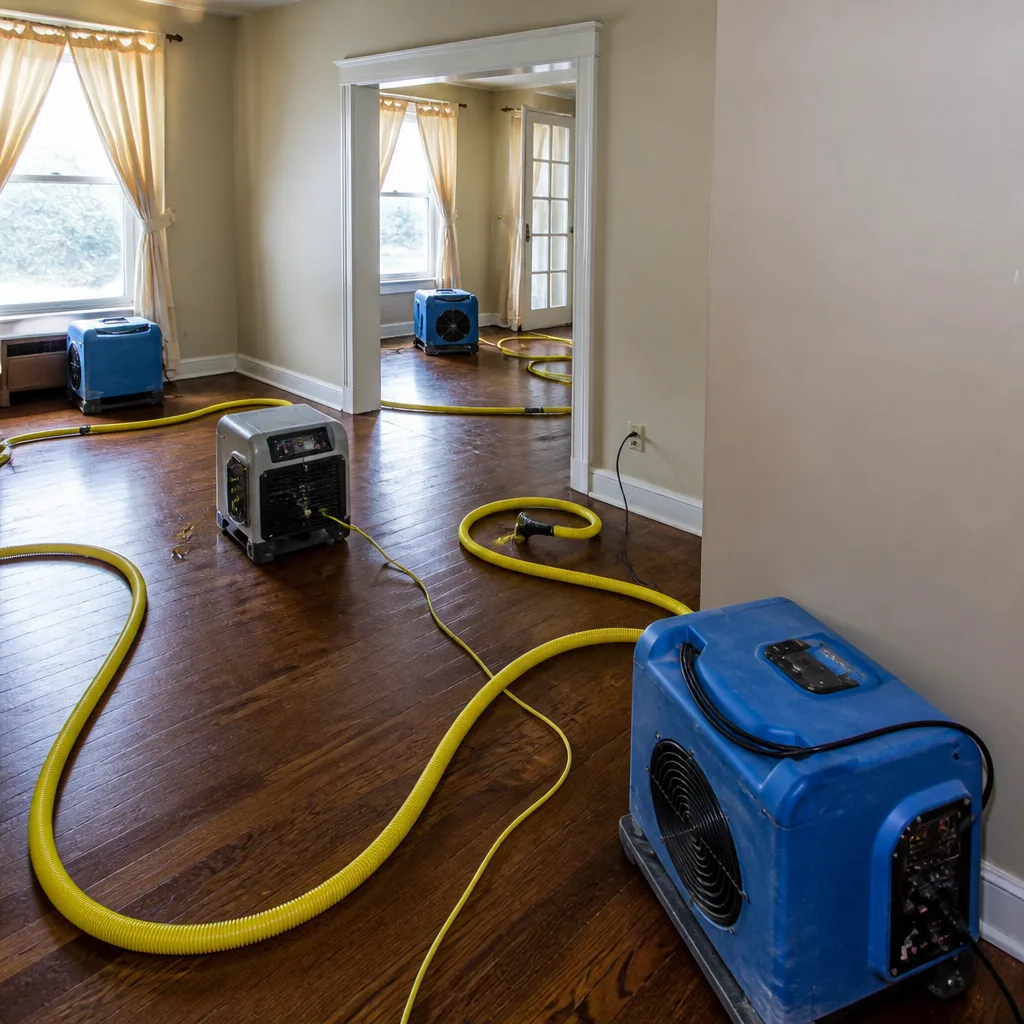
We deploy Dri-Eaz and Phoenix LGR dehumidifiers, XPOWER and B-Air axial air movers, and Injectidry cavity drying systems to establish controlled drying environments. Daily moisture logs track specific humidity, grains per pound, and vapor pressure differential - the measurable force that drives evaporation - until materials return to pre-loss moisture content.
4. Cleaning & Sanitization
Category 2 and 3 losses receive antimicrobial treatment with EPA-registered products. HEPA air scrubbers run continuously during this phase to capture airborne particulates, including any asbestos fibers released by water-disturbed materials. We document product application by trade name, concentration, and dwell time.
5. Asbestos Abatement Coordination
When pre-war building materials test positive for asbestos, we halt standard restoration and coordinate licensed NYC DEP abatement contractors. This is not optional in Midtown Manhattan - it is a regulatory layer that protects occupants from exposure and property owners from DEP fines. We manage the transition and resume drying the moment clearance is issued.
6. Repairs & Restoration
Our reconstruction team replaces damaged materials to match existing finishes, from custom mahogany millwork in pre-war co-ops to glass curtain-wall assemblies in modern towers. If fire or smoke damage is also present, we coordinate Fire & Smoke Damage Restoration - Midtown Manhattan as part of the full scope. Every repair is photo-documented and covered by our 365-Day Done Right Promise under The Haven Standard.
Need Emergency Water Damage Restoration in Midtown Manhattan Now?
Crews minutes away, answering live 24 hours a day. The sooner we start, the less it costs.
Working With Your Insurance Company
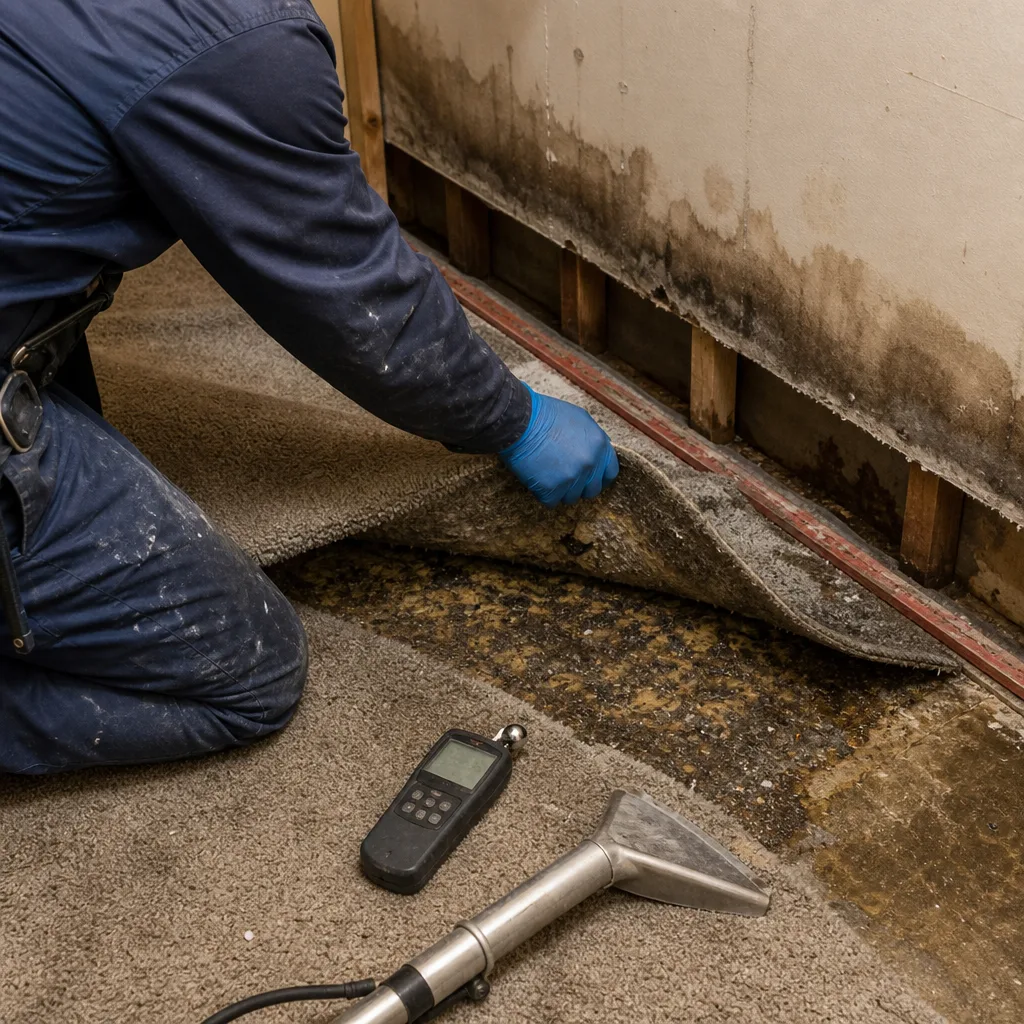
Insurance claims succeed or fail on documentation. We learned this from Alicia Brennan’s years as a claims adjuster before founding Back to Dry in 2011. From the moment we arrive, we build a file that an adjuster can read and approve without revision: timestamped photos of every affected room, moisture readings with equipment serial numbers, daily drying logs with psychrometric calculations, and a line-item scope written to Xactimate or Symbility standards.
We coordinate directly with your carrier’s adjuster, provide same-day documentation uploads, and never ask you to front costs for covered losses. Our photo record is included as standard, never sold as an upsell. Haven Standard, Clause 1: your written price before work begins. Haven Standard, Clause 7: your documented file before we leave.
What We Provide Your Insurer
- Thorough documentation of the loss
- Photos of all damage, room by room
- Moisture readings and drying logs
- A detailed, line-item scope of work
- Direct coordination with your carrier
Built for Midtown Manhattan’s Loss Calendar
January brings the deepest freeze risk. Rooftop wooden stave water tanks - the gravity-fed systems supplying most Midtown high-rises - crack when supply lines freeze and thaw. A single failed stave can release thousands of gallons into the building core, saturating ceiling assemblies floor by floor before anyone on the affected level notices a stain.
Spring thaw stresses aging drainage systems in pre-war buildings. Summer thunderstorms drive flash flooding through street-level commercial spaces in the Garment District. October through April, nor’easters hammer wind-driven rain into curtain-wall and masonry facade gaps at elevation, creating chronic envelope-intrusion damage that hides inside wall cavities for weeks. Our crews know the seasonal patterns because we’ve documented 12,000+ losses since 2011, and we calibrate our response to what Midtown’s building stock actually faces.
Water Damage Restoration Across Midtown Manhattan’s Neighborhoods
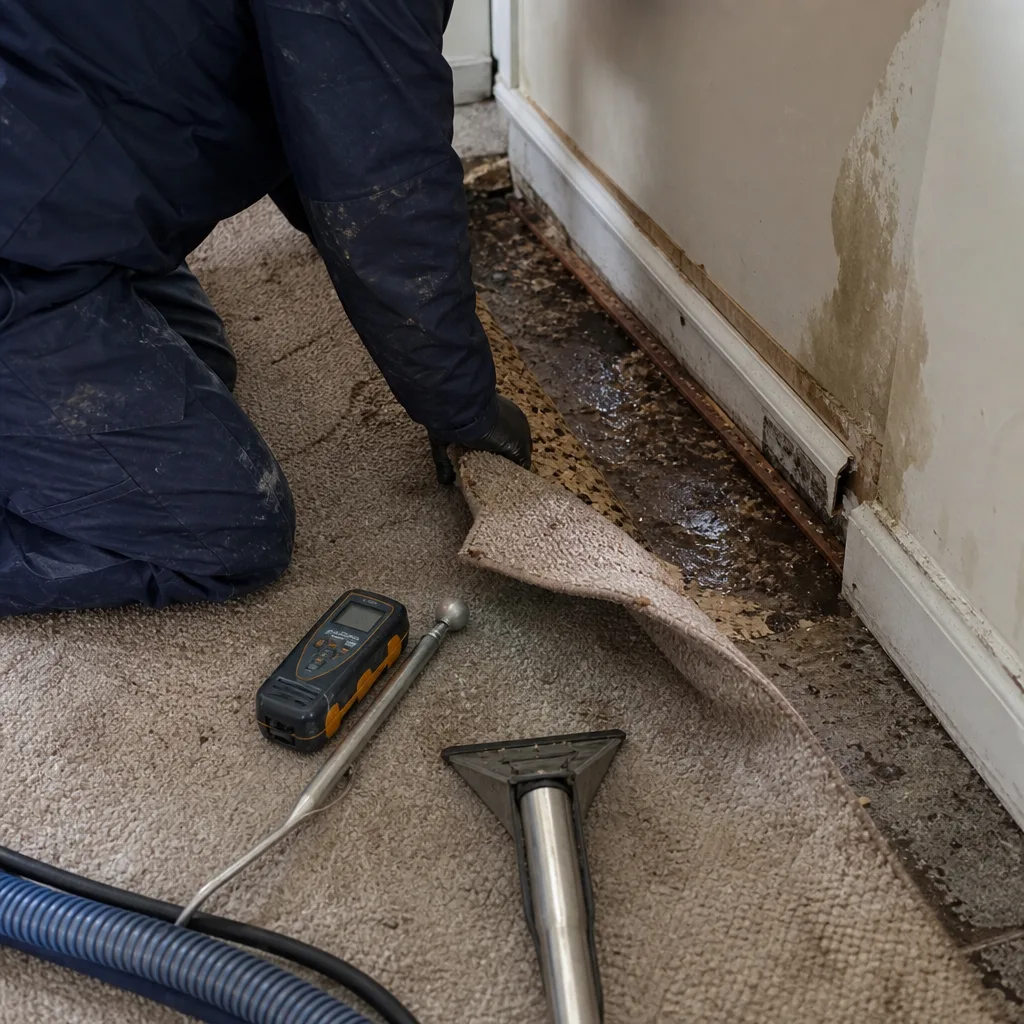
Our Water Damage Restoration team serves the full Midtown corridor with protocols tailored to each micro-market. In the Garment District, we respond to commercial losses in converted loft buildings with mixed sprinkler and standpipe systems where a single valve failure can flood multiple showrooms. The loading docks and freight elevators here are narrow - equipment staging requires advance coordination with building management that generic restoration companies often miss.
Along Billionaires’ Row on West 57th Street, our work is almost entirely in ultra-luxury condominiums with custom interiors by named architects and designers. Water damage to imported stone, bespoke millwork, or integrated smart-home systems demands white-glove containment and pack-out procedures. We document pre-loss condition of every finish because replacement sourcing can take months.
The Theater District presents unique constraints: losses often occur during performance hours, requiring silent equipment and containment that doesn’t disrupt operations. Hotels here operate on occupancy metrics measured in hours - our response protocols account for guest-room turnover and public-space accessibility windows that residential restorers never encounter.
Murray Hill’s pre-war co-op buildings, many with original plaster ceilings and hardwood floors, require moisture mapping that distinguishes salvageable materials from those requiring controlled demolition. We have restored water damage in buildings where the original 1920s millwork could not be replicated, making preservation drying the only cost-effective option. Our Water Damage Restoration in Midtown Manhattan coverage extends to every block of this corridor.
Specialized Water Damage Restoration Services We Offer in Midtown Manhattan
Emergency Water Extraction
Standing water is removed within hours of your call using truck-mounted extraction units and portable systems for buildings without loading dock access. In Midtown high-rises, we pre-coordinate freight elevator reservations - without them, extraction equipment never reaches your floor while water continues wicking into structural materials.
Structural Drying & Dehumidification
We establish controlled drying environments with LGR dehumidifiers and targeted air movement, documenting daily moisture readings until materials reach pre-loss equilibrium. Tertiary drying - the final phase where bound moisture is removed from dense materials like plaster and hardwood - is where most DIY and cut-rate efforts fail. We don’t stop until the numbers prove completion.
Flood Cleanup
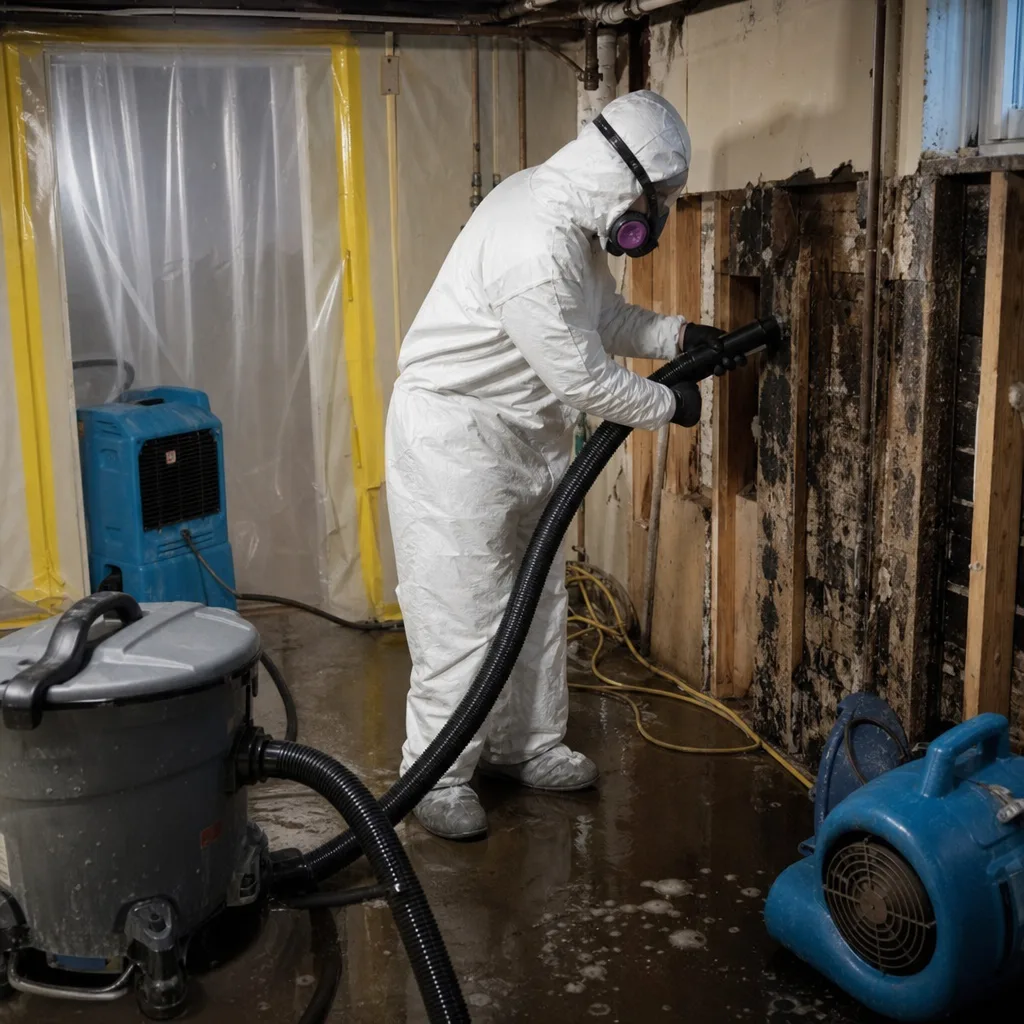
Street-level flooding in Midtown commercial spaces requires Category 3 protocols: full PPE, antimicrobial treatment, and disposal of porous materials that cannot be sanitized. We coordinate with NYC DEP and building management on debris removal and air-quality clearance.
Burst Pipe Restoration
Midtown’s pre-war buildings contain galvanized steel and copper piping at end-of-life. When riser pipes burst, we coordinate with the building engineer to isolate the system, document water migration through multiple floors, and restore affected units while the building’s plumber completes permanent repairs. Our scope is the water damage; we don’t touch plumbing without proper licensing, and we document the boundary clearly.
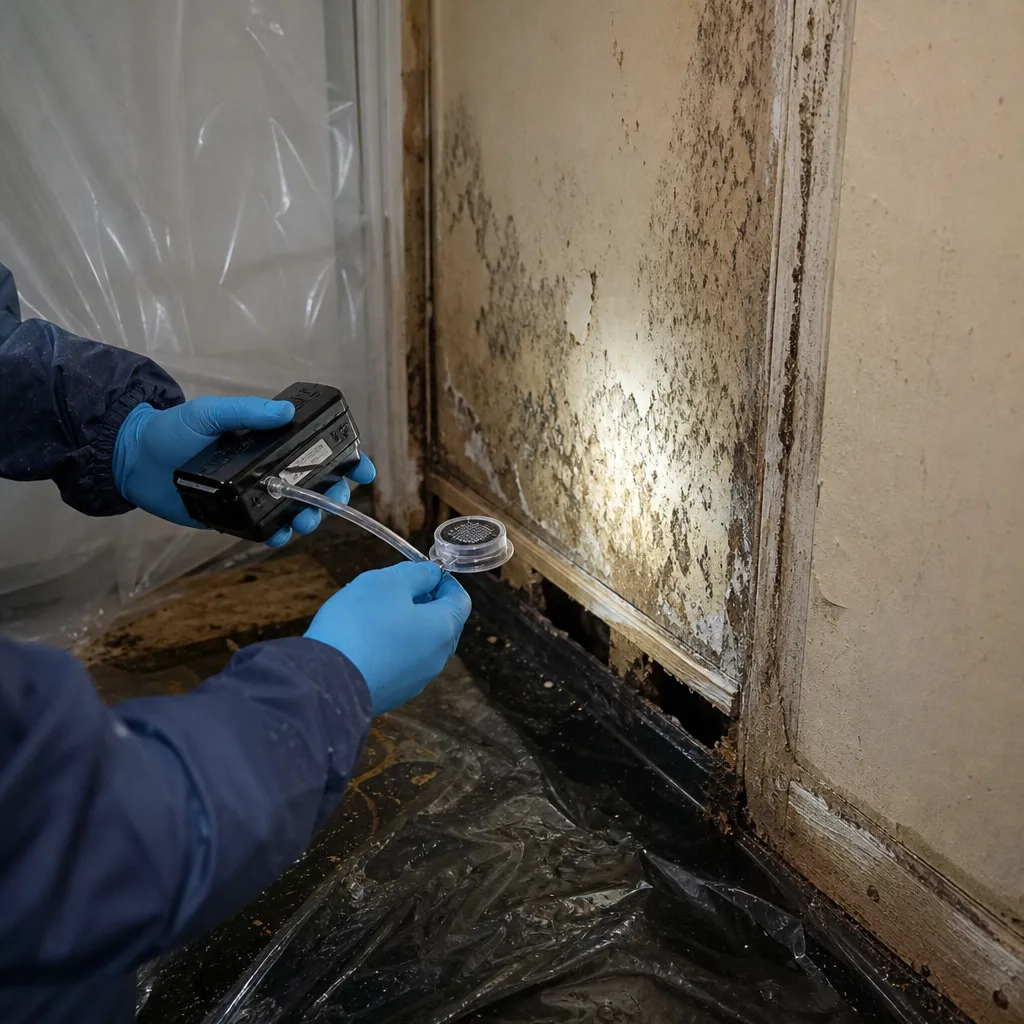
Basement Water Removal
While true basements are rare in Midtown’s high-rise context, sub-cellars, mechanical rooms, and elevator pits flood regularly from drainage failures or sewer backup. These spaces require specialized extraction and confined-space safety protocols that our crews train to annually.
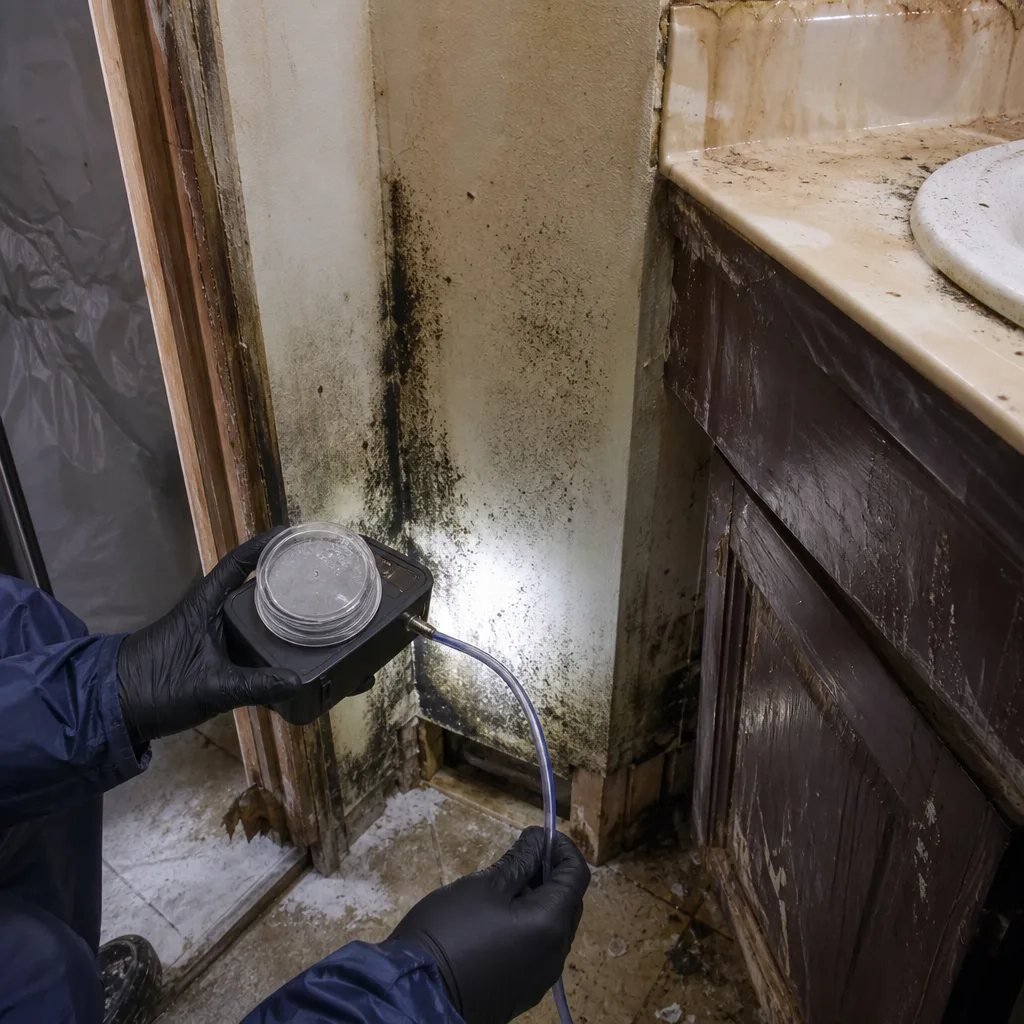
Ceiling & Roof Leak Water Damage
Wind-driven rain through aging curtain-wall systems and rooftop tank failures are the two primary ceiling damage sources we see in Midtown. We trace water migration with thermal imaging, establish containment to protect occupied spaces below, and coordinate with roofing and facade contractors on permanent envelope repairs.
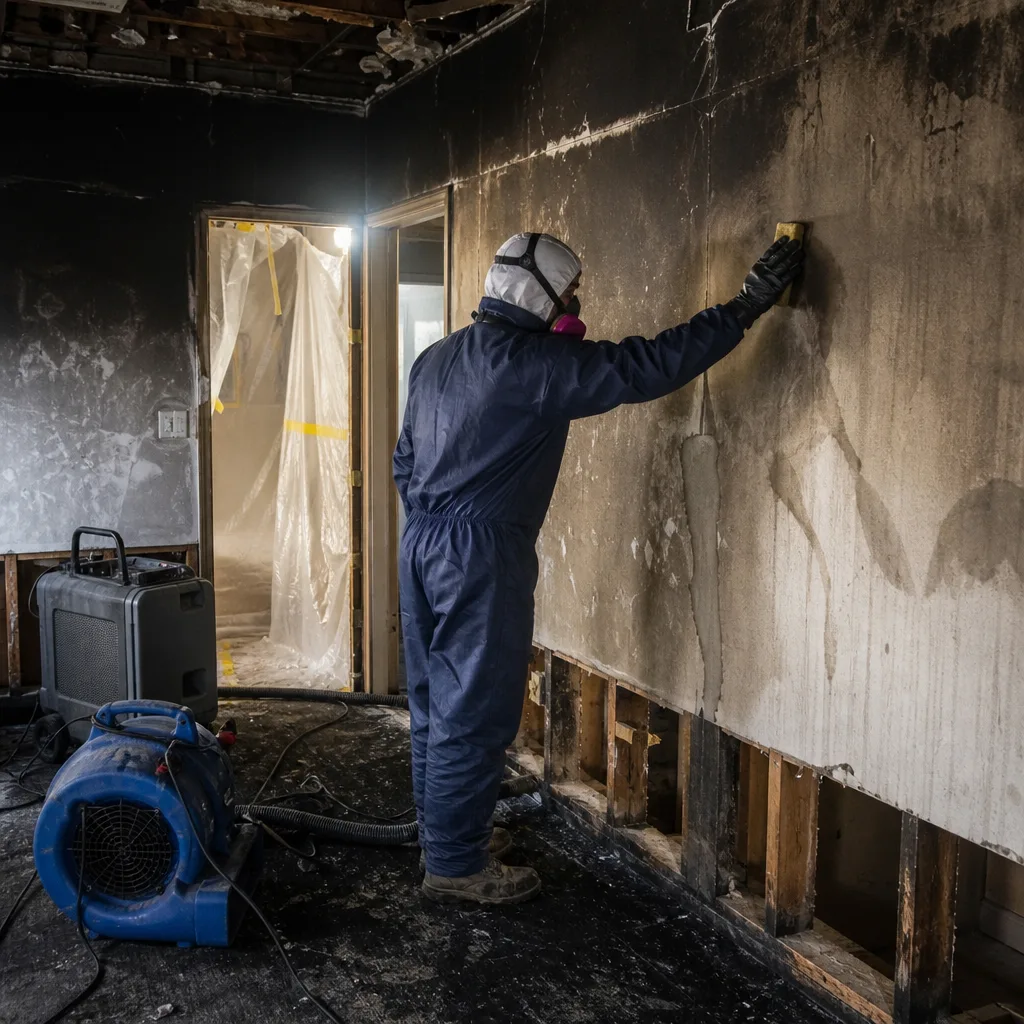
What happens when you call
- 1
A real person answersNo phone trees - you reach a local pro.
- 2
You get an upfront price rangeHonest numbers before anyone is dispatched.
- 3
A background-checked tech heads outLicensed & insured, dispatched right away.
- 4
You approve before work beginsNothing starts until you say go.
Water Damage Restoration Costs in Midtown Manhattan, NY
Midtown Manhattan’s market runs higher than outer-borough pricing due to building access complexity, commercial-grade equipment requirements, and the prevalence of high-value finishes requiring specialized handling. Typical ranges:
| Service | Typical Range in Midtown Manhattan |
|---|---|
| Emergency water extraction (up to 1,000 sq ft) | $1,200 - $2,400 |
| Structural drying & dehumidification (3-5 day cycle) | $3,500 - $6,200 |
| Full water damage restoration with repairs | $5,800 - $14,500 |
| Category 3 flood cleanup with disposal | $4,200 - $9,800 |
| Asbestos abatement coordination (when required) | $2,800 - $7,500 (separate licensed contractor) |
What moves the price: building access complexity (freight elevator restrictions, after-hours surcharges), affected square footage, category of water contamination, presence of asbestos or other hazardous materials, and the value of finishes requiring preservation drying versus replacement. Most Midtown water damage losses are insurance claims; we provide direct billing and adjuster coordination. For out-of-pocket scenarios, our Free Second Opinion on any competitor’s written estimate ensures you’re comparing equivalent scopes. Call (862) 281-7710 for your written price - estimates are free, and Haven Standard, Clause 1 applies to every job.
We Also Serve Cities Near Midtown Manhattan
Our New York City office dispatches crews throughout the metro area. We regularly respond to Midtown Manhattan alongside Astoria, Upper East Side, Long Island City, and Jackson Heights - often on the same day when regional weather events produce multiple losses. Each market receives the same documentation-first protocol and written-price guarantee.
Serving Midtown Manhattan, NY - Our Local Coverage Area
We’re based in the Midtown Manhattan area and know this community well. Use the map below to see our service coverage - if you’re nearby, we can almost certainly help.
Midtown Manhattan Water Damage Restoration Questions, Answered
Why do Midtown Manhattan water damage jobs often require asbestos abatement before drying?
Pre-war buildings throughout Midtown commonly contain asbestos in pipe insulation, floor tiles, and ceiling assemblies, and disturbing these materials during water damage restoration triggers mandatory NYC DEP protocols. We test suspect materials immediately and coordinate licensed abatement contractors before resuming standard drying - this protects occupants from exposure and property owners from significant DEP fines. Call (862) 281-7710 if you’ve received a competitor’s estimate that skipped this step; we’ll review it at no charge.
How does the rooftop wooden stave water tank affect water damage restoration in Midtown high-rises?
These gravity-fed tanks supply most Midtown buildings above 6 stories, and when a stave fails or supply line freezes, thousands of gallons enter the building core and saturate ceiling assemblies floor by floor. Restoration cannot begin effectively until the tank supply is isolated and the remaining water is drained - our first call on these jobs is always to the building engineer, not the drying equipment. The freeze-thaw cycles of New York winters put extreme stress on these aging wooden systems.
What is the first thing your crew does on a water loss in a Midtown high-rise?
We contact the building’s in-house engineer to shut down the water source and reserve freight elevator access for our equipment. Without a reserved elevator window in a 40-story building, industrial dehumidifiers and air movers remain in the lobby while moisture readings climb and mold risk escalates. This protocol, learned through 12,000+ documented losses, is absent from generic residential restoration playbooks.
Can you restore water-damaged custom millwork and wood doors common in Midtown apartments?
Yes, when moisture readings and material condition support preservation drying rather than replacement. We document pre-loss condition with detailed photography, establish controlled drying environments with targeted air movement, and apply antimicrobial treatment to prevent fungal growth. For irreplaceable historic millwork, we engage specialty conservators and document every step for insurance valuation. Replacement is always the last option, not the default.
How do you handle water damage in occupied Midtown office towers or luxury condos?
Containment and business-interruption documentation begin simultaneously with extraction. In Class A office towers, we establish negative-air containment with HEPA filtration, schedule work around tenant occupancy hours, and document every hour of downtime for business-interruption claims. In luxury condos, white-glove pack-out and finish protection are standard, not upgrades. Every protocol is written into the scope before work begins - Haven Standard, Clause 1.
How fast can someone actually get to my Midtown Manhattan building?
Our 45-minute response commitment covers all Midtown Manhattan addresses, from the Garment District to Billionaires’ Row, 24 hours a day. Dispatch coordinates with your building’s concierge or engineer while crews are en route, so elevator access and water isolation are resolved before we arrive. Call (862) 281-7710 - a live person answers, never voicemail.
Will insurance cover my water damage restoration in Midtown Manhattan?
Most sudden and accidental water damage is covered under standard commercial and residential policies, though gradual leaks and maintenance issues are typically excluded. We document the loss from the first hour to prove sudden occurrence, write scopes to industry-standard estimating platforms, and coordinate directly with your adjuster. Our documentation-first approach exists precisely because Alicia Brennan saw too many homeowners lose valid claims to incomplete files.
How long does structural drying take in a Midtown high-rise?
Standard drying cycles run 3-5 days for most Class 2 losses, but Midtown’s pre-war construction with plaster walls, hardwood floors, and dense structural materials often extends this to 7-10 days for complete tertiary drying. We don’t guess at completion - daily moisture logs with specific humidity and vapor pressure readings prove when materials have returned to pre-loss equilibrium. Rushing this phase guarantees hidden moisture and future mold growth.
Water damage in Midtown Manhattan demands a restoration company that understands high-rise logistics, pre-war building hazards, and the documentation standards that insurance carriers require. We built our company around that gap. Call (862) 281-7710 now for a free visual inspection and written estimate - our live dispatch is standing by, and your price is fixed before any work begins.
Written by Alicia Brennan, Owner at Back to Dry Restoration, serving Midtown Manhattan since 2011.