Free visual inspection and a written scope of work before any mitigation begins - photos, moisture readings, and drying logs go in your claim file
The scope we write is the scope we bill. Anything new gets shown to you, in writing, before we touch it.
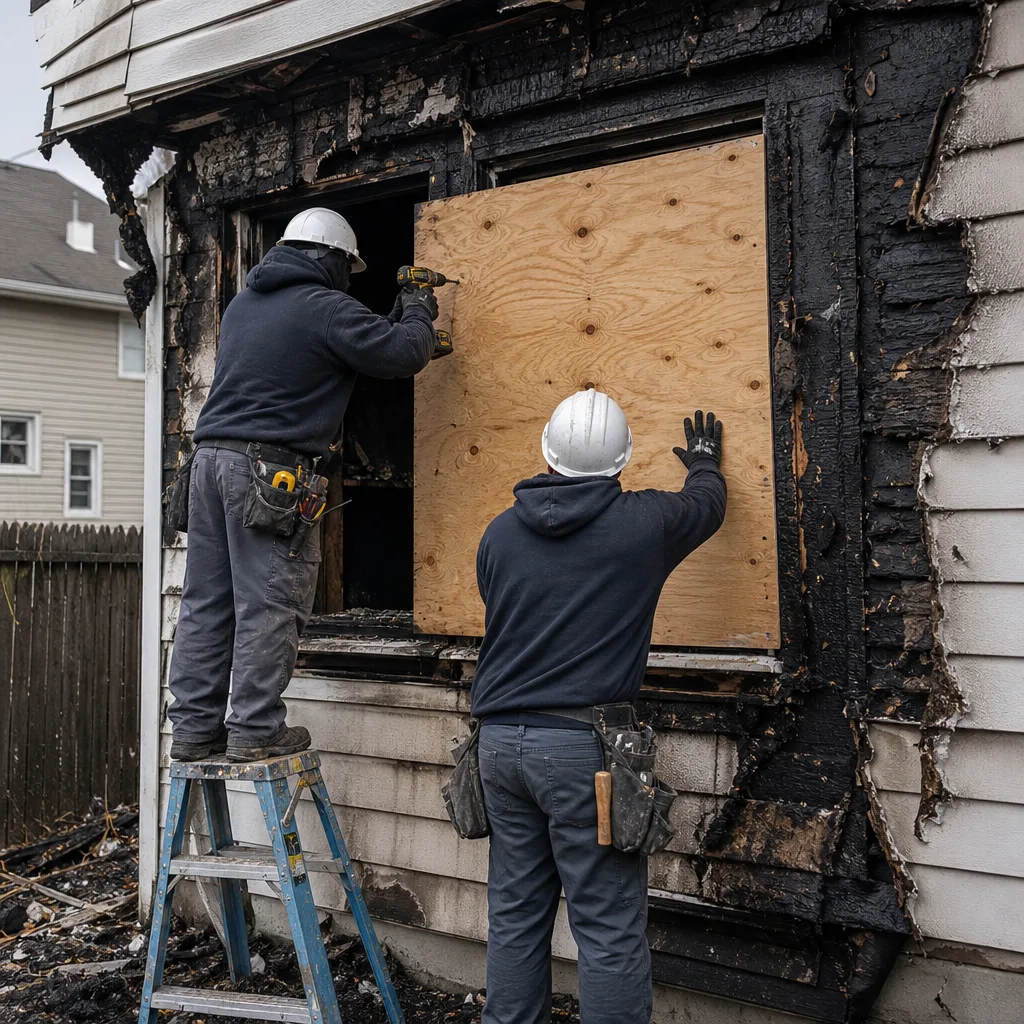
Storm response
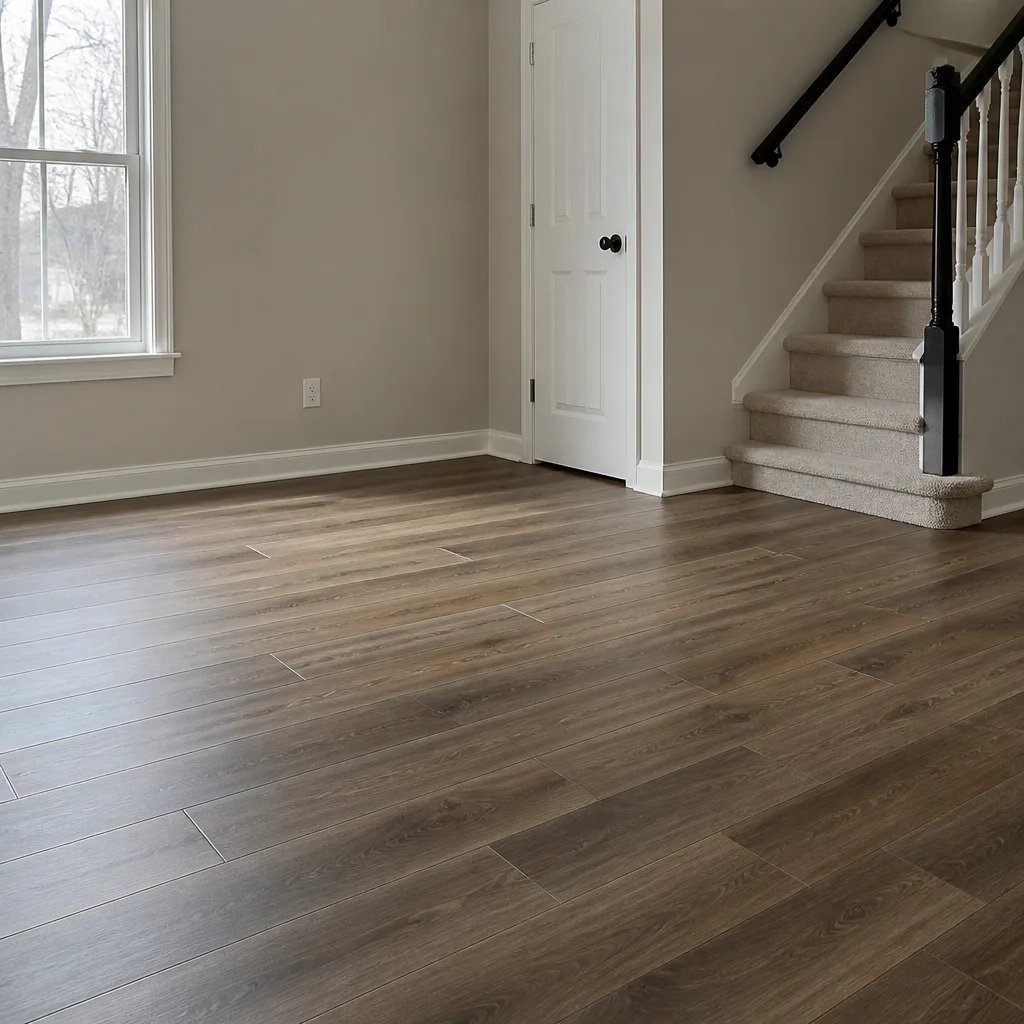
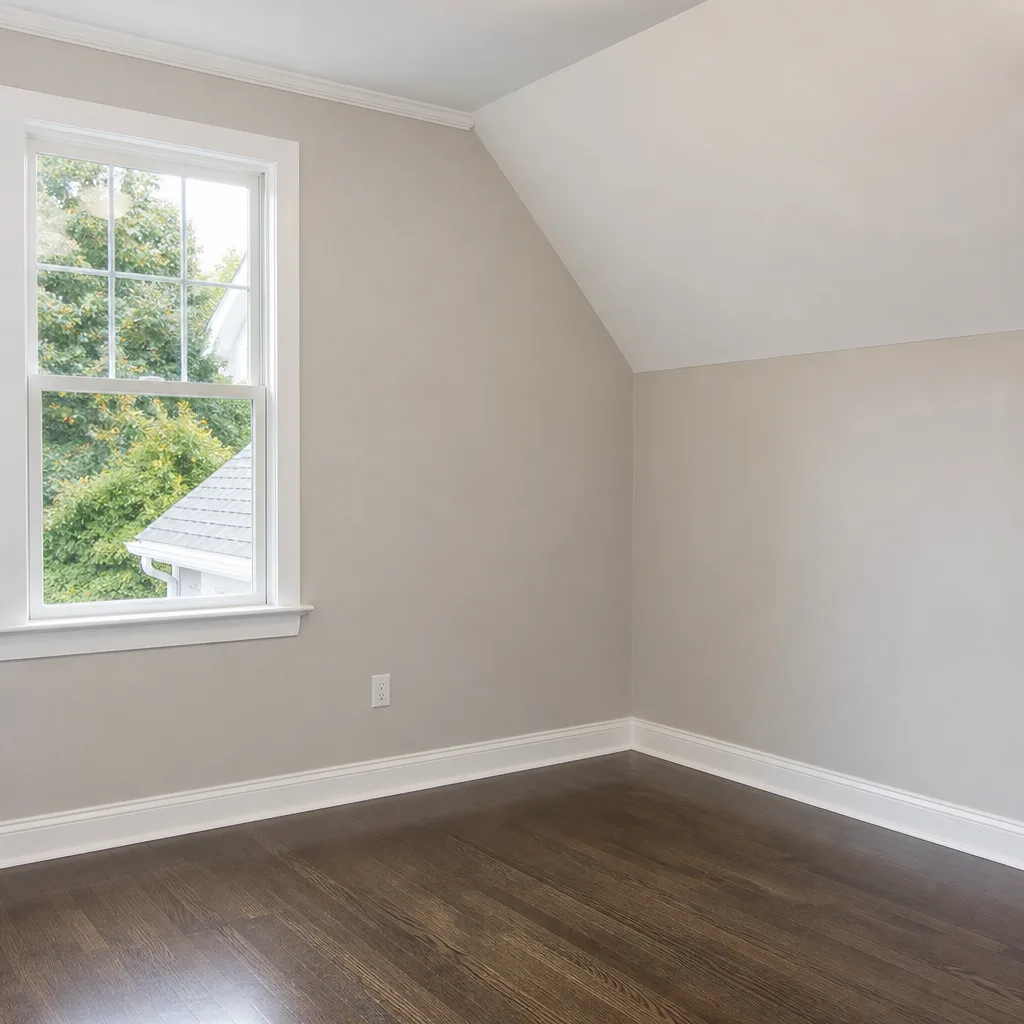
 Before
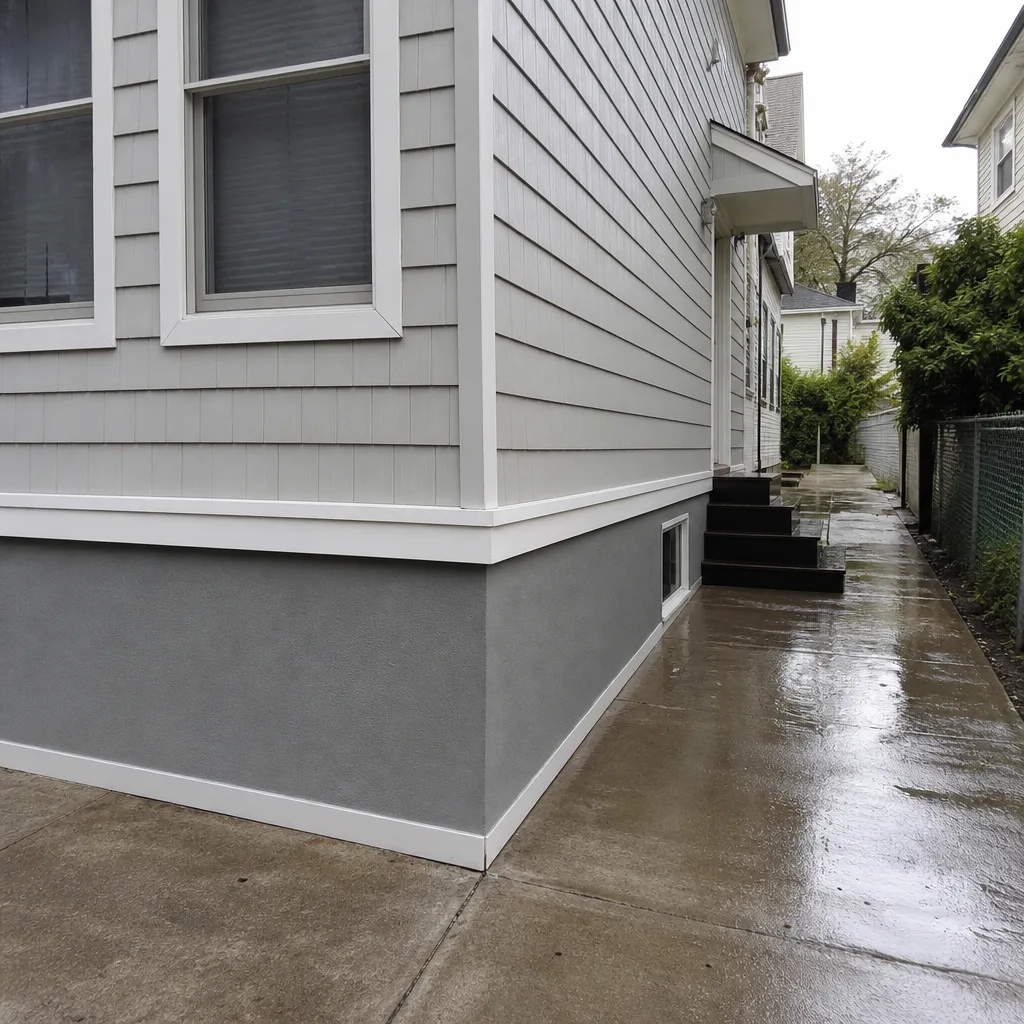 After
After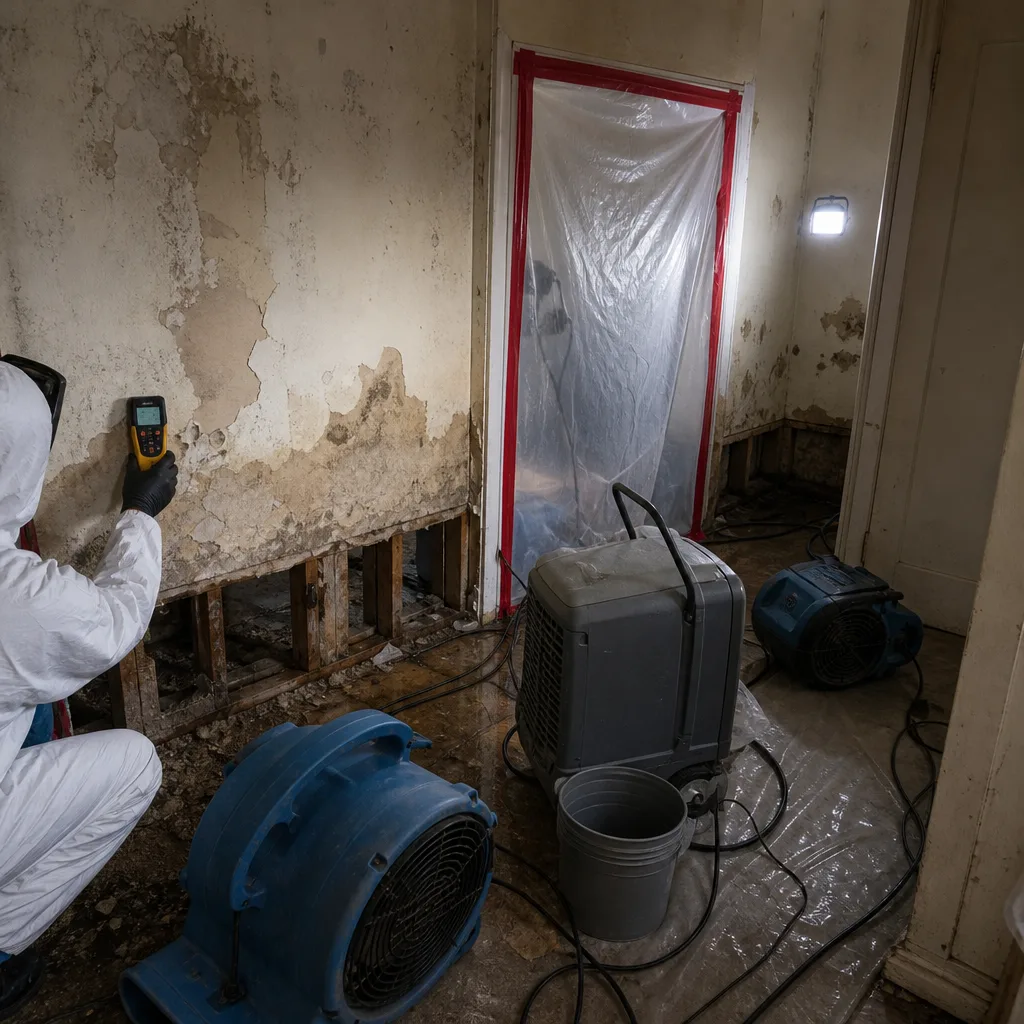 Before
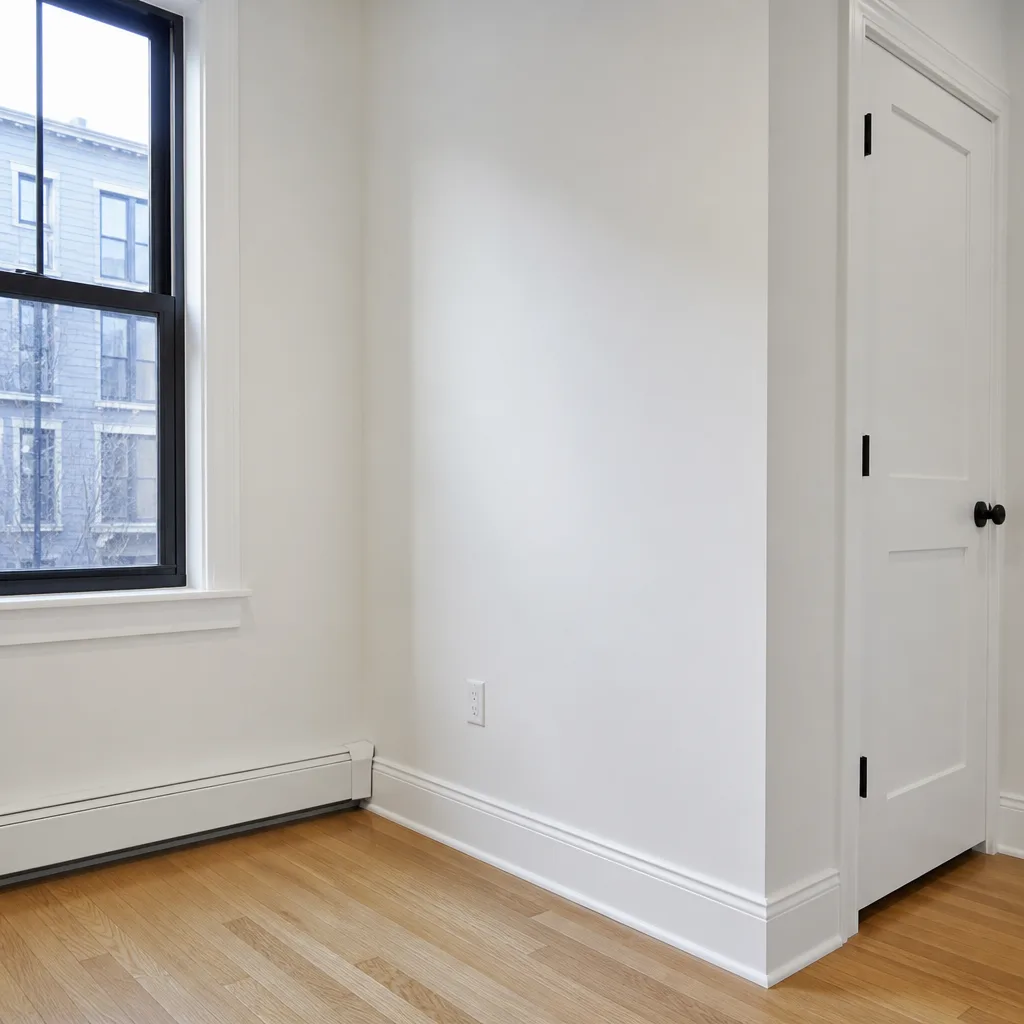 After
After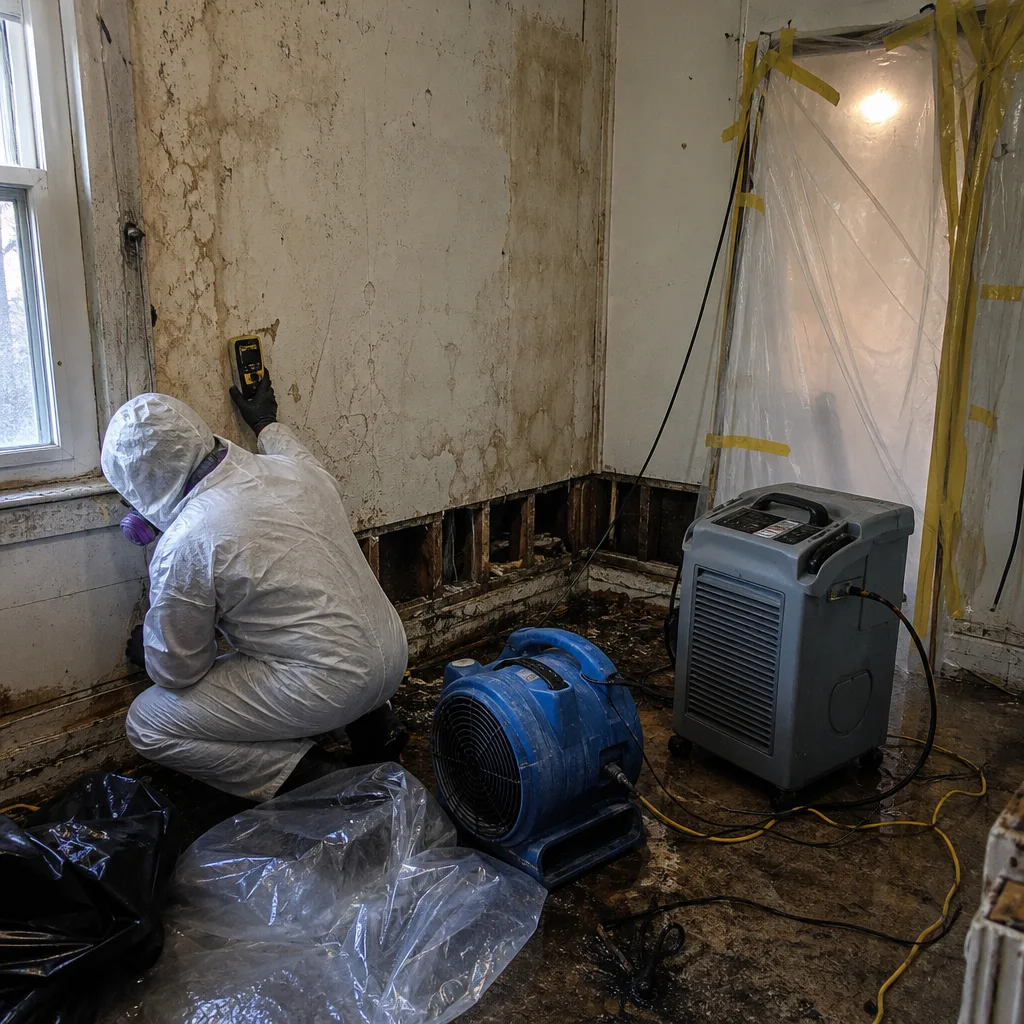 Before
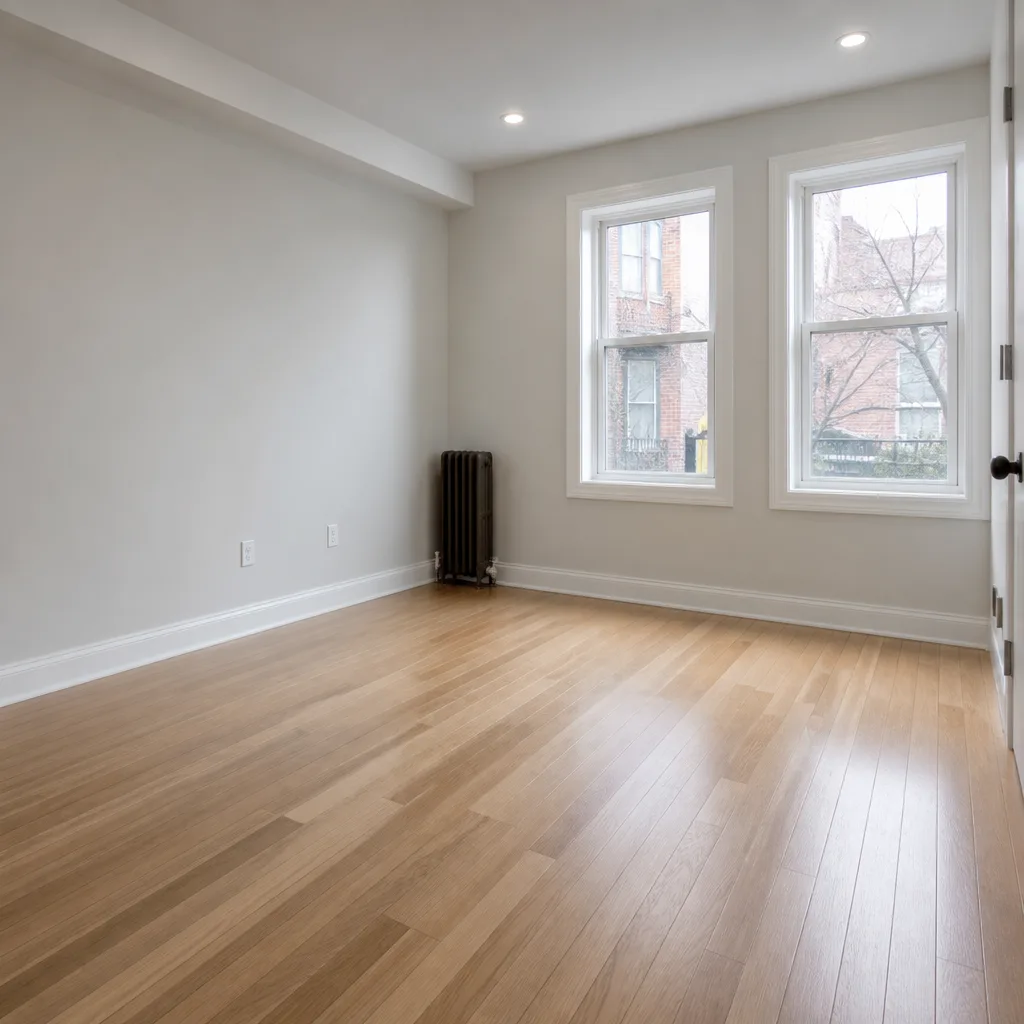 After
After24/7 Emergency Water Damage Restoration in Long Island City
Water damage restoration in Long Island City typically runs $2,800-$7,500 for residential mitigation, with emergency extraction calls starting at $450-$950 and full structural drying adding $1,800-$4,200 depending on affected square footage and water category. Our crews answer live at (862) 281-7710 twenty-four hours a day, seven days a week - no voicemail, no callback queues. When water is still moving through a building, the first sixty minutes determine whether you’re looking at contained mitigation or a six-figure rebuild. We dispatch from our New York City office to Long Island City addresses with a forty-five-minute response commitment on emergency calls. Every job begins with a free visual inspection, a written price before any work starts, and a photo-documented record that your adjuster can read without calling us back for clarification.
Understanding Water Damage Restoration Severity in Long Island City Properties
Water damage in Long Island City falls into three categories under IICRC standards, and the building type determines which one you’re facing. Category 1 - clean water from a burst supply line - is straightforward in a post-2010 tower but complicated in a converted Court Square loft where original galvanized plumbing and aging cast-iron drains can introduce sediment and corrosion the moment pressure drops. Category 2, gray water with chemical or biological load, is common in Hunter’s Point waterfront properties where below-grade flooding pulls in groundwater with unknown contaminants. Category 3, black water, hits when sewage backs up or when storm surge from the East River floods ground-floor mechanical rooms.
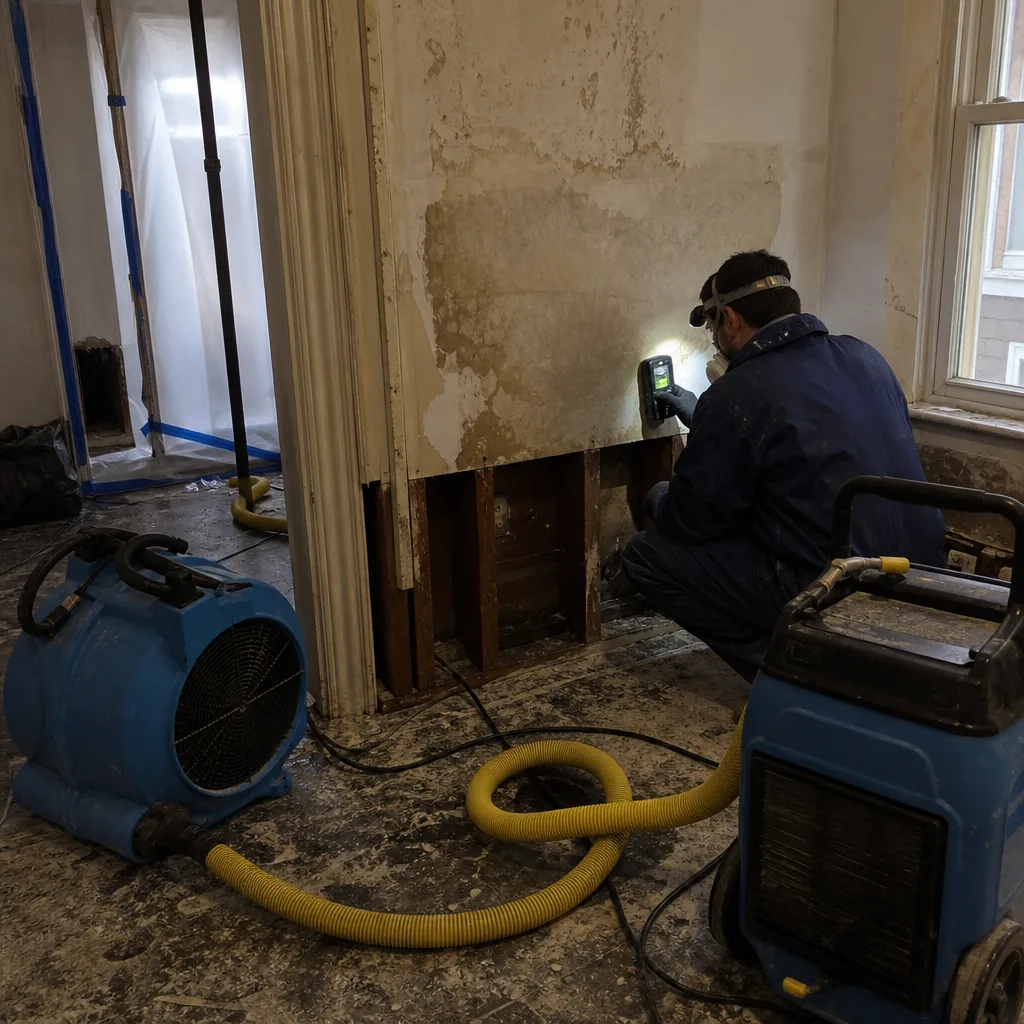
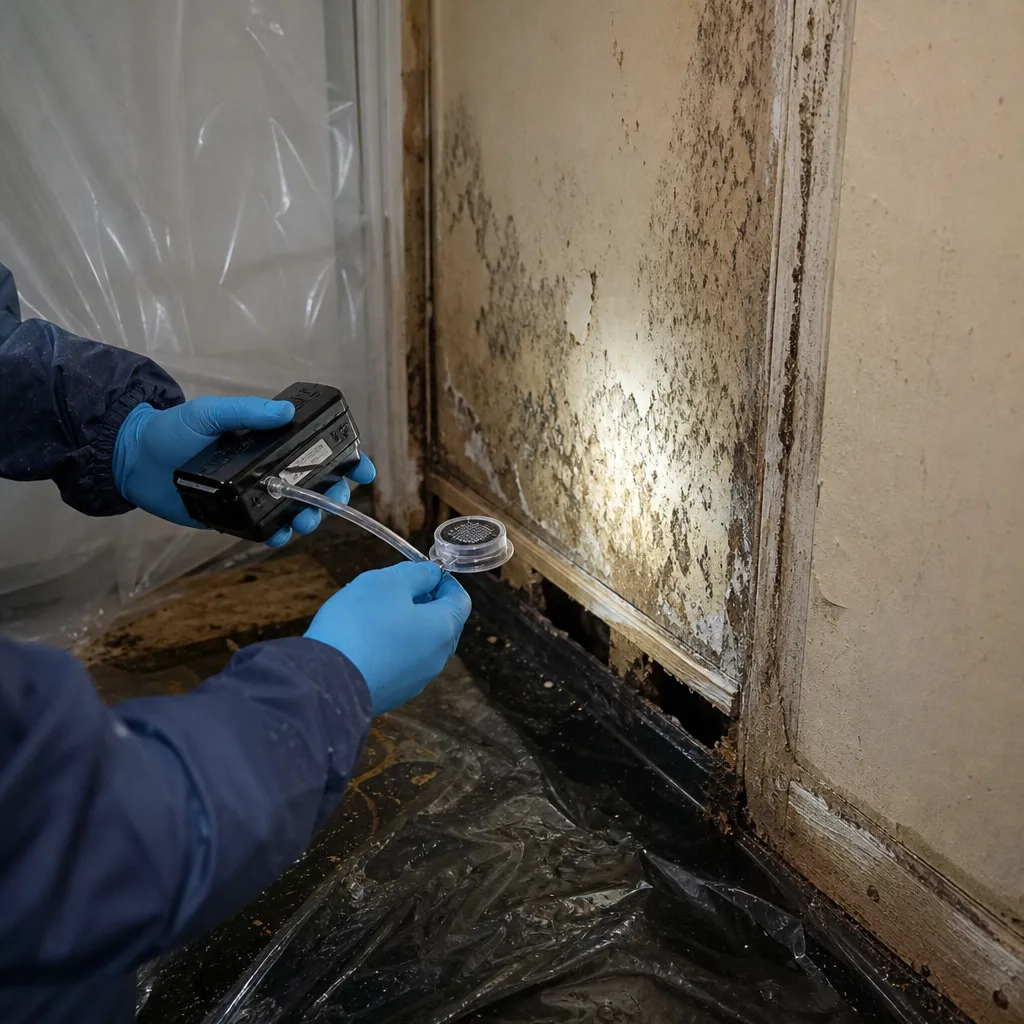
Moisture mapping with thermal imaging and calibrated hygrometers tells us what the eye cannot: vapor pressure differential across building assemblies, hidden migration through centralized HVAC chases in glass towers, and trapped moisture in heavy timber framing of pre-WWII conversions. Structural drying is not about running equipment until surfaces feel dry. It is about documented psychrometric data - temperature, relative humidity, and specific humidity readings logged daily - that proves the assembly has reached pre-loss moisture content or a defined dry standard.
Why Long Island City Property Owners Choose DryMark Restoration Astoria
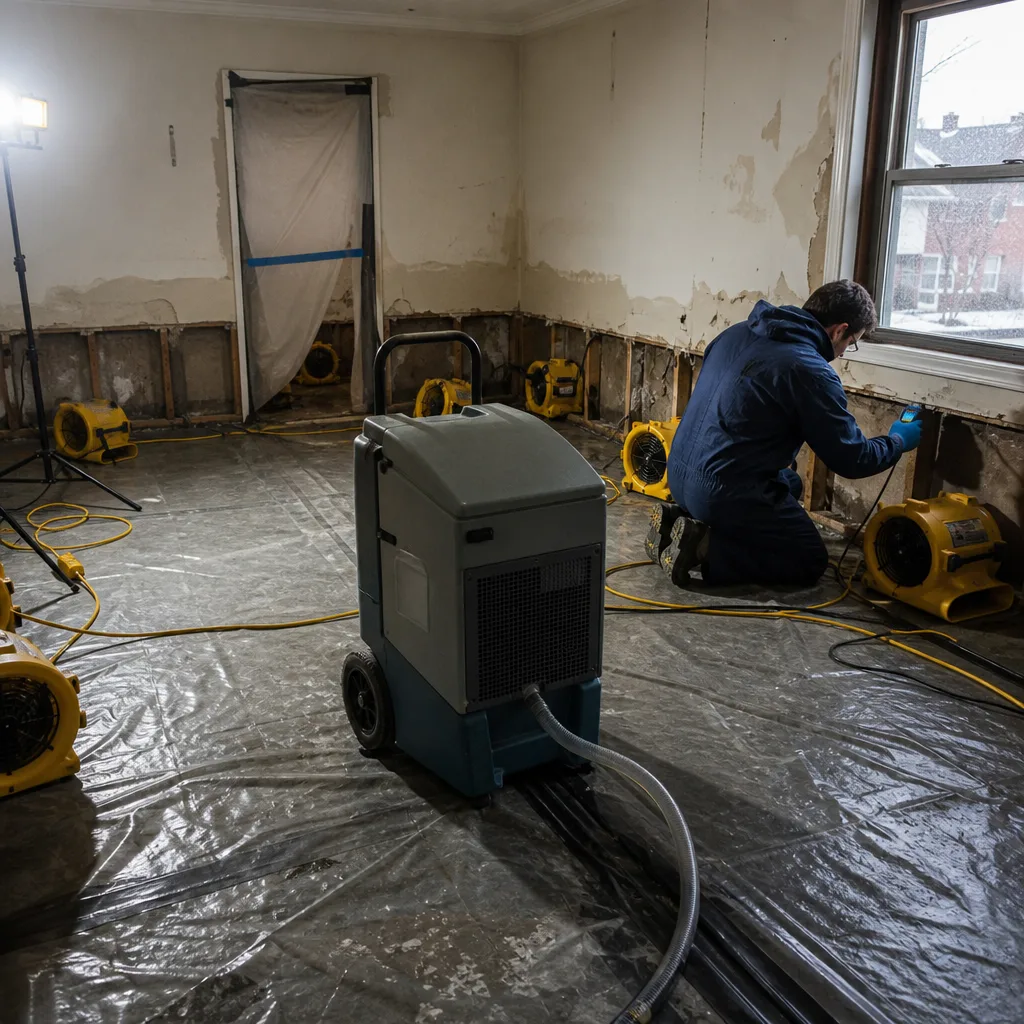
- Forty-five-minute response commitment to Long Island City addresses, because water does not wait for business hours.
- Twenty-four-hour live answer: a real person picks up every call, never an automated system or next-business-day callback.
- IICRC-certified crews holding WRT (Water Damage Restoration Technician) and AMRT (Applied Microbial Remediation Technician) credentials, with license numbers provided on request.
- Free visual inspection before any equipment is deployed or any price is discussed.
- Direct insurance billing and adjuster coordination, with documentation that meets carrier standards on the first submission.
- One team from extraction through reconstruction - no handoffs to unknown subcontractors mid-job.
BeforeAfterOur Water Damage Restoration Process
1. Inspection & Assessment
We document the loss with moisture readings, thermal imaging, and room-by-room photography before touching any material. In Long Island City’s converted lofts, this includes screening for legacy asbestos fireproofing and lead paint that changes the scope from standard mitigation to regulated hazmat work.
2. Extraction & Stabilization
Standing water comes out first - truck-mounted extraction for large losses, portable units for tight mechanical rooms and elevator pits. We establish containment boundaries and deploy HEPA air scrubbers where Category 2 or 3 water has introduced biological or chemical load.
3. Drying & Dehumidification
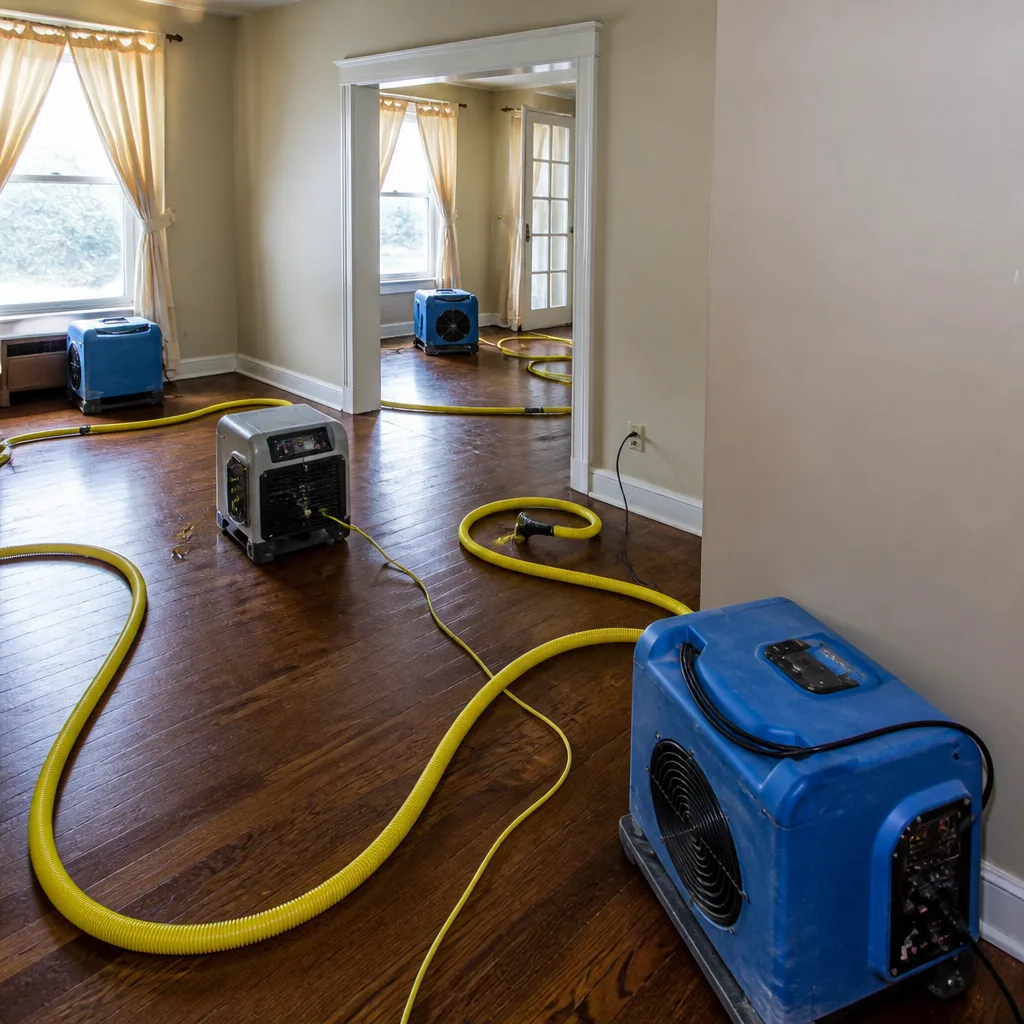
Our crews deploy Dri-Eaz and Phoenix desiccant dehumidifiers alongside axial and centrifugal air movers sized to the cubic footage and vapor load. Daily moisture logs track specific humidity, temperature, and dew point until readings confirm the structure has reached dry standard.
4. Cleaning & Sanitization
Antimicrobial treatment is applied to affected surfaces and slab assemblies, with product selection matched to the water category and substrate. In Long Island City’s FEMA AE zone, below-grade flood jobs near Newtown Creek may require additional environmental screening before standard sanitization protocols apply.
5. Environmental & Specialty Treatment
Converted timber-and-brick lofts in Court Square and Hunter’s Point often need lead-safe and asbestos-compliant work practices. Post-2010 towers with below-grade mechanical rooms may require coordination with building engineers to maintain life-safety systems during drying.
6. Repairs & Restoration
We deliver a written scope for reconstruction with line-item pricing before any rebuild work begins. Our 365-Day Done Right Promise, backed by The Haven Standard, covers all restoration work - if it is not done right, we make it right.
Need Emergency Water Damage Restoration in Long Island City Now?
Crews minutes away, answering live 24 hours a day. The sooner we start, the less it costs.
Working With Your Insurance Company
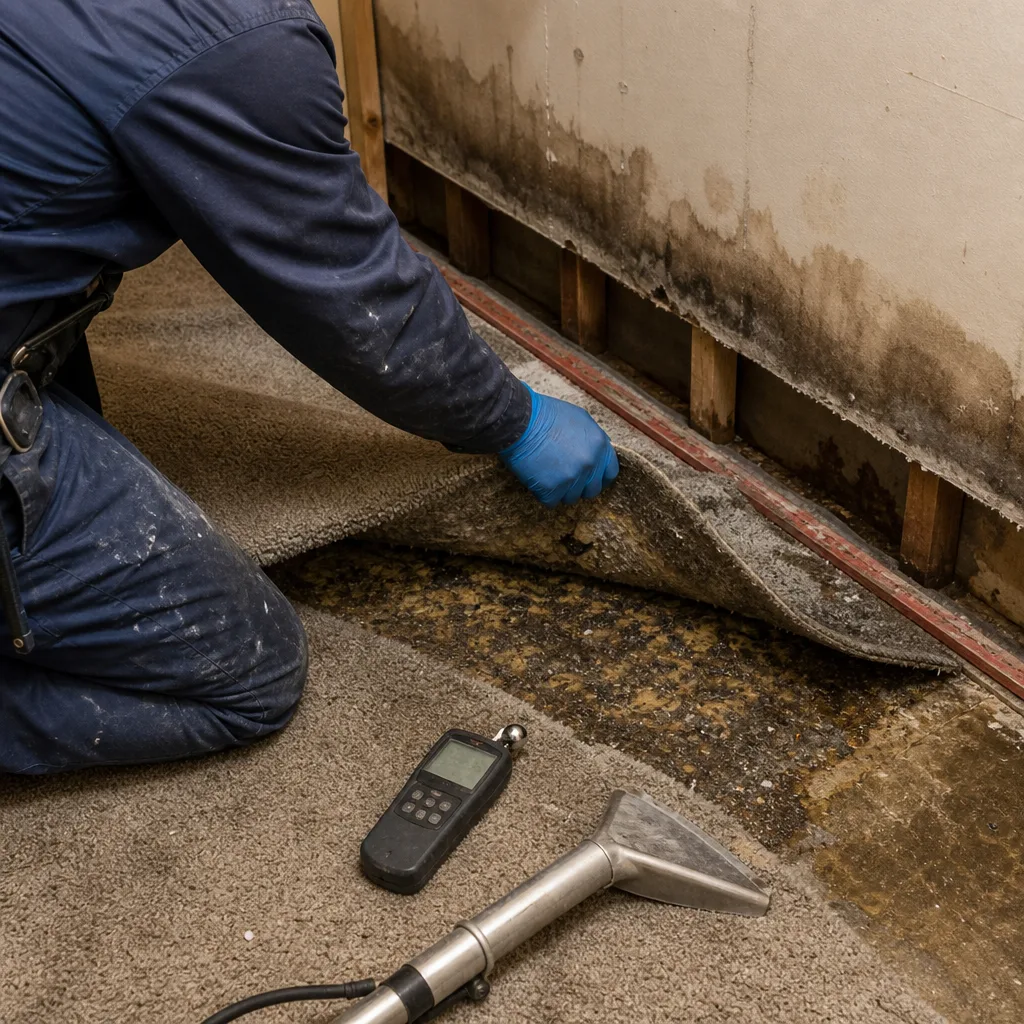
Insurance claims fail on documentation gaps. We close those gaps from the first hour. Every DryMark Restoration Astoria job produces a photo record on every visit, daily moisture logs with psychrometric data, and a detailed, line-item scope of work written to industry-standard estimating platforms. Our field supervisors coordinate directly with adjusters, answering material classification questions and providing supplemental documentation before the carrier asks for it. Alicia Brennan built this company in 2011 after seeing how many homeowners lost valid claims to sloppy paperwork, and that origin shapes every file we produce.
What We Provide Your Insurer
- Thorough documentation of the loss
- Photos of all damage, room by room
- Moisture readings and drying logs
- A detailed, line-item scope of work
- Direct coordination with your carrier
Built for Long Island City’s Loss Calendar
January deep freezes split supply lines in pre-WWII masonry buildings where original plumbing runs through uninsulated perimeter walls. Spring thaw brings basement seepage through century-old foundations in converted industrial buildings along the waterfront. Summer thunderstorms overwhelm flat-roof drainage on post-2010 towers, sending water through penthouse mechanical penthouses down vertical chases. And nor’easters - March, October, December - push East River surge into FEMA AE flood zones, flooding Hunter’s Point parking garages and lobby-level units before rain even hits the upper floors.
After a March nor’easter pushed surge into a below-grade garage on the Hunter’s Point waterfront, our crew ran water extraction on standing Category 3 water, set containment, applied antimicrobial treatment to the slab and equipment pads, and logged moisture readings against the pre-loss condition before bringing in Dri-Eaz and Phoenix desiccant dehumidification units with air movers to stabilize the mechanical room. That is standard practice for us. It should be standard everywhere.
Water Damage Restoration Across Long Island City’s Neighborhoods
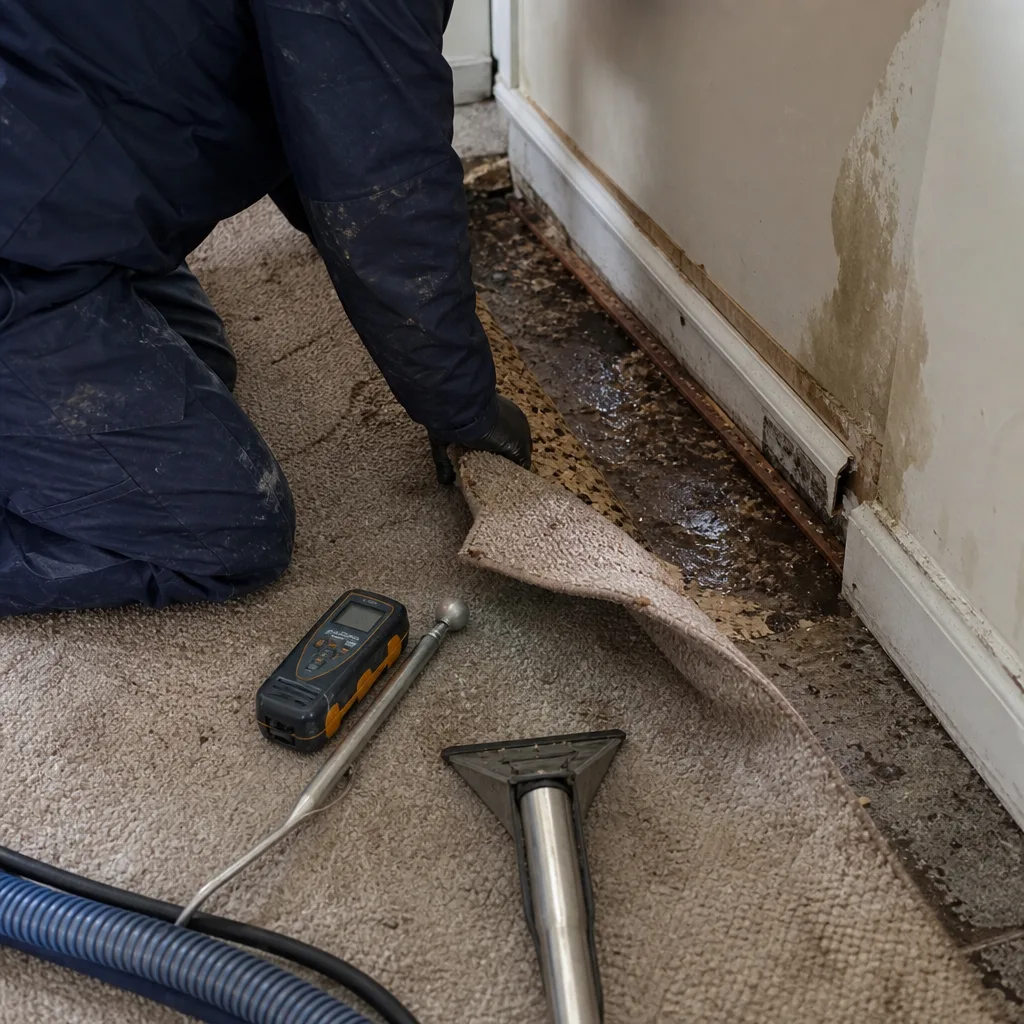
Our Water Damage Restoration team serves the full Long Island City map, and the work changes block by block.
Court Square - converted early-20th-century factory lofts with heavy timber framing, original cast-iron columns, and aging galvanized plumbing. Burst pipe restoration here often triggers hazmat protocols for legacy asbestos fireproofing. We have scoped jobs where a single supply line failure required dual containment: one for water damage, one for regulated material disturbance.
Hunter’s Point - the waterfront edge, post-2010 glass towers and pre-war industrial conversions side by side. Below-grade mechanical rooms and parking garages sit in FEMA AE flood zones. Flood cleanup here starts with elevation assessment, not surface observation. We scope by flood stage, not by where the leak first appeared.
Dutch Kills - a mix of pre-WWII rowhouses and newer infill construction, with aging combined sewer systems that back up during heavy rain. Basement water removal in this corridor often involves Category 2 or 3 water requiring full PPE and antimicrobial treatment beyond standard extraction.
The industrial blocks near Newtown Creek - below-grade water intrusion here can carry historically contaminated groundwater from one of the nation’s most contaminated Superfund sites. Environmental screening is not optional. It is a prerequisite before standard mitigation protocols apply.
Specialized Water Damage Restoration Services We Offer in Long Island City
Emergency Water Extraction
Standing water removes faster than it evaporates, and every hour of delay multiplies secondary damage. Our truck-mounted and portable extraction systems handle everything from a single-unit supply line break in a Court Square loft to a fifty-thousand-square-foot garage flood on the Hunter’s Point waterfront. Call (862) 281-7710 for immediate dispatch.
Structural Drying & Dehumidification
Drying a structure means controlling vapor pressure differential until moisture readings match pre-loss conditions or industry dry standards. In Long Island City’s post-2010 towers, this requires mapping moisture migration through centralized plumbing and HVAC chases that can carry water five floors from the source before it surfaces.
Flood Cleanup
Long Island City’s FEMA AE flood zone makes flood cleanup a recurring need, not a rare emergency. We assess water category by source and path, not by appearance alone. Surge flooding from the East River carries different contaminants than a roof drain backup, and the mitigation protocol changes accordingly.
Burst Pipe Restoration
January freezes split copper and PEX in uninsulated walls; corrosion failures in original galvanized or cast-iron plumbing hit year-round in pre-WWII buildings. Our crews extract, dry, and document the full affected assembly, including hidden moisture in timber framing and masonry cavities that thermal imaging reveals.
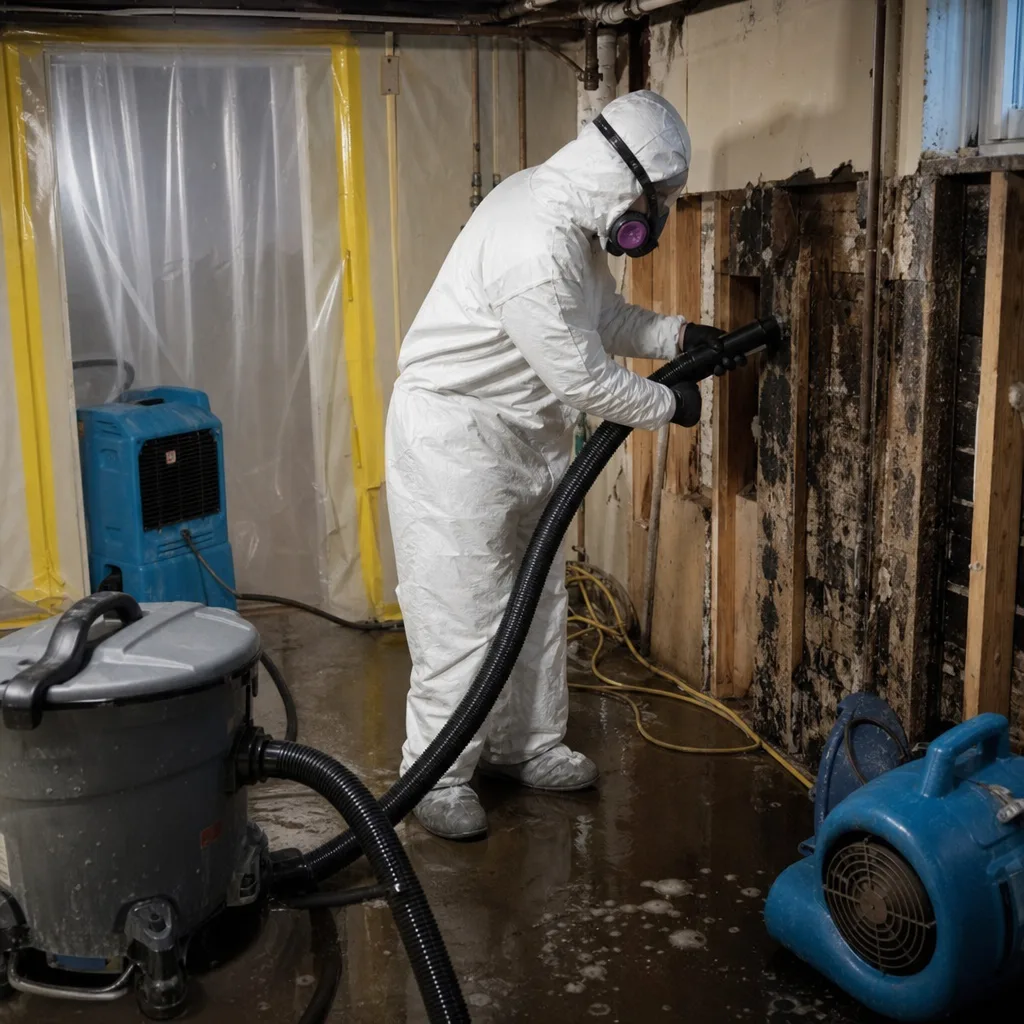
Basement Water Removal
Below-grade spaces in Long Island City range from century-old stone foundations in Dutch Kills to poured concrete parking structures on the waterfront. Each requires different extraction equipment, different drying configurations, and - near Newtown Creek - environmental screening before standard protocols begin.
What happens when you call
- 1
A real person answersNo phone trees - you reach a local pro.
- 2
You get an upfront price rangeHonest numbers before anyone is dispatched.
- 3
A background-checked tech heads outLicensed & insured, dispatched right away.
- 4
You approve before work beginsNothing starts until you say go.
Water Damage Restoration Costs in Long Island City, NY
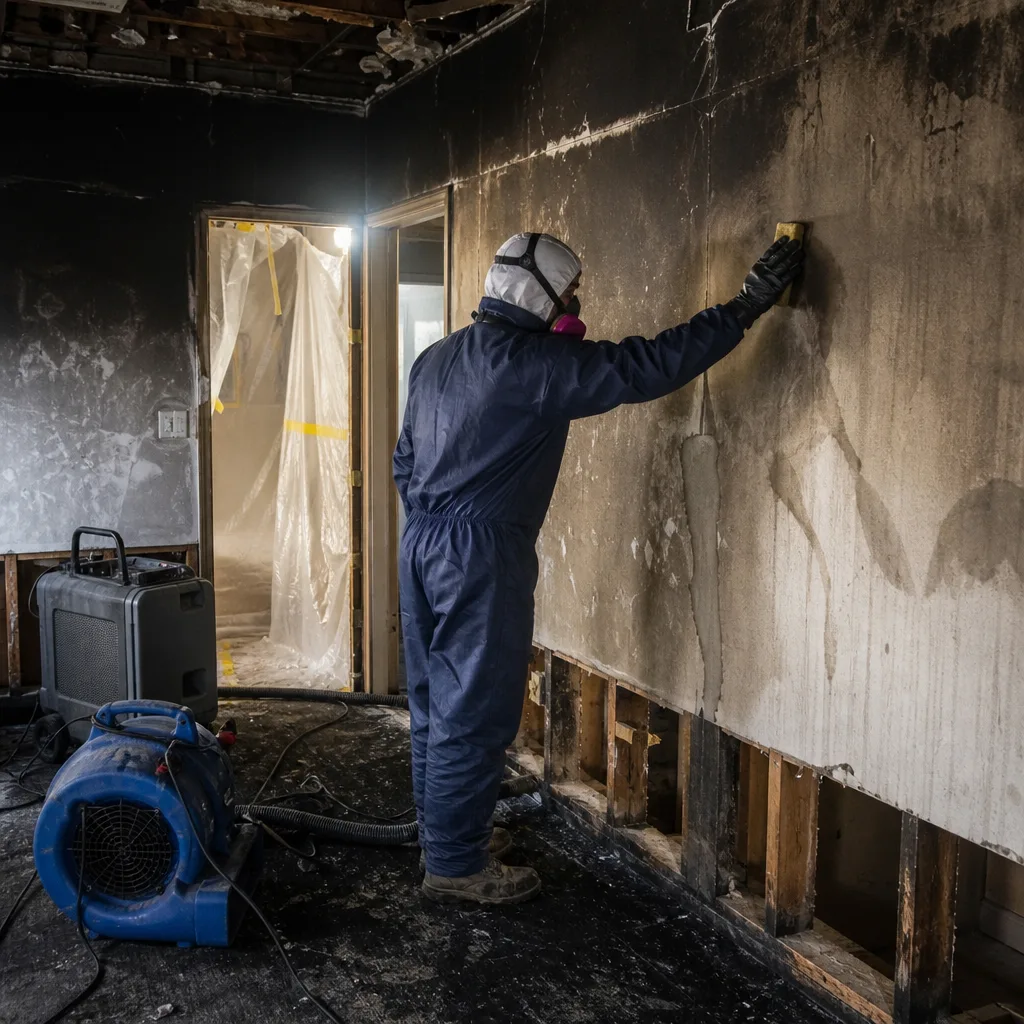
These are actual ranges for Water Damage Restoration in Long Island City properties, based on jobs we have scoped and completed:
| Service | Typical Range |
|---|---|
| Emergency water extraction (up to 1,000 sq ft) | $450 - $950 |
| Structural drying & dehumidification | $1,800 - $4,200 |
| Category 1 clean water mitigation (full service) | $2,800 - $5,500 |
| Category 2 gray water mitigation | $3,500 - $6,800 |
| Category 3 black water / sewage cleanup | $5,000 - $12,000+ |
| Below-grade flood with environmental screening | $4,200 - $9,500 |
What moves the price: affected square footage, water category, building access, presence of regulated materials like asbestos or lead, and whether the loss requires environmental screening. Insurance typically covers sudden and accidental water damage from burst pipes or storm intrusion; gradual leaks and maintenance-related failures often fall to the owner. We provide a written price before any work starts, every time, with no scope-creep additions once the crew is inside - Haven Standard, Clause 1. Bring a competitor’s written estimate for a free second opinion.
We Also Serve Cities Near Long Island City
Our crews respond daily to Astoria, Maspeth, Jackson Heights, and Elmhurst - each with its own building stock and loss patterns, each documented to the same standard.
Serving Long Island City, NY - Our Local Coverage Area
We’re based in the Long Island City area and know this community well. Use the map below to see our service coverage - if you’re nearby, we can almost certainly help.
Long Island City Water Damage Restoration Questions, Answered
Why does a water damage call in Long Island City sometimes start with environmental screening?
Because Long Island City’s western edge borders Newtown Creek, a federally designated Superfund site with historically contaminated groundwater. Below-grade flood jobs in this zone can expose crews to contaminants that standard water mitigation protocols do not address. We screen first, then scope. Call (862) 281-7710 if your property is in this area.
How fast does water damage turn into mold in an LIC high-rise?
Mold colonization can begin in forty-eight to seventy-two hours under favorable conditions, and Long Island City’s post-2010 towers create those conditions efficiently: centralized HVAC chases provide concealed moisture reservoirs, and glass curtain walls with minimal drying potential trap humidity. We deploy air scrubbers and begin drying within hours of extraction to interrupt that timeline. Call (862) 281-7710 for immediate response.
Does the FEMA AE flood zone along the East River change how you handle a flooded garage or lobby unit?
Yes. The AE zone means flood elevation drives the scope, not the apparent water line. A garage or lobby unit may have taken surge water that receded before arrival, leaving hidden saturation in slab assemblies and mechanical pads. We moisture-map to flood stage, not to visible residue, and document elevation data for your adjuster. Call (862) 281-7710 for assessment.
What is different about restoring a converted Court Square loft versus a new glass tower?
Court Square lofts contain heavy timber framing, original cast-iron columns, aging galvanized plumbing, and likely asbestos fireproofing - any of which can convert a standard burst-pipe job into a regulated hazmat scope. Post-2010 towers have complex centralized systems that let water migrate vertically through chases, so moisture mapping must cover adjacent floors and stacks even when the leak appeared contained. Call (862) 281-7710 - we scope both correctly.
Can you dry a below-grade mechanical room in an LIC tower without shutting the building down?
Often yes, depending on the equipment configuration and the building engineer’s requirements. We deploy desiccant dehumidification with temporary ducting that isolates the affected zone while maintaining life-safety system operation. Coordination with building management is standard on every tower job. Call (862) 281-7710 to discuss your specific mechanical room layout.
Will my insurance cover water damage restoration in Long Island City?
Sudden and accidental damage - burst pipes, storm intrusion, appliance failures - is typically covered under standard homeowner and commercial policies. Gradual leaks, maintenance neglect, and flood damage from rising water usually require separate flood coverage. We document every loss to carrier standards and coordinate directly with your adjuster. Call (862) 281-7710 and bring your policy number if you have it.
How long does structural drying take in a Long Island City building?
Three to five days for standard residential losses, five to ten days for large commercial or below-grade jobs with heavy masonry or timber assemblies. Long Island City’s pre-WWII lofts with thick timber framing often run longer than post-2010 steel-and-concrete towers. We log daily moisture readings and release equipment only when psychrometric data confirms dry standard, not by calendar estimate. Call (862) 281-7710 for a timeline based on your specific loss.
What should I do in the first thirty minutes after discovering water damage?
Shut off the water source if you can locate it safely. Do not enter standing water if electrical equipment or outlets are submerged. Take photos from a safe distance. Then call (862) 281-7710. Our live dispatcher will guide you through immediate safety steps while a crew is en route. Do not wait for a callback - we answer every call.
Every DryMark Restoration Astoria job in Long Island City is documented, priced in writing before work begins, and backed by our 365-Day Done Right Promise under The Haven Standard. We have restored more than 12,000 homes since 2011, each with the same protocol: evidence first, then action.
Call (862) 281-7710 now for emergency water damage restoration in Long Island City. Live answer, twenty-four hours a day. Free visual inspection. Written price before any work starts.
Written by Alicia Brennan, Owner at DryMark Restoration Astoria, serving Long Island City since 2011.
Water Damage Restoration in Nearby Areas