
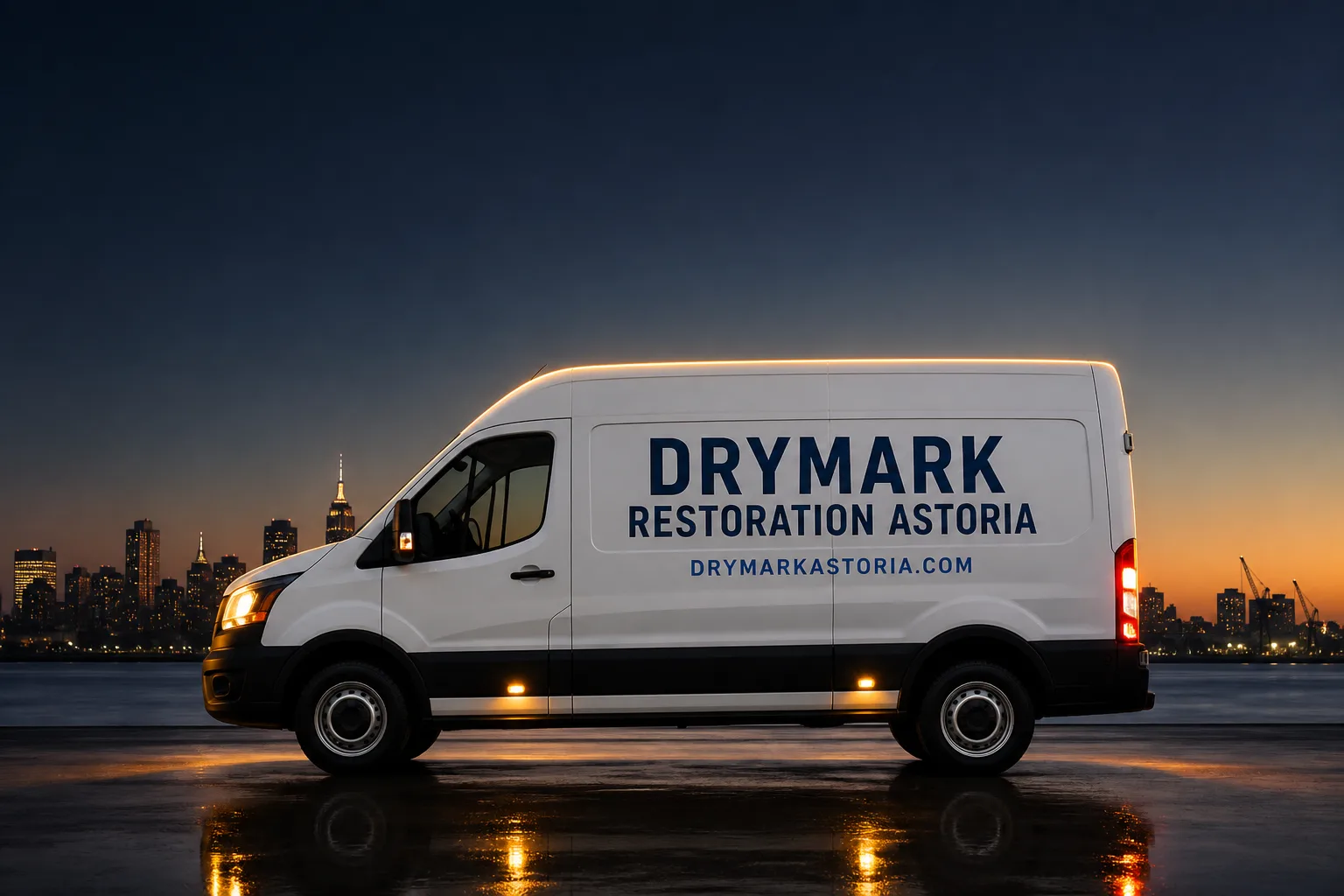
Free visual inspection and a written scope of work before any mitigation begins - photos, moisture readings, and drying logs go in your claim file
The scope we write is the scope we bill. Anything new gets shown to you, in writing, before we touch it.
Storm response
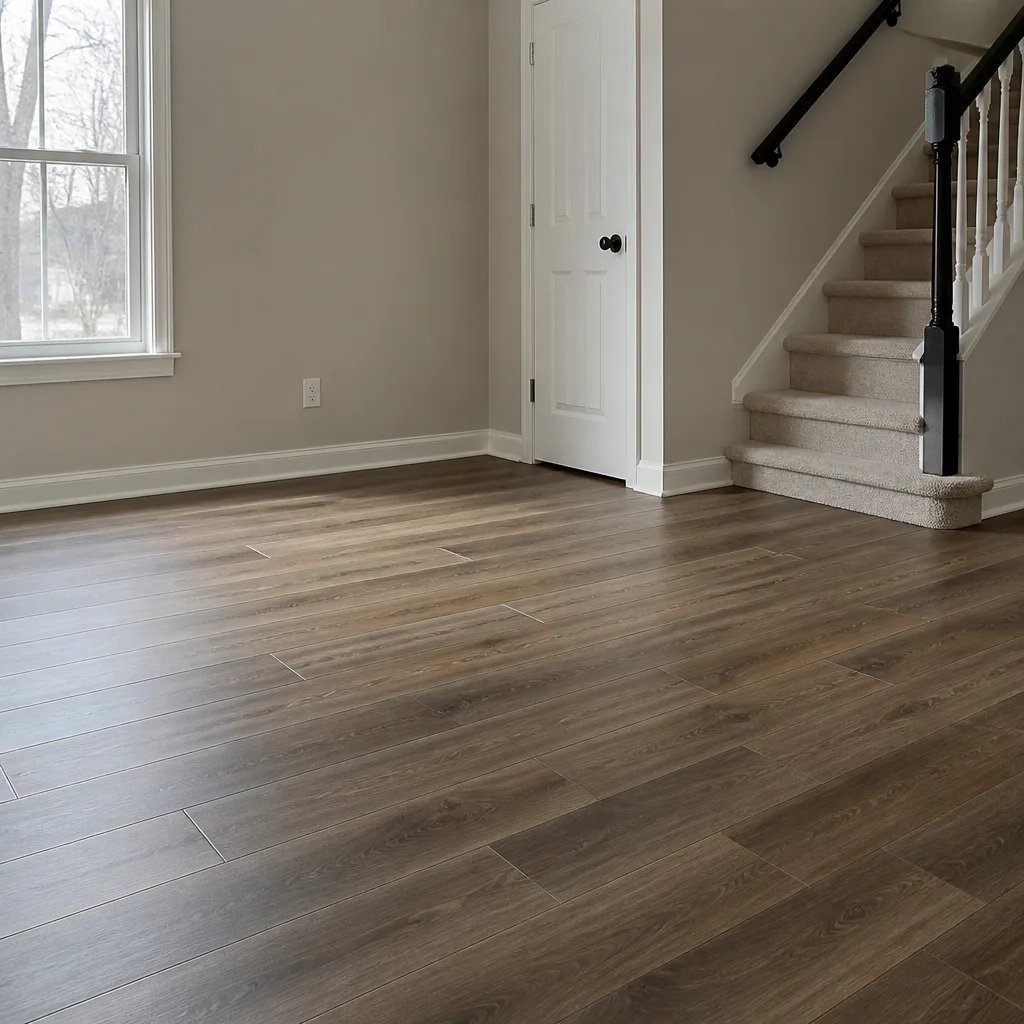
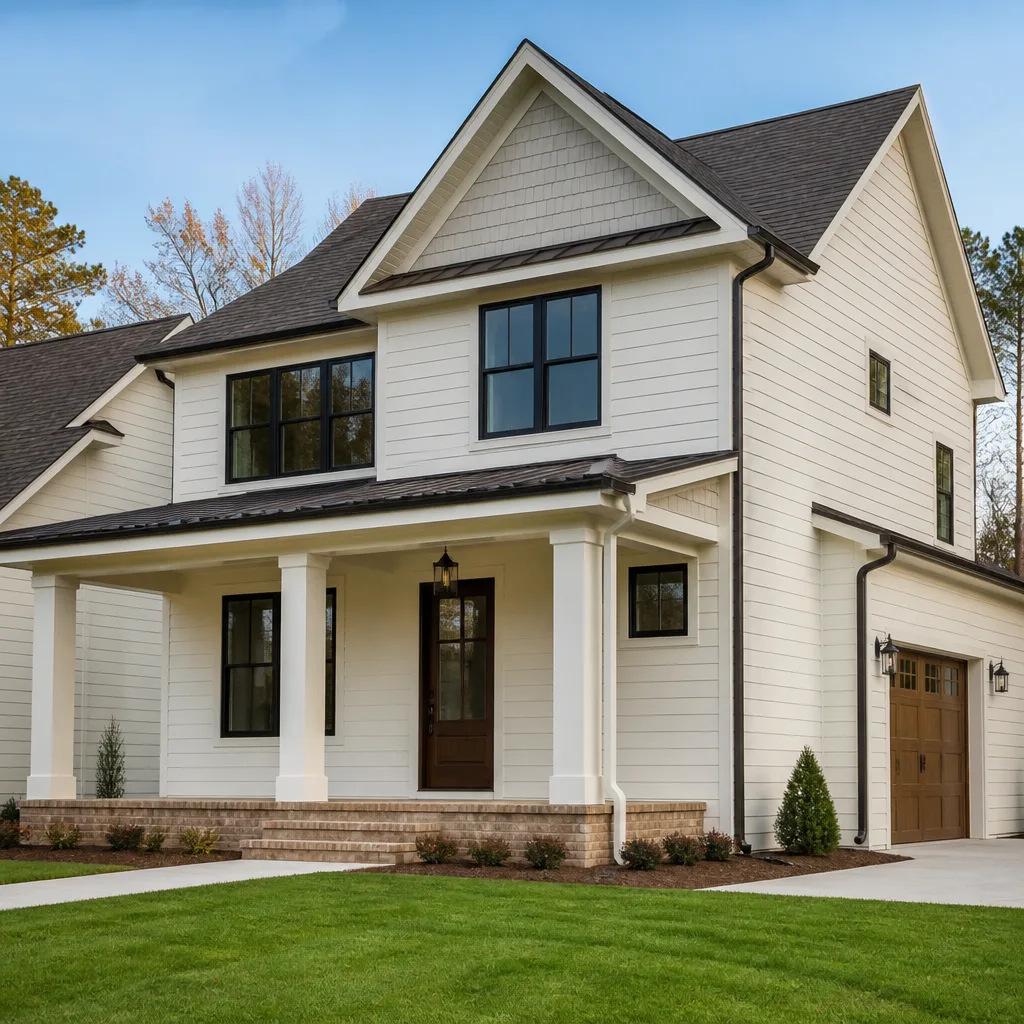
 Before
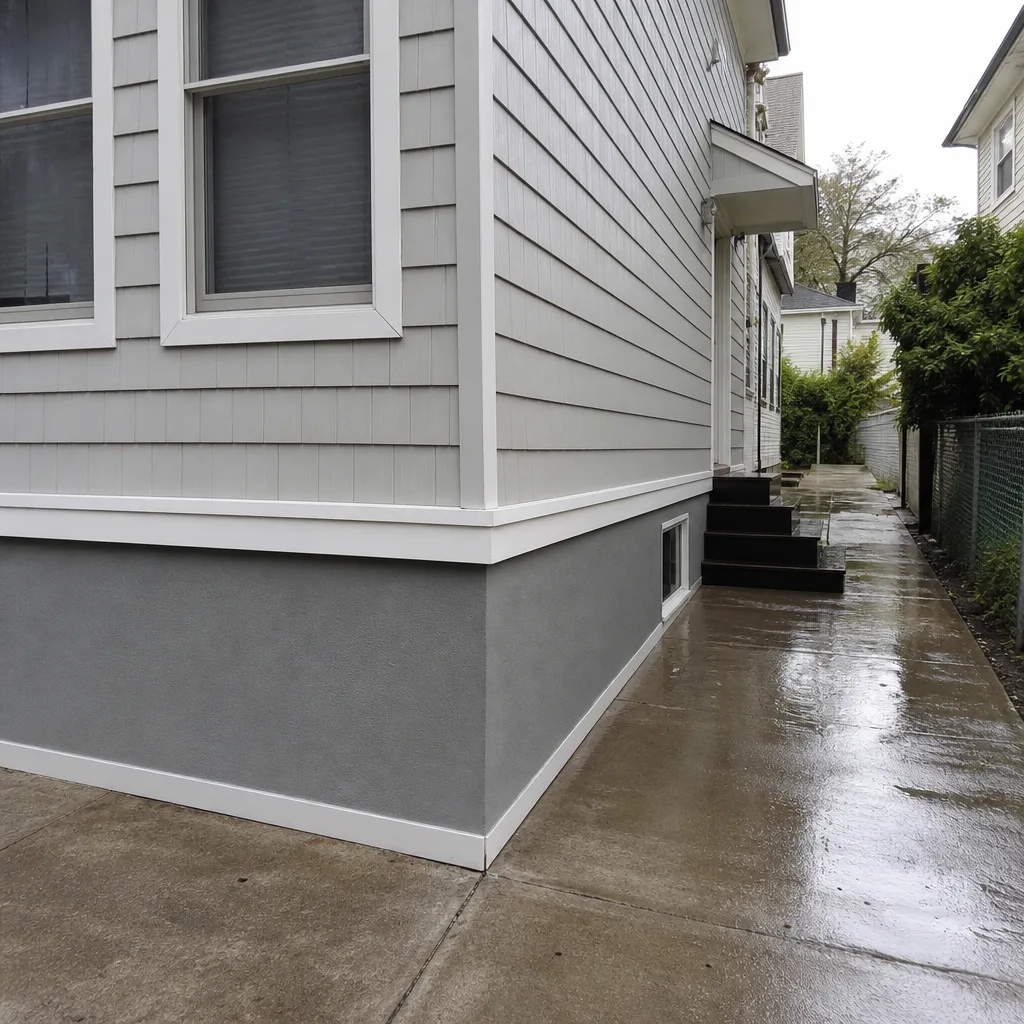 After
After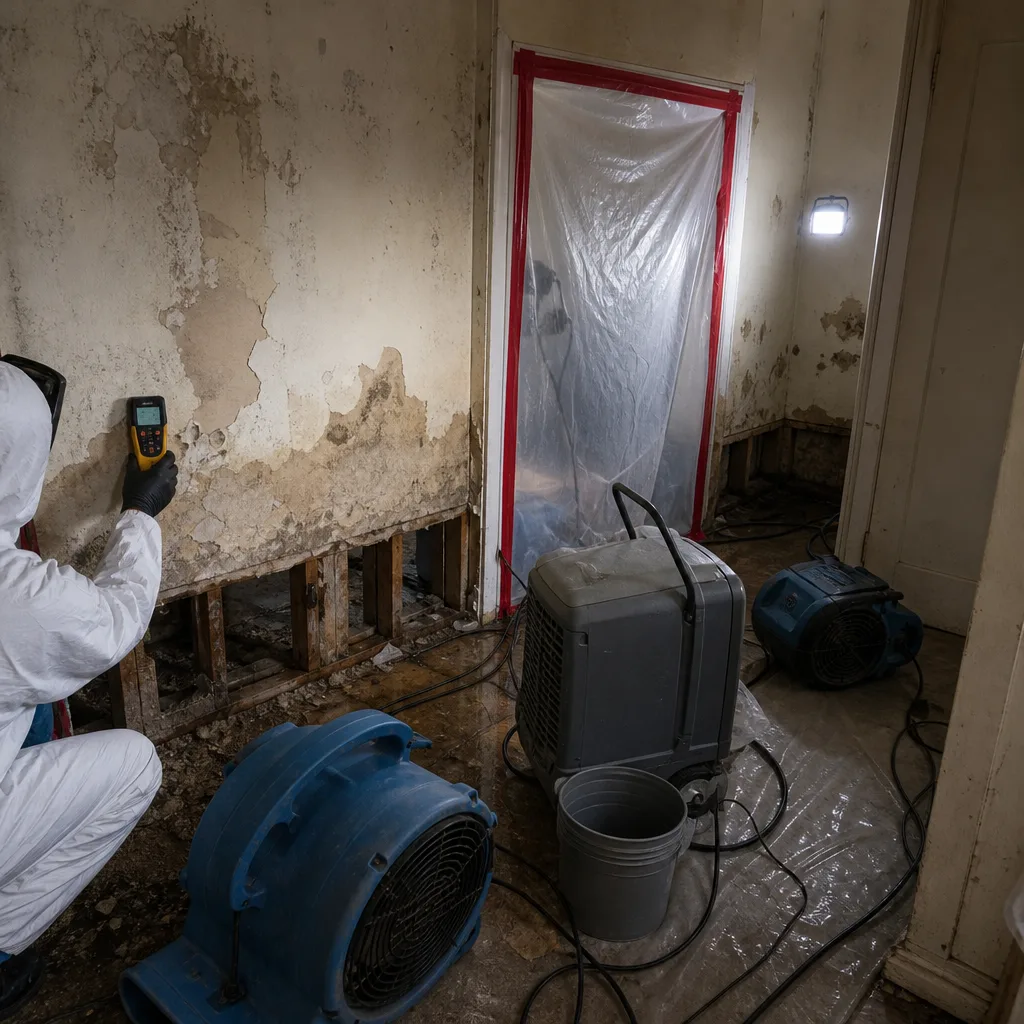 Before
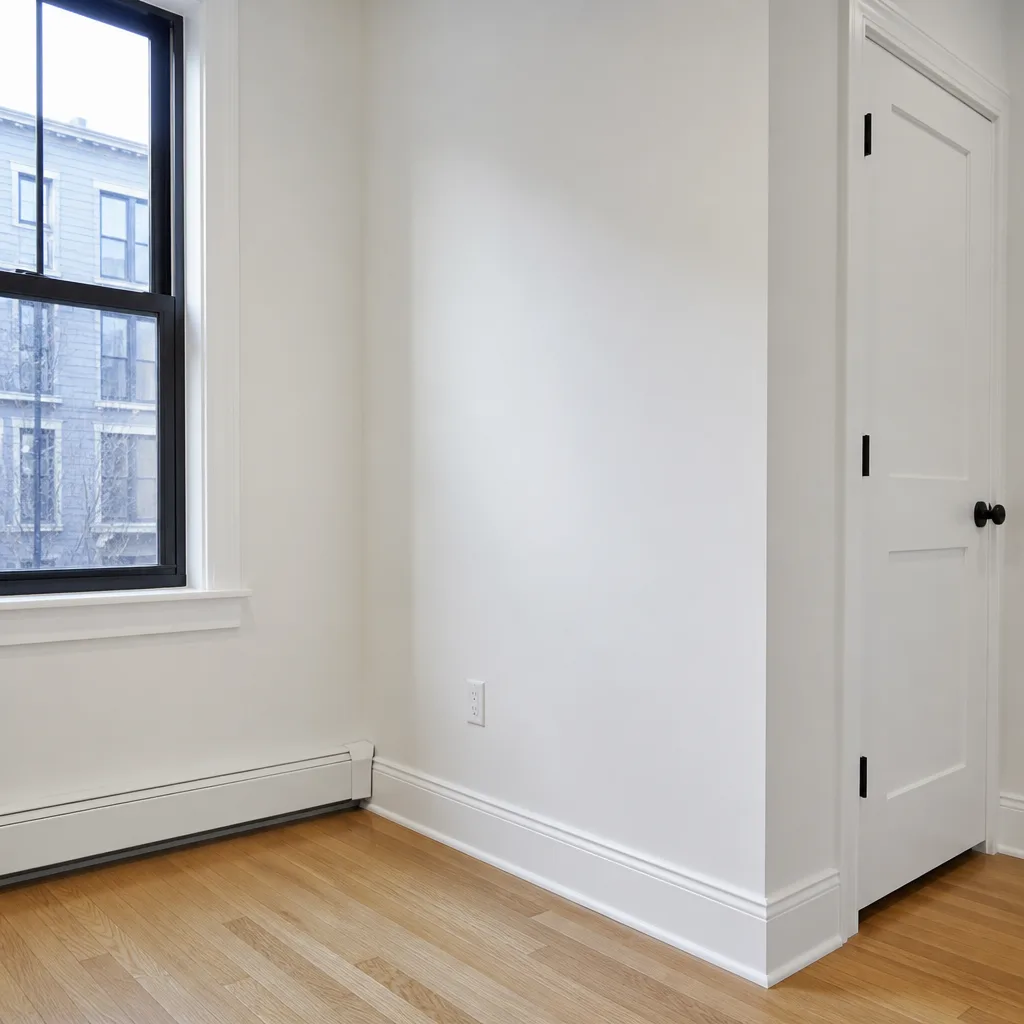 After
After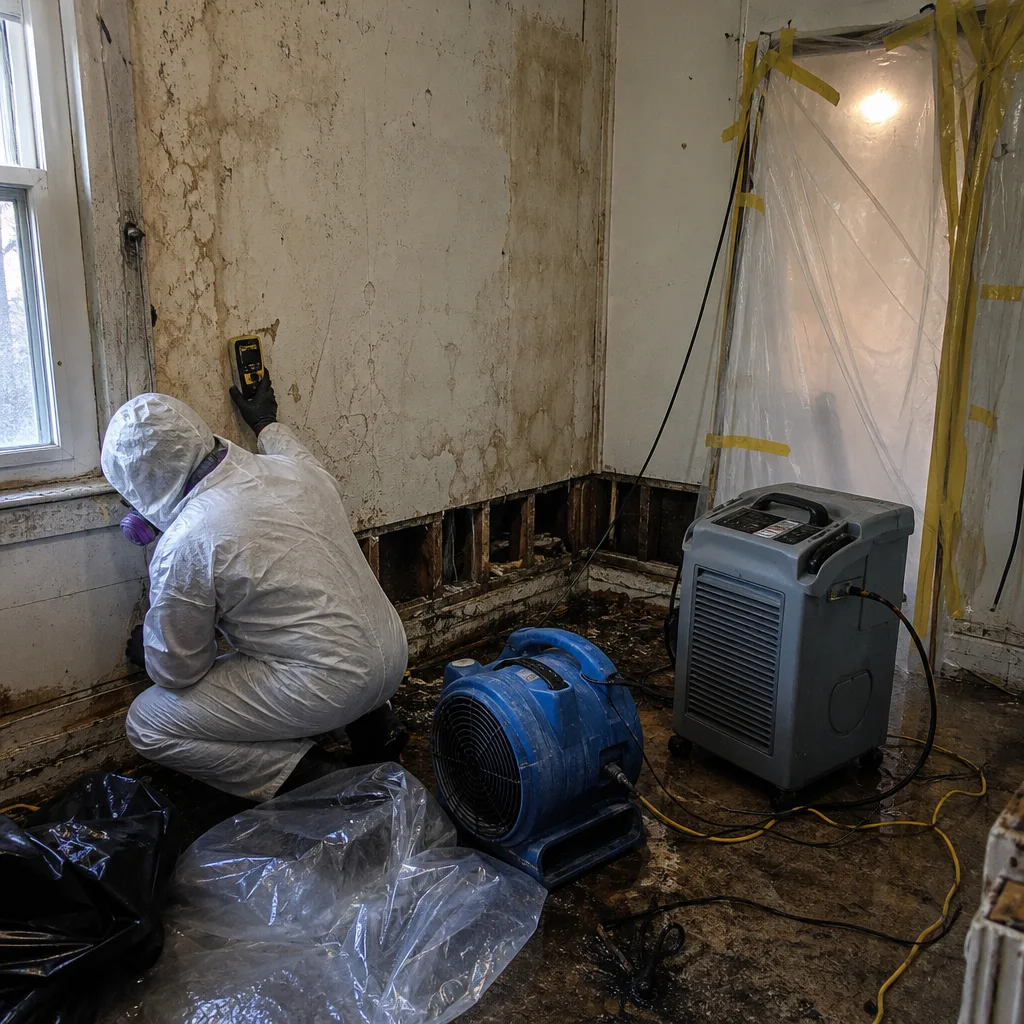 Before
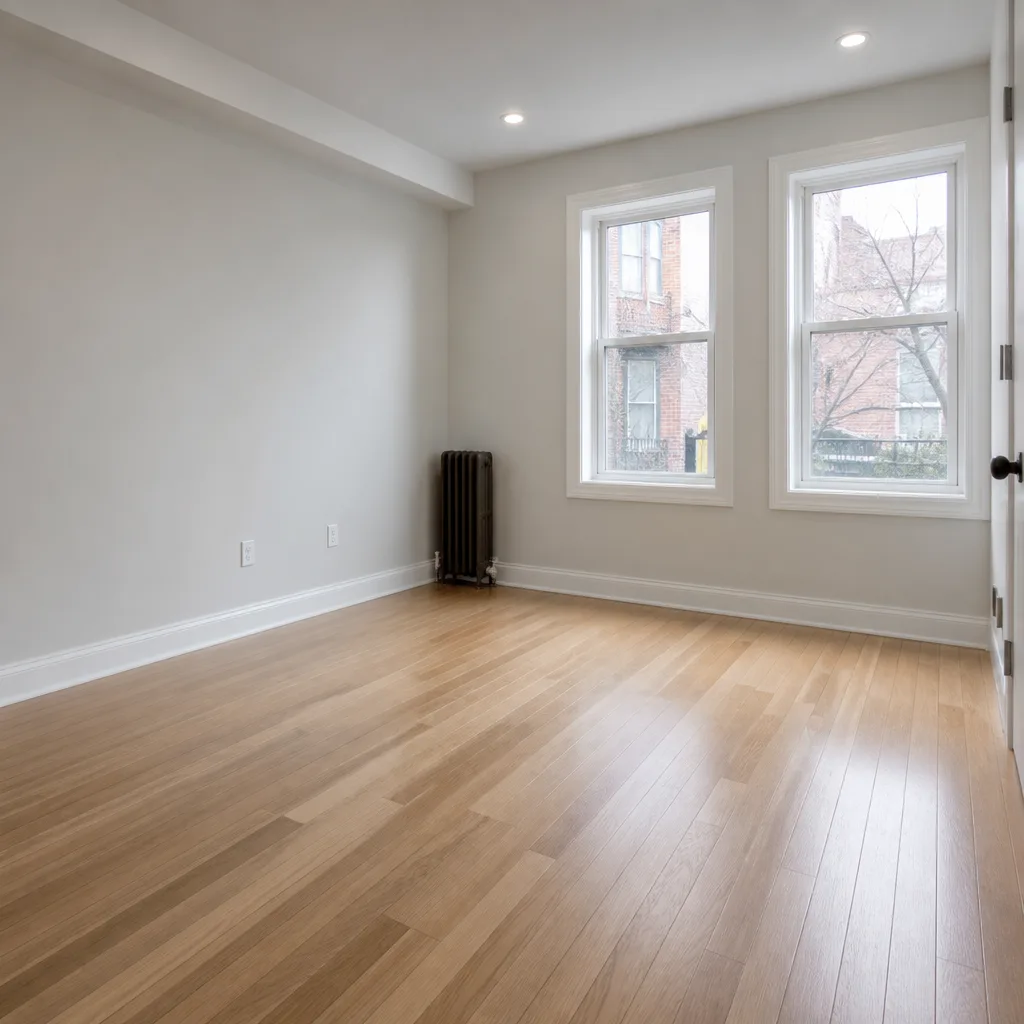 After
After24/7 Emergency Water Damage Restoration in Jackson Heights
Water damage restoration in Jackson Heights typically runs $2,800-$7,500 for a standard residential mitigation, with emergency extraction starting at $450-$950 and full structural drying adding $1,800-$4,200 depending on affected square footage and material classification. Most jobs in the 11372 and 11373 ZIP codes begin same-day when you call our live dispatch line at (862) 281-7710. We’re answering right now, 24 hours a day, with no voicemail tree, no callback queue, and no next-business-day delay while water keeps moving through your floors and walls.
Our crews dispatch from our New York City office and reach Jackson Heights properties in under 45 minutes during daylight hours, slightly longer overnight depending on traffic across the Queensboro approach. The first hour determines whether you’re looking at extraction and drying or full gutting and reconstruction, including Fire & Smoke Damage Restoration in Jackson Heights when needed. Water travels horizontally through pre-war plaster faster than most owners realize, and in Jackson Heights’s garden co-op blocks, a single source can affect multiple shareholder units before anyone smells it.
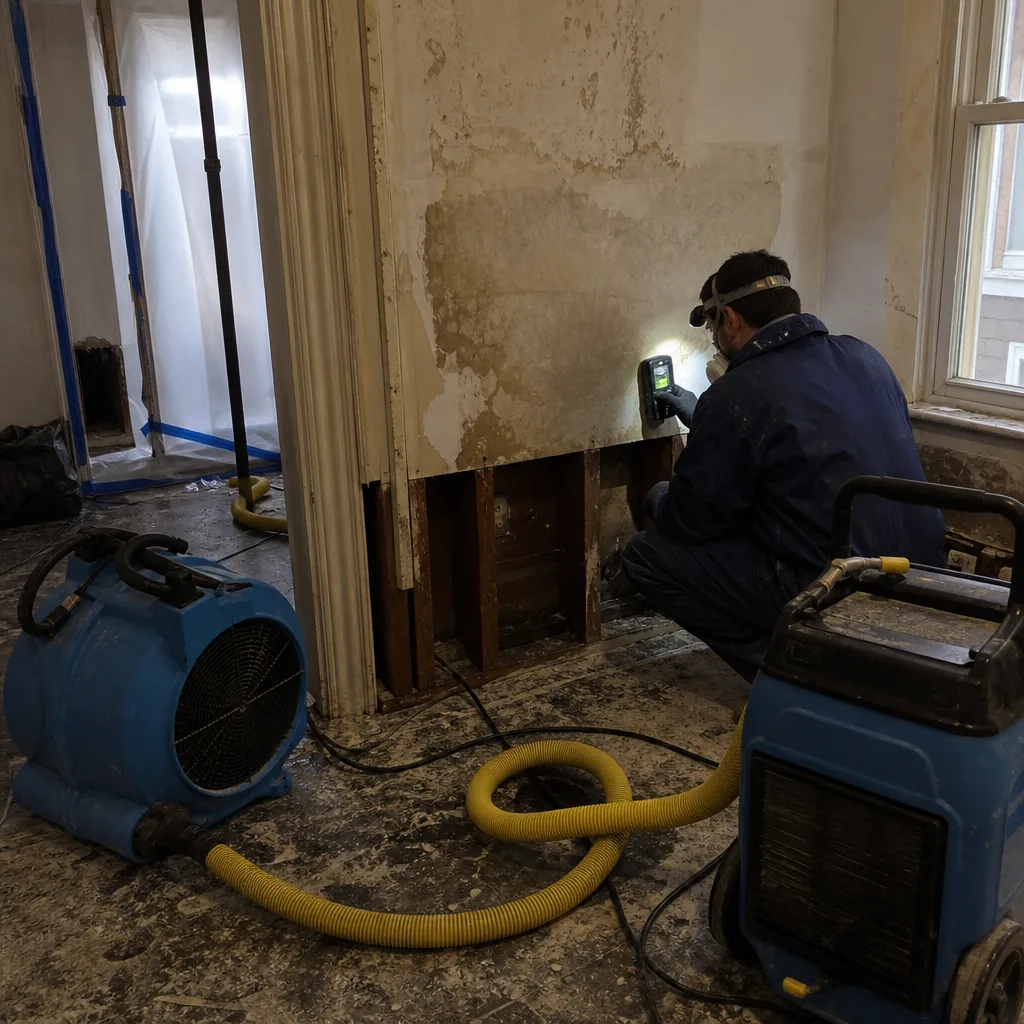
We do not charge for the initial visual inspection. A technician arrives, documents the loss with photos, takes moisture readings with a calibrated penetrating meter, and delivers a written scope and price before any equipment runs or any demolition starts. Haven Standard, Clause 1: written price before work begins, every time, no exceptions.
Understanding Water Damage Restoration Severity in Jackson Heights Properties
Water damage falls into three categories, and in Jackson Heights, the building stock almost always pushes losses toward the more complex end. Category 1 is clean water from a broken supply line. Category 2 carries significant contamination, think dishwasher discharge or sump pump failure. Category 3 is grossly contaminated black water, and this is where Jackson Heights’s geography becomes expensive.
The neighborhood sits on flat Queens terrain with combined sewer infrastructure dating to the 1920s and 1930s. Heavy rain events back up street drains and push Category 3 water into basement-level units and mechanical rooms of the garden apartment complexes. We’ve documented this pattern repeatedly along 34th Avenue and the lower-numbered streets north of Roosevelt Avenue. The water carries sewage, industrial runoff, and whatever else entered the storm system upstream. Category 3 losses require full antimicrobial treatment, removal of all contaminated porous materials, and clearance testing before reconstruction begins.
Moisture mapping with thermal imaging and penetrating meters tells us where water has traveled behind walls and under flooring. In buildings with horsehair plaster and original lath, moisture wicks vertically through the plaster assembly and can remain trapped for weeks without professional drying. Structural drying uses psychrometric data, temperature, relative humidity, and vapor pressure differential, to calculate exactly how much dehumidification capacity a space requires. We run daily moisture logs with readings from every affected room, documented to IICRC S500 standards, so your adjuster sees progress in numbers, not promises.
Why Jackson Heights Property Owners Choose DryMark Restoration Astoria
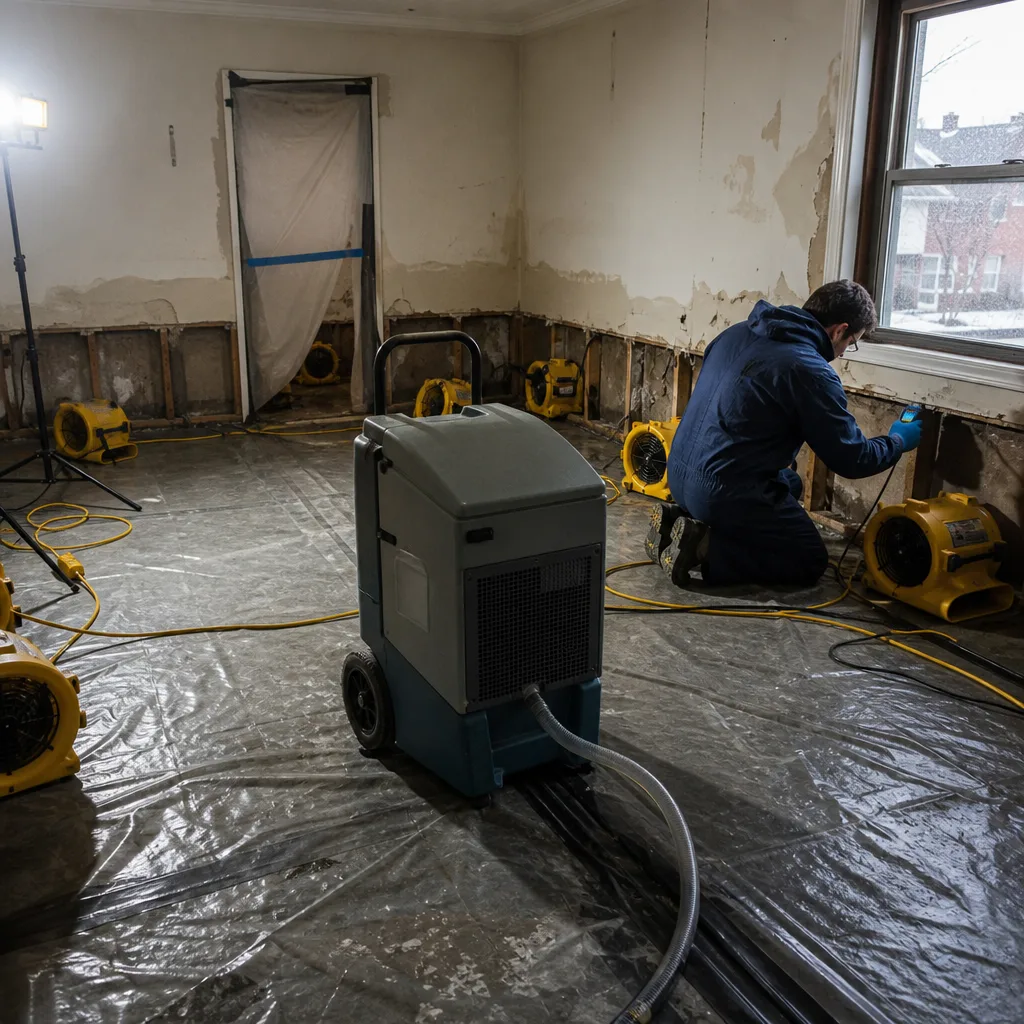
- 45-minute response commitment to Jackson Heights addresses during standard dispatch hours, with crews carrying extraction equipment, moisture meters, and containment materials on every truck.
- 24/7 live answer - a real person picks up every call, never an automated system or voicemail tree, because water does not wait for business hours.
- IICRC-certified crews holding WRT (Water Damage Restoration Technician), FSRT (Fire & Smoke Restoration Technician), and AMRT (Applied Microbial Remediation Technician) certifications, with license numbers documented on every job file.
- Free visual inspection with moisture readings, photo documentation, and a written scope delivered before you decide whether to proceed.
- Direct insurance billing with photo-documented estimates, daily drying logs, and direct adjuster coordination, so you’re not floating costs while claims pend.
- One team from extraction to reconstruction - the same crew that pumps out your basement handles the drywall, flooring, and finish carpentry, with no handoff gaps or blame-shifting between contractors.
BeforeAfterOur Water Damage Restoration Process
1. Inspection & Assessment
We arrive with thermal imaging cameras, penetrating moisture meters, and borescopes to map the full extent of water migration. In Jackson Heights co-ops, this includes identifying whether the source is a unit fixture, a shared riser, or a roof/courtyard breach that requires board access. Every reading is logged with time, location, and equipment serial number.
2. Extraction & Stabilization
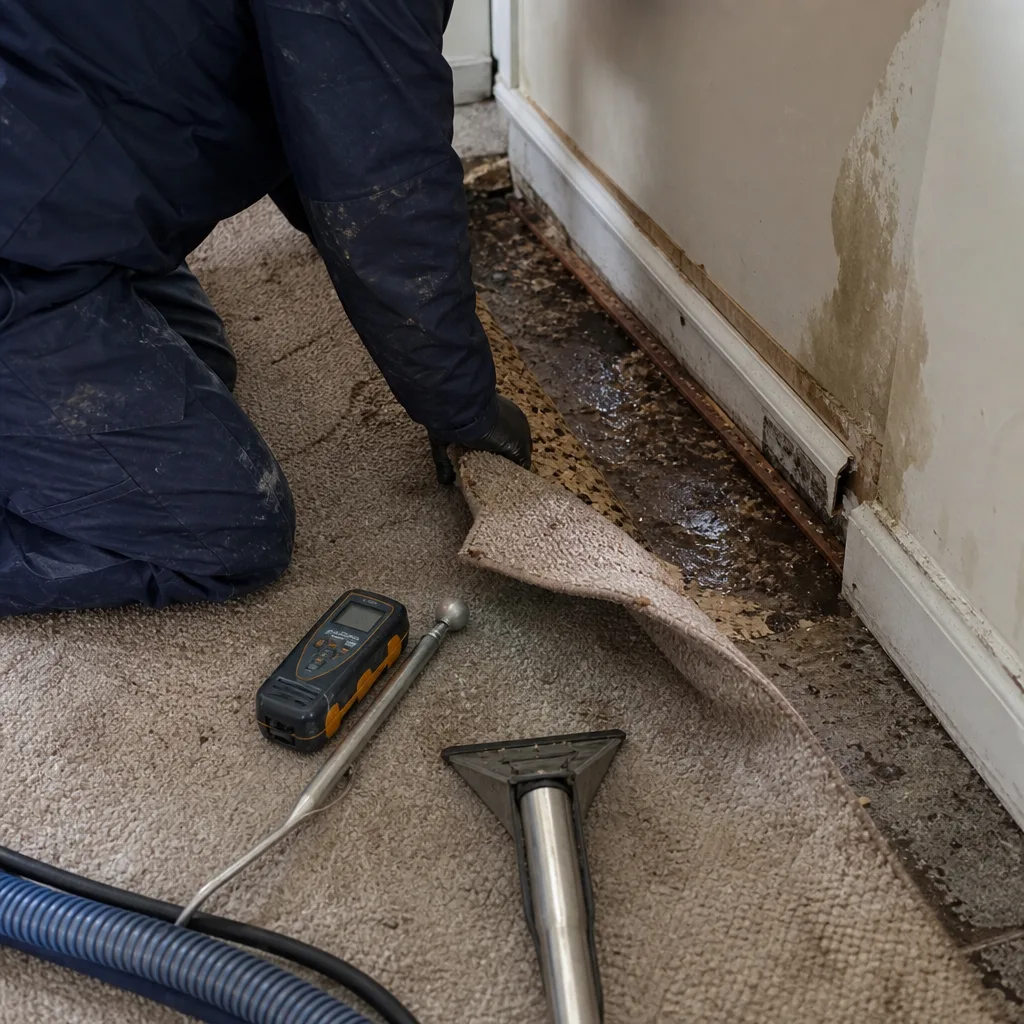
Standing water comes out first, using truck-mounted extraction units and weighted floor tools that compress carpet and pad to remove water from the subfloor. For Category 3 losses, we establish containment with 6-mil poly barriers and negative air pressure before touching anything. No drying starts until the water source is stopped and the category is confirmed.
3. Drying & Dehumidification
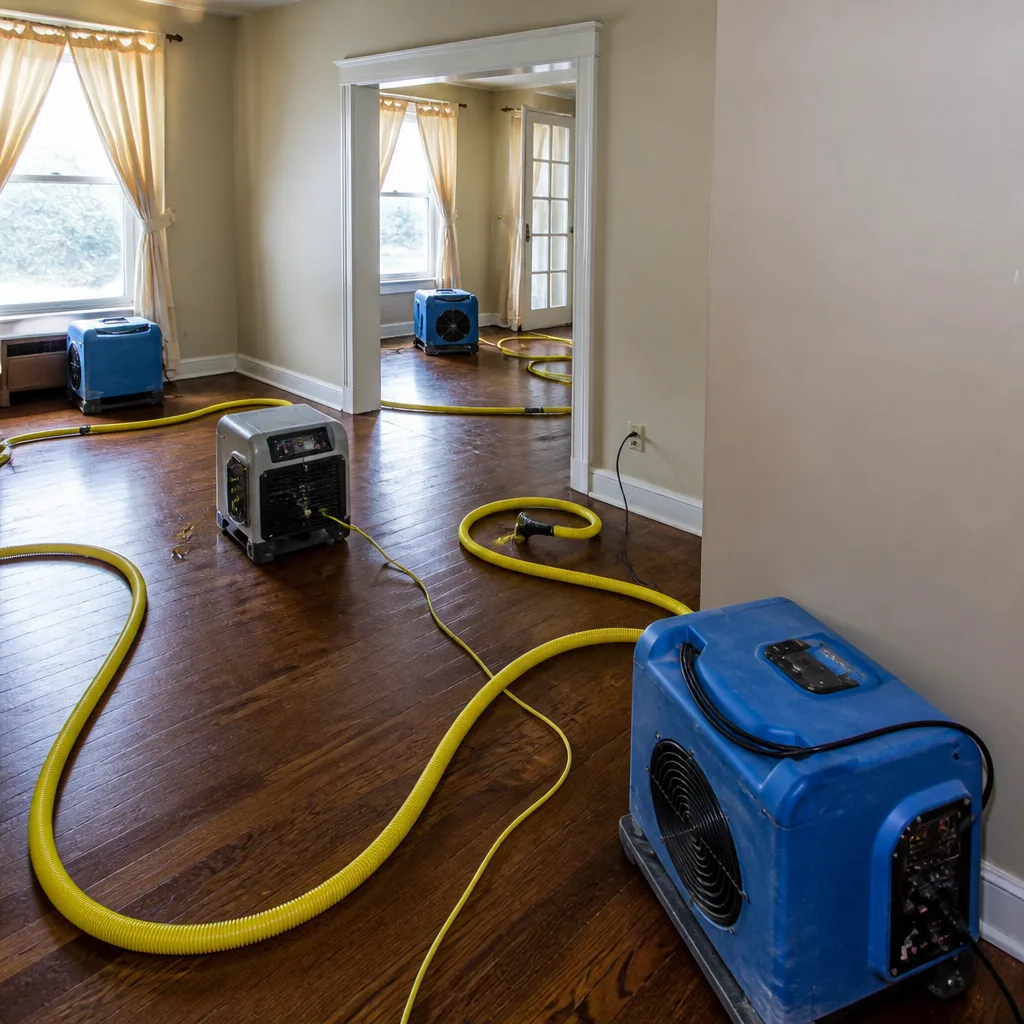
We deploy Dri-Eaz and Phoenix LGR dehumidifiers sized to the space’s cubic footage and vapor load, with XPOWER and B-Air axial air movers positioned for laminar airflow across wet surfaces. For plaster assemblies and hardwood floors, Injectidry panel systems create controlled negative pressure that pulls moisture from wall cavities and subfloors without demolition. Daily psychrometric readings track progress.
4. Cleaning & Sanitization
All affected surfaces receive antimicrobial treatment appropriate to the water category. Category 2 and 3 losses get full washdown with EPA-registered disinfectants, followed by HEPA air scrubbing to capture airborne particulates. We document every product used, its dilution ratio, and application method for your adjuster’s file.
5. Hazardous Material Assessment & Abatement
Pre-1978 construction in Jackson Heights triggers NYC’s mandatory lead and asbestos protocols before restoration work proceeds. We test impacted materials, establish regulated work areas if asbestos-containing tile, pipe insulation, or plaster is present, and coordinate certified abatement contractors. No reconstruction starts until clearance air sampling confirms safe levels.
6. Repairs & Restoration
Our carpenters and finish trades rebuild to match existing conditions, using moisture-resistant materials where code allows and historically appropriate methods where Landmarks Preservation Commission review applies. Every repair is photo-documented, and the final walkthrough produces a signed completion certificate backed by our 365-Day Done Right Promise under The Haven Standard.
Need Emergency Water Damage Restoration in Jackson Heights Now?
Crews minutes away, answering live 24 hours a day. The sooner we start, the less it costs.
Working With Your Insurance Company
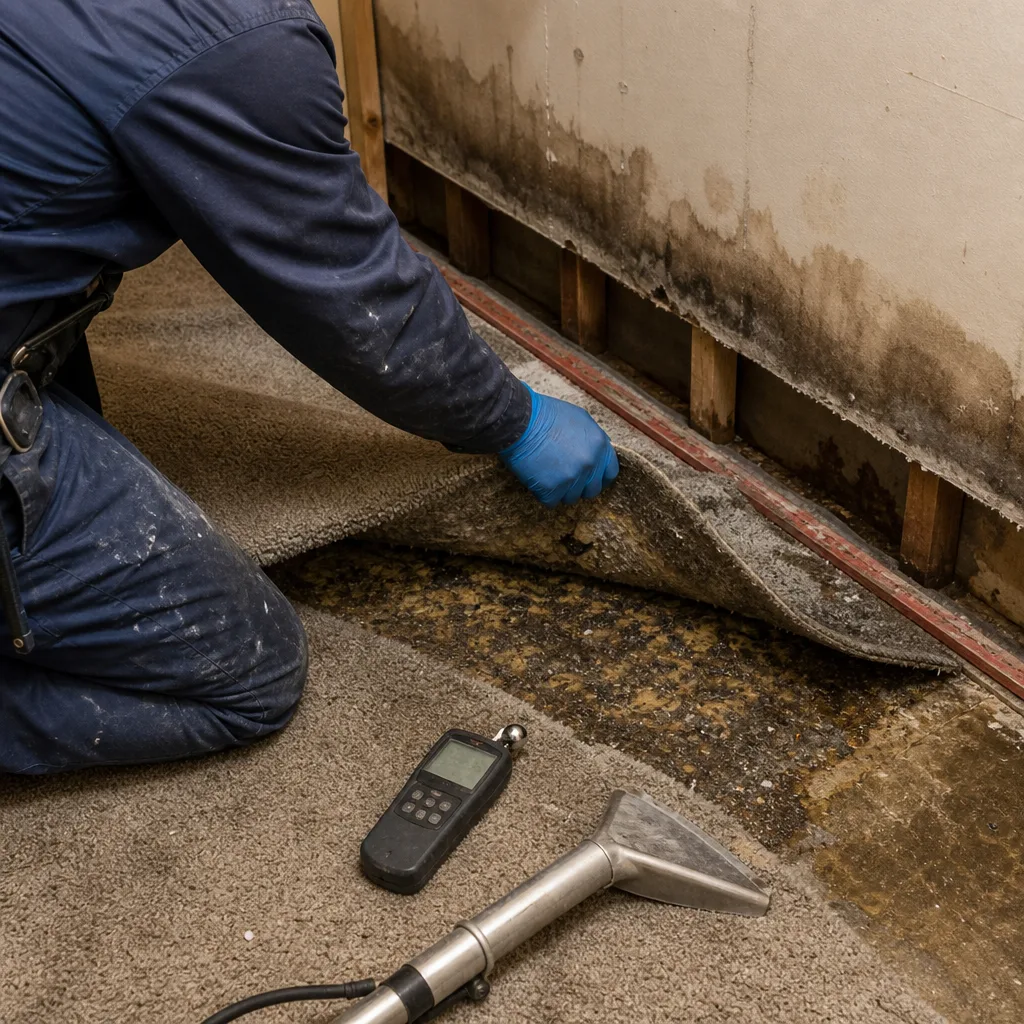
Insurance claims fail when documentation does. We’ve seen it from both sides, Alicia Brennan founded this company in 2011 after working as a claims adjuster and watching homeowners lose thousands because their restoration contractor couldn’t produce a moisture log or a dated photo. Our process reverses that risk from the first hour.
We photograph every room before touching anything. We record moisture readings at every visit, not just day one and day five. We write scopes in line-item format that matches Xactimate and Symbility estimating platforms, so your adjuster recognizes the format and moves faster. When multiple shareholders are affected, as happens constantly in Jackson Heights co-ops, we produce separate documentation packages for each unit owner’s carrier, clearly distinguishing common-area damage from individual unit damage.
Direct billing is available with most major carriers. You are not asked to pay upfront and wait for reimbursement. The only out-of-pocket cost is your deductible, and we tell you that number in writing before work starts.
What We Provide Your Insurer
- Thorough documentation of the loss
- Photos of all damage, room by room
- Moisture readings and drying logs
- A detailed, line-item scope of work
- Direct coordination with your carrier
Built for Jackson Heights’s Loss Calendar
January and February bring deep freezes that split copper supply lines and cast-iron heating risers in unconditioned spaces. The 1920s steam systems in garden co-op blocks are particularly vulnerable; a single frozen riser can flood four to six units when it thaws. We keep extra extraction capacity staged through Presidents’ Day weekend.
March and April deliver the thaw-and-rain combination that overwhelms the combined sewers. Basement units along 74th Street and the lower-numbered avenues see repeated Category 3 intrusion. By May, we’re handling the first wave of mold calls from owners who tried to dry February losses with household fans.
June through September brings localized thunderstorm flooding and the occasional tropical system remnant. Flat roofs on pre-war co-ops pond water after debris clogs drains, then breach at seams. October and November are relatively quiet, a good window for preventive inspections. December’s freeze-thaw cycles start the cycle again.
Water Damage Restoration Across Jackson Heights’s Neighborhoods
The 11372 ZIP, roughly north of Roosevelt Avenue and west of 85th Street, contains the densest concentration of landmark garden co-op blocks. Response routes from our Queens dispatch use the Brooklyn-Queens Expressway to Northern Boulevard, then surface streets to 35th or 37th Avenues. Traffic on Northern can add 15 minutes during rush, so we stage crews closer on high-alert weather days.
The 11373 ZIP, south of Roosevelt and east toward Junction Boulevard, mixes pre-war co-ops with 1960s and 1970s brick apartment buildings and some single-family stock. The newer buildings have fewer hazmat concerns but more aluminum wiring and polybutylene piping, a different failure mode entirely. Losses here tend to be single-unit rather than multi-unit, which simplifies the insurance picture.
Along 37th Avenue, the commercial corridor with ground-floor retail and residential above, water losses often start in restaurant or laundry mechanicals and migrate through shared walls. We coordinate with building supers and the FDNY on these jobs, since electrical exposure in mixed-use buildings requires utility clearance before extraction begins.
The courtyard-facing wings of the historic district, particularly between 34th and 35th Avenues, present our most complex jobs. Shared interior courts funnel rainwater against masonry, and board-controlled access to chases and roofs means we sometimes wait 48 to 72 hours for authorization to scope the actual source. We use that delay to document, contain, and begin controlled drying of what we can reach, so no time is wasted.
Specialized Water Damage Restoration Services We Offer in Jackson Heights
Emergency Water Extraction
Standing water comes out within hours of your call, using truck-mounted extraction systems that remove 95% of water from carpet and pad in a single pass. For Jackson Heights co-ops with limited elevator access or narrow stairwells, we carry portable extraction units that match the performance of truck mounts. Category 3 losses get immediate containment and antimicrobial treatment, not just pumping.
Structural Drying & Dehumidification
We size dehumidification capacity to the specific vapor load of your space, not a rule-of-thumb guess. In plaster-and-lath construction common to Jackson Heights, tertiary drying, the final phase where bound moisture releases slowly from dense materials, can extend the timeline by 3 to 5 days. We document every phase with daily logs so your adjuster understands why the equipment stayed longer.
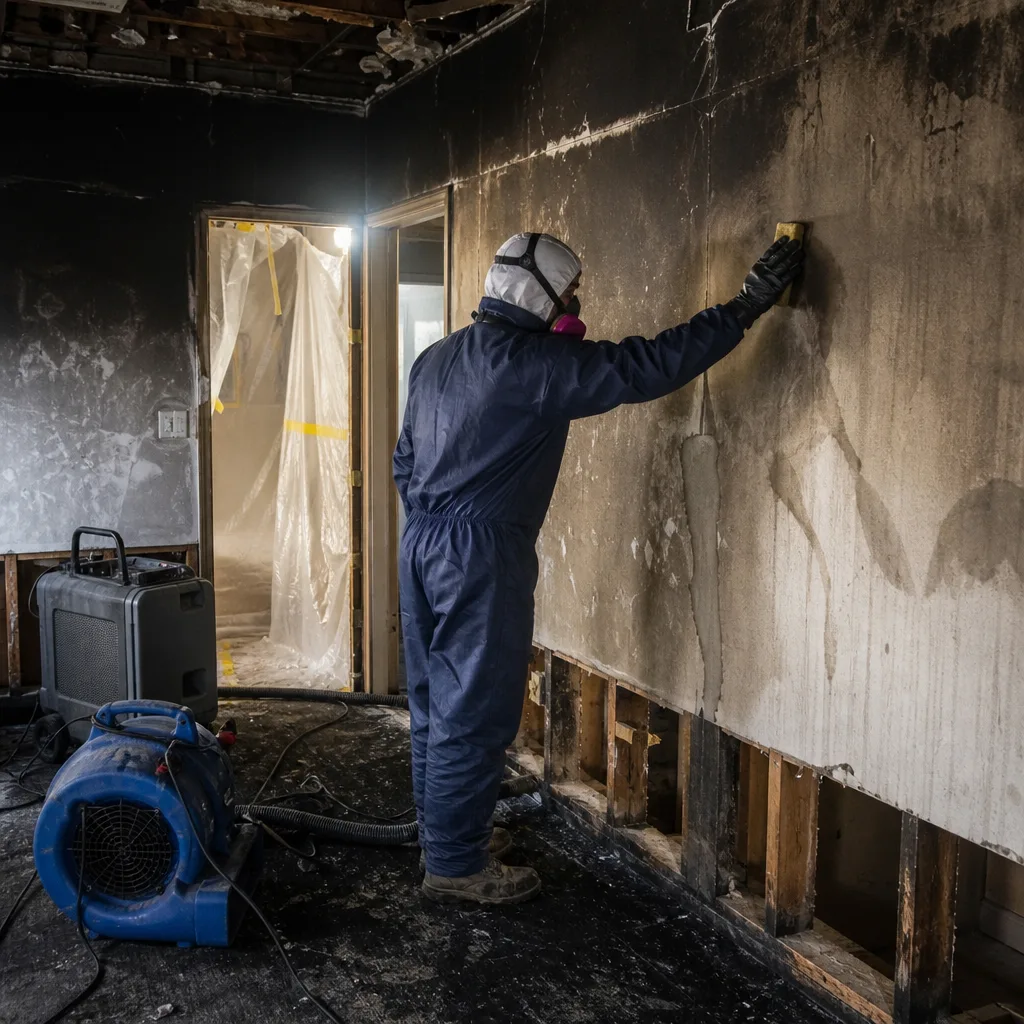
Flood Cleanup
Flood losses in Jackson Heights are almost always Category 3 due to combined sewer backup. We remove all porous materials that contacted black water, treat structural elements with EPA-registered disinfectants, and run HEPA air scrubbers until particulate counts drop below background. Reconstruction waits for clearance sampling.
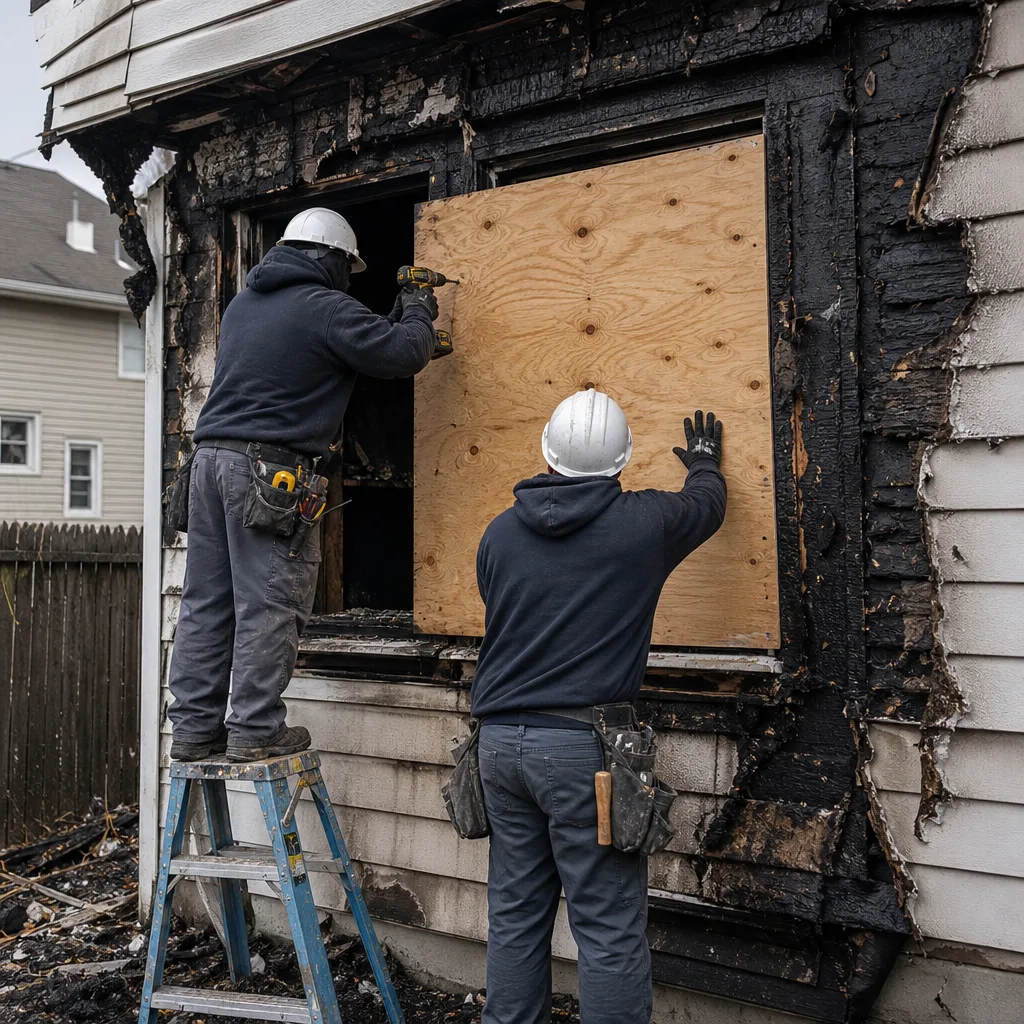
Burst Pipe Restoration
Supply line bursts in pre-war co-ops often involve galvanized or lead piping that cannot be simply patched. We extract, dry, and document the water loss, then coordinate with licensed plumbers for code-compliant repiping. When a shared riser bursts, we produce separate scopes for each affected unit and the common-area carrier.
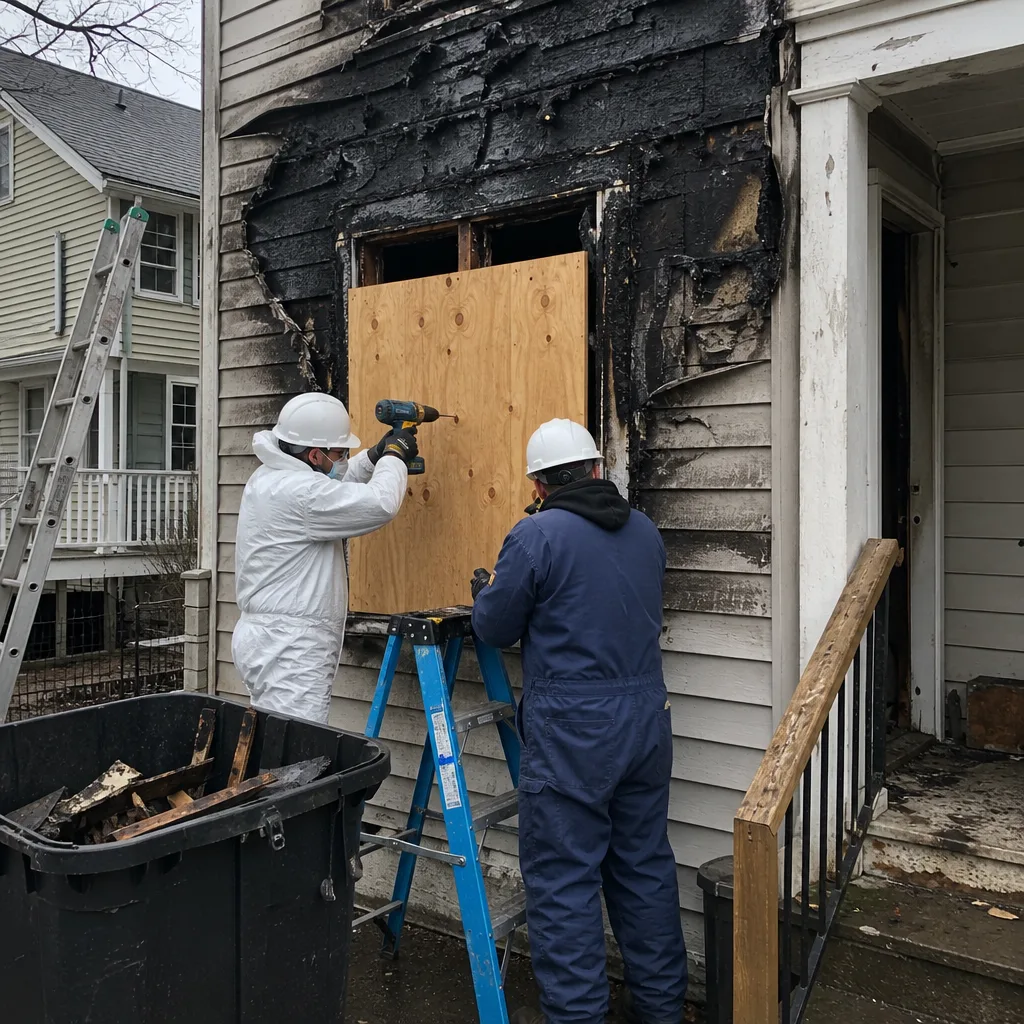
Basement Water Removal
Basement units in Jackson Heights garden co-ops are particularly vulnerable to sewer backup and groundwater intrusion. We pump, extract, and treat these spaces as Category 3 by default until testing proves otherwise. Asbestos floor tile and pipe insulation are common, so we test before disturbing materials and establish regulated abatement areas when needed.
Ceiling & Roof Leak Water Damage
Flat roof breaches on pre-war co-ops send water through multiple floors before anyone notices the stain. We trace the migration path with thermal imaging, set drying equipment in all affected cavities, and document the spread pattern for insurance. Roof repair coordination is handled separately, but we photograph the breach for your roofer’s reference.
What happens when you call
- 1
A real person answersNo phone trees - you reach a local pro.
- 2
You get an upfront price rangeHonest numbers before anyone is dispatched.
- 3
A background-checked tech heads outLicensed & insured, dispatched right away.
- 4
You approve before work beginsNothing starts until you say go.
Water Damage Restoration Costs in Jackson Heights, NY
Emergency water extraction in Jackson Heights typically runs $450-$950 for the first two hours of truck-mounted work, with additional extraction at $185-$245 per hour. Structural drying for a standard one-bedroom co-op unit with 800-1,200 square feet of affected area costs $1,800-$4,200 for a 3 to 5 day equipment rental cycle, including daily moisture monitoring. Full mitigation with limited demolition, cleaning, and sanitization for a Category 1 or 2 loss generally totals $2,800-$5,500.
Category 3 losses with sewer backup, hazmat testing, and asbestos abatement run higher: $5,500-$12,000 for a typical basement or ground-floor unit in a pre-war co-op, with abatement alone adding $2,000-$4,500 depending on square footage and material type. Multi-unit co-op losses with separate adjusters and board coordination can exceed these ranges; we deliver a written scope for each unit before any work proceeds.
Insurance covers sudden and accidental water damage in most HO-3 and HO-5 policies, with exclusions for gradual leaks and flood (the latter requires separate NFIP coverage). We review your policy language, document the loss as sudden and accidental, and coordinate directly with your adjuster. Our estimates are free, and we offer a free second opinion on any competitor’s written quote.
We Also Serve Cities Near Jackson Heights
Our crews respond throughout western and central Queens, including Jackson Heights and neighboring Elmhurst to the south, Maspeth to the west with its industrial-to-residential conversion buildings, Astoria along the river with its own pre-war stock and newer high-rise construction, and Forest Hills to the east with its garden apartment complexes that share many of Jackson Heights’s structural characteristics. Each area gets the same documentation-first approach, adjusted for local building age, infrastructure, and code environment.
Serving Jackson Heights, NY - Our Local Coverage Area
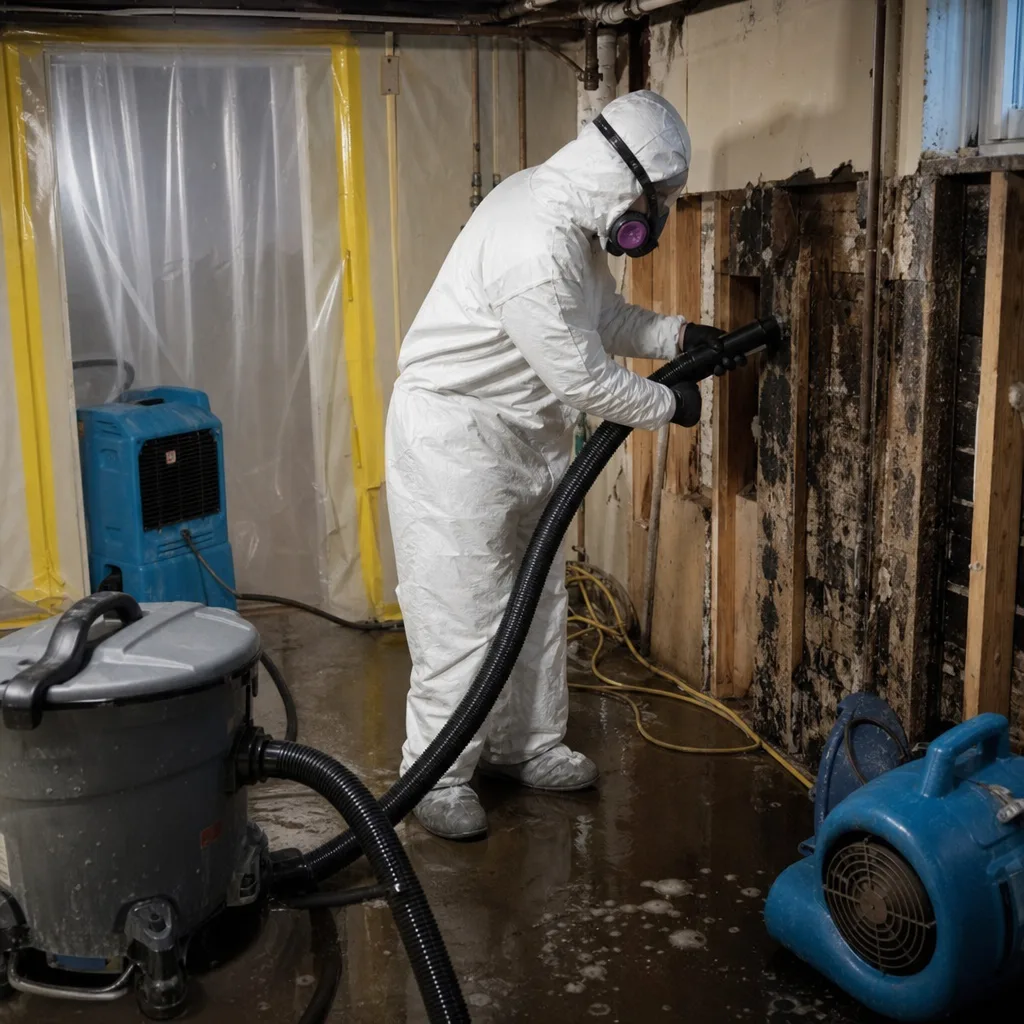
We’re based in the Jackson Heights area and know this community well. Use the map below to see our service coverage - if you’re nearby, we can almost certainly help.
Jackson Heights Water Damage Restoration Questions, Answered
How fast can you get to my property in Jackson Heights?
Our crews typically arrive within 45 minutes of your call during standard dispatch hours, and within 60 to 75 minutes overnight, depending on traffic across the Queensboro approach. We stage additional equipment near Northern Boulevard during severe weather alerts to shorten response time. Call (862) 281-7710 now for an exact ETA to your address.
Does a water loss in a Jackson Heights landmark co-op require special permits before repair?
Yes. Because the 1917-1940 garden co-op blocks are a NYC Landmark Historic District, even interior repairs that alter visible architectural features may require Landmarks Preservation Commission review. More immediately, co-op boards control access to shared mechanical chases and roof systems, so crews often cannot scope the actual loss until board authorization is granted. We document everything we can reach during the waiting period and coordinate with board managers to expedite access. Call (862) 281-7710 and we’ll walk through the specific permit path for your building.
Why does water from a Jackson Heights basement usually get classified as Category 3?
Jackson Heights sits on flat terrain with aging combined sewer infrastructure that carries both sanitary waste and storm runoff in the same pipes. Heavy rain backs up these drains and pushes sewage, industrial contaminants, and street debris into basement-level spaces. By IICRC S500 standards, this is grossly contaminated Category 3 water requiring full antimicrobial treatment, removal of porous materials, and clearance testing. Crews who treat it as clean water skip required steps and leave health hazards behind. Call (862) 281-7710 for proper Category 3 protocol.
How fast does mold grow after a leak in a pre-war Jackson Heights apartment?
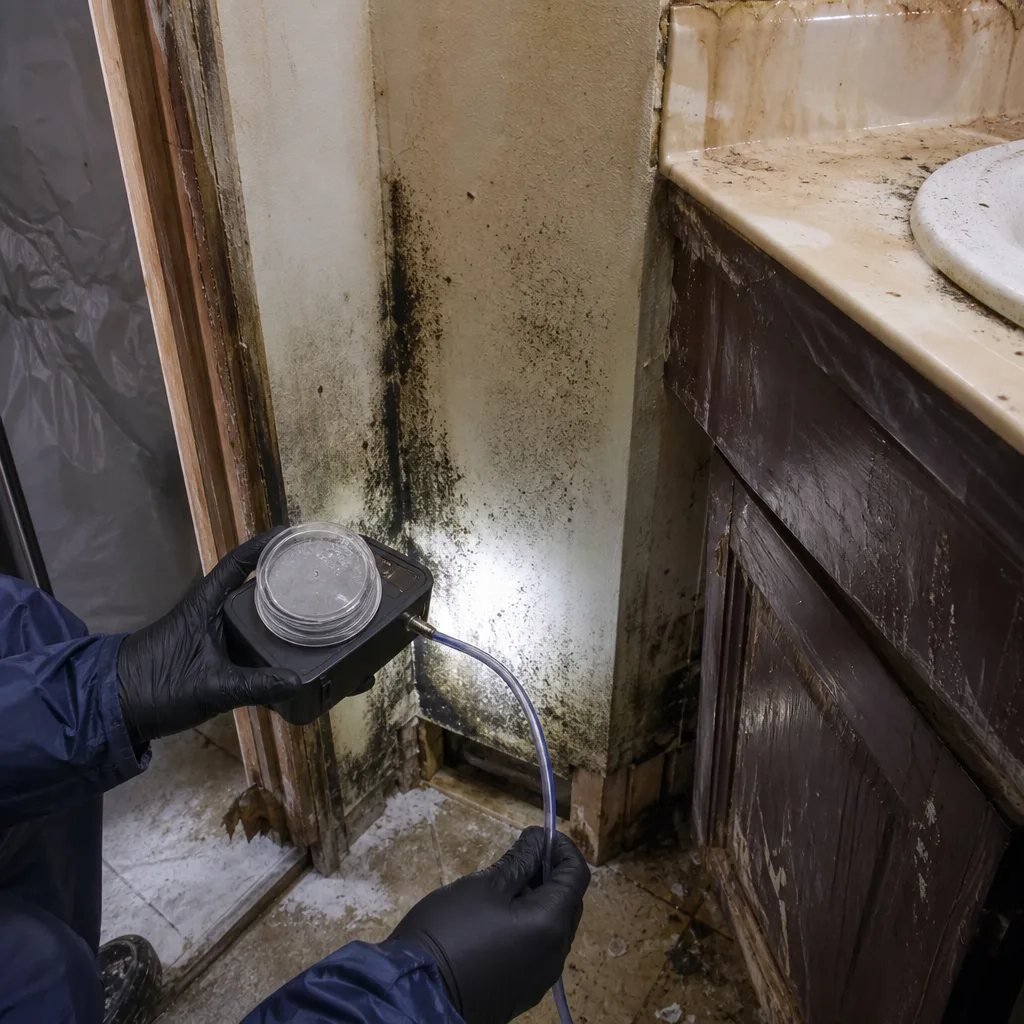
Mold colonization begins on organic surfaces within 24 to 48 hours of water intrusion at temperatures above 60°F. In Jackson Heights’s pre-war apartments, horsehair plaster provides an ideal substrate, and the steam heating systems that run through wall cavities maintain temperatures well above that threshold year-round. By day 3 to 5, visible growth is common behind baseboards and under vinyl flooring. We recommend professional drying within 24 hours and air sampling if the leak was hidden for longer. Call (862) 281-7710 for moisture mapping and containment.
What does a burst steam riser in a Jackson Heights co-op mean for multiple units?
A single burst riser in a 1920s co-op typically floods 4 to 12 units simultaneously, with water traveling vertically through pipe chases and horizontally through shared walls. Each shareholder has a separate insurance policy and adjuster, so the scope of work gets disputed before mitigation starts. We produce individual documentation packages for each unit, clearly separating common-area damage from individual unit damage, and coordinate with the building’s master policy carrier for shared systems. Call (862) 281-7710 for multi-unit coordination.
Will you tear out the original plaster walls in a Jackson Heights garden apartment to dry them?
Not if we can avoid it. Our first approach uses Injectidry panel systems and controlled dehumidification to dry plaster assemblies in place, preserving the landmarked fabric and avoiding the dust, debris, and LPC review that demolition triggers. We monitor moisture content at multiple depths through the plaster until readings confirm the assembly is dry to within 4% of established dry standard. Only if plaster has delaminated from lath or tested positive for asbestos do we recommend removal. Call (862) 281-7710 for a drying plan specific to your walls.
Will insurance cover my water damage restoration in Jackson Heights?
Most sudden and accidental water damage is covered under standard HO-3 and HO-5 policies, including supply line bursts, appliance failures, and storm-related roof breaches. Gradual leaks, maintenance neglect, and flood from rising groundwater require separate coverage. We review your policy declarations, document the loss as sudden and accidental with photos and moisture logs, and coordinate directly with your adjuster. Our estimates are free, and we offer direct billing with most carriers. Call (862) 281-7710 for coverage verification.
Can we stay in the home during water damage restoration?
For Category 1 losses limited to one room, occupants usually remain with equipment running and some noise disruption. Category 2 and 3 losses, or any job with asbestos abatement or extensive demolition, require temporary relocation for health and safety. In multi-unit Jackson Heights co-ops, the board may require vacancy during common-area work regardless of category. We tell you the occupancy recommendation in writing as part of our initial scope. Call (862) 281-7710 for a specific assessment of your situation.
Our Water Damage Restoration team has handled losses across every building type in Queens, from 1920s co-ops to new construction. The documentation-first approach we apply in Jackson Heights, photo records, written prices, daily moisture logs, is the same one that has satisfied adjusters on 12,000+ homes since 2011. Alicia Brennan built this company around the gap she saw as an adjuster: contractors who couldn’t produce evidence, and homeowners who paid the difference.
Written by Alicia Brennan, Owner at DryMark Restoration Astoria, serving Jackson Heights and surrounding Queens neighborhoods since 2011 under The Haven Standard.