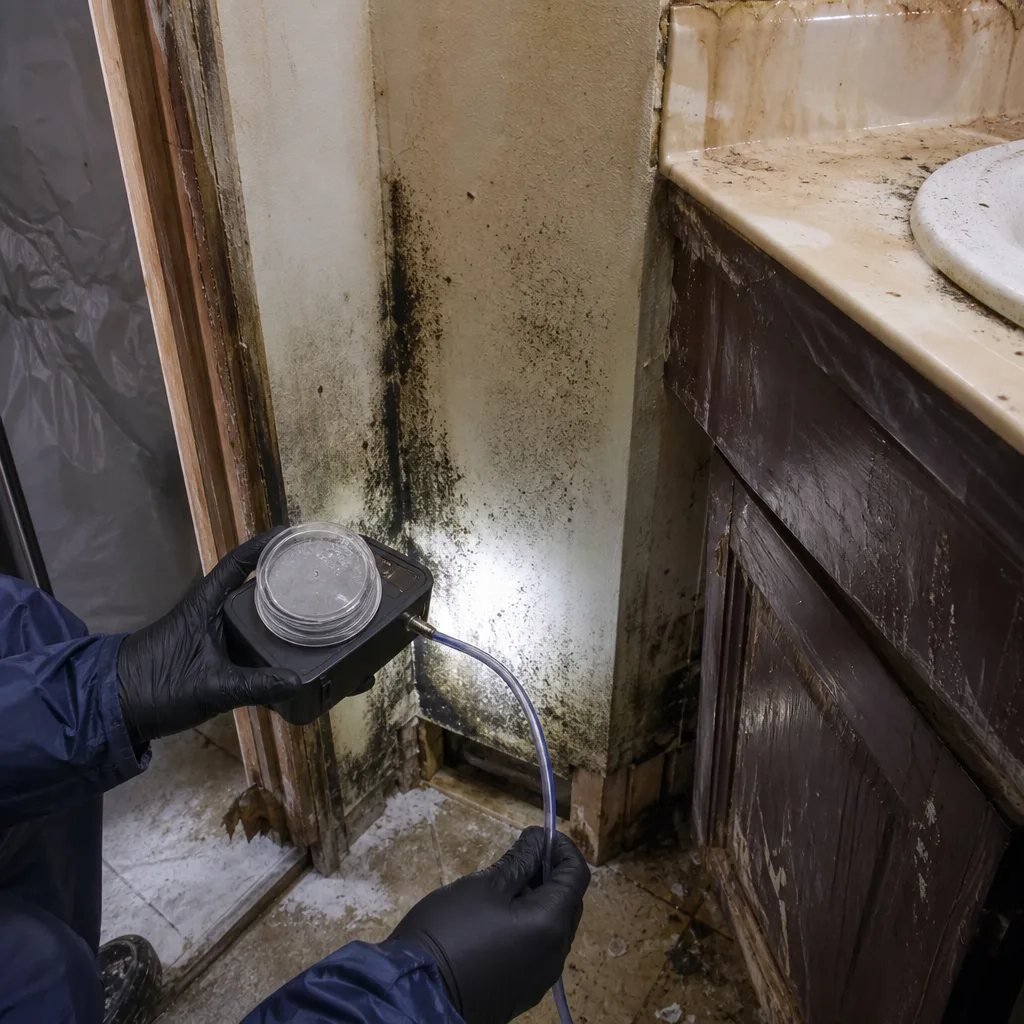
Free visual inspection and a written scope of work before any mitigation begins - photos, moisture readings, and drying logs go in your claim file
The scope we write is the scope we bill. Anything new gets shown to you, in writing, before we touch it.
Storm response
 Before
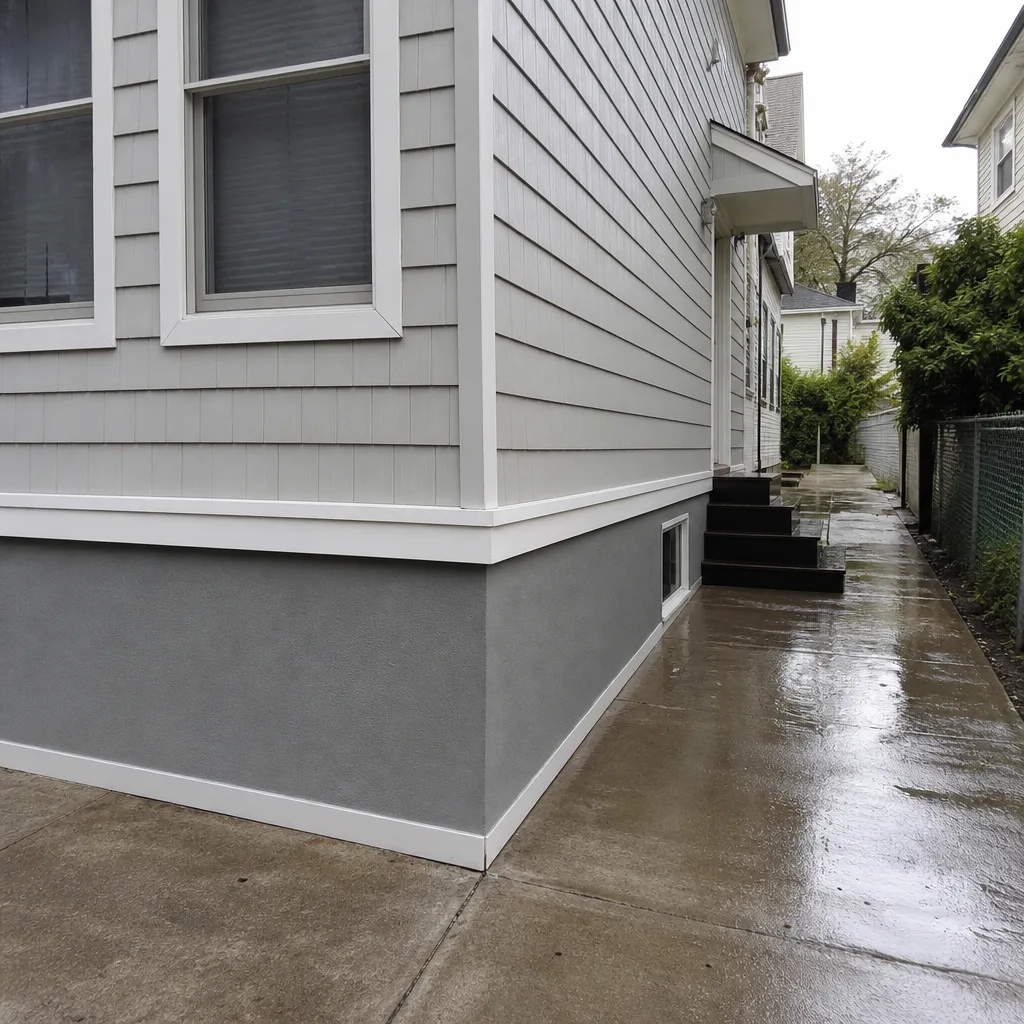 After
After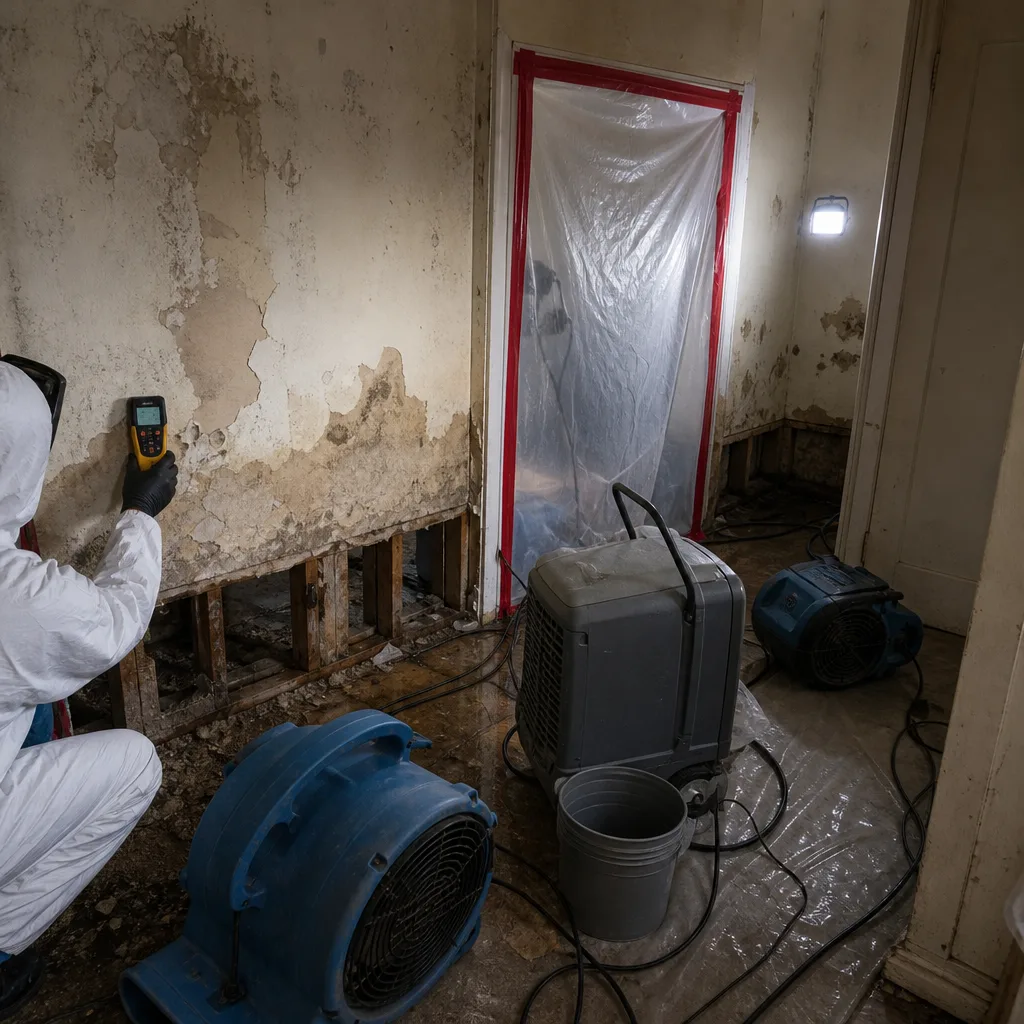 Before
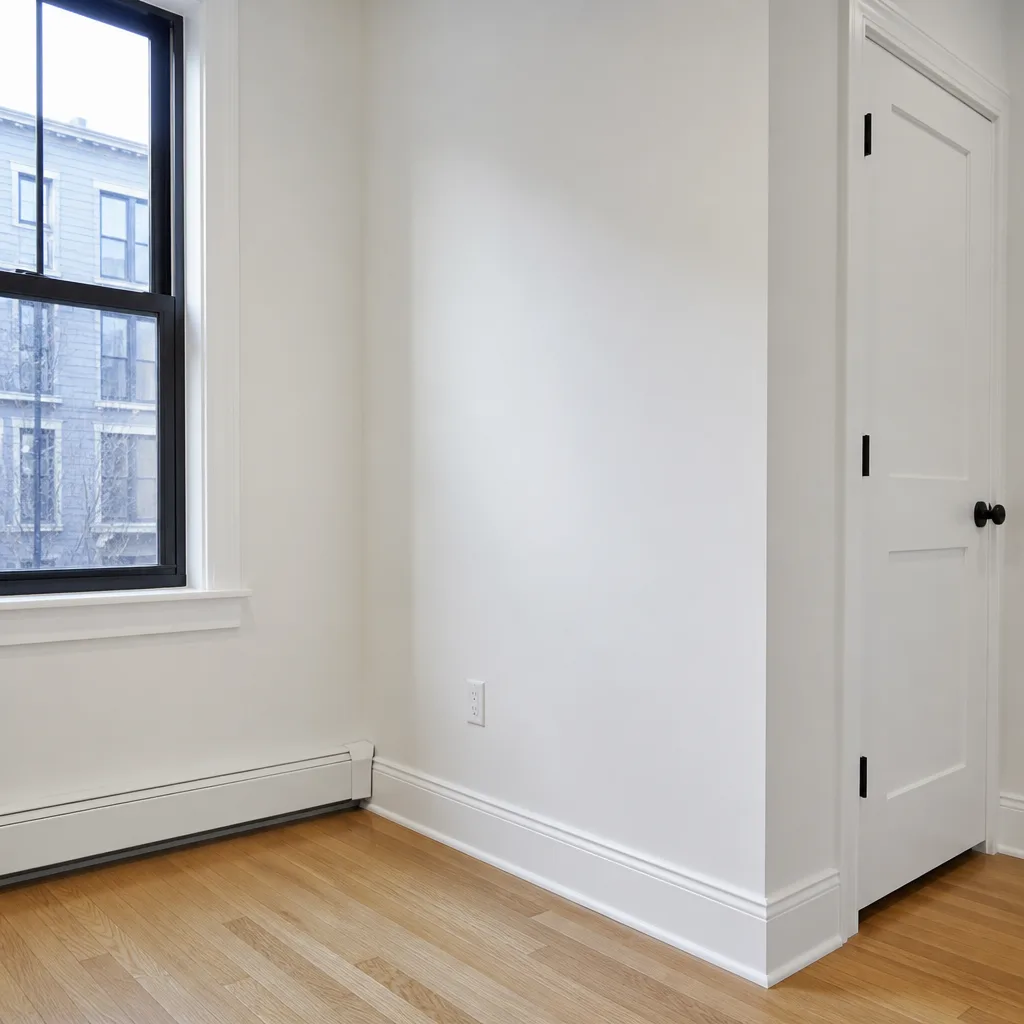 After
After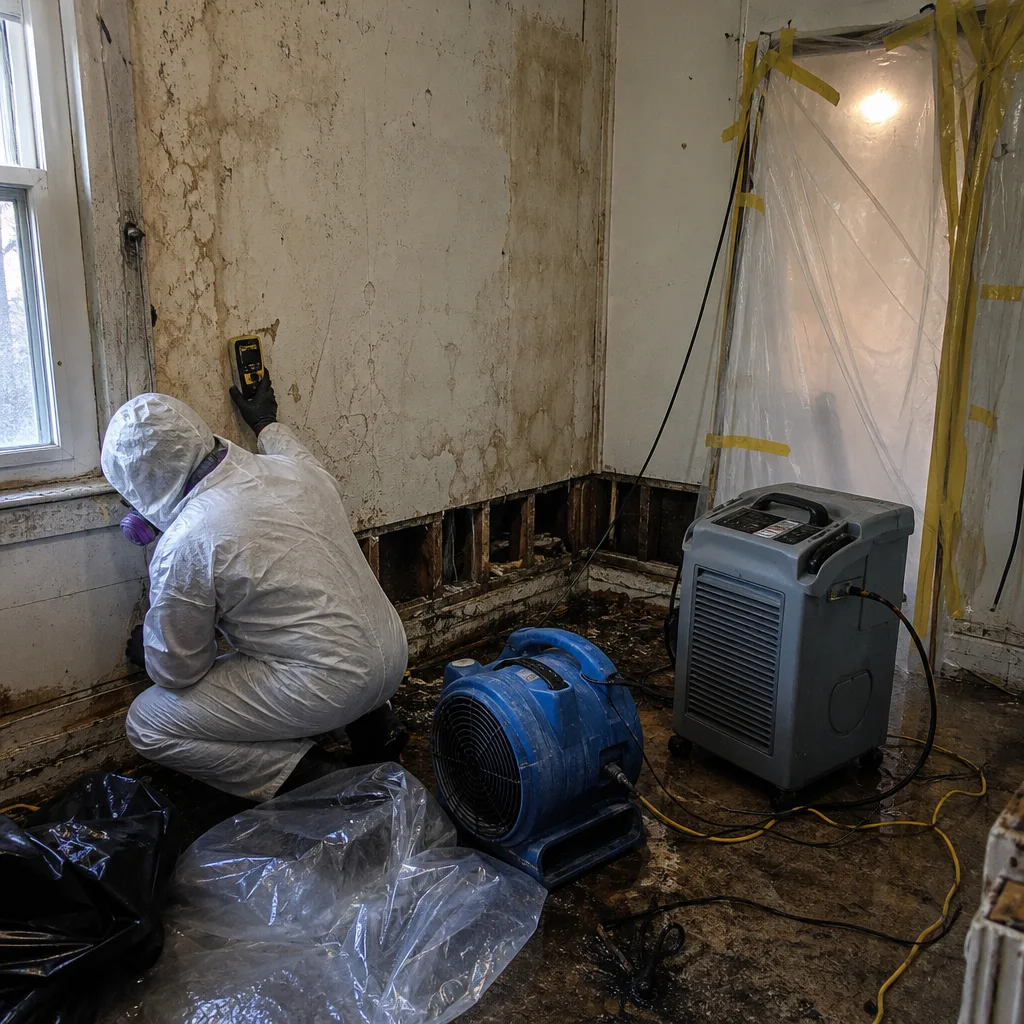 Before
 After
After24/7 Emergency Mold Remediation in Midtown Manhattan
Mold in a Midtown Manhattan high-rise moves fast. Once water saturates a ceiling assembly, you’ve got 24 to 48 hours before spores colonize drywall, insulation, and hidden pipe chases. Our crews answer live at (862) 281-7710, 24 hours a day, with no voicemail trees, and we dispatch to Midtown Manhattan properties with a 45-minute response commitment. The first hour is where containment happens, or where the problem doubles in square footage.
We provide a free visual inspection on arrival, document everything with photos, and deliver a written price before any work begins. Haven Standard, Clause 1. No exceptions.
Understanding Mold Remediation Severity in Midtown Manhattan Properties
Mold severity in Midtown isn’t measured by what you can see on a ceiling tile. It’s measured by the water category that fed it, the vertical distance the moisture traveled, and whether asbestos-containing materials sit between the visible stain and the structural deck.
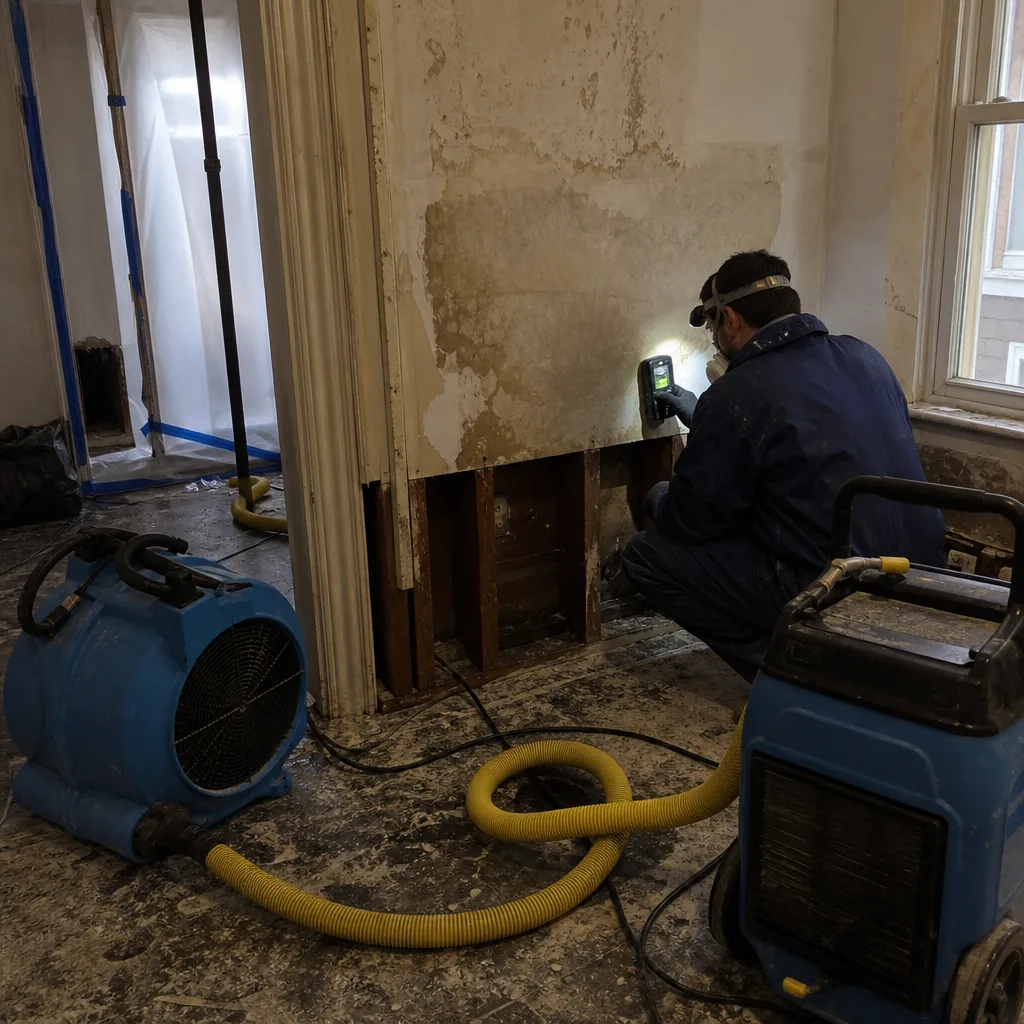
Category 1 water, a clean supply-line break, becomes Category 2 the moment it passes through a pre-war ceiling assembly with decades of dust and microbial loading. Category 3, grossly contaminated water from a rooftop tank stave failure or sewage backflow, demands full PPE, negative-air containment, and antimicrobial treatment before drying can even start. Our crews map moisture with thermal imaging and penetrating hygrometers, then classify every affected material by permeability: non-porous steel studs, semi-porous concrete, porous acoustic ceiling tile that must be removed.
Pre-war steel-frame towers throughout the Theater District and along Sixth Avenue commonly contain asbestos in pipe insulation, floor tiles, and spray-applied fireproofing. Disturb these materials during remediation without NYC DEP clearance, and the job stops cold while mold keeps growing in saturated cavities.
Why Midtown Manhattan Property Owners Choose DryMark Restoration Astoria
- 45-minute response commitment to Midtown Manhattan addresses, because mold doesn’t wait for business hours.
- 24/7 live answer - a real person picks up, never an automated system routing you through prompts while water keeps moving.
- IICRC-certified crews holding WRT (Water Damage Restoration Technician), AMRT (Applied Microbial Remediation Technician), and FSRT (Fire & Smoke Restoration Technician) certifications, with license numbers documented on every job.
- Free visual inspection on arrival, with moisture readings taken before any equipment is proposed.
- Direct insurance billing and adjuster coordination, including photo-documented estimates that carriers recognize and pay.
- One team from containment to clearance testing, so no handoff gaps between remediation and reconstruction.
BeforeAfterOur Mold Remediation Process
1. Inspection & Assessment
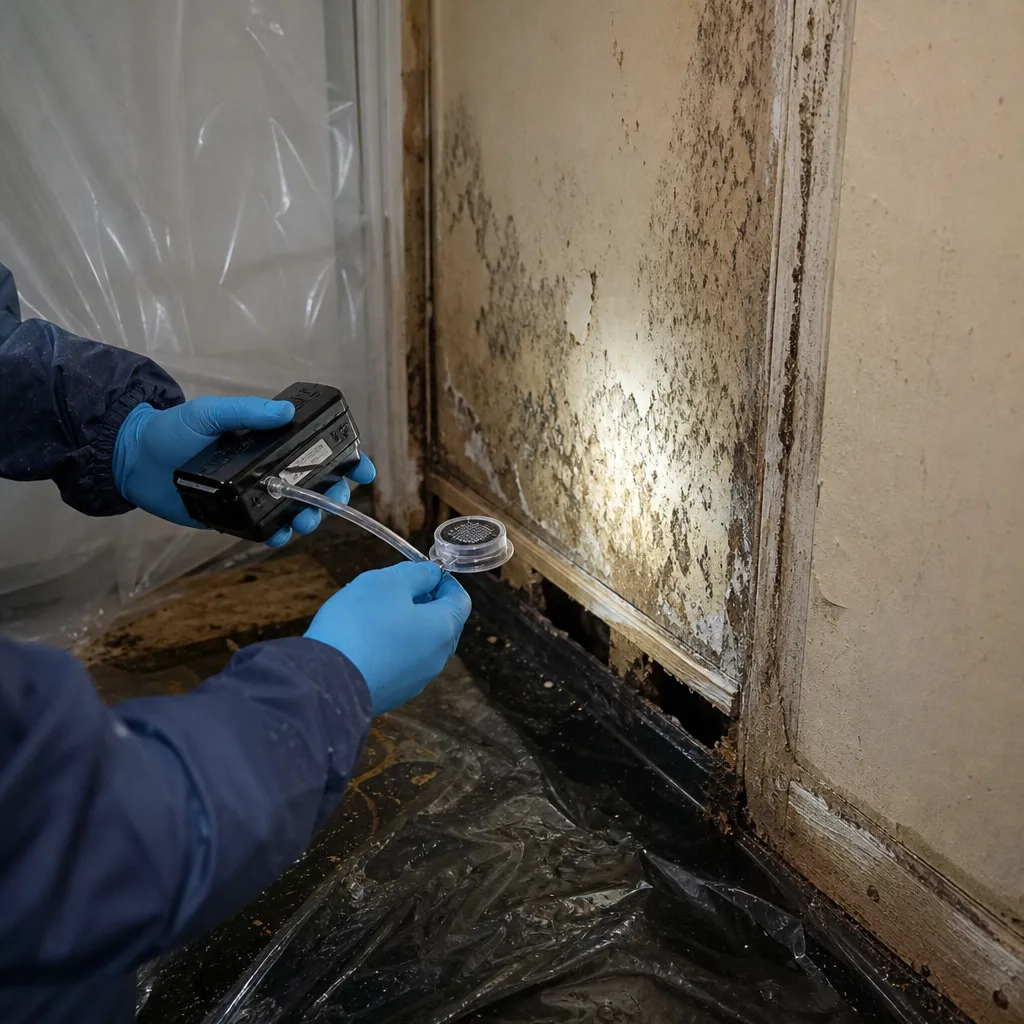
We arrive with thermal imaging cameras, penetrating moisture meters, and borescopes to map the full extent of water migration. In Midtown high-rises, this means tracing vertical chases from the reported floor through mechanical rooms and elevator shafts. Every reading is logged, every photo geotagged to the room.
2. Containment & Stabilization
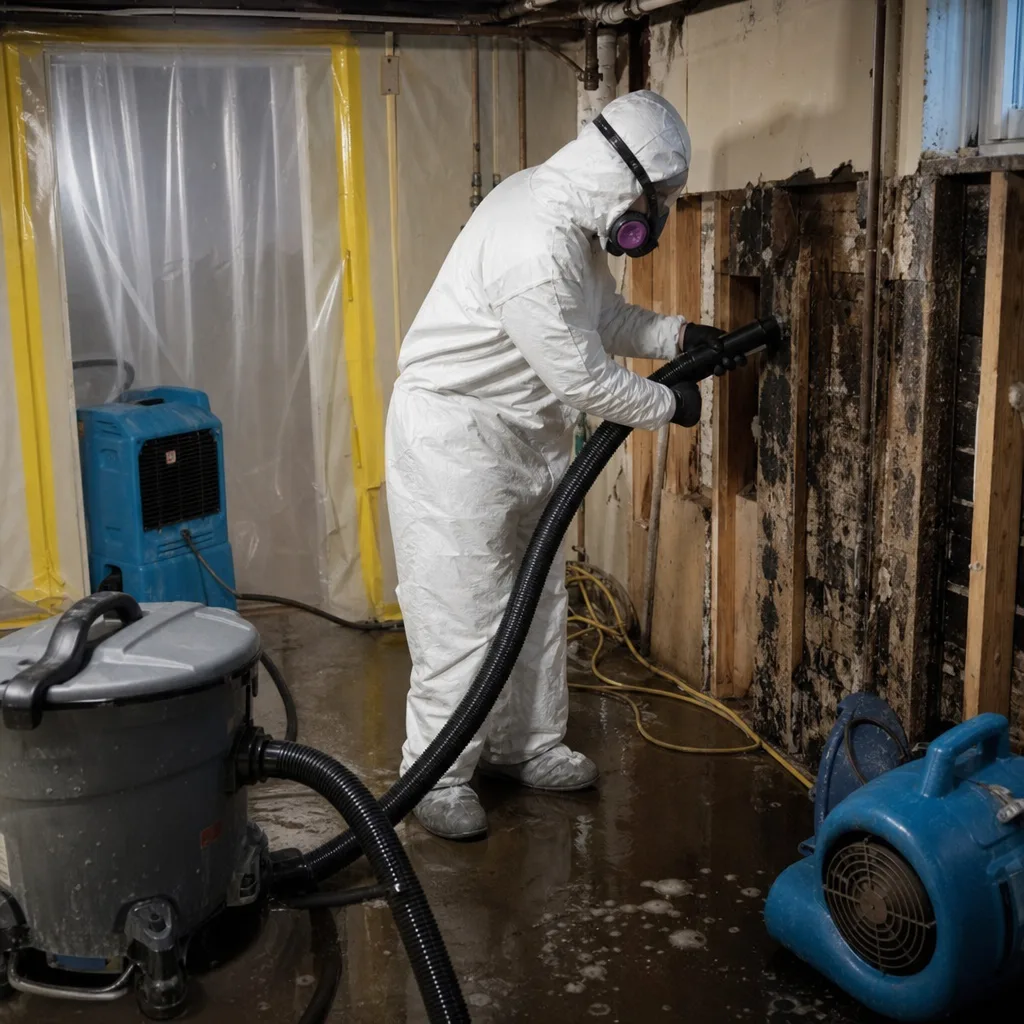
Polyethylene barriers and negative-air HEPA scrubbers isolate the affected zone. We seal HVAC returns to prevent spore redistribution through the building’s centralized air system. If asbestos-containing materials are present, we coordinate the NYC DEP abatement hold before proceeding.
3. Air Filtration & Moisture Control
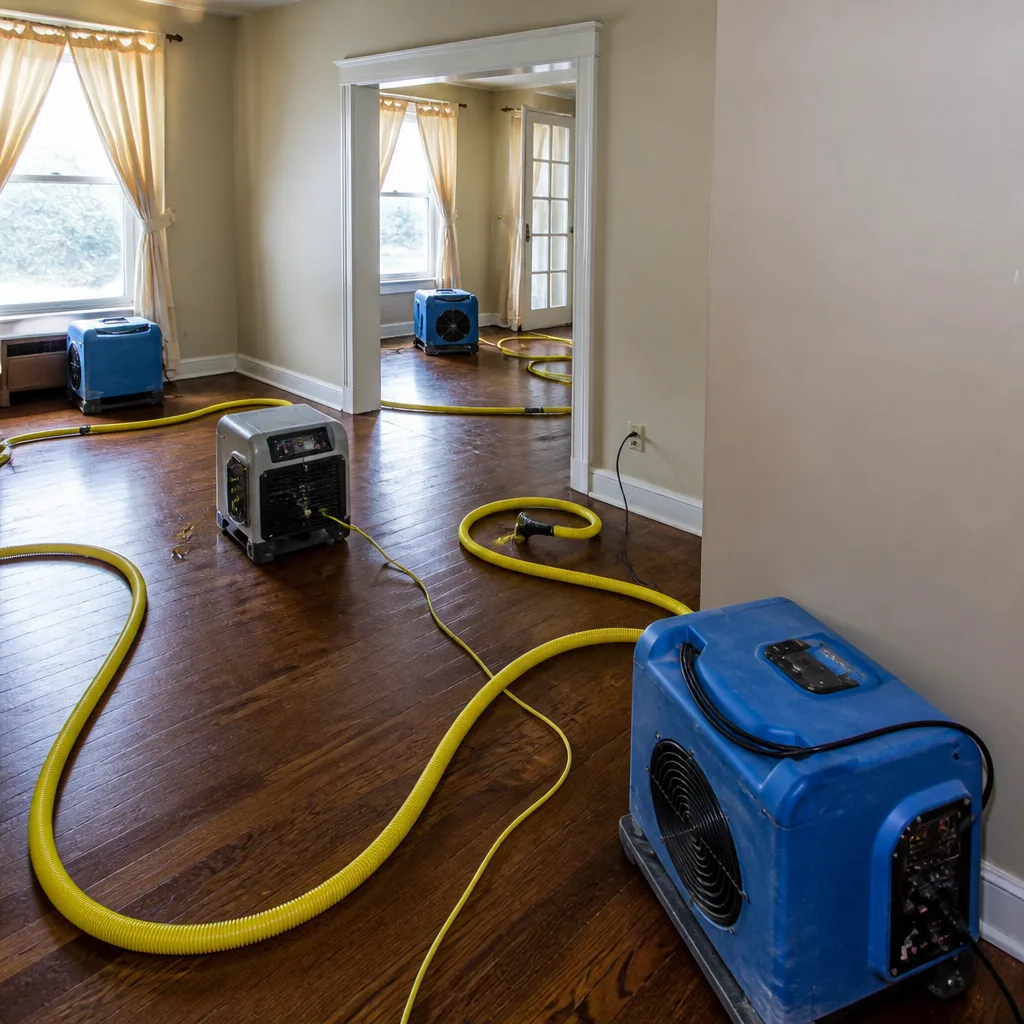
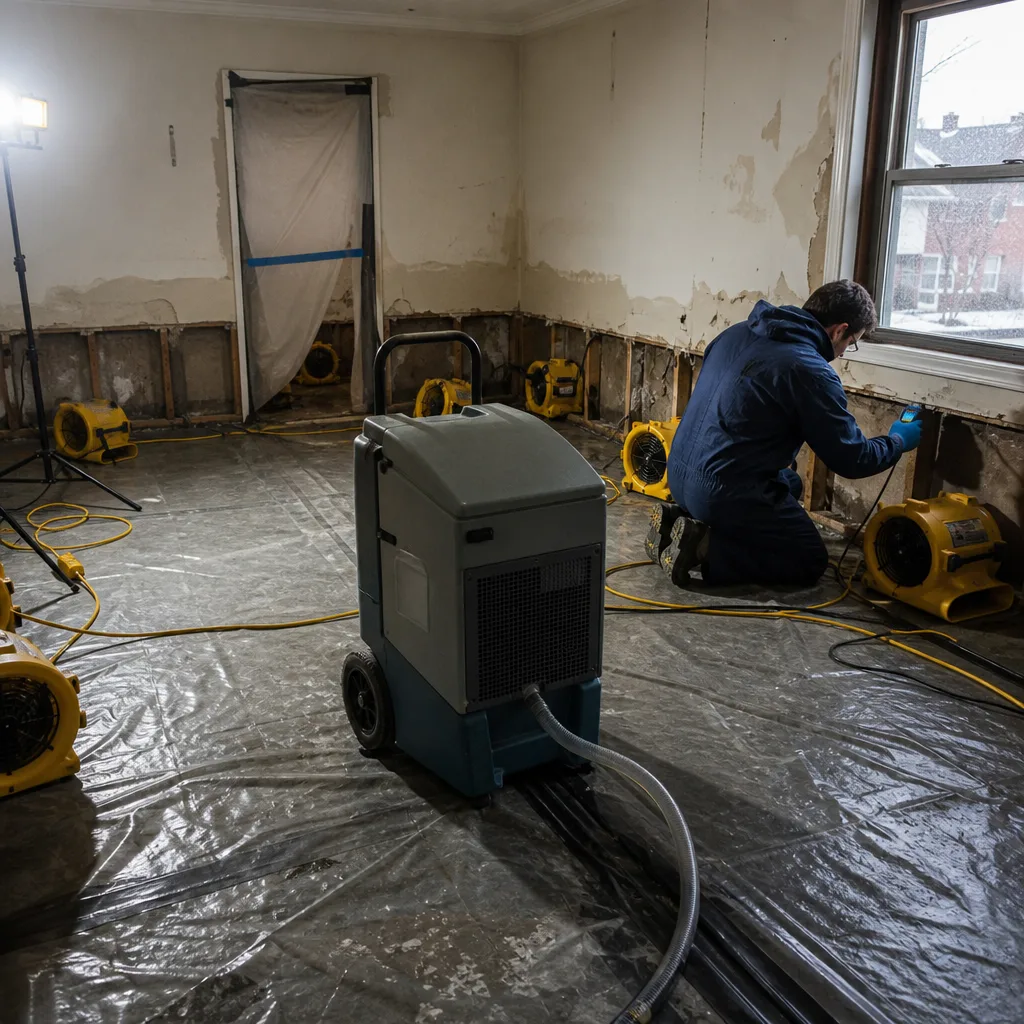
Industrial dehumidifiers from Dri-Eaz and Phoenix, plus XPOWER air movers, establish vapor pressure differential, the measurable force that pulls moisture from materials into the air so the dehumidifiers can capture it. Psychrometric data, temperature, relative humidity, and grains per pound, is recorded twice daily.
4. Cleaning & Antimicrobial Treatment
HEPA vacuuming removes settled spores from all surfaces. We apply EPA-registered antimicrobials to structural materials that test salvageable, with application rates documented to the square foot. No guesswork, no overspray into occupied spaces.
5. Moisture & Humidity Control
Tertiary drying targets residual bound water in concrete and dense structural assemblies. We monitor until moisture content returns to within 2% of dry standard for that material class. Daily drying logs go to you and your adjuster, building the documentation trail that turns invoices into paid claims.
6. Clearance Testing & Restoration
Third-party air sampling confirms spore counts at or below outdoor baseline before containment comes down. Then our reconstruction crew repairs drywall, ceiling tile, and finishes, with a written warranty under The Haven Standard’s 365-Day Done Right Promise.
Need Emergency Mold Remediation in Midtown Manhattan Now?
Crews minutes away, answering live 24 hours a day. The sooner we start, the less it costs.
Working With Your Insurance Company
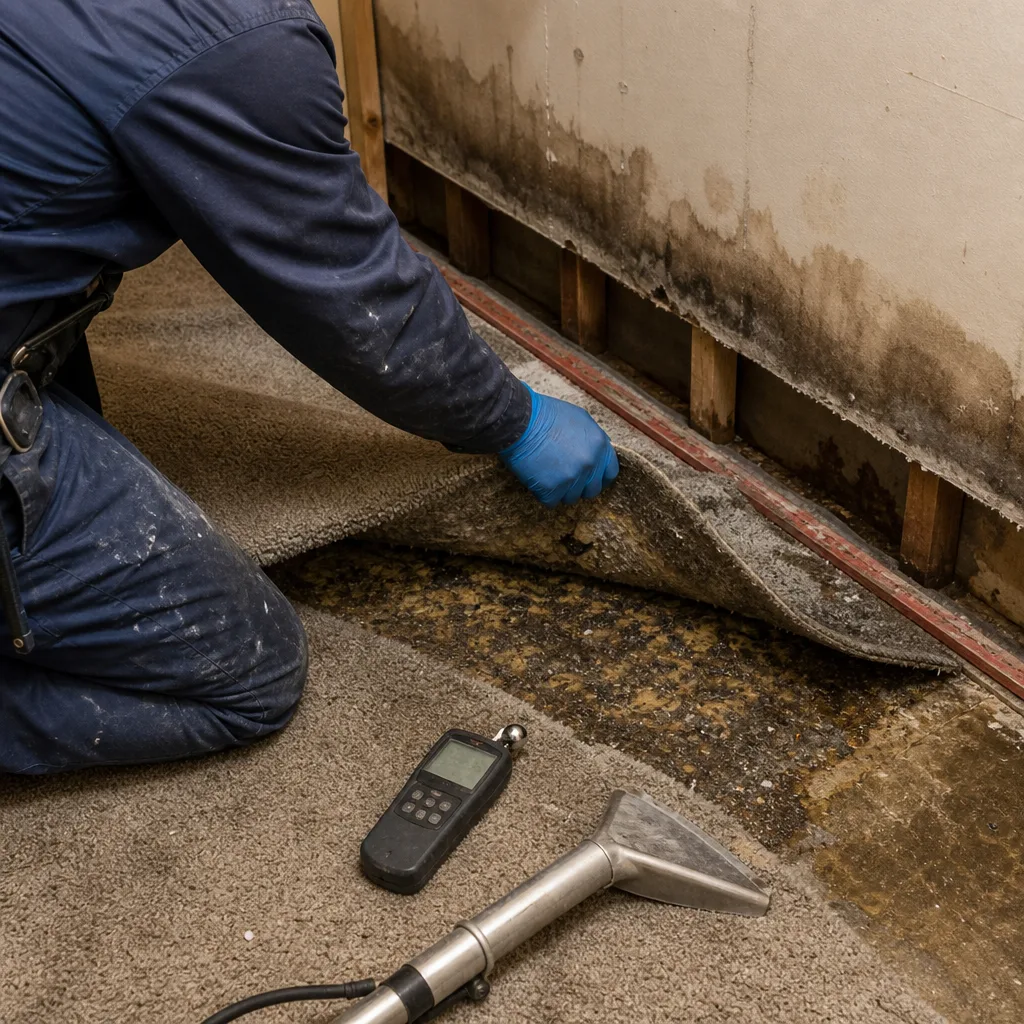
Insurance claims on Midtown commercial and residential properties live or die on documentation. We start building your file from the first phone call: photos of the loss origin, moisture readings at every affected point, and a written scope with line-item pricing before any equipment runs.
Our estimates follow industry-standard formats that adjusters recognize. We communicate directly with your carrier, provide supplemental documentation when hidden damage extends the scope, and coordinate payment so you’re not floating restoration costs while coverage determinations pend. The photo record on every visit is standard, never an upsell.
What We Provide Your Insurer
- Thorough documentation of the loss origin and migration path
- Photos of all damage, room by room, with timestamps
- Moisture readings and daily drying logs to IICRC standards
- A detailed, line-item scope of work with unit pricing
- Direct coordination with your carrier’s adjuster and desk examiner
Built for Midtown Manhattan’s Loss Calendar
January’s deep freezes split rooftop wooden stave tanks and supply lines across Midtown’s pre-war inventory. When a tank fails on a 40-story building near Bryant Park, gravity does the rest, sending category 2 water down riser chases and saturating ceiling assemblies floor by floor.
Spring thaw brings basement and sub-slab seepage to buildings with aging foundation waterproofing. Summer humidity, compounded by oversized cooling loads in glass curtain-wall towers, drives condensation at thermal bridges where interior dew point meets poorly insulated spandrel panels. Nor’easters hammer facade gaps in mid-century towers along Park Avenue, injecting wind-driven rain into cavity walls that dry slowly in the absence of direct sun exposure. Each season demands different equipment staging, different containment strategies, and different documentation for the adjuster who will review the claim six weeks later.
Mold Remediation Across Midtown Manhattan’s Neighborhoods
The Theater District’s 1920s-era office buildings and converted residential towers present the classic Midtown challenge: asbestos in every ceiling assembly, freight elevators shared by multiple tenants, and business-interruption clocks measured in opening-night schedules. Our crews know the loading docks on West 44th and the service corridors that connect Broadway houses to their backstage support spaces.
Near Bryant Park, the mix of pre-war commercial and newer luxury residential high-rises means we switch between commercial-grade containment for 50,000-square-foot floorplates and precision work in 2,000-square-foot condo units with $10,000 kitchen islands. The building engineers in this corridor know us by name; we’ve coordinated tank shutdowns and elevator windows on Park Avenue South, West 40th, and East 42nd.
Sixth Avenue’s mid-century Modernist towers, with their curtain-wall envelopes and centralized HVAC, suffer chronic envelope intrusion that shows up as recurring mold at spandrel panels and column covers. We’ve traced these patterns across multiple floors of the same building, documenting the systemic failure that a single-floor remediation would miss.
East Midtown’s residential conversions, former office buildings turned condos in the 1980s and 1990s, hide original pipe insulation behind dropped ceilings that new owners never suspect. Our moisture mapping finds the real damage, and our documentation gets the abatement sequencing right the first time.
Specialized Mold Remediation Services We Offer in Midtown Manhattan
Mold Inspection & Testing
We don’t guess. Air sampling, surface swabs, and ERMI dust analysis identify species and concentration, while moisture mapping finds the hidden reservoirs that visual inspection misses. In Midtown high-rises, this means checking elevator pits, mechanical rooms, and the full vertical chase, not just the floor with the stain.
Mold Removal
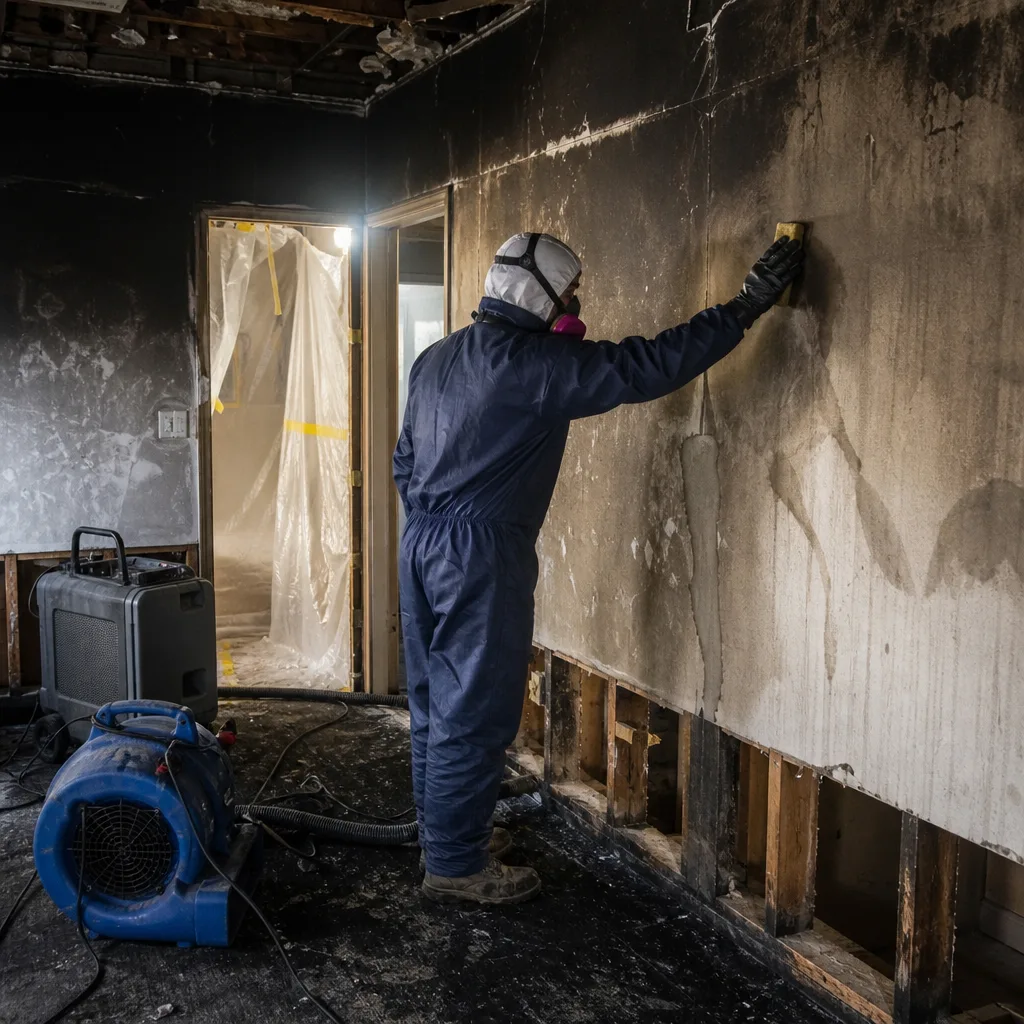
Physical removal of contaminated materials, following IICRC S520 standards for containment, negative air, and proper disposal. In Midtown’s pre-war buildings, removal stops at the asbestos boundary until DEP clearance; we build that sequencing into every scope.
Black Mold Remediation
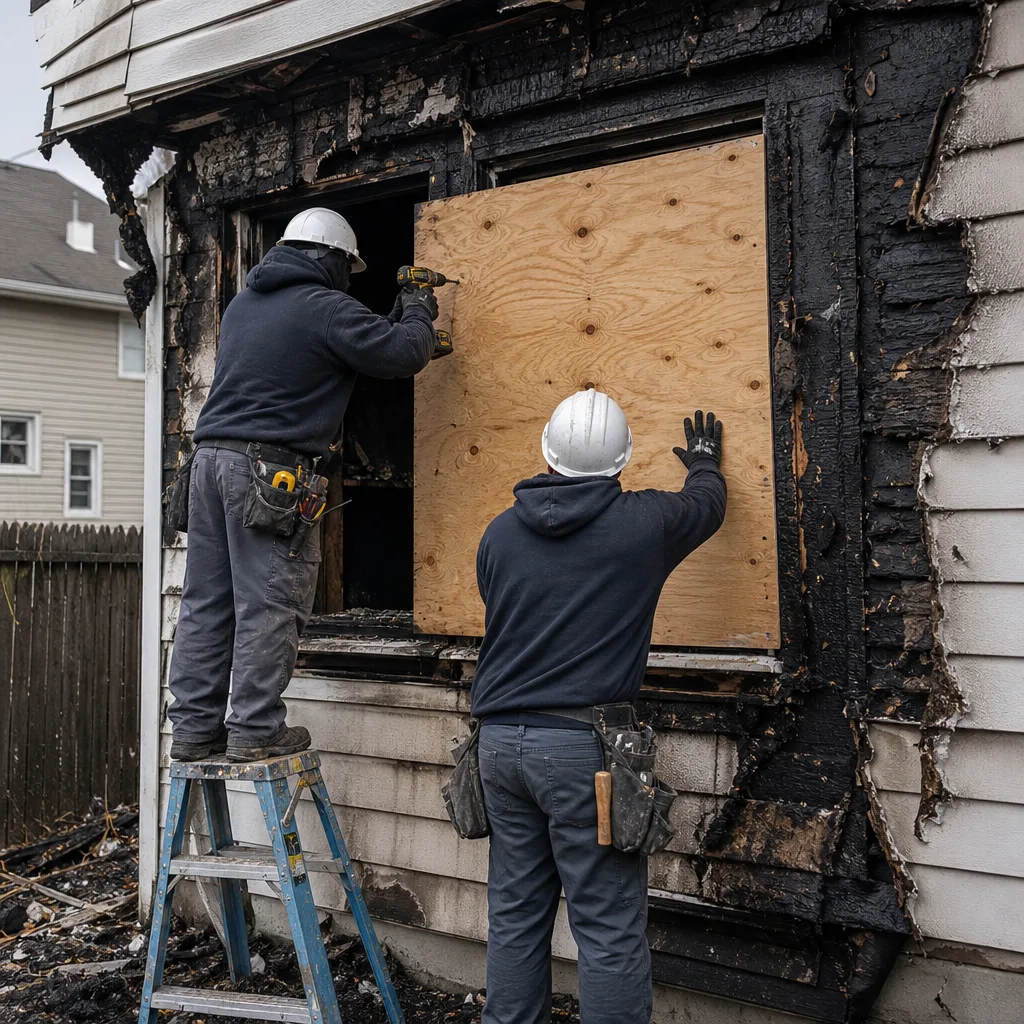
Stachybotrys and other toxigenic species require enhanced PPE, strict containment, and HEPA filtration at 99.97% efficiency at 0.3 microns. We don’t treat black mold as a marketing term; we treat it as a species-specific protocol with documented clearance criteria.
Air Quality Restoration
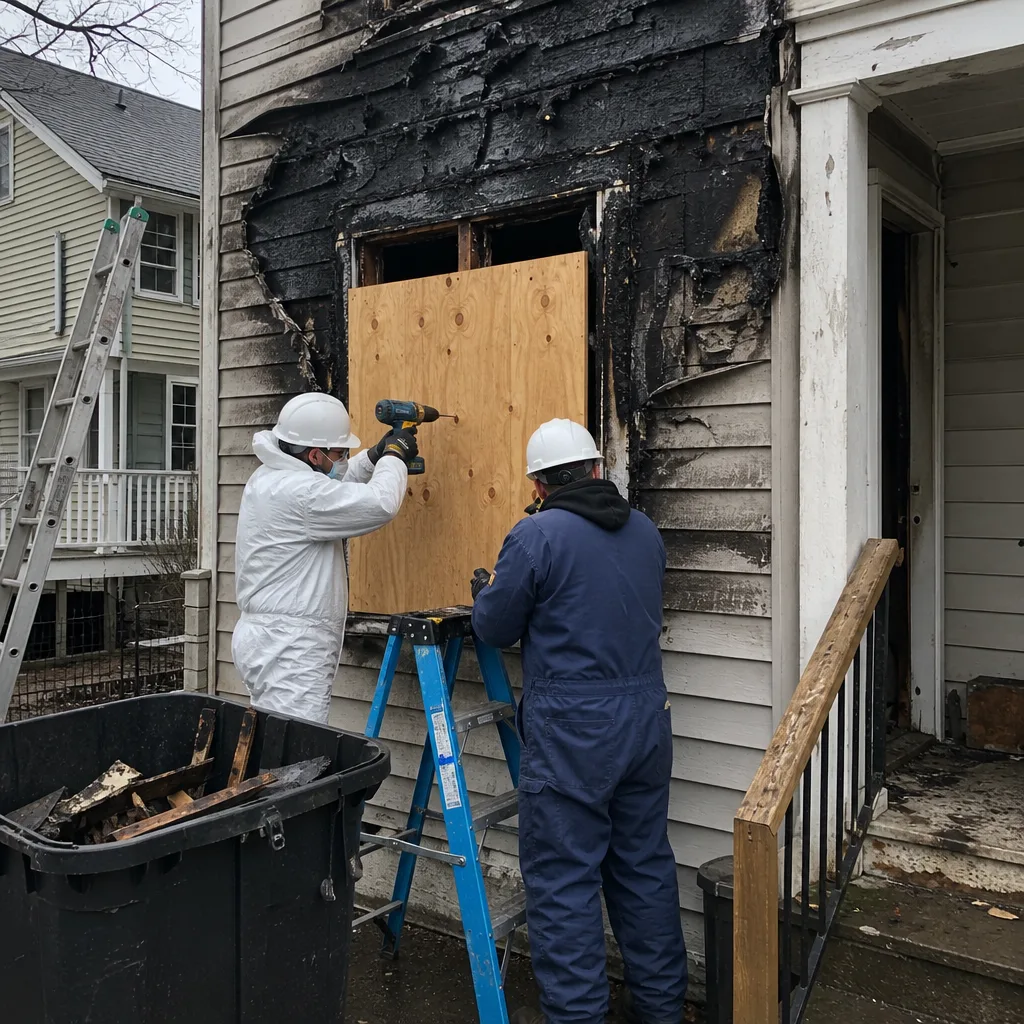
Post-remediation, we restore breathable air through source removal, HEPA filtration, and controlled ventilation. For Midtown buildings with centralized air handlers, this means coordinating with the building’s mechanical contractor to clean or replace contaminated duct sections.
Crawl Space Treatment
While true crawl spaces are rare in Midtown high-rises, sub-basement utility vaults and mechanical pits present analogous conditions: confined spaces, chronic humidity, and limited access. We apply the same vapor barrier, dehumidification, and antimicrobial protocols, adapted for concrete and steel environments.
Moisture & Humidity Control
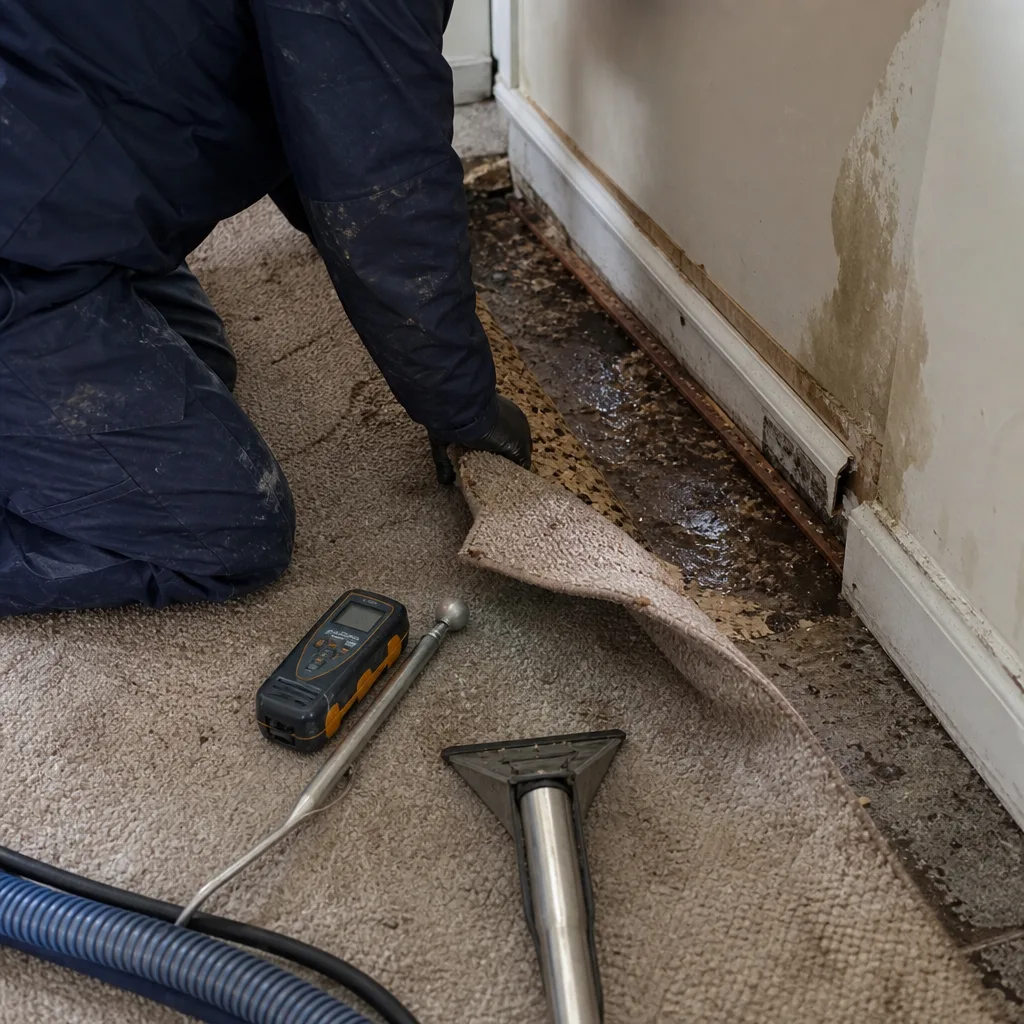
The only permanent mold solution is removing the moisture source. We install permanent dehumidification, improve drainage paths, and specify building envelope repairs. In Midtown, this often means coordinating with the building’s engineer on rooftop tank maintenance, facade sealing, or HVAC condensate management.
What happens when you call
- 1
A real person answersNo phone trees - you reach a local pro.
- 2
You get an upfront price rangeHonest numbers before anyone is dispatched.
- 3
A background-checked tech heads outLicensed & insured, dispatched right away.
- 4
You approve before work beginsNothing starts until you say go.
Mold Remediation Costs in Midtown Manhattan, NY
Mold inspection and testing in Midtown Manhattan typically runs $350-$650 for a standard residential unit or small commercial space, scaling to $800-$1,500 for multi-floor commercial assessments with air sampling at multiple points. Containment and remediation for a contained single-room loss generally falls between $1,800 and $4,500. Multi-floor high-rise jobs with asbestos abatement sequencing, elevator rigging, and business-interruption urgency can range from $8,000 to $25,000 or more, depending on affected square footage and the category of water that caused the mold.
What moves the price: the vertical extent of water migration, the presence of asbestos requiring DEP abatement, freight-elevator rigging costs for equipment access above the 20th floor, and whether the space must be remediated during off-hours to avoid tenant disruption. Insurance typically covers mold remediation when it results from a sudden, covered water loss; long-term humidity or maintenance-related mold may fall under policy exclusions. We review your coverage with you and document the loss origin to support your claim. Call (862) 281-7710 for a free inspection and written scope - estimates are free, and Haven Standard, Clause 1, means the price you see is the price you pay.
We Also Serve Cities Near Midtown Manhattan
Our crews respond throughout the immediate metro area, including Mold Remediation in Midtown Manhattan and surrounding neighborhoods. We also serve Astoria, Upper East Side, Long Island City, and Jackson Heights with the same 45-minute response commitment and documentation-first approach.
Serving Midtown Manhattan, NY - Our Local Coverage Area
We’re based in the Midtown Manhattan area and know this community well. Use the map below to see our service coverage - if you’re nearby, we can almost certainly help.
Midtown Manhattan Mold Remediation Questions, Answered
Does mold remediation in a pre-war Midtown Manhattan high-rise require asbestos abatement first?
Yes, if the water damage that caused the mold has disturbed asbestos-containing materials in pipe insulation, ceiling tiles, or spray-applied fireproofing. NYC DEP regulations mandate that abatement be completed by a certified contractor before standard restoration work can resume. Our crews identify these materials during initial inspection and build the abatement hold into the project schedule, so mold doesn’t keep growing while permits clear. Call (862) 281-7710 for an inspection - we’ll flag asbestos risk in the first 30 minutes.
Why does elevator access matter so much on a Midtown mold job?
A 40-story tower has no other path for industrial dehumidifiers, air movers, and HEPA scrubbers. Passenger elevators are too small and too restricted; freight elevators require advance booking with the building engineer. Without a reserved window, equipment sits in the lobby while the 24-48 hour mold colonization window closes on floors 20 through 40. Our first call on every high-rise loss is to shut the water source and book that elevator. Call (862) 281-7710 and we’ll coordinate access before we arrive.
How do you tell whether a Midtown water loss is Category 1, 2, or 3?
We test at the source and at multiple points along the migration path. Category 1, clean water from a supply line, becomes Category 2 after contact with pre-war building materials loaded with decades of dust and microbial content. Category 3, grossly contaminated, applies to sewage, flooding from outside the building, or any water that has passed through a rooftop wooden tank with biological loading. Our moisture mapping traces the actual path and samples at each transition point. Call (862) 281-7710 for documented classification on your loss.
Can mold from a Nor’easter curtain-wall leak in a Midtown tower be remediated without vacating tenants?
Often yes, with contained, negative-air remediation during off-hours. The key is isolating the work zone with polyethylene barriers and HEPA scrubbers while maintaining normal operations in adjacent spaces. We’ve remediated active office floors at night and handed back clean, documented space before the business day starts. The scope and schedule depend on the extent of spore migration, which our initial inspection determines. Call (862) 281-7710 for a containment plan tailored to your building.
What does moisture mapping actually find after a Midtown riser or rooftop-tank failure?
It finds what visual inspection cannot: water that has wicked horizontally into adjacent ceiling assemblies, vertically down elevator shafts, and into mechanical rooms three floors below the reported leak. We use thermal imaging to detect temperature differentials caused by evaporative cooling at wet surfaces, then confirm with penetrating meters that measure actual moisture content in drywall, concrete, and insulation. In a 1928 tower on West 45th Street, our mapping found category 2 water in pipe chases six floors below the origin, preventing a secondary mold outbreak that would have surfaced weeks later. Call (862) 281-7710 for mapping that finds the full damage.
How fast can DryMark Restoration Astoria actually get to Midtown Manhattan?
We commit to 45 minutes from call to arrival for emergency mold and water losses in Midtown Manhattan. Dispatch is coordinated from our New York City office, with crews staged for immediate response. Live answer 24/7, no voicemail. Call (862) 281-7710 - if we’re not moving within minutes, we’ll tell you exactly why and when.
Will my insurance cover mold remediation in Midtown Manhattan?
Insurance covers mold remediation when it results from a sudden, accidental water loss that your policy covers, like a burst pipe or tank failure. Long-term humidity, maintenance neglect, or gradual leaks are typically excluded. We document the loss origin and timeline to support your claim, provide line-item estimates in standard insurance formats, and coordinate directly with your adjuster. Our photo record and drying logs are built for claim approval. Call (862) 281-7710 - we’ll review your situation and advise on coverage before any work begins.
How long does mold remediation take in a Midtown high-rise?
A contained single-room residential or small commercial job typically takes 3 to 5 days from containment to clearance testing. Multi-floor high-rise projects with asbestos abatement sequencing, elevator rigging, and off-hours scheduling can extend to 2 to 4 weeks. The timeline depends on moisture source elimination, material drying rates documented in daily logs, and third-party clearance sampling. We provide a written schedule with the scope, before work starts. Call (862) 281-7710 for a timeline specific to your building.
Midtown Manhattan’s high-rise environment creates mold remediation challenges that don’t exist in suburban or low-rise settings. The sequencing matters: building engineer call, freight-elevator window, NYC DEP asbestos abatement hold where required, then containment, remediation, and documented clearance. Skip any step and the job fails, costs multiply, or both. Our Mold Remediation team has handled losses from the Theater District to East Midtown, and we build that experience into every scope we write.
A stave failure on the rooftop wooden water tank of a 1928 pre-war tower on West 45th Street sent thousands of gallons down a riser chase, soaking the ceiling assemblies on six occupied office floors. Our crew’s first move was not unpacking the Dri-Eaz - we called the building engineer to shut the tank supply line and booked a freight-elevator window, because a 40-story Midtown tower has no other path for our dehumidification and air movers. Once containment and antimicrobial treatment were set on each floor, moisture mapping showed category 2 water had wicked into asbestos-insulated pipe chases, forcing a DEP abatement hold before structural drying could resume. The job finished on schedule because we sequenced it right from the first call.
Every job we take in Midtown Manhattan carries the same documentation standards: written price before work begins, photo record on every visit, daily moisture logs, and the 365-Day Done Right Promise backed by The Haven Standard. We’ve restored 12,000+ homes and commercial spaces since 2011, every one with that same protocol. Alicia Brennan founded Back to Dry Restoration as a former claims adjuster who watched homeowners lose legitimate claims to sloppy documentation. We don’t let that happen to our customers.
Call (862) 281-7710 now for emergency mold remediation in Midtown Manhattan, or to schedule a free inspection and written estimate. Live answer, 24 hours a day.
Written by Alicia Brennan, Owner at Back to Dry Restoration, serving Midtown Manhattan since 2011.
Mold Remediation in Nearby Areas