
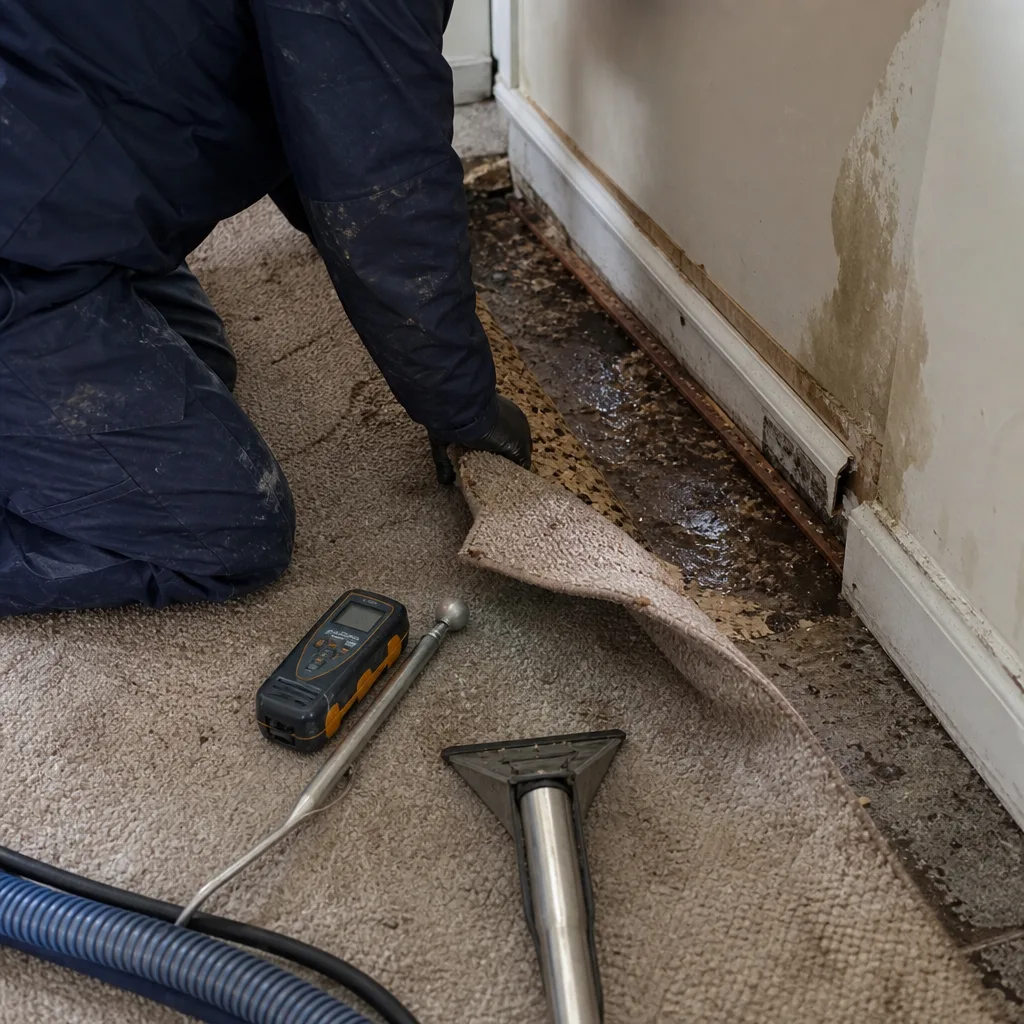
Free visual inspection and a written scope of work before any mitigation begins - photos, moisture readings, and drying logs go in your claim file
The scope we write is the scope we bill. Anything new gets shown to you, in writing, before we touch it.
Storm response
 Before
 After
After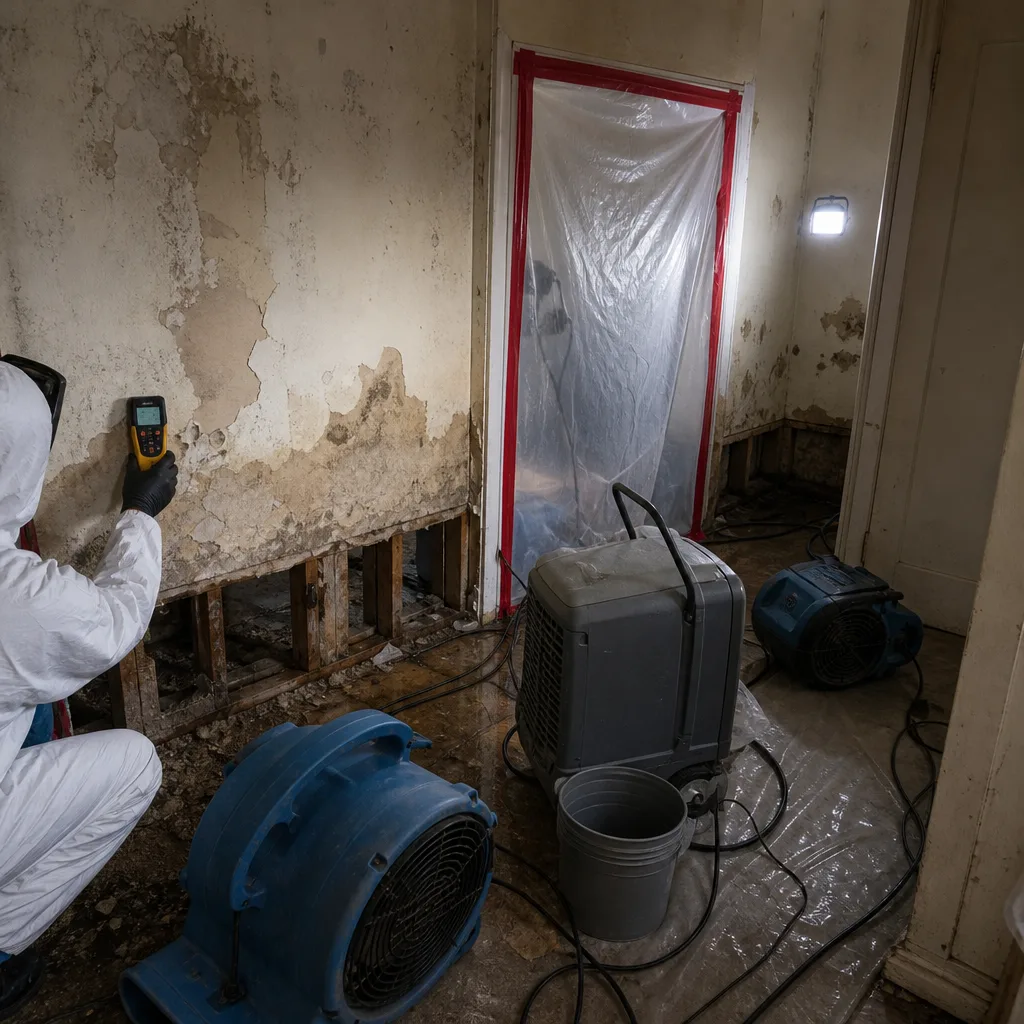 Before
 After
After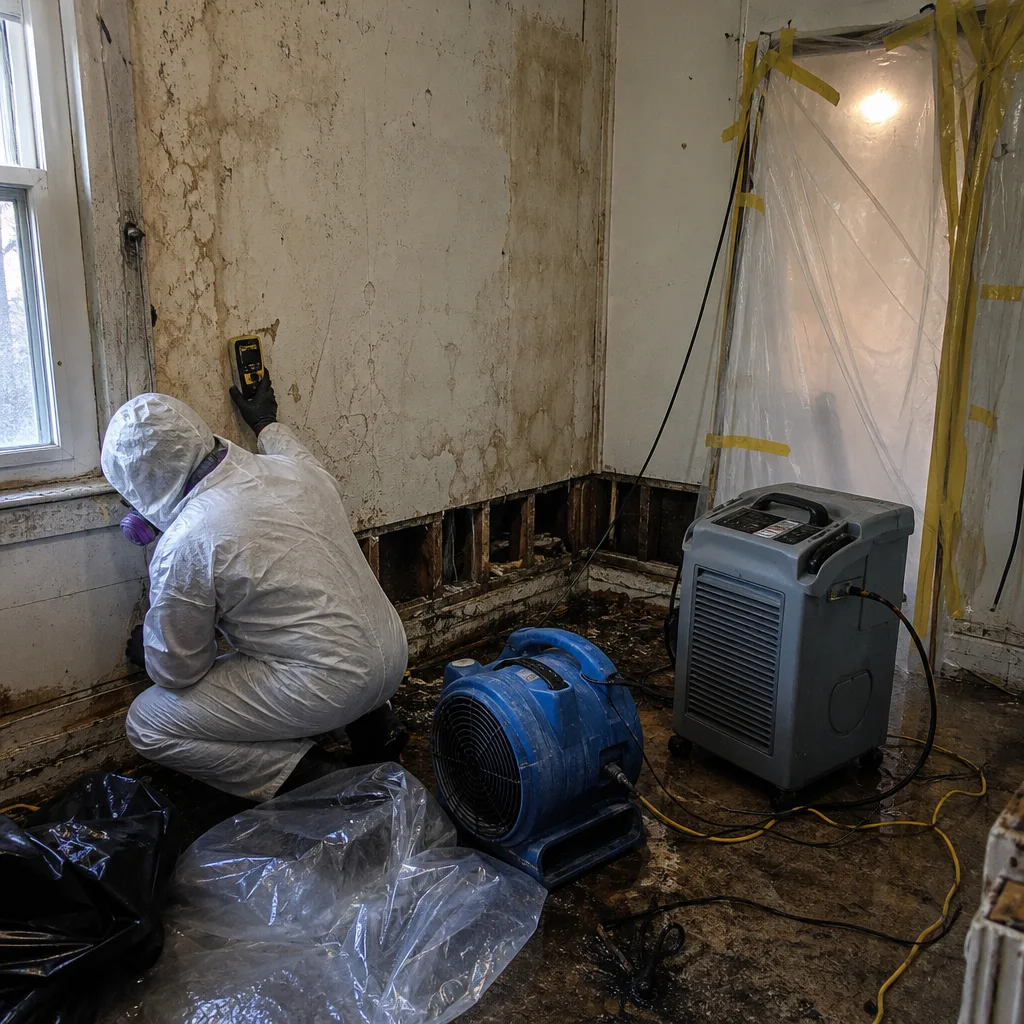 Before
 After
After24/7 Emergency Mold Remediation in Hoboken
Mold remediation in Hoboken typically costs $2,800-$7,500 for a standard residential job, with smaller contained areas starting around $1,200 and whole-basement gut-and-treat projects exceeding $12,000 in flood-prone garden-level units. Crews from our Mold Remediation in Hoboken operation can be on-site within 45 minutes of your call, and we answer live at (862) 281-7710 24 hours a day, 7 days a week - no voicemail, no callback queue. The first 24 hours after water intrusion are critical: mold colonization on organic materials begins within 48-72 hours, but in Hoboken’s humid, poorly ventilated below-grade spaces, we’ve documented active growth in as little as 36 hours following a combined sewer backup.
We provide a free visual inspection with moisture mapping on every call. Our dispatch is coordinated from our New York City metro office, with crews serving Hoboken locally for Hoboken Water Damage Restoration and carrying the documentation tools - thermal imaging, borescopes, and psychrometric data loggers - that turn a restoration invoice into a claim your adjuster pays without dispute.
Understanding Mold Remediation Severity in Hoboken Properties
Mold remediation severity in Hoboken is graded by affected square footage, material classification, and the underlying water category that initiated growth. Category 1 water - a clean supply-line break - permits more conservative remediation with surface treatment and targeted drying. Category 2, or gray water, requires removal of porous materials in the damage footprint. Category 3 water, which includes the combined sewer backups that plague Hoboken’s aging infrastructure, demands full gutting of affected cavities, antimicrobial treatment of structural members, and clearance testing before rebuild.
Hoboken’s building stock complicates every classification. The pre-1920 attached brick rowhouses and brownstones that dominate the city use horsehair plaster over wood lath rather than modern drywall. Standard pin-type moisture meters read the plaster face as dry even when the lath and framing behind it are saturated and actively growing mold. This means a Category 1 assessment based on meter readings can mask a Category 3 reality behind the wall. Our crews demo first and meter second on every Hoboken job - the true damage footprint almost always exceeds the initial visual assessment, and documenting that gap is what separates a payable claim from a denied one.
Why Hoboken Property Owners Choose DryMark Restoration Astoria
- 45-minute response commitment to any address in Hoboken, with crews staged for the zip codes 07030 demand.
- 24/7 live answer by a real person, never an automated system - because mold doesn’t wait for business hours, and neither should your contractor.
- IICRC-certified crews holding WRT (Water Damage Restoration Technician), AMRT (Applied Microbial Remediation Technician), and FSRT (Fire & Smoke Restoration Technician) credentials, with license numbers documented on every job file.
- Free visual inspection with moisture mapping and thermal imaging - no charge, no obligation, and a written scope delivered before any work begins.
- Direct insurance billing with photo-documented estimates formatted to carrier standards, plus free second opinion on any competitor’s written estimate.
- One team from mold containment through reconstruction - no handoffs, no blame-shifting, and a single 365-Day Done Right Promise backed by The Haven Standard covering the complete chain of work.
BeforeAfterOur Mold Remediation Process
1. Inspection & Assessment
We arrive with thermal imaging cameras, borescopes, and pinless moisture meters calibrated for Hoboken’s horsehair plaster substrates. Our techs document the visible damage footprint, identify the moisture infiltration pathway, and assess whether party-wall migration has extended the scope into adjoining units. You receive a written scope and firm price before any containment goes up - Haven Standard, Clause 1.
2. Containment & Air Filtration
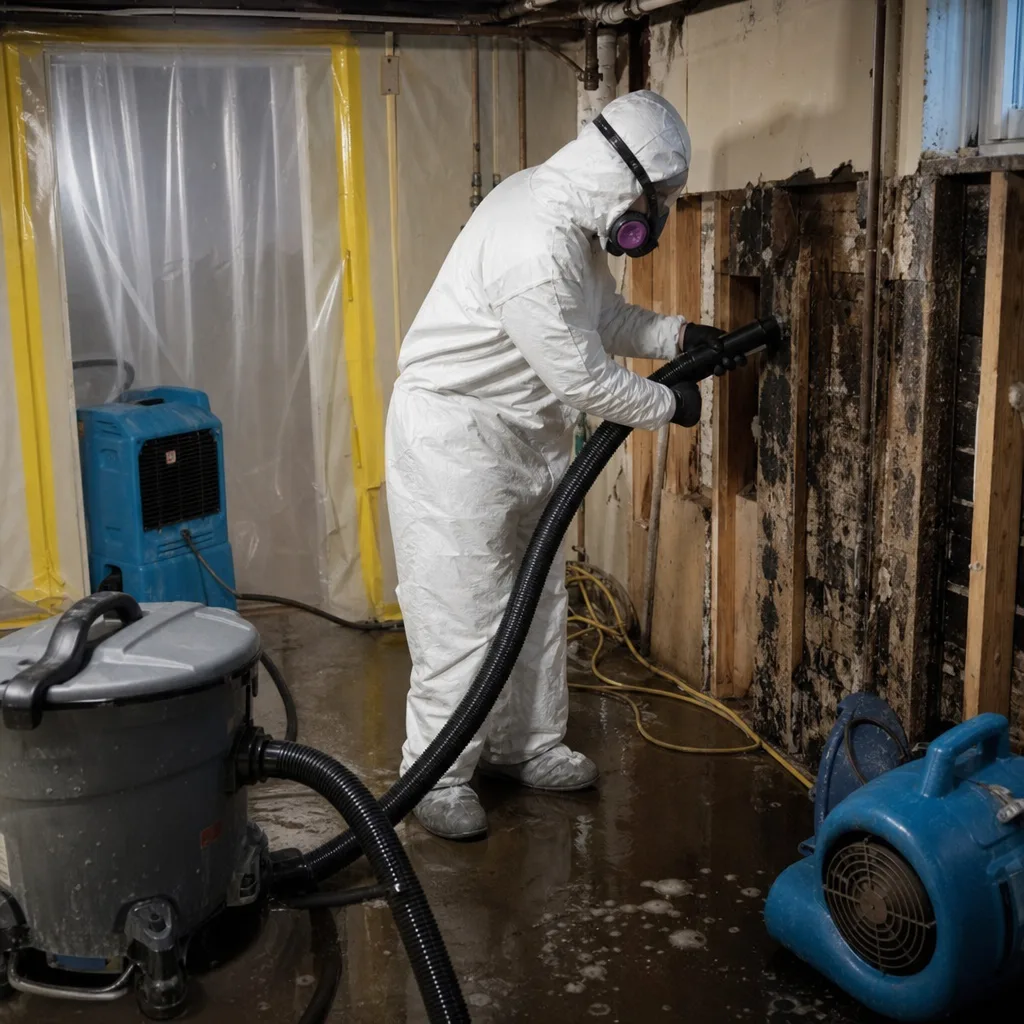
We establish negative-pressure containment with 6-mil polyethylene barriers and HEPA-filtered air scrubbers to prevent cross-contamination during demolition. In Hoboken’s attached rowhouses, this step is non-negotiable: shared HVAC chases and party-wall gaps can transport spores into neighboring properties if containment is improvised.
3. Demolition & Moisture Mapping
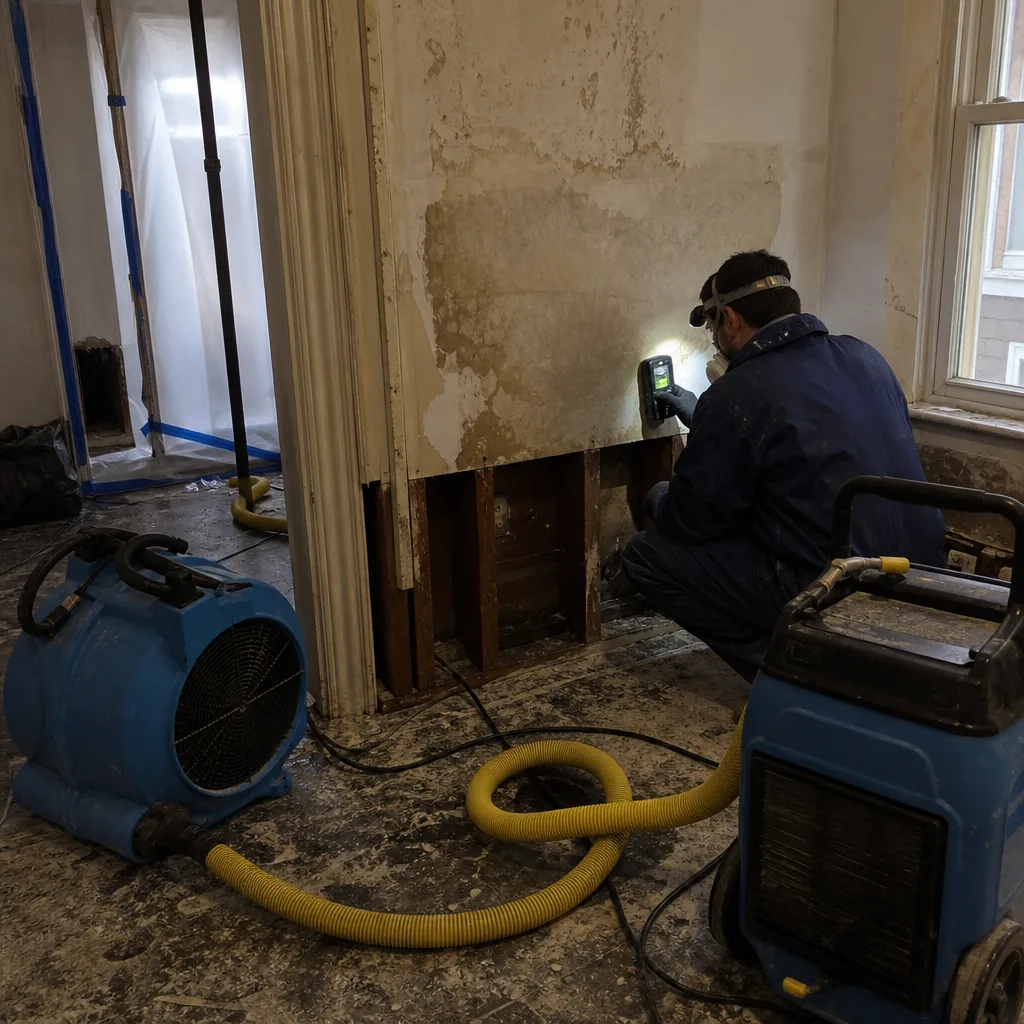
We remove horsehair plaster and lath to expose the true moisture boundary, then map readings on exposed framing with pin meters and thermal imaging. This is where most contractors fail in Hoboken - they treat the plaster face and miss the saturated lath behind it. Our daily drying logs document every reading to IICRC and RIA standards.
4. Drying & Dehumidification
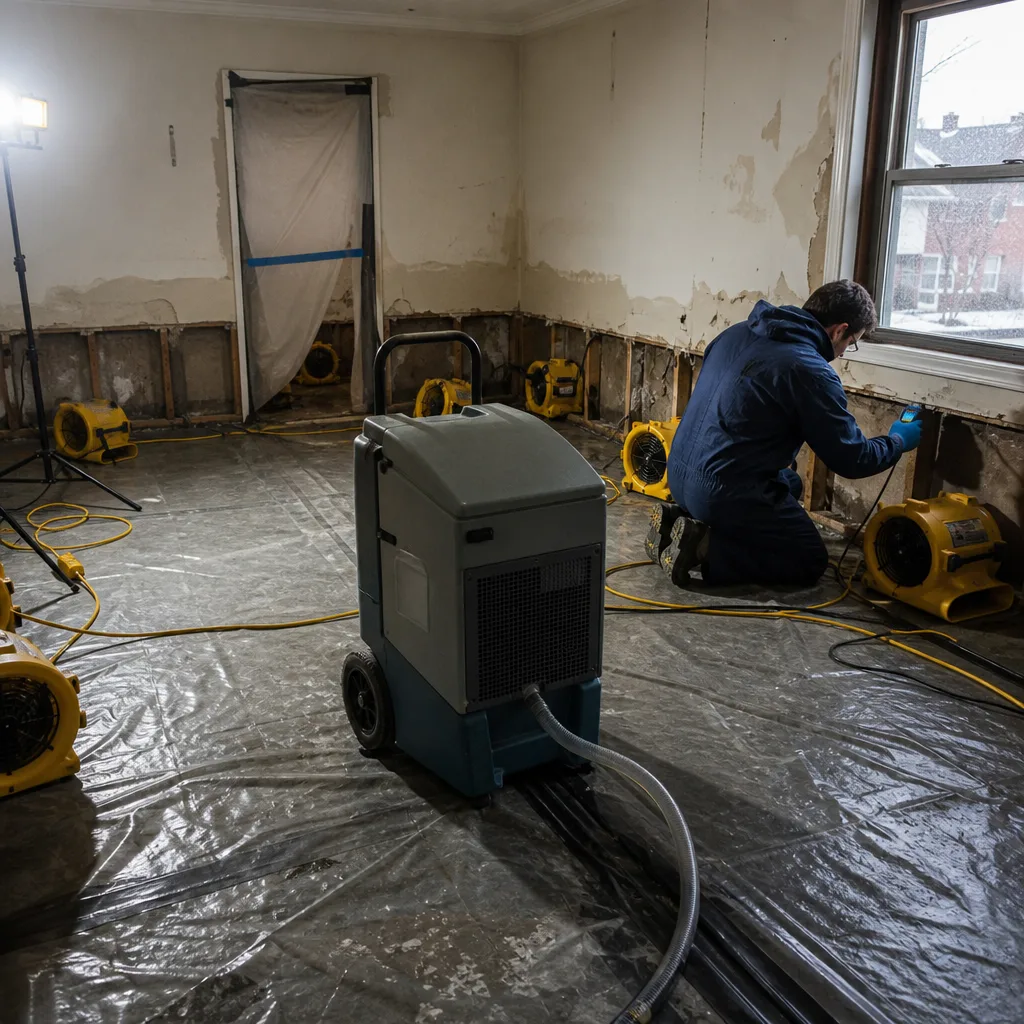
We deploy Phoenix LGR dehumidifiers, Dri-Eaz air movers, and Injectidry cavity-drying systems to establish vapor pressure differential - the force that pulls moisture from deep within structural members into the air where the dehumidifier captures it. Psychrometric data loggers track temperature, relative humidity, and grain depression until materials reach established dry standards.
5. Antimicrobial Treatment & HEPA Cleaning
After drying verification, we apply EPA-registered antimicrobial agents to all exposed structural members, followed by HEPA vacuuming and wet cleaning of the containment zone. Air scrubbers run continuously through this phase. For Category 3 losses, we treat with sporicidal agents and require clearance sampling before rebuild.
6. Repairs & Restoration
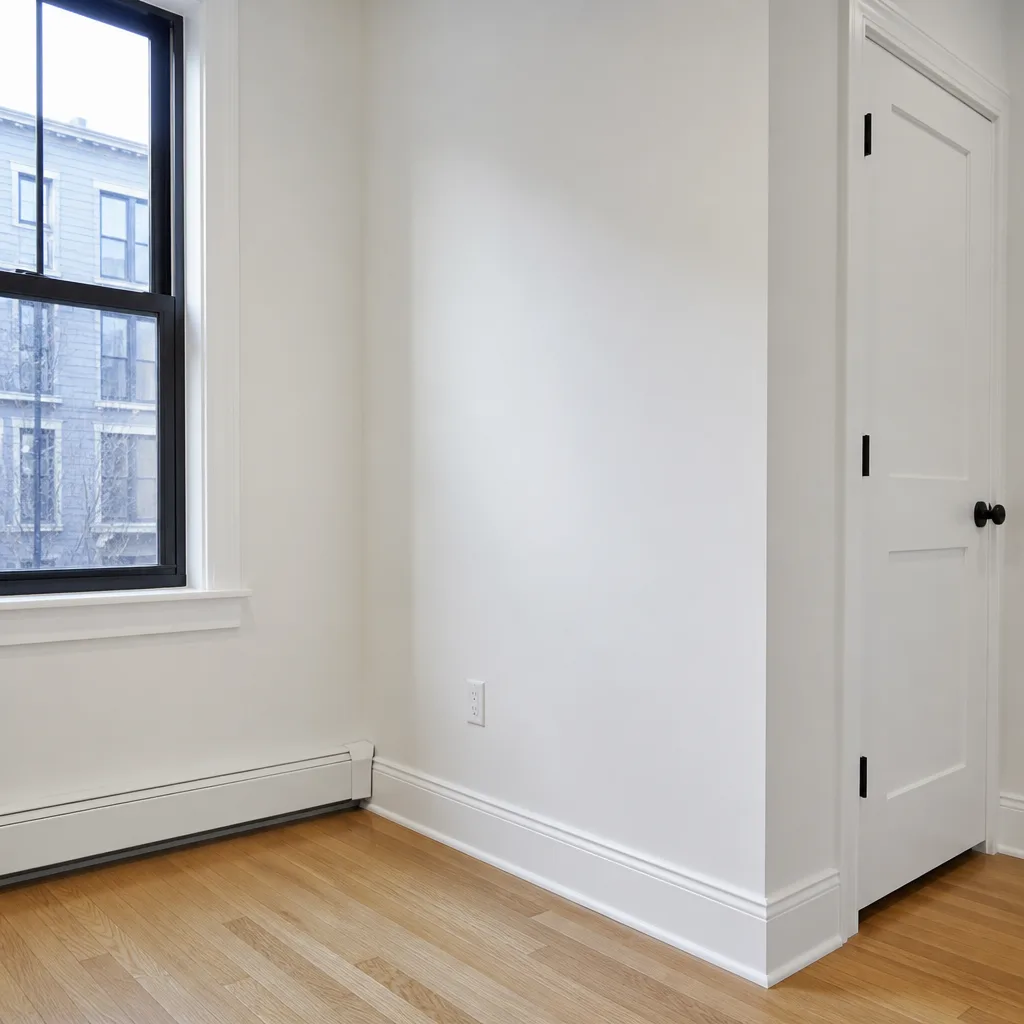
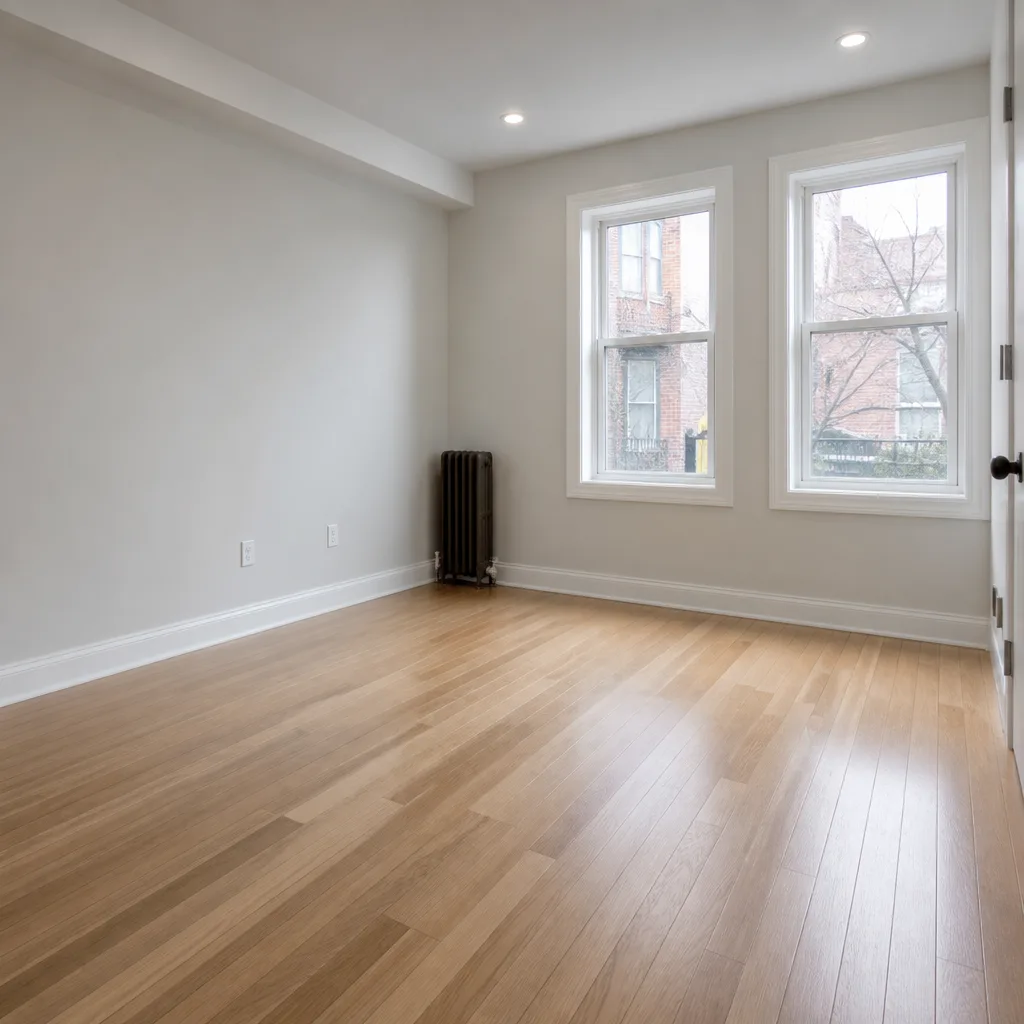
Our carpenters replace damaged framing, install modern moisture-resistant substrates where code permits, and restore finishes to match existing conditions. We address the infiltration pathway - tide-backed drain, failed door seal, cracked mortar joint - that caused the original wetting, because remediation without pathway correction is a callback waiting to happen.
Need Emergency Mold Remediation in Hoboken Now?
Crews minutes away, answering live 24 hours a day. The sooner we start, the less it costs.
Working With Your Insurance Company
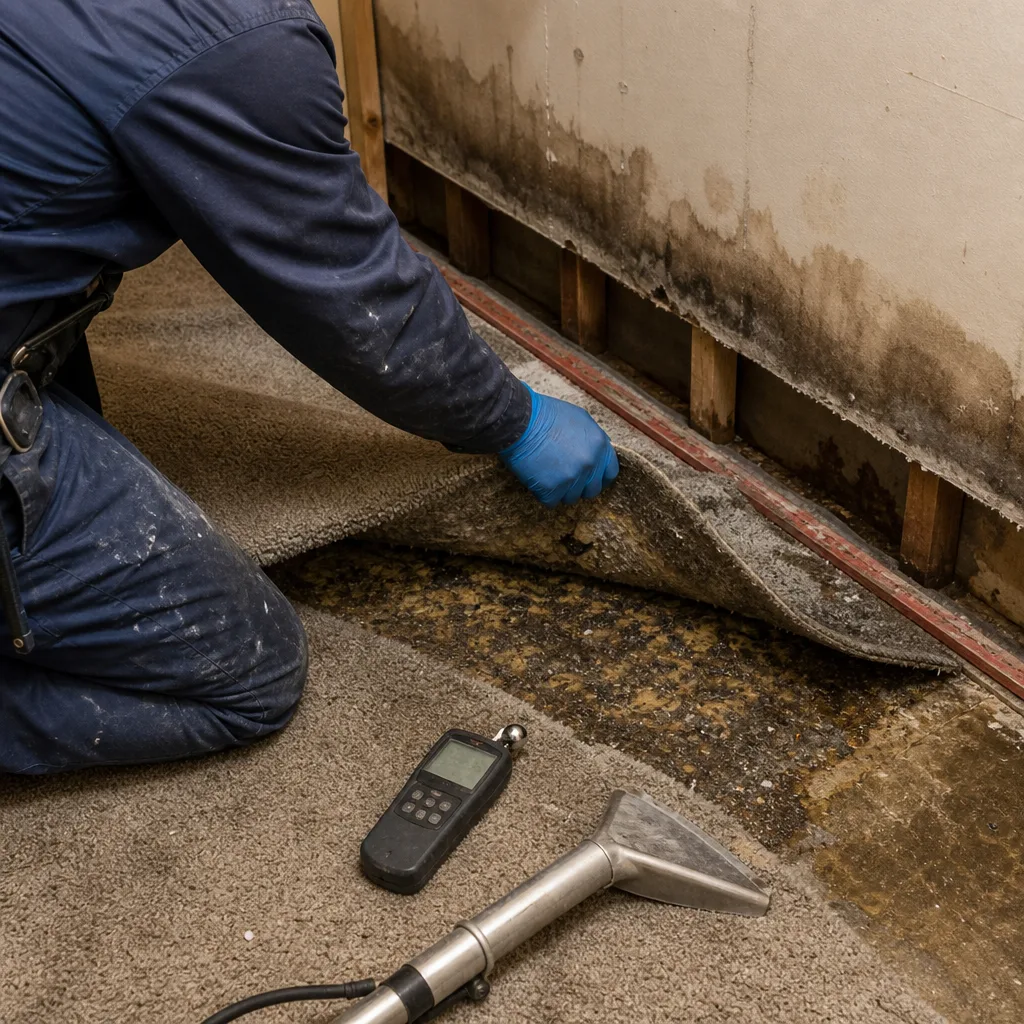
Every mold claim in Hoboken begins with documentation. We photograph the loss scene room by room, record moisture readings with equipment serial numbers and calibration dates, and produce a line-item scope of work formatted to Xactimate standards that your adjuster can process without revision. Our team coordinates directly with your carrier’s claims department, and we provide the drying logs and photo records that transform a restoration invoice into a payable document.
The Haven Standard requires this documentation on every job, not as an upsell but as a baseline deliverable. We’ve handled claims involving multiple owner-of-record properties after a single pipe burst migrated through party walls - the kind of loss that is routine in Hoboken’s attached housing stock and that demands meticulous scope-of-loss documentation to resolve liability disputes.
What We Provide Your Insurer
- Thorough documentation of the loss
- Photos of all damage, room by room
- Moisture readings and drying logs
- A detailed, line-item scope of work
- Direct coordination with your carrier
Built for Hoboken’s Loss Calendar
Hoboken’s mold season runs year-round, but the pattern is distinctive. January deep freezes burst copper supply lines in uninsulated wall cavities above garden-level units, with thaw cycles in February revealing the damage. March through May brings nor’easters and spring rain that overwhelm the combined sewer system on Observer Highway and Willow Avenue, backing raw sewage into basements and producing the Category 3 losses that demand full gut remediation.
Summer humidity compounds the problem: Hoboken’s bowl-shaped topography traps moisture, and air conditioning in upper floors creates vapor pressure differentials that pull humid air through party-wall gaps into cooler basement spaces, condensing on lath and framing. September through November is peak hurricane and nor’easter season - the anniversary of Sandy reminds property owners what the Hoboken Bowl means when storm surge meets high tide. Every season demands a different remediation protocol, and our crews carry the equipment and documentation protocols for each.
Mold Remediation Across Hoboken’s Neighborhoods
The Waterfront and Hudson Street corridor presents high-rise and mid-rise condo buildings with centralized HVAC systems and podium-level parking garages where bulk water intrusion follows failed waterproofing membranes. Our containment protocols here emphasize protecting common corridors and elevator lobbies from cross-contamination during remediation.
Washington Street and the central business district mix commercial ground floors with residential above, meaning mold losses often involve dual-use buildings where a restaurant grease-line failure or roof drain backup affects multiple tenant spaces. Documentation must separate commercial from residential scopes for separate policy limits.
The Heights and western Hoboken, climbing toward the Palisades, includes some of the city’s oldest housing stock and steepest elevation changes. Mold here often follows chronic roof and gutter failures in buildings with original slate or terra cotta roofing, with water tracking down through multiple floors before visible damage appears on the ceiling.
Near the PATH station and the NJ Transit rail yards, vibration from constant train traffic stresses building envelopes, cracking mortar joints and window seals that become infiltration pathways during rain events. We’ve documented mold behind intact plaster in units where the owner insisted the wall was dry because the surface felt normal - the meter told a different story once we opened the cavity.
Specialized Mold Remediation Services We Offer in Hoboken
Mold Inspection & Testing
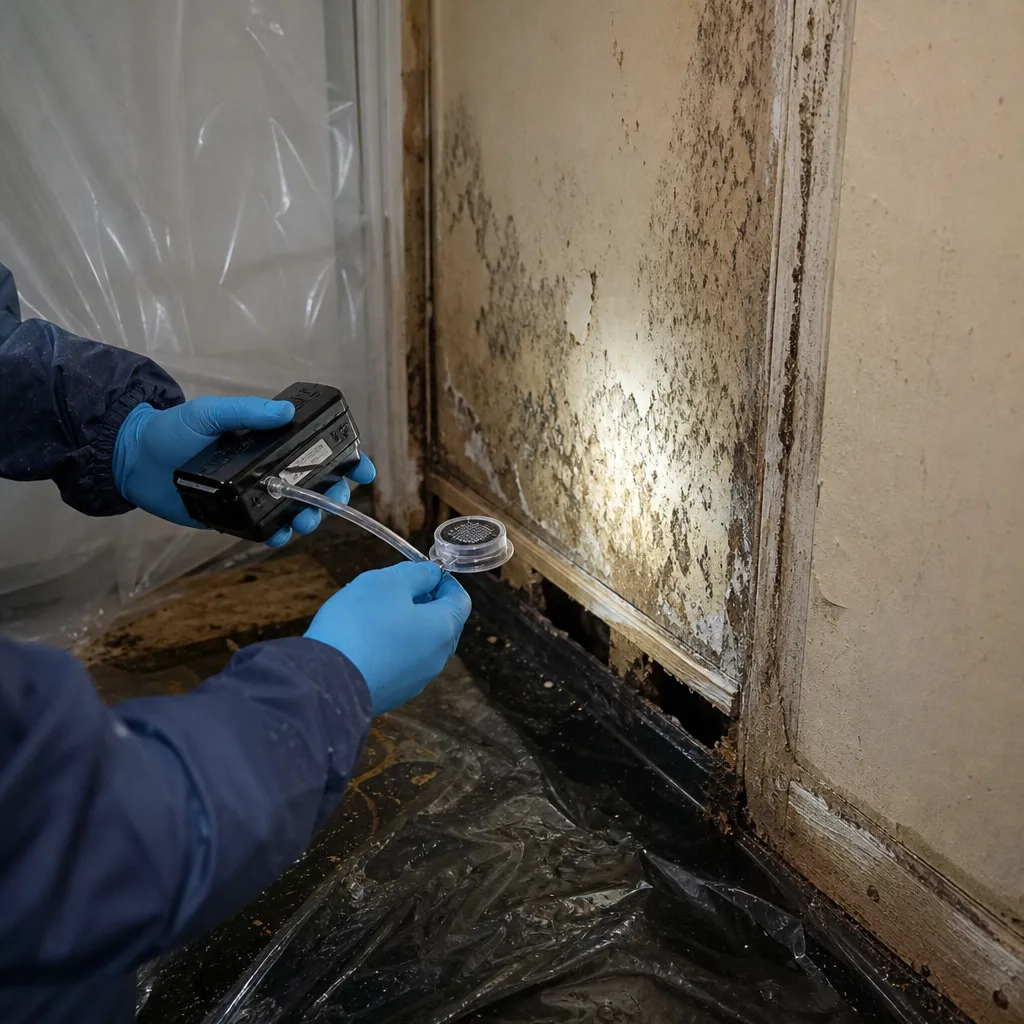
Our inspections use thermal imaging, borescopes, and air sampling to locate hidden mold in Hoboken’s plaster-over-lath wall systems. We provide a written report with photo documentation, moisture readings, and recommended scope - the same documentation package we produce for insurance carriers. A typical inspection in Hoboken runs $350-$650, with air sampling and lab analysis adding $150-$300 per sample.
Mold Removal
We remove visible mold growth through HEPA-contained demolition and mechanical cleaning, with daily moisture logs tracking progress to dry standard. In Hoboken’s shared-wall buildings, we coordinate access with adjoining unit owners when party-wall migration is suspected - a step that prevents the liability disputes that derail claims.
Black Mold Remediation
Stachybotrys chartarum and other toxigenic species require enhanced containment, PPE, and sporicidal treatment protocols. We treat these as Category 3-equivalent losses regardless of the original water category, with clearance testing by an independent third party before reoccupancy. Costs typically run 40-60% above standard remediation due to extended containment and treatment cycles.
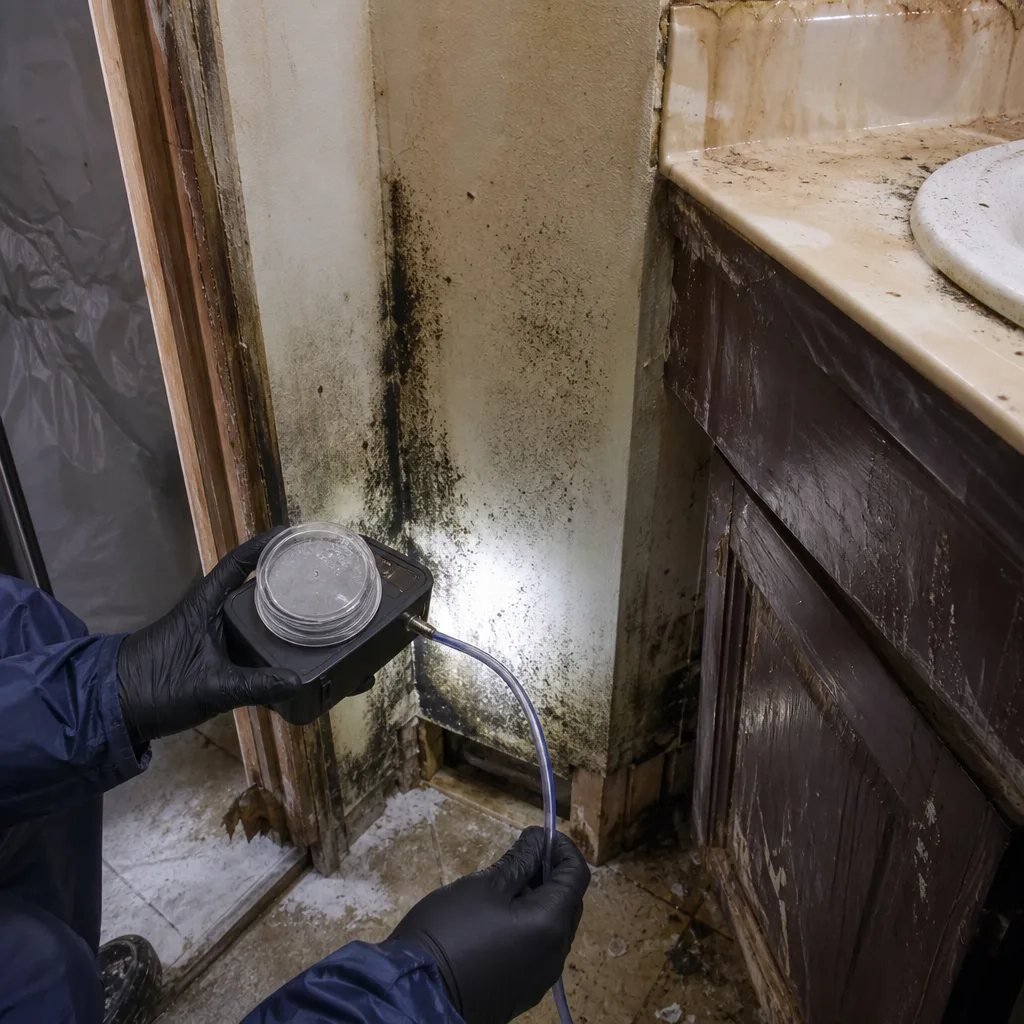
Air Quality Restoration
After remediation, we deploy HEPA air scrubbers and carbon filtration to address residual spores and volatile organic compounds. In Hoboken’s tight, poorly ventilated rowhouses, this step is essential for reoccupancy - we verify results with pre- and post-remediation air sampling documented to IFA standards.
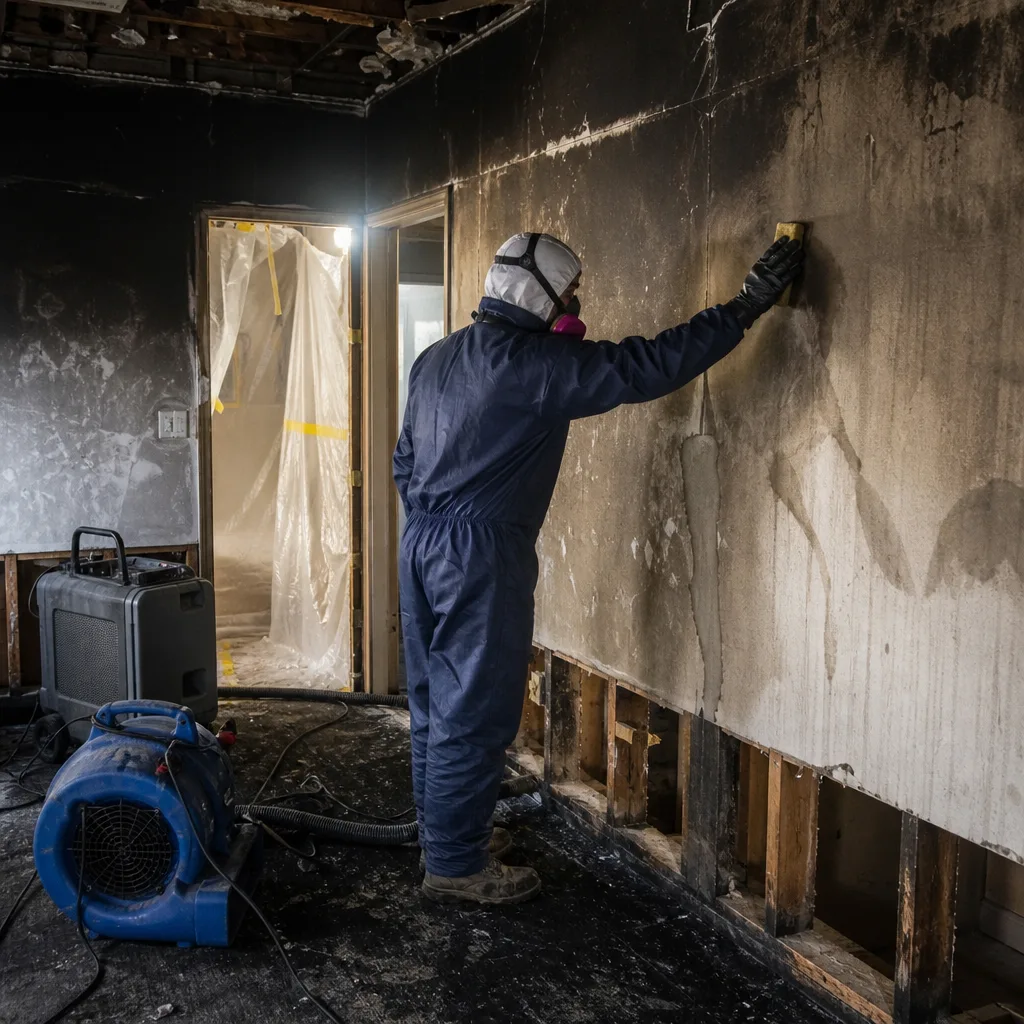
Crawl Space Treatment
Hoboken has limited crawl space inventory, but the garden-level and basement spaces that function as crawl equivalents - low clearance, dirt or concrete floors, minimal ventilation - receive the same treatment: vapor barrier installation, dehumidification, and structural drying to prevent recurring mold cycles in chronically damp conditions.
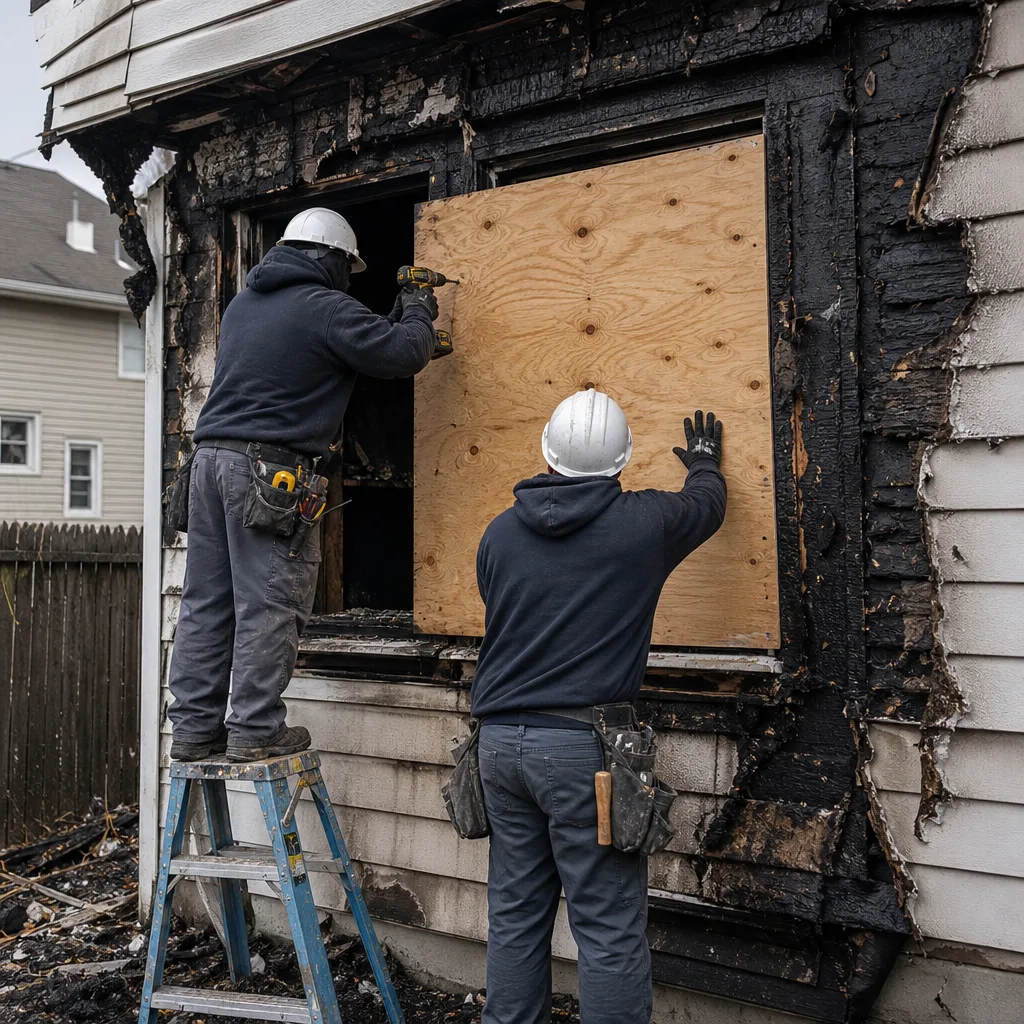
Moisture & Humidity Control
This is where Hoboken remediation succeeds or fails long-term. We install permanent dehumidification, repair infiltration pathways, and specify building envelope improvements that address the tide-backed drains and failed seals that drive recurring wetting. Without this step, mold returns within weeks of remediation - we’ve seen it repeatedly in units where the contractor treated symptoms and ignored cause.
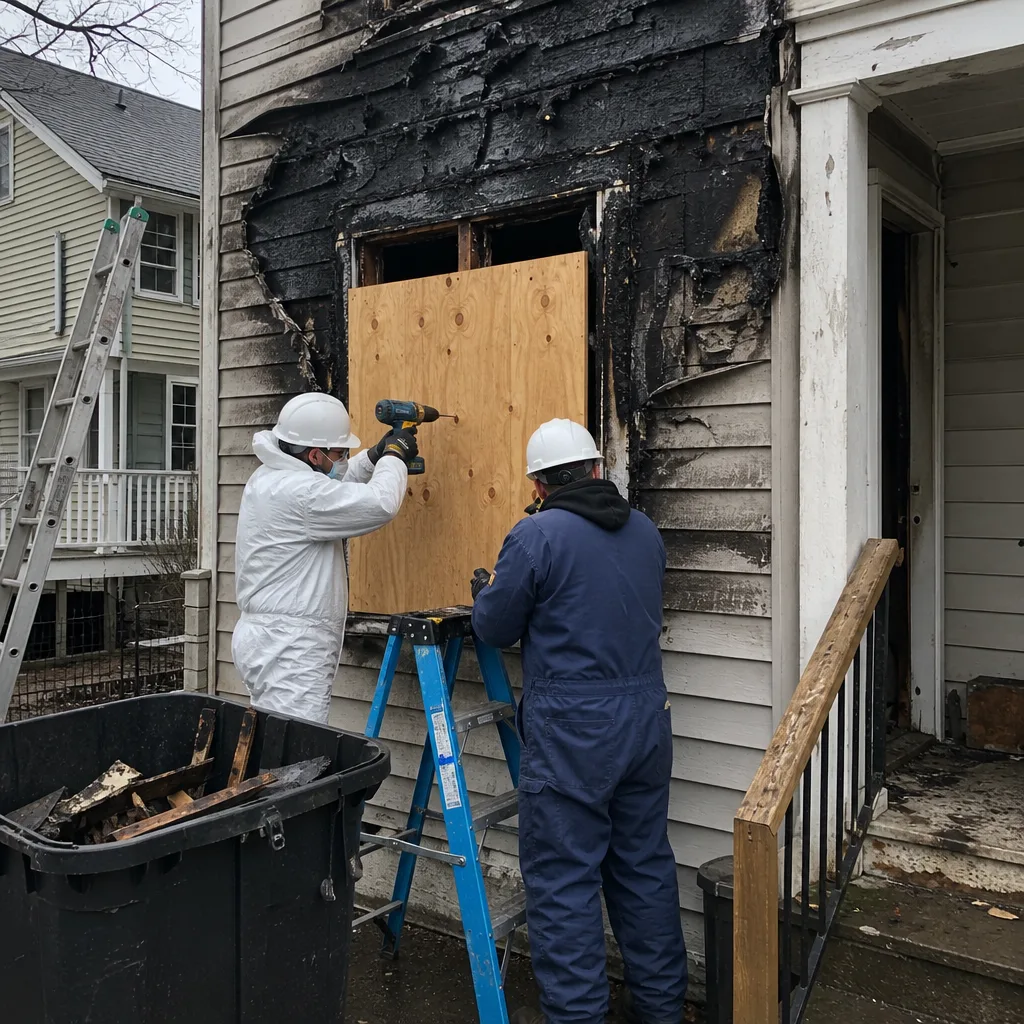
What happens when you call
- 1
A real person answersNo phone trees - you reach a local pro.
- 2
You get an upfront price rangeHonest numbers before anyone is dispatched.
- 3
A background-checked tech heads outLicensed & insured, dispatched right away.
- 4
You approve before work beginsNothing starts until you say go.
Mold Remediation Costs in Hoboken, NJ
Mold remediation in Hoboken follows a clear pricing structure, delivered in writing before work begins - Haven Standard, Clause 1. Small, contained areas (under 10 square feet, Category 1 or 2 water source) typically run $1,200-$2,800. Standard residential jobs involving one room or a basement section with controlled demolition range from $2,800-$7,500. Extensive Category 3 losses with full gutting of multiple rooms, antimicrobial treatment of structural members, and clearance testing often reach $7,500-$15,000, with the most complex multi-unit party-wall projects exceeding that range.
What moves the price: the water category (Category 3 requires more extensive removal), the presence of horsehair plaster and lath (more labor-intensive demolition than drywall), whether party-wall access requires neighbor coordination, and the need for independent clearance testing. Insurance typically covers mold remediation when the growth follows a covered water loss - a burst pipe, storm damage, or appliance failure - but may exclude long-term maintenance-related moisture. We review your policy language and document the loss origin to support your claim. Call (862) 281-7710 for a free inspection and written scope - estimates are free, and we provide free second opinions on any competitor’s written estimate.
We Also Serve Cities Near Hoboken
Our crews respond throughout the immediate Hudson County area, with particular focus on Mold Remediation for property owners in Union City, where similar attached housing stock and combined sewer infrastructure produce comparable loss patterns. We coordinate multi-property losses across municipal boundaries when a single event affects buildings in both jurisdictions.
Serving Hoboken, NJ - Our Local Coverage Area
We’re based in the Hoboken area and know this community well. Use the map below to see our service coverage - if you’re nearby, we can almost certainly help.
Hoboken Mold Remediation Questions, Answered
Why does my Hoboken rowhouse wall feel dry but still test positive for mold behind it?
Horsehair plaster over wood lath reads dry on standard pin-type moisture meters because the plaster surface itself has low moisture content, while the lath and framing behind it remain saturated and actively growing mold. We demo first and meter second on every Hoboken job - the true damage footprint almost always exceeds the initial visual assessment, and relying on surface readings alone is the single most common cause of failed remediation in pre-1920 rowhouses. Call (862) 281-7710 for an inspection with proper diagnostic equipment.
How fast can mold start after a Hoboken basement floods from a nor’easter or sewer backup?
In Hoboken’s humid, poorly ventilated below-grade spaces, we’ve documented active mold colonization in as little as 36 hours following Category 3 water intrusion. The combination of organic lath and framing, sustained moisture from slow-draining Hoboken Bowl topography, and summer humidity creates conditions that accelerate growth beyond the textbook 48-72 hour window. Immediate extraction and drying protocol initiation is critical - our crews carry Dri-Eaz extractors and Phoenix dehumidifiers for exactly this timeline. Call (862) 281-7710 for immediate dispatch.
What water category is a Hoboken sewer backup, and does that change the remediation scope?
A combined sewer backup is Category 3 water - grossly contaminated with pathogens and requiring full removal of porous materials in the damage footprint, plus antimicrobial treatment of structural members and clearance testing before rebuild. This is non-negotiable under IICRC S500 standards and significantly expands scope and cost compared to Category 1 or 2 losses. We document the water category origin in every estimate to support insurance coverage determinations. Call (862) 281-7710 for a written scope.
Does mold in my unit affect my neighbor through the party wall?
Yes - shared party walls in Hoboken’s attached rowhouses provide direct pathways for moisture and spore migration, and we’ve handled multiple losses where a single pipe burst or flood extended horizontally into adjoining owner-of-record properties. Our containment protocols include party-wall assessment with borescope inspection when migration is suspected, and we document all findings for insurance coordination. Early detection prevents the liability and scope-of-loss disputes that complicate claims. Call (862) 281-7710 for neighbor-safe assessment protocols.
Why does mold keep coming back in my garden-level Hoboken condo after remediation?
Recurring mold indicates the underlying moisture infiltration pathway was never addressed - a tide-backed drain, failed door seal, cracked party-wall mortar joint, or chronically humid basement environment that re-wets materials after remediation is complete. We treat the symptom and the cause: our scopes include pathway identification and repair, plus permanent moisture control recommendations. Without this, Hoboken’s repeated wetting cycles guarantee regrowth within weeks. Call (862) 281-7710 for remediation that includes pathway correction.
How long does mold remediation take in a typical Hoboken rowhouse?
A contained single-room job with Category 1 or 2 water origin typically requires 3-5 days from containment to clearance. Category 3 losses with horsehair plaster demolition, structural drying, and antimicrobial treatment extend to 7-14 days. Complex multi-unit party-wall projects with neighbor coordination and independent clearance testing may require 2-3 weeks. We provide a written timeline with every scope - Haven Standard, Clause 1 - and daily drying logs document progress to that schedule.
Can we stay in our home during mold remediation?
For small contained areas with negative-pressure isolation and HEPA air filtration, occupants often remain with restricted access to the work zone. For extensive Category 3 remediation, whole-basement gutting, or toxigenic species involvement, we recommend temporary relocation - particularly in Hoboken’s tight rowhouses where HVAC interconnection and limited ventilation make isolation difficult. We discuss reoccupancy criteria in the initial scope and require independent clearance testing before lifting any recommendation to relocate.
What certifications do your technicians hold for mold work?
Our lead technicians hold IICRC AMRT (Applied Microbial Remediation Technician) and WRT (Water Damage Restoration Technician) certifications, with ongoing education to RIA and IFA standards. License numbers are documented on every job file, and all technicians are background-checked, uniformed, and verified before arriving at your property. We do not subcontract mold remediation to uncertified day labor - the same crew that assesses your loss completes the work and signs the 365-Day Done Right Promise. Call (862) 281-7710 to verify credentials for your specific job.
We got a call from a garden-level condo on Bloomfield Street after a nor’easter backed the combined sewer into a shared basement. Our tech pulled standing water with a Dri-Eaz extractor, mapped moisture through the adjoining unit’s party wall, and found the woman’s complaint about a musty closet was actually mold behind intact horsehair plaster lath. We set containment, ran XPOWER air movers and a Phoenix dehumidifier, logged daily drying readings, and treated the framing after demolition showed saturation two feet past the visible stain.
Written by Alicia Brennan, Owner at Back to Dry Restoration, serving Hoboken since 2011 under The Haven Standard.
Mold Remediation in Nearby Areas