
Free visual inspection and a written scope of work before any mitigation begins - photos, moisture readings, and drying logs go in your claim file
The scope we write is the scope we bill. Anything new gets shown to you, in writing, before we touch it.
Storm response
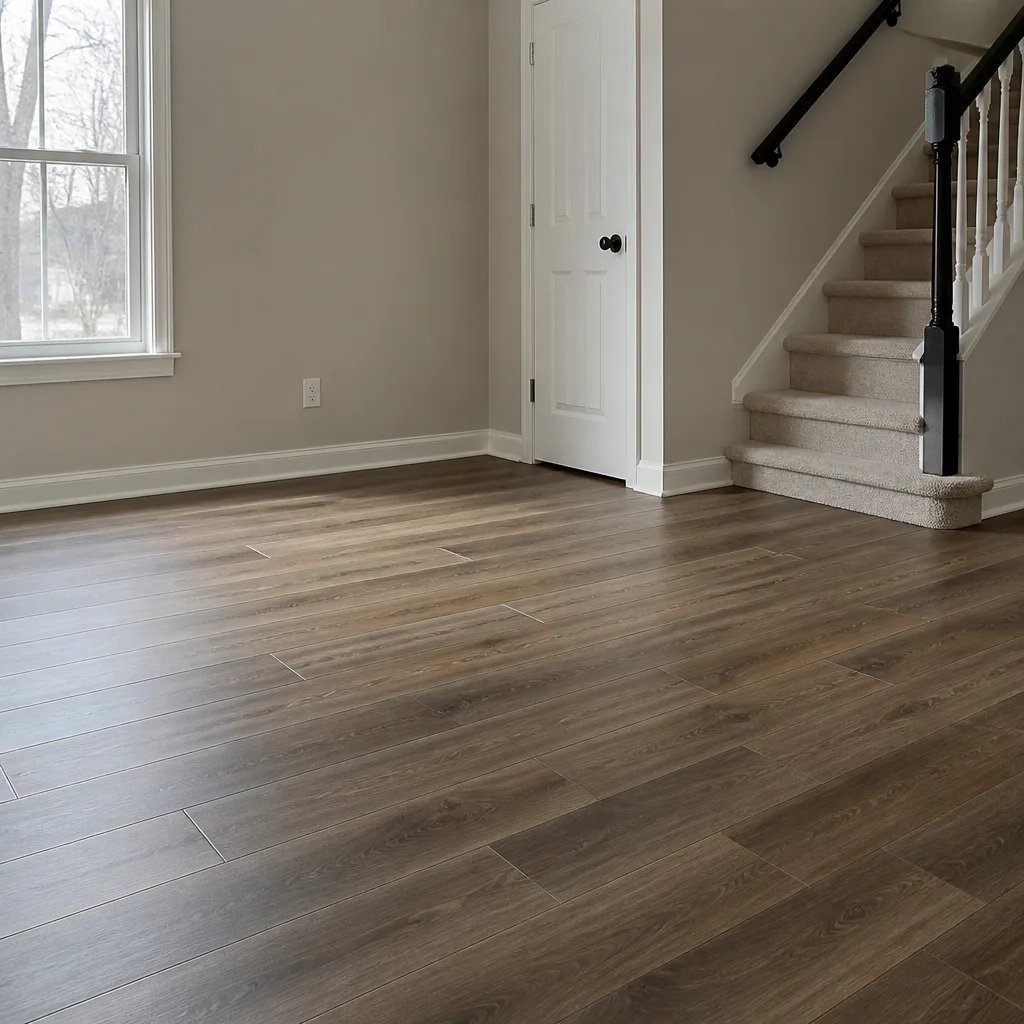
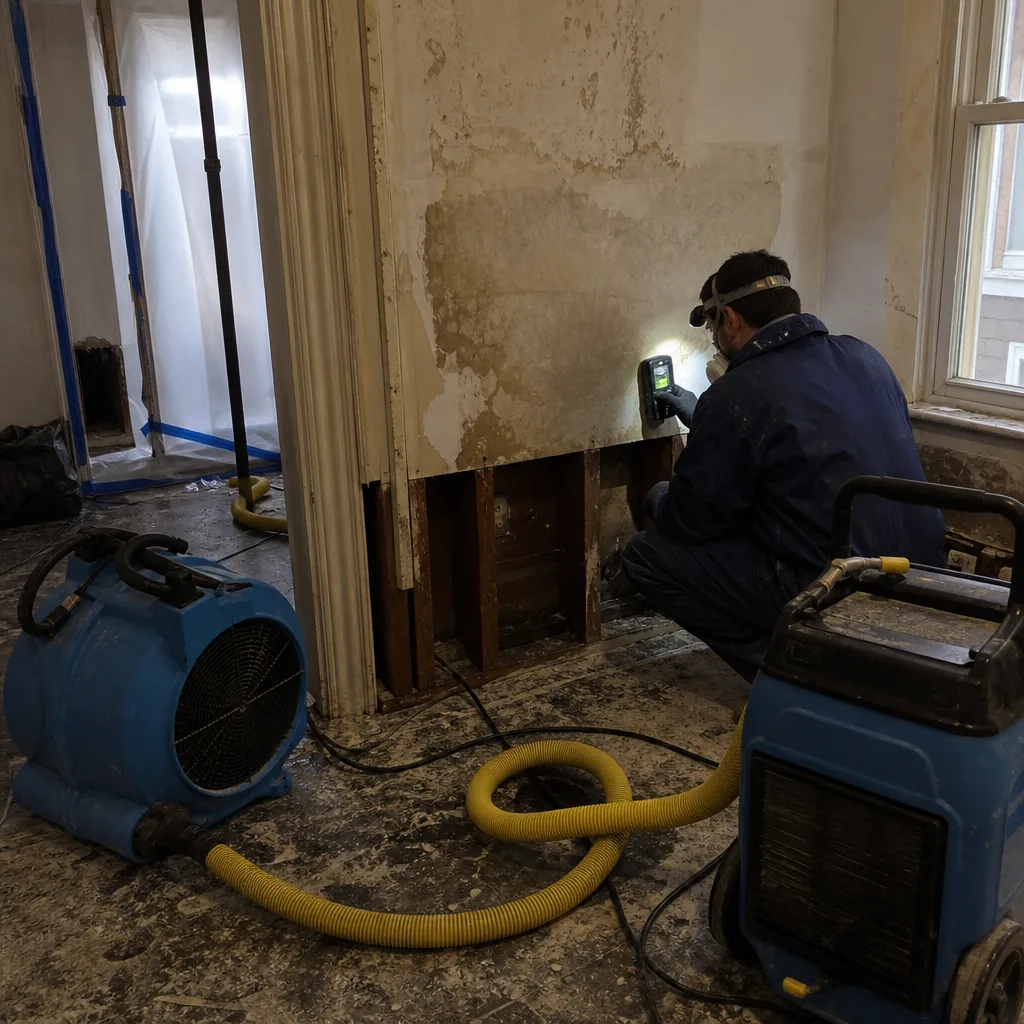 Before
 After
After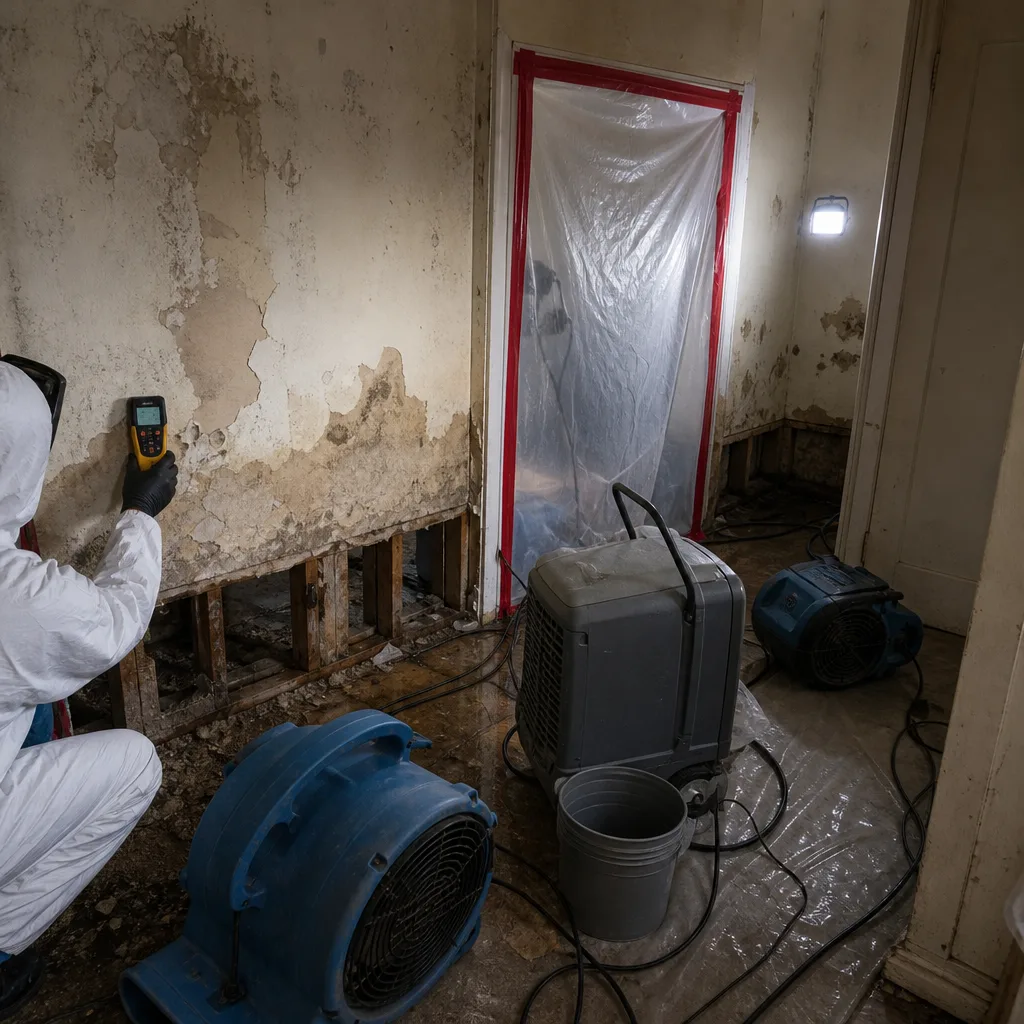 Before
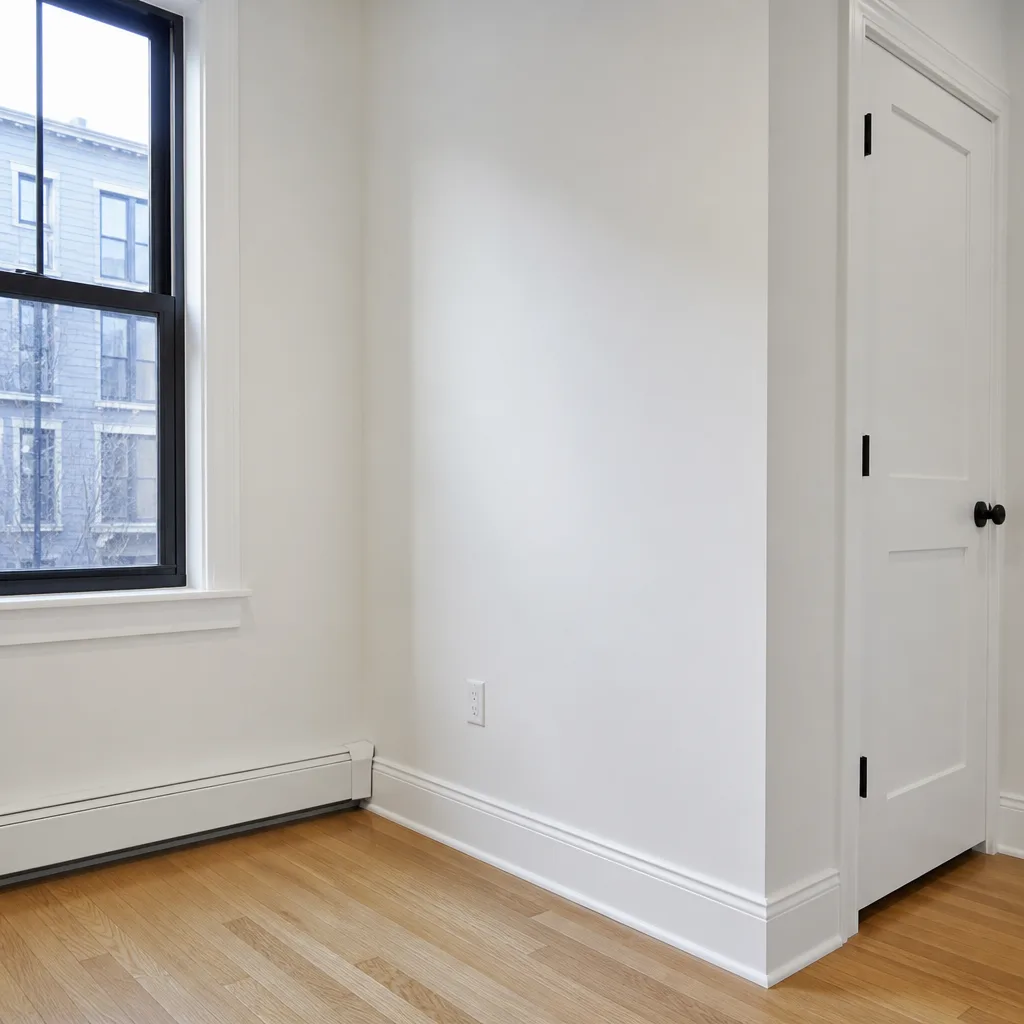 After
After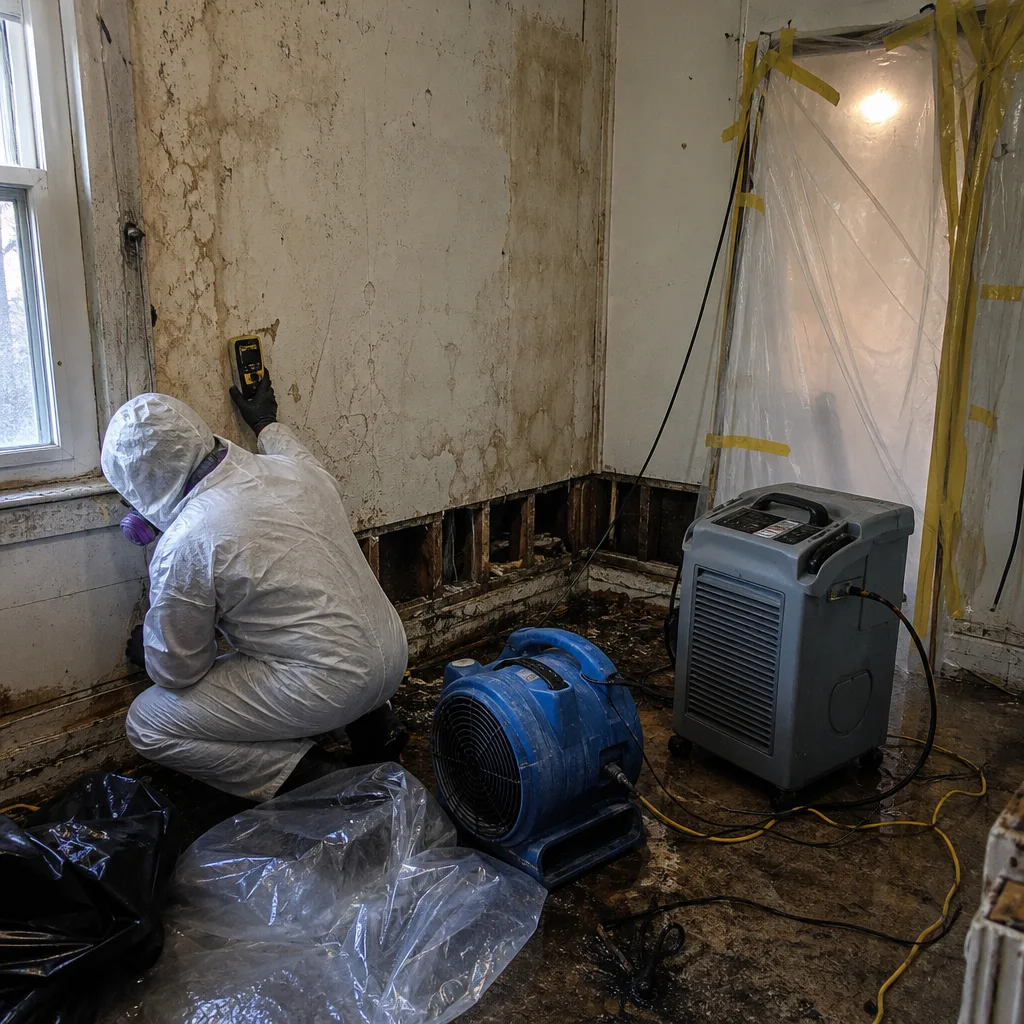 Before
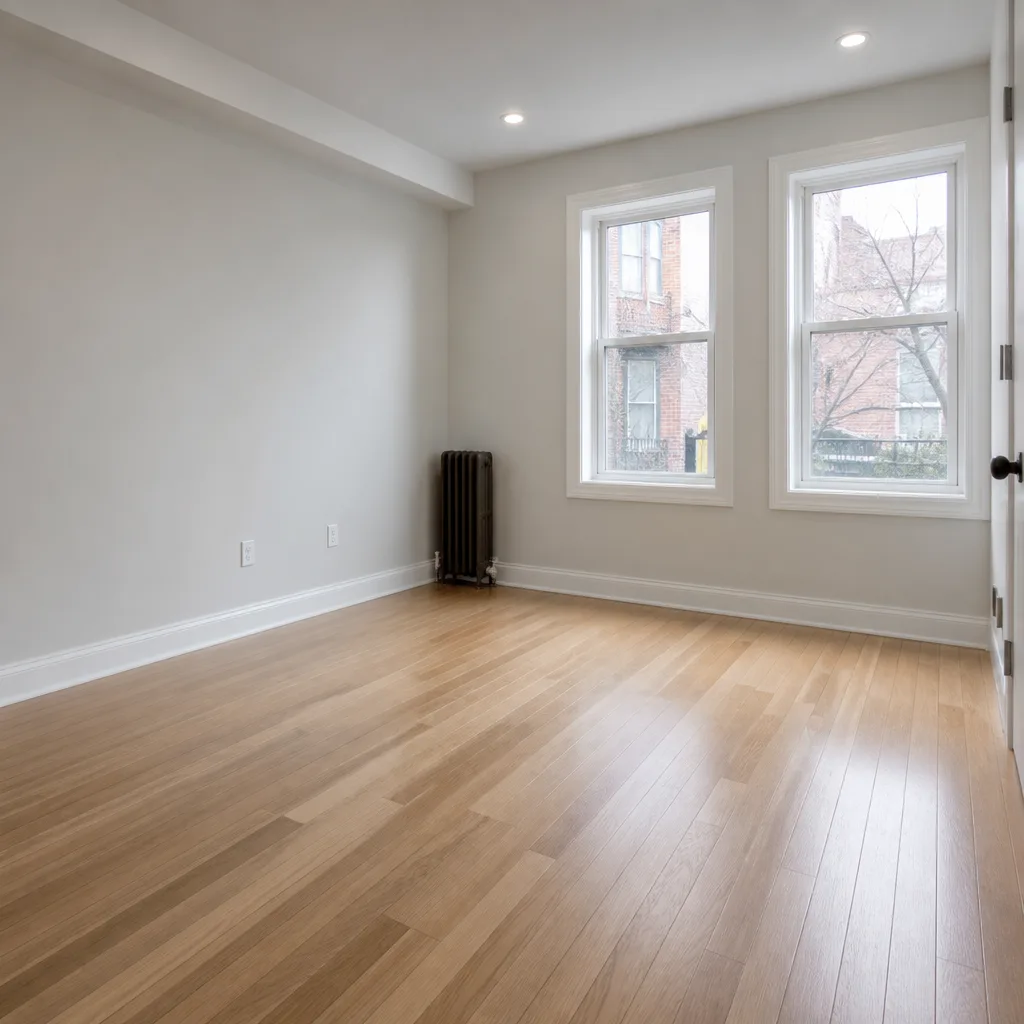 After
After24/7 Emergency Mold Remediation in Financial District
Mold remediation in Financial District properties typically runs $2,800-$7,500 for contained residential units, with full-building mechanical room projects reaching $15,000-$35,000. Crews are dispatched from our New York City office with a 45-minute response commitment to the Financial District area, and every call is answered live at (862) 281-7710 - no voicemail, no callbacks tomorrow. The first hour after water intrusion is when mold colonization begins; after 48 hours, drywall and plaster in FiDi’s converted pre-war buildings often require removal rather than drying. We provide a free visual inspection, a written scope before any work starts, and photo-documented assessments that satisfy both insurers and NYC DOB flood-zone inspectors.
Understanding Mold Remediation Severity in Financial District Properties
We classify mold contamination by affected square footage, material porosity, and the water category that initiated growth. Category 1 clean water from a burst supply line demands less aggressive remediation than Category 3 brackish floodwater, which is the norm in Financial District basement mechanical rooms after coastal surge events. Our crews use moisture mapping with thermal imaging to locate hidden colonization behind the thick masonry walls and brick-nogged partitions common in FiDi’s converted 19th-century commercial buildings.
Air quality severity depends on spore count, species identification, and HVAC distribution. Many Financial District conversions share central air handling across multiple units, meaning one contaminated mechanical room can seed mold throughout a vertical stack. We deploy HEPA air scrubbers and establish negative air containment before disturbing any affected material. Tertiary drying, the final phase where vapor pressure differentials are measured between structural materials and ambient air, often takes longest in FiDi’s dense masonry because salt-laden moisture binds differently to terra-cotta and historic plaster than to standard gypsum board.
Why Financial District Property Owners Choose DryMark Restoration Astoria
- 45-minute response commitment to Financial District addresses, with crews staged for Manhattan south of Chambers Street.
- 24/7 live answer - a real person picks up every call, never an automated system or voicemail tree, because mold doesn’t wait for business hours.
- IICRC-certified crews holding WRT (Water Damage Restoration Technician), AMRT (Applied Microbial Remediation Technician), and FSRT (Fire & Smoke Restoration Technician) credentials where dual certification applies to fire-water-mold sequences.
- Free visual inspection with moisture readings and a preliminary scope, delivered in writing before you decide.
- Direct insurance billing with photo-documented loss files and daily drying logs that adjusters recognize and pay without dispute.
- One team from extraction to reconstruction - no handoffs between mitigation and rebuild contractors that delay NYC DOB flood-zone compliance.
BeforeAfterOur Mold Remediation Process
1. Inspection & Assessment
We map moisture intrusion with FLIR thermal imaging and penetrating hygrometers, identify water category and mold species through accredited lab analysis, and document everything with timestamped photography. In Financial District conversions, we specifically inspect for brackish water signatures and chloride contamination in terra-cotta and brick-nogged partitions.
2. Containment & Stabilization
Negative air containment is erected with 6-mil polyethylene barriers and HEPA-scrubbed airlocks to prevent cross-contamination. We seal HVAC returns serving the affected zone and establish pressure differentials that keep spores contained during disturbance.
3. Drying & Dehumidification
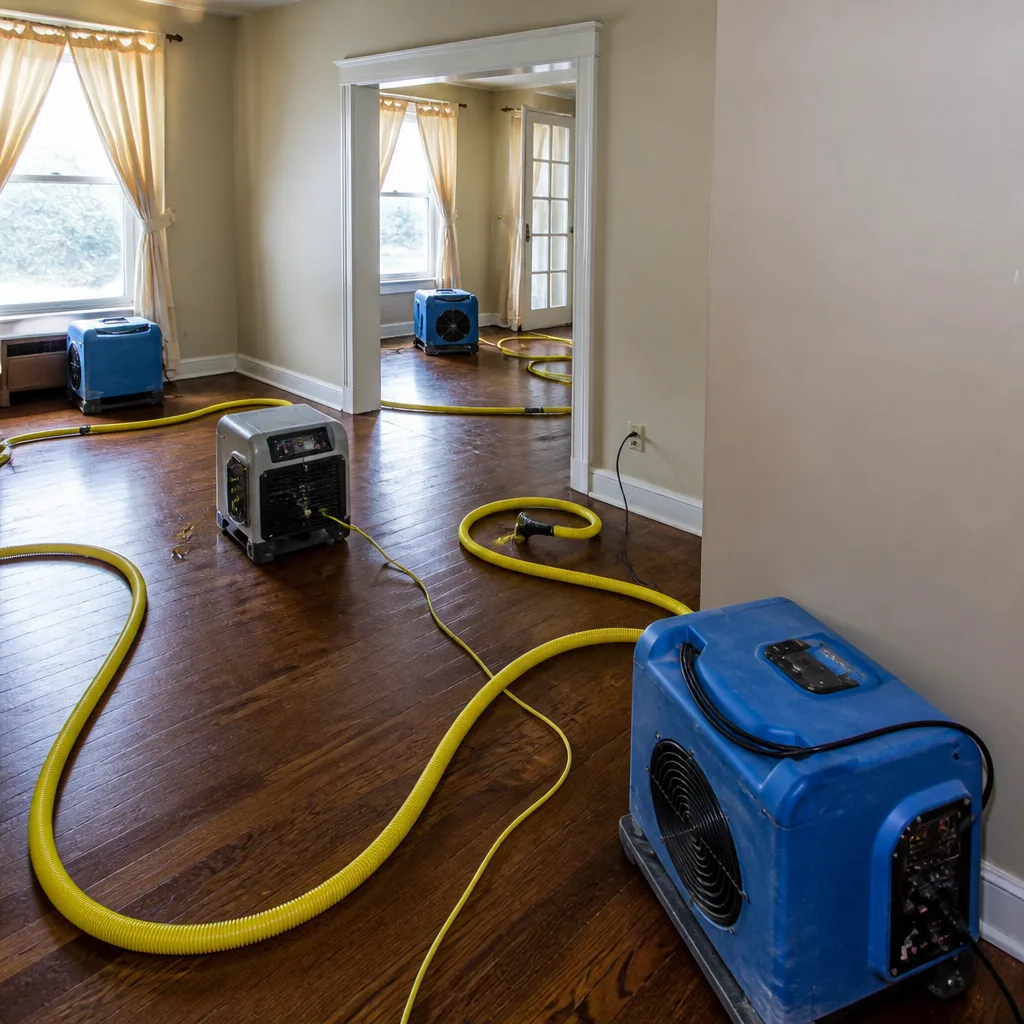
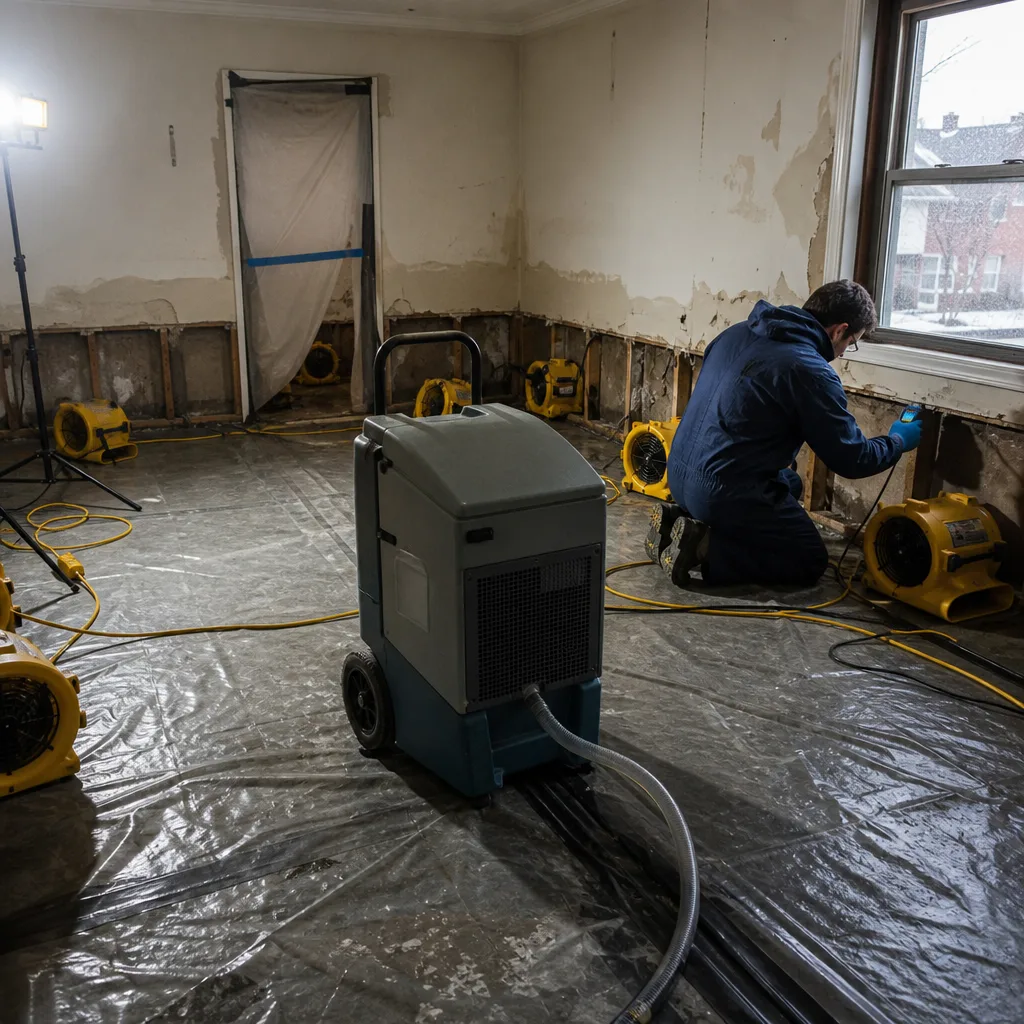
We deploy Dri-Eaz and Phoenix LGR dehumidifiers with XPOWER air movers arranged for optimal airflow patterns. Psychrometric data - temperature, relative humidity, and vapor pressure - is logged daily to prove drying progress to insurers and to detect when masonry has reached equilibrium moisture content.
4. Cleaning & Sanitization
HEPA vacuuming precedes antimicrobial application on non-porous surfaces. Porous materials saturated with Category 3 brackish water are removed per IICRC S520 standards, not merely surface-treated, because salt and organic loading compromise long-term material integrity.
5. Air Quality Restoration & Clearance
Post-remediation air sampling validates spore counts below outdoor baseline levels. We provide third-party clearance documentation required by many Financial District condo boards and management companies before rebuild authorization.
6. Repairs & Flood-Zone Rebuild
Reconstruction follows NYC DOB Special Flood Hazard Area requirements, with chloride testing documentation and waterproofing specifications for below-grade work. Our written scope includes all materials and methods before any rebuild begins.
Need Emergency Mold Remediation in Financial District Now?
Crews minutes away, answering live 24 hours a day. The sooner we start, the less it costs.
Working With Your Insurance Company
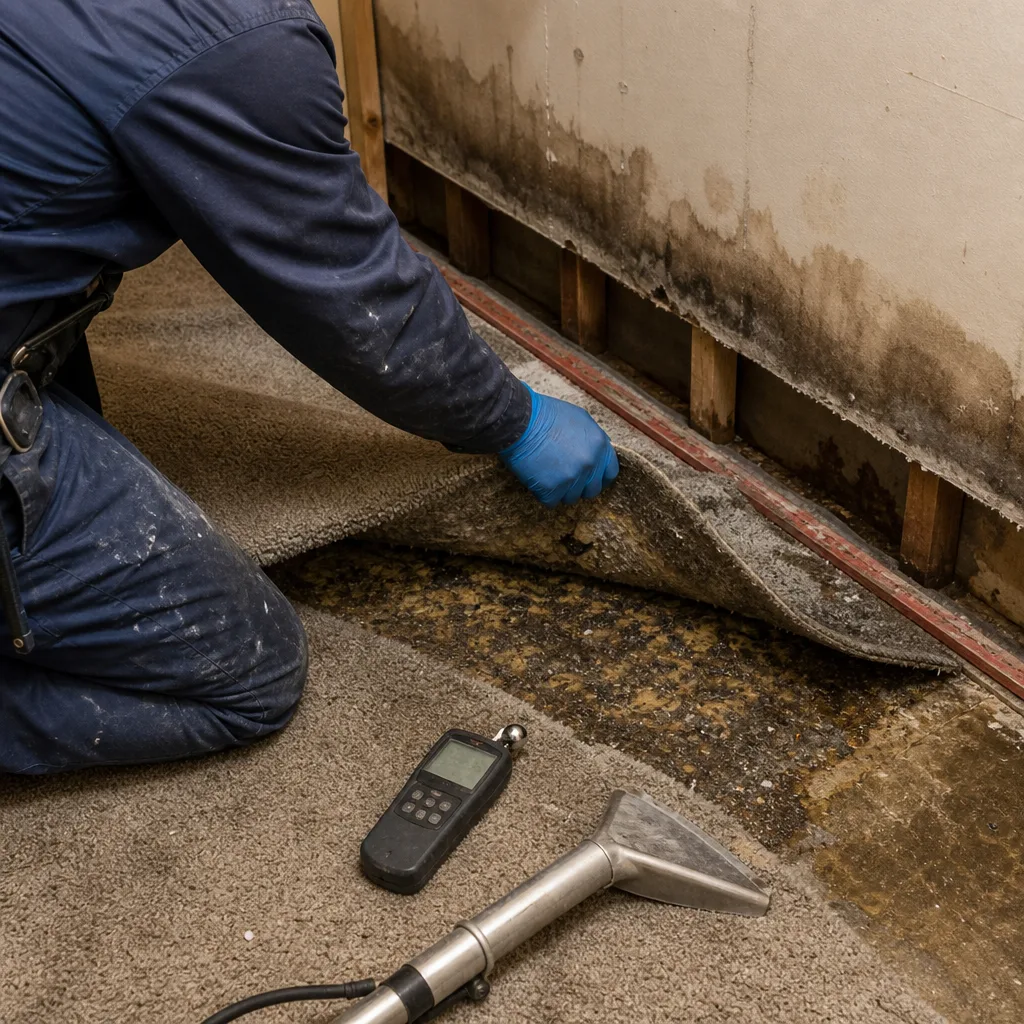
Our documentation-first approach exists because our founder, Alicia Brennan, built this company after seeing how many restoration invoices get denied for insufficient proof. From the first hour on your Financial District property, we photograph every affected room, record moisture readings at multiple depths, and maintain daily drying logs that translate directly into line-item estimates adjusters can approve.
We speak the same language as carriers: Xactimate estimating, IICRC standard references, and proof of pre-loss condition through photo comparison. Direct adjuster coordination means your claim moves while work progresses, not after. For flood-zone properties, we also document NYC DOB compliance steps that many carriers now require before releasing rebuild funds.
What We Provide Your Insurer
- Thorough documentation of the loss
- Photos of all damage, room by room
- Moisture readings and drying logs
- A detailed, line-item scope of work
- Direct coordination with your carrier
Built for Financial District’s Loss Calendar
January deep freezes split cast-iron risers in FiDi’s converted pre-war buildings, sending Category 1 water through multiple floors before anyone notices the leak. Spring thaw brings basement seepage through century-old foundation walls that were never intended for residential occupancy. Summer humidity peaks in August when the Financial District’s canyon-like street grid traps moisture against masonry facades, accelerating mold in poorly ventilated mechanical rooms.
Nor’easters and tropical cyclones are the catastrophic events. Positioned at the southern tip of Manhattan between the Hudson and East River, the Financial District is acutely exposed to storm surge in a way that inland neighborhoods are not. Even moderate coastal storms push brackish water through bulkheads into below-grade elevator pits, boiler rooms, and electrical vaults. Hurricane Sandy proved this in 2012, inundating basement mechanical rooms throughout the neighborhood with saltwater that continues causing problems years later through chloride migration into embedded structural steel.
Mold Remediation Across Financial District’s Neighborhoods
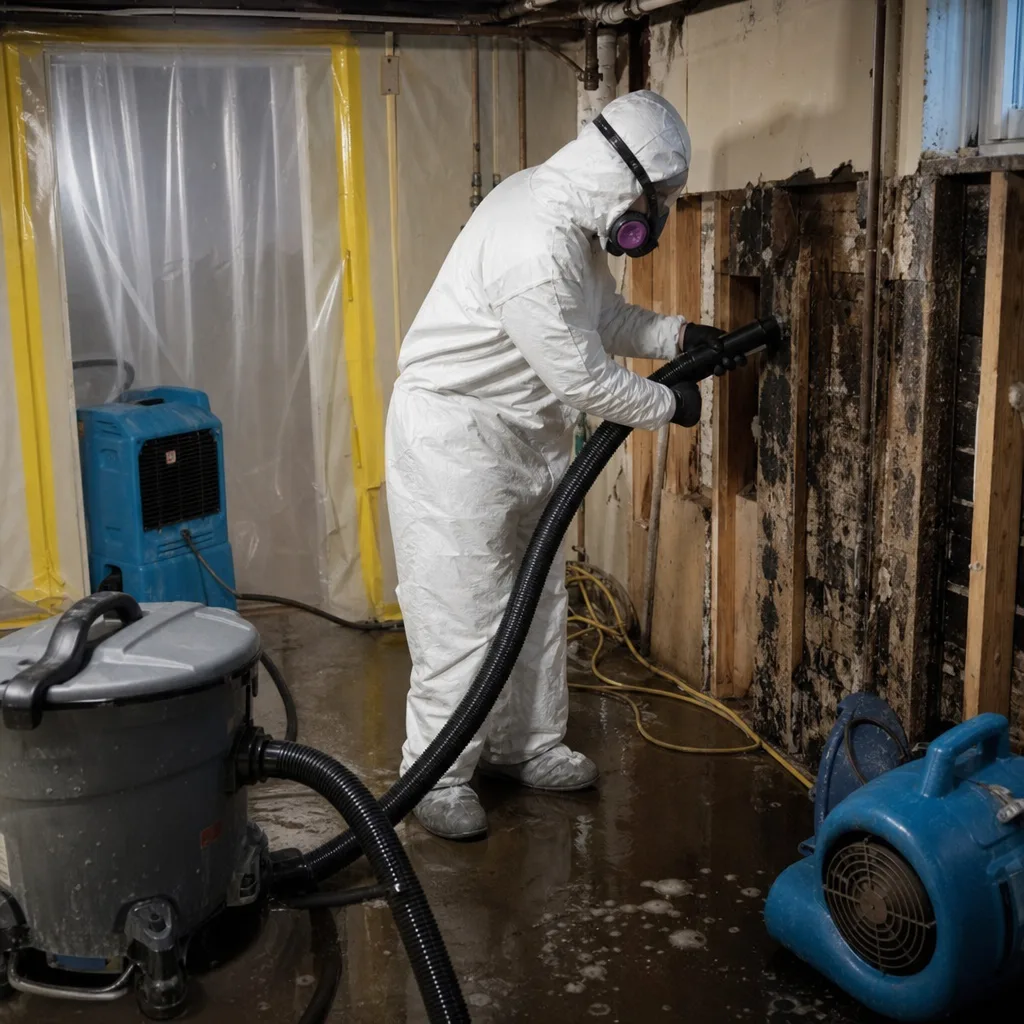
Near the South Street Seaport, converted 19th-century warehouse lofts with original timber post-and-beam construction present unique challenges: wood members absorb brackish water slowly but release it even more slowly, requiring extended drying cycles with controlled vapor pressure differentials. Our Mold Remediation crews have restored multiple properties along Front Street where bulkhead failures sent surge water into sub-basement storage.
Around Wall Street and the NYSE corridor, high-rise residential towers built atop 20th-century commercial podiums share central plant mechanical rooms that serve hundreds of units. A single pipe failure or flood event here requires coordination with building management, resident notification protocols, and often 24-hour containment operations to maintain elevator service and life safety systems.
Along Battery Park City, the newer residential stock might seem less vulnerable, but the landfill substrate and below-grade parking garages create hydrostatic pressure conditions that drive moisture through slab joints. We’ve treated recurring mold in garage-level storage rooms where standard waterproofing failed within a decade of construction.
In the narrow streets around Stone Street and the original Dutch colonial grid, buildings sit directly on bedrock with minimal subsurface drainage. Summer humidity condenses on cool foundation walls, creating chronic moisture conditions that support mold even without a catastrophic leak. Our Mold Remediation in Financial District services include moisture and humidity control systems designed for these persistent conditions.
Specialized Mold Remediation Services We Offer in Financial District
Mold Inspection & Testing
We start with visual assessment, moisture mapping, and air sampling analyzed by accredited laboratories. In Financial District conversions, we add chloride contamination testing for properties with known or suspected saltwater exposure - standard mold inspections miss this entirely, and it determines whether dry-and-restore is even possible.
Mold Removal
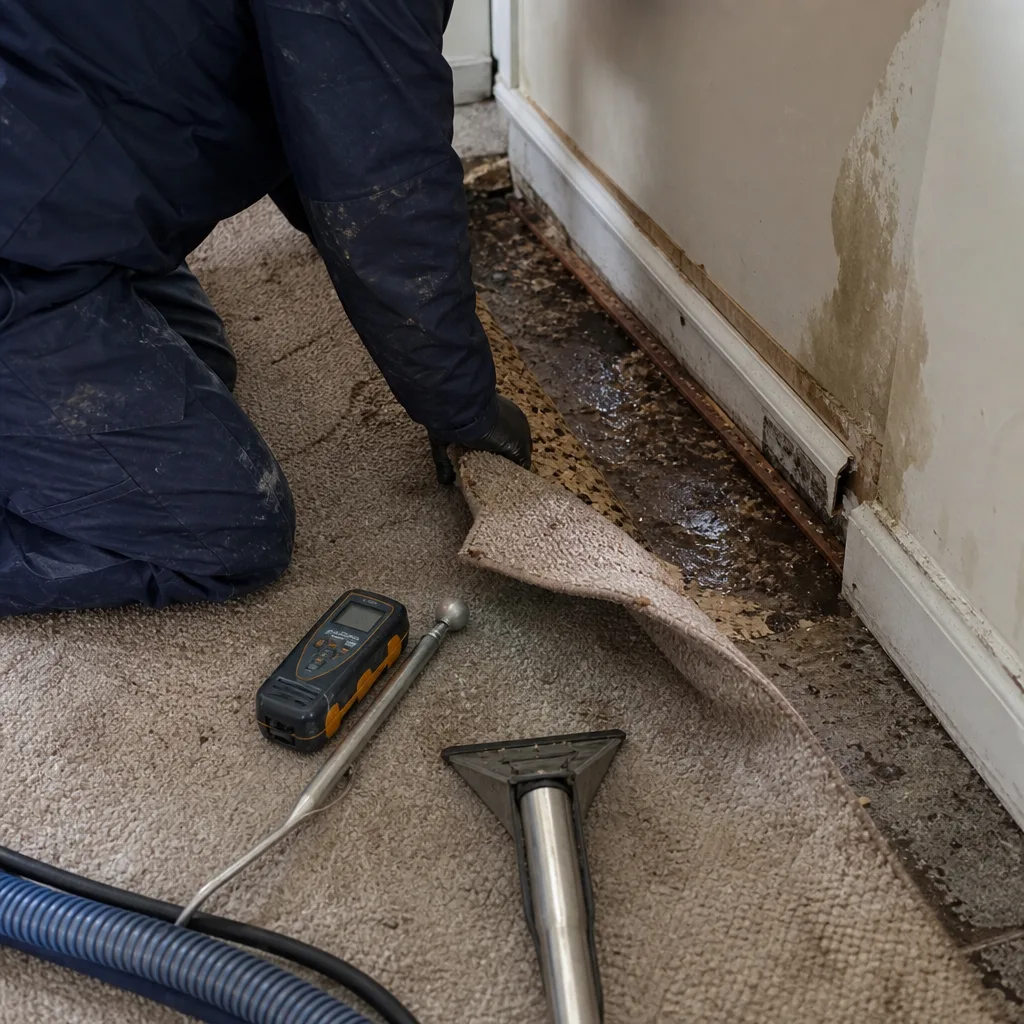
Removal follows IICRC S520 protocols with containment, HEPA filtration, and proper disposal. For FiDi’s pre-war buildings, we distinguish between salvageable dense plaster and compromised terra-cotta tile or brick-nogged partitions that require full replacement due to irreversible salt loading.
Black Mold Remediation
Stachybotrys chartarum and other toxigenic species require enhanced containment and PPE protocols. We identify species through lab analysis rather than visual assumption, because accurate identification determines remediation intensity and post-clearance verification requirements.
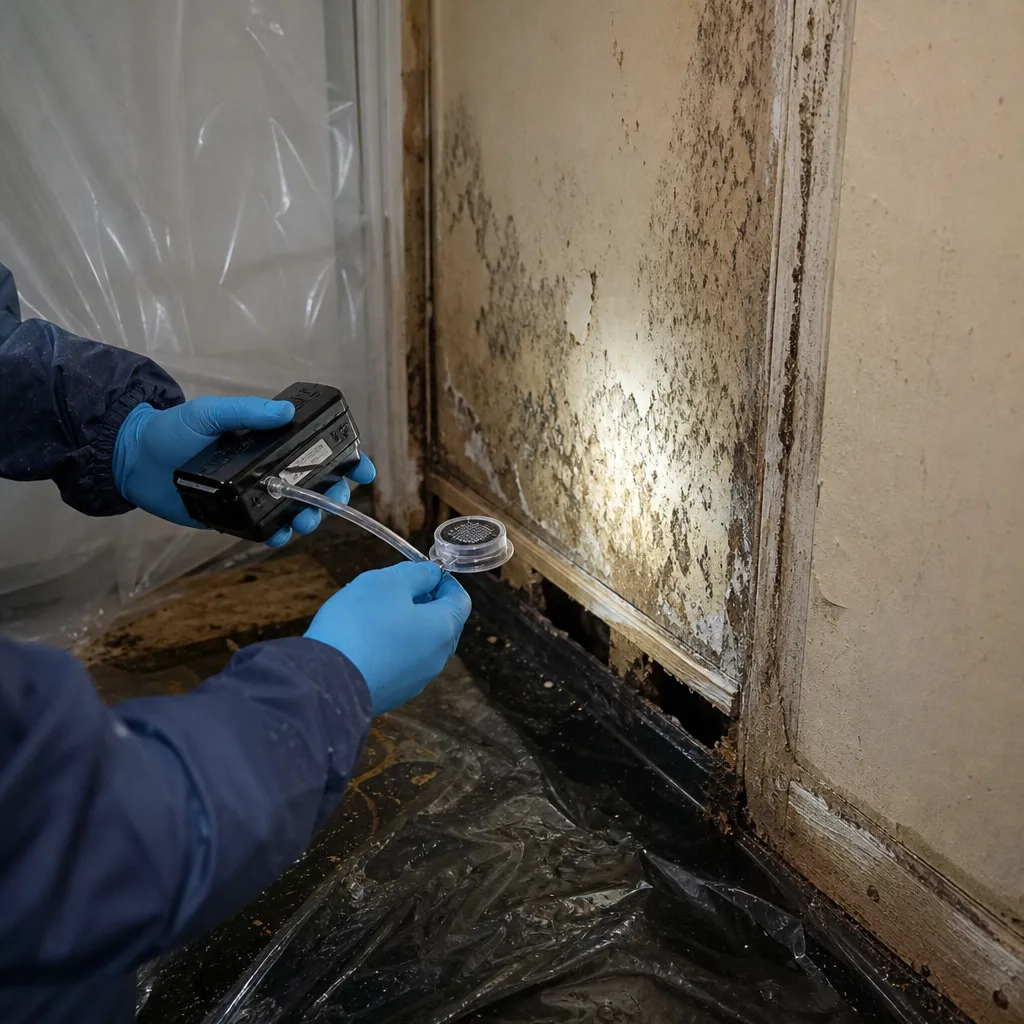
Air Quality Restoration
Post-remediation, we restore breathable air quality through source removal, HEPA scrubbing, and HVAC cleaning where systems have been contaminated. Many Financial District buildings require third-party clearance testing before residents can reoccupy - we coordinate this as standard practice, not an upsell.
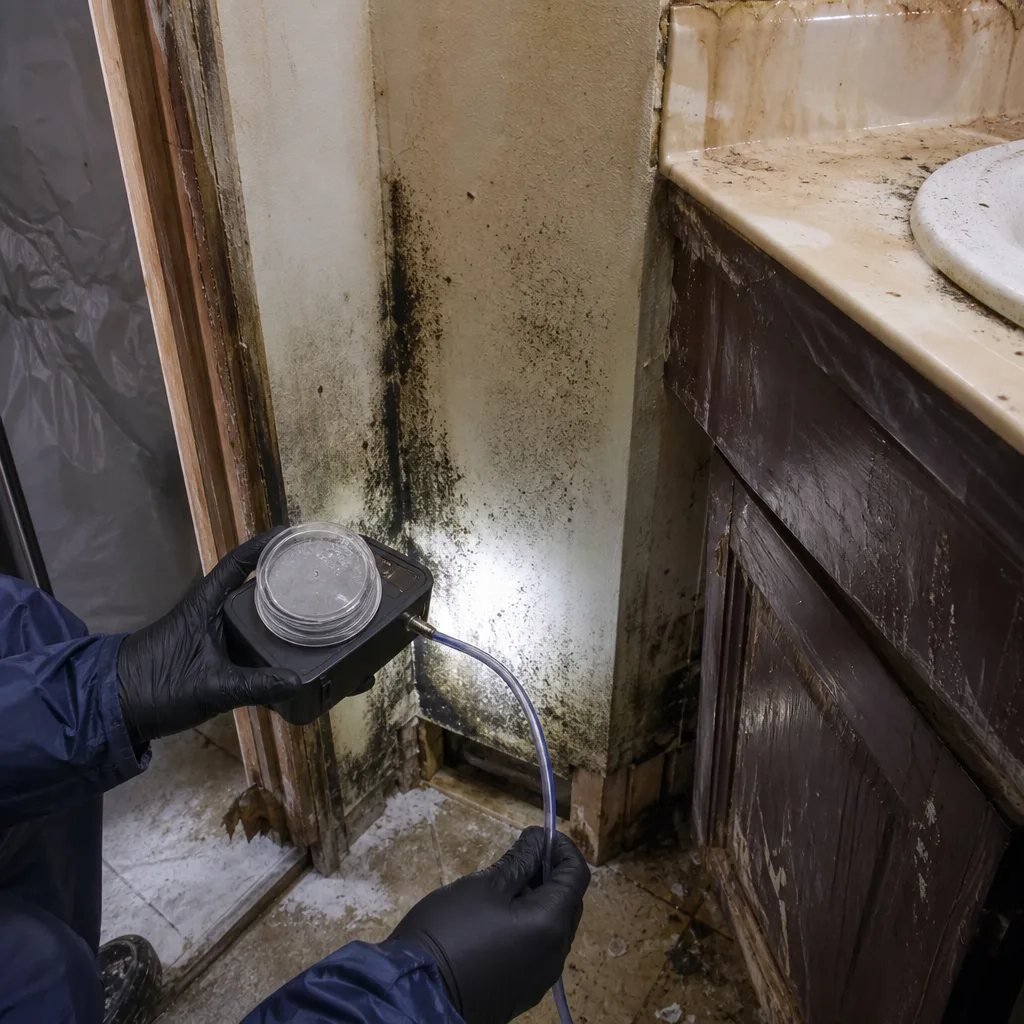
Crawl Space Treatment
While true crawl spaces are rare in Manhattan, FiDi’s sub-basement mechanical rooms and utility vaults function similarly: confined, poorly ventilated, and prone to chronic moisture. We apply encapsulated vapor barrier systems and dehumidification to these spaces where conventional ventilation is impossible.
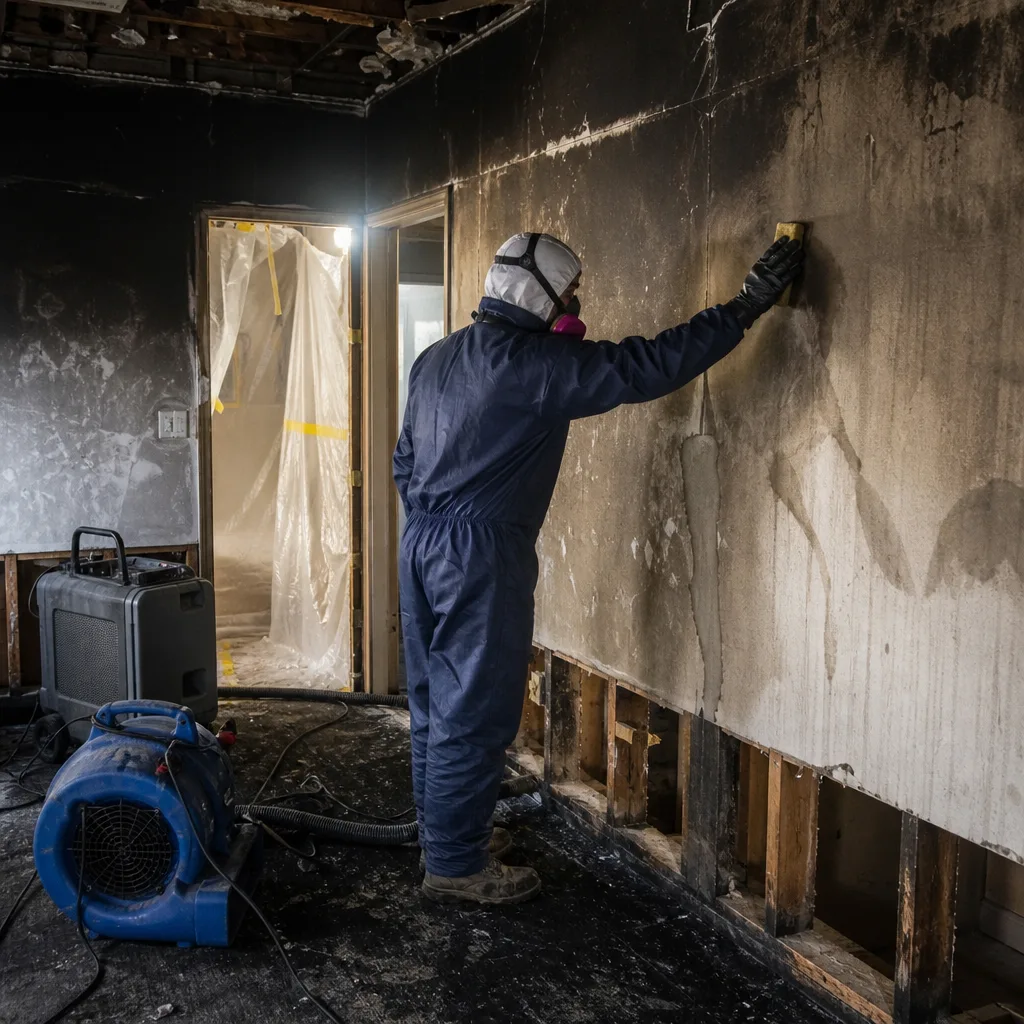
Moisture & Humidity Control
Permanent mold prevention requires controlling the moisture that enables it. We install commercial-grade dehumidification and monitor with remote humidity sensors, particularly valuable in Financial District buildings where seasonal humidity swings exceed 40% and masonry thermal mass creates condensation surfaces.
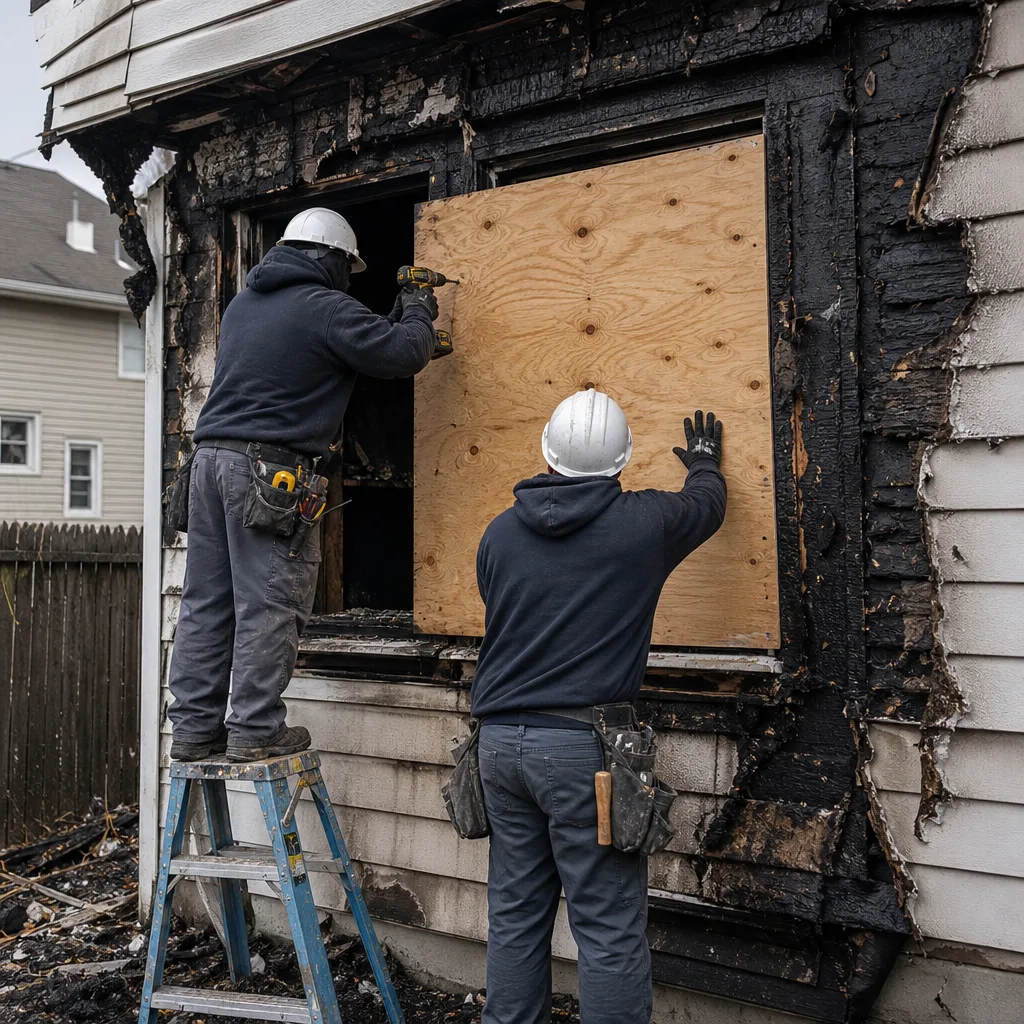
What happens when you call
- 1
A real person answersNo phone trees - you reach a local pro.
- 2
You get an upfront price rangeHonest numbers before anyone is dispatched.
- 3
A background-checked tech heads outLicensed & insured, dispatched right away.
- 4
You approve before work beginsNothing starts until you say go.
Mold Remediation Costs in Financial District, NY
A typical contained mold remediation in a Financial District residential unit runs $2,800-$5,500 for areas under 150 square feet with straightforward access. Moderate projects affecting multiple rooms or requiring significant drywall removal range $5,500-$12,000. Full mechanical room or basement remediation with Category 3 brackish water, structural drying, and NYC DOB flood-zone compliance documentation runs $15,000-$35,000.
What moves the price: square footage of affected and removed material, whether terra-cotta or brick-nogged partitions require replacement rather than drying, the extent of HVAC contamination, and whether third-party clearance testing is required by your building or insurer. Insurance typically covers mold resulting from sudden and accidental water damage; long-term humidity-driven mold may be excluded. We review your policy language and provide a Free Second Opinion on any competitor’s written estimate. Every job is quoted in writing before work begins, per Haven Standard, Clause 1.
We Also Serve Cities Near Financial District
Our crews respond throughout lower Manhattan and across the East River to Astoria, where pre-war brick multifamilies face their own mold challenges; the Upper East Side, with its mix of co-op and condo stock; Long Island City, where rapid residential development has created waterproofing gaps in new construction; and Jackson Heights, where pre-war garden apartments and aging infrastructure produce distinct loss patterns. Each area gets the same documentation-first approach and written-price guarantee.
Serving Financial District, NY - Our Local Coverage Area
We’re based in the Financial District area and know this community well. Use the map below to see our service coverage - if you’re nearby, we can almost certainly help.
Financial District Mold Remediation Questions, Answered
How fast does mold start growing after a flood or pipe failure in a Financial District loft?
Mold colonization begins within 24 to 48 hours of moisture intrusion, but in Financial District buildings with dense masonry walls and poor air circulation, we’ve observed active growth in concealed cavities within 18 hours. The loft conversions near Pearl Street and Water Street are particularly vulnerable because original plaster and terra-cotta retain moisture long after surface materials appear dry. Call (862) 281-7710 for immediate response - estimates are free.
Why is saltwater flooding from a nor’easter treated differently than a burst pipe in the Financial District?
Brackish storm surge carries salts, organic contaminants, and corrosive chlorides that Category 1 clean water does not. In FiDi’s converted pre-war towers, these chlorides wick into unwaterproofed terra-cotta and brick-nogged partitions, then migrate into embedded steel lintels where standard moisture readings cannot detect ongoing corrosion. Dry-and-restore fails here; full envelope assessment and often material replacement are required for NYC DOB flood-zone compliance. Call (862) 281-7710 to discuss your specific situation.
A single pipe failure in an upper-floor unit - how far can mold damage migrate in a FiDi conversion?
We’ve traced water migration through a dozen residential units in a single converted building near Broad Street, following labyrinthine cast-iron riser configurations that channel water horizontally through brick-nogged partitions before any vertical drop to the street. The thick masonry that gives these lofts character also conceals wicking pathways that can remain wet for weeks. Our moisture mapping identifies the full extent before remediation begins. Call (862) 281-7710 for a free inspection.
What does mold remediation involve in FiDi’s below-grade mechanical rooms and elevator pits?
These spaces require Category 3 water protocols: full PPE, enhanced containment, and antimicrobial treatment of all affected surfaces. We deploy Dri-Eaz and Phoenix dehumidifiers with extended drying cycles because masonry and concrete release salt-laden moisture slowly. Post-remediation, we provide chloride testing documentation required for NYC DOB flood-zone rebuild permits. Many building management companies require this documentation before authorizing reconstruction. Call (862) 281-7710 to schedule assessment.
Will my Financial District mold job need a rebuild permit before work can be done?
Any reconstruction in NYC’s Special Flood Hazard Areas, which includes most of the Financial District on its reclaimed landfill base, requires NYC DOB permitting with documentation of pre-flood conditions, remediation methods, and flood-resistant materials. We prepare this documentation as part of our standard scope; it’s not an additional service. Our familiarity with DOB flood-zone inspectors streamlines approval. Call (862) 281-7710 to discuss your project’s compliance path.
How long does mold remediation typically take in a Financial District property?
Contained residential units with straightforward access typically require 3 to 5 days of active remediation plus 48 hours for clearance testing. Projects involving brackish water in dense masonry, or mechanical rooms with complex HVAC interconnections, often extend to 10 to 14 days. We provide daily drying logs so you can track progress and share documentation with your insurer or building management. Call (862) 281-7710 for a timeline specific to your loss.
Can residents stay in the unit during mold remediation?
Residents typically must relocate during active remediation because containment disturbs spores and air scrubbers create noise levels incompatible with normal occupancy. For small, contained areas with isolated containment, limited access may be possible. We coordinate with Financial District condo boards and management companies on notification protocols and temporary relocation documentation that insurers may require. Call (862) 281-7710 to discuss your building’s specific requirements.
What certifications do your mold remediation technicians hold?
Our technicians hold IICRC WRT (Water Damage Restoration Technician) and AMRT (Applied Microbial Remediation Technician) certifications at minimum, with FSRT (Fire & Smoke Restoration Technician) added where fire-water-mold sequences occur. All are background-checked, uniformed, and verified before arriving at your Financial District property. License numbers are available on request. Equipment includes professional-grade systems from Dri-Eaz, Phoenix, XPOWER, B-Air, and Injectidry, documented to IICRC, RIA, and IFA standards. Call (862) 281-7710 to verify credentials before scheduling.
We were called to a converted pre-war loft building near the South Street Seaport after a nor’easter pushed brackish water through the bulkhead and into a below-grade mechanical room, wicking up through brick-nogged partitions three floors above. Our crew ran moisture mapping and Category 3 water protocols, set containment with Dri-Eaz dehumidifiers and XPOWER air movers, and applied antimicrobial treatment to the saturated plaster. The drying logs showed the terra-cotta never fully released chloride, so we recommended full replacement of the affected partition rather than a dry-and-restore. The building’s insurer paid the scope without dispute because our documentation met every standard they required.
That case illustrates why Financial District mold remediation cannot follow generic protocols. The saltwater intrusion unique to this FEMA flood zone, the unwaterproofed terra-cotta and brick-nogged partitions in converted pre-war towers, and the labyrinthine riser configurations that hide migration across multiple units - these conditions demand assessment and documentation that standard mold companies simply do not provide. We do, because Alicia Brennan founded this company in 2011 specifically to close the documentation gap that costs homeowners their claims.
Every job receives a written price before work begins, per Haven Standard, Clause 1. Every visit produces a photo record included as standard, never an upsell. Every project carries our 365-Day Done Right Promise backed by The Haven Standard - if it’s not done right, we make it right. And if you have a competitor’s written estimate, we’ll review it at no charge.
Call (862) 281-7710 now. We answer live 24 hours a day, 7 days a week. Crews are minutes from the Financial District. Estimates are free, and your written scope arrives before any work starts.
Written by Alicia Brennan, Owner at DryMark Restoration Astoria, serving Financial District since 2011 under The Haven Standard.
Mold Remediation in Nearby Areas