Free visual inspection and a written scope of work before any mitigation begins - photos, moisture readings, and drying logs go in your claim file
The scope we write is the scope we bill. Anything new gets shown to you, in writing, before we touch it.
Storm response
 Before
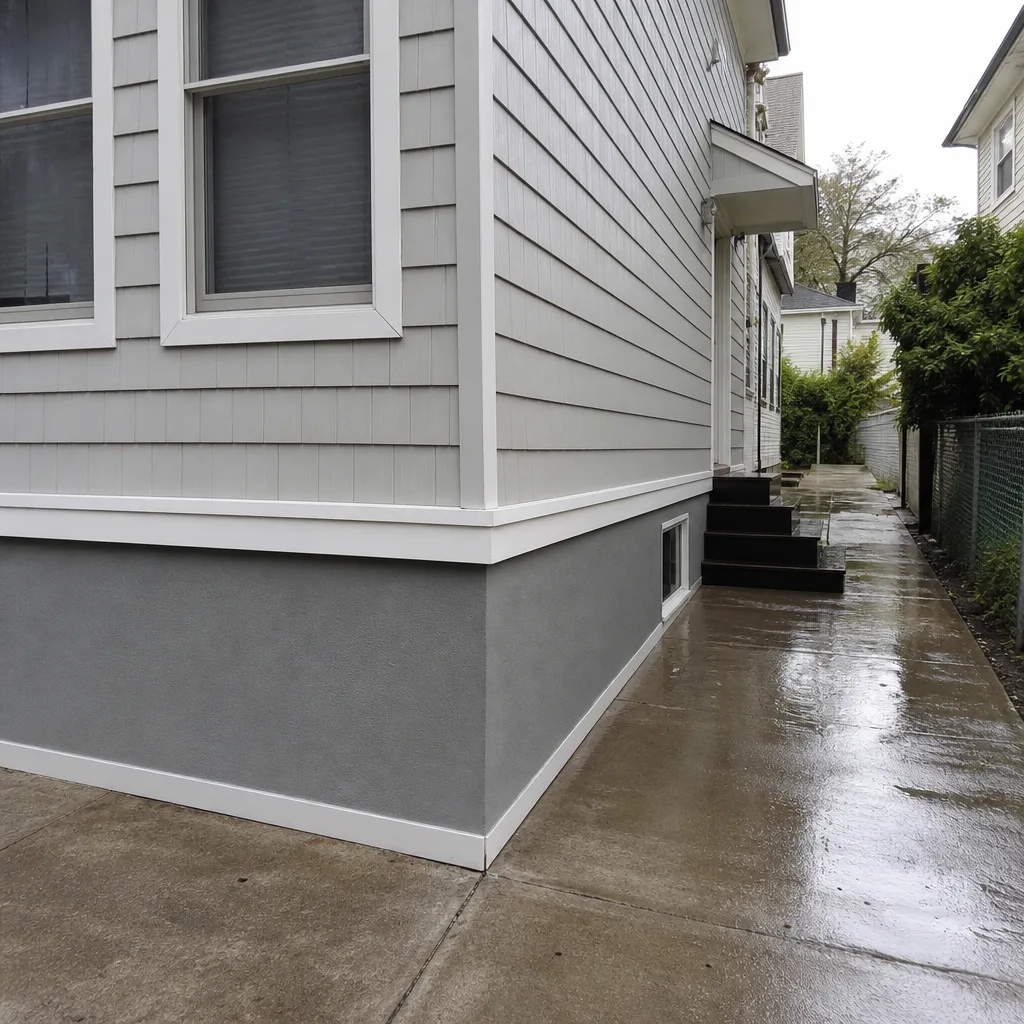 After
After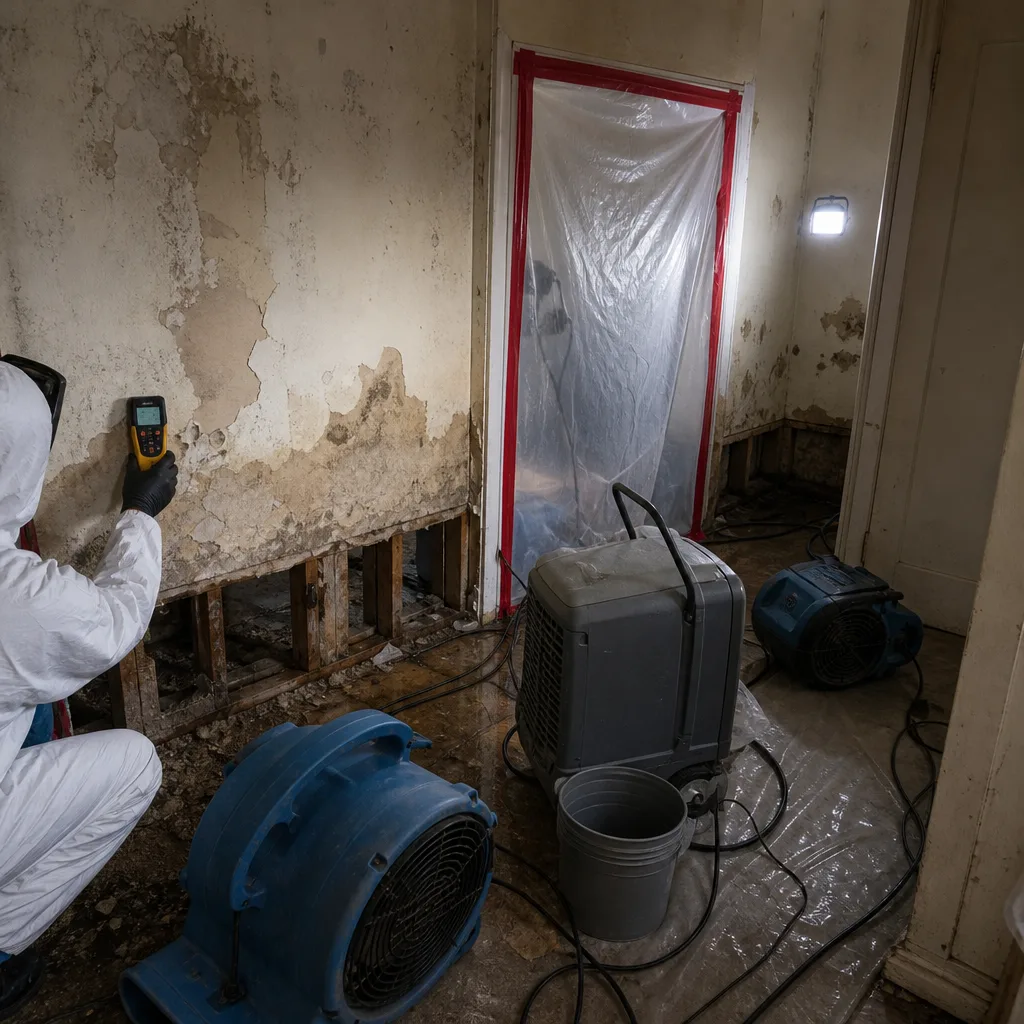 Before
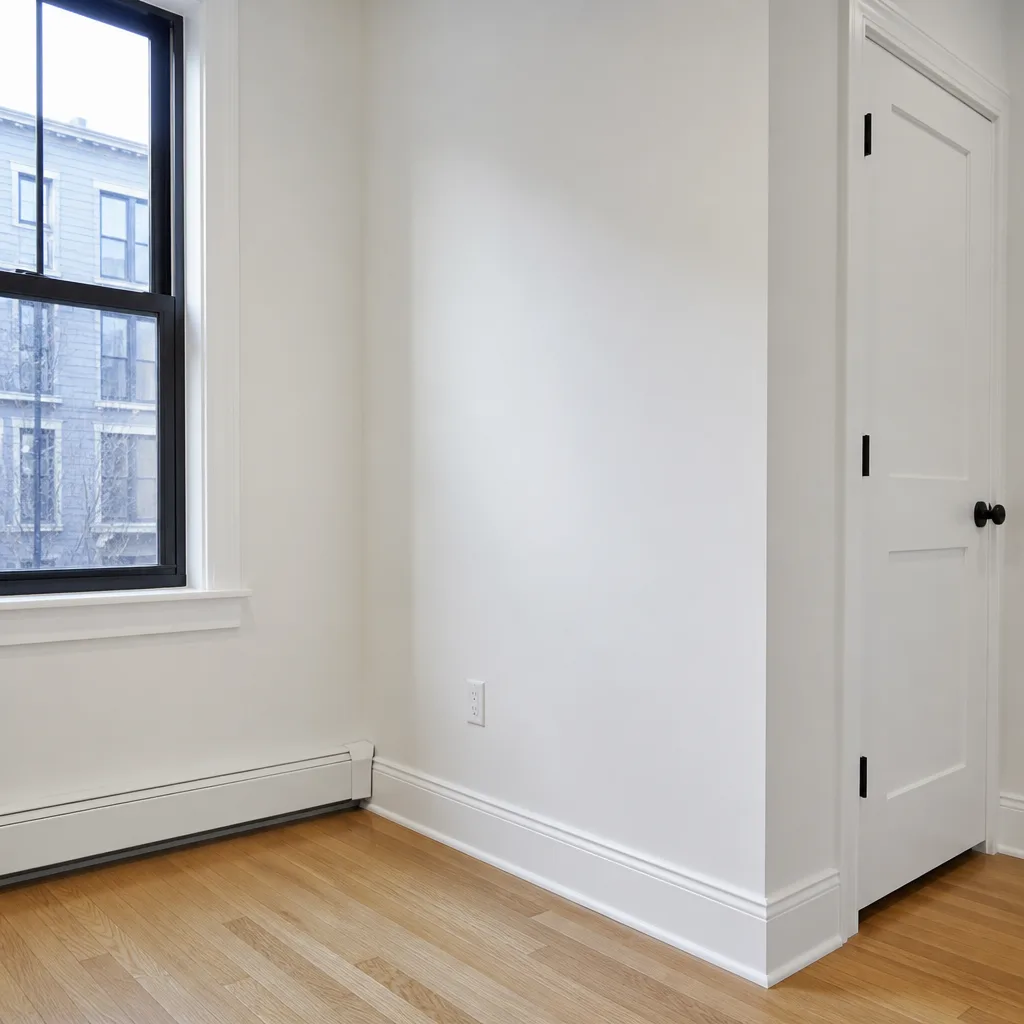 After
After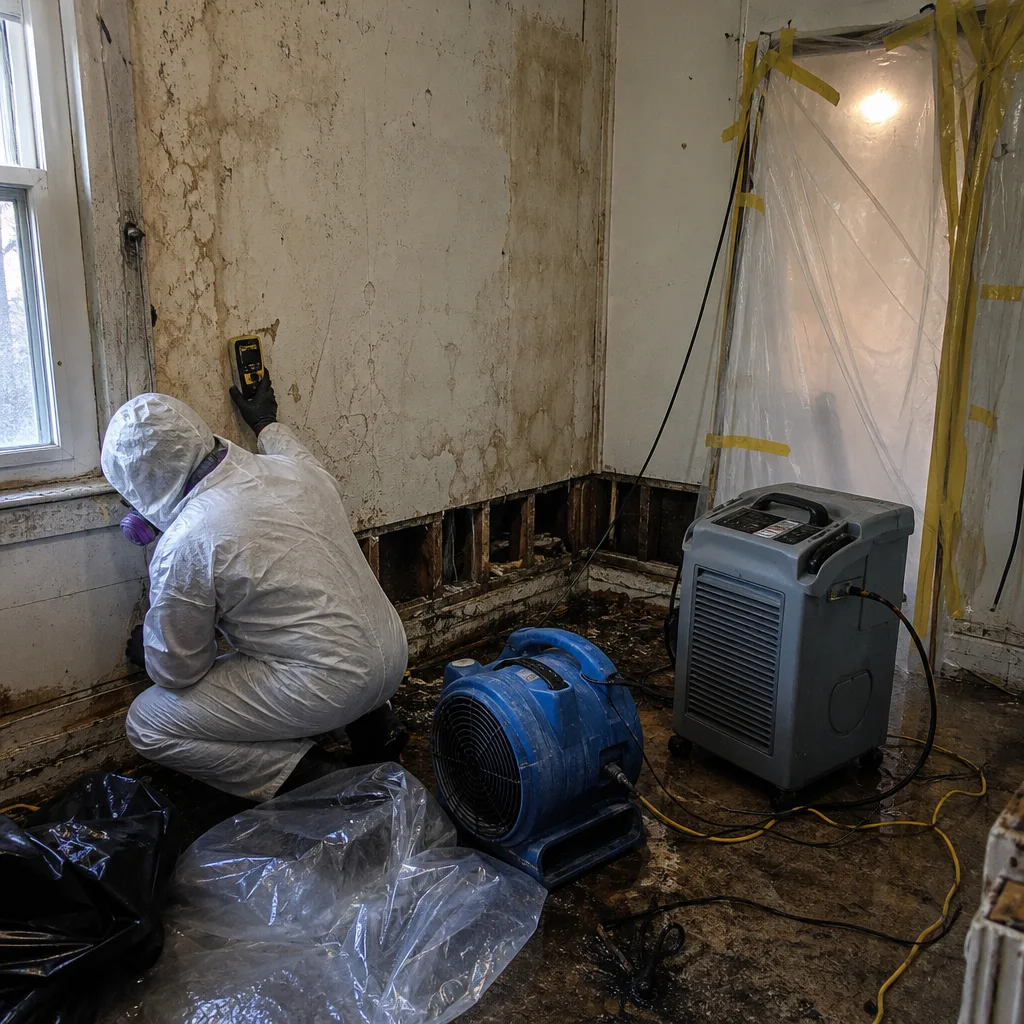 Before
 After
After24/7 Emergency Fire & Smoke Damage Restoration in Financial District
Fire and smoke damage restoration in Financial District typically costs $4,200-$18,500 depending on the fire class and square footage affected, with emergency board-up and stabilization available within 45 minutes of your call. Our crews are dispatched from our New York City office and serve Financial District properties directly, including the converted pre-war lofts and high-rise residential towers that define this neighborhood. Call (862) 281-7710 now - a live person answers every time, 24 hours a day, 7 days a week, with no voicemail trees while smoke is still settling.
The first hour after a fire determines whether smoke residues set into porous substrates permanently and whether firefighting water migrates through cast-iron risers into multiple units below. In Financial District’s converted commercial buildings, a single kitchen fire on an upper floor can send water through a dozen apartments before it reaches Pearl Street. We arrive with thermal imaging cameras, moisture meters, and HEPA containment equipment to stop that migration immediately.
Understanding Fire & Smoke Damage Restoration Severity in Financial District Properties
Fire damage in Financial District falls into distinct severity classes tied directly to the neighborhood’s building stock: 19th- and early-20th-century commercial and warehouse structures converted to residential lofts and condos from the 1980s onward. These buildings present restoration challenges that newer construction rarely faces.
Class 1 fires affect a single room with light smoke residue, typically manageable with surface cleaning and localized deodorization. Class 2 fires involve multiple rooms with moderate smoke damage and often require pack-out of contents before deep cleaning. Class 3 fires mean heavy smoke saturation throughout the structure, with smoke webs on ceilings and soot driven into HVAC systems - common in Financial District’s open-plan lofts with original high ceilings and minimal compartmentalization. Class 4 fires involve charring of structural elements and always require specialized restoration with pre- and post-rebuild engineering assessment.
The smoke residue type matters as much as the fire class. Dry smoke from fast-burning, high-heat fires produces powdery, non-smeary residue that responds to dry cleaning methods. Wet smoke from slow-burning, low-heat fires - typical of smoldering upholstery or electrical fires in older wiring - creates sticky, smeary residue that bonds to surfaces and requires solvent-based cleaning. Protein fires from kitchen incidents leave nearly invisible but pungent residues that standard cleaning misses entirely. In Financial District’s converted buildings, we frequently encounter all three residue types layered in a single event, each requiring distinct cleaning chemistry and technique.
Why Financial District Property Owners Choose DryMark Restoration Astoria
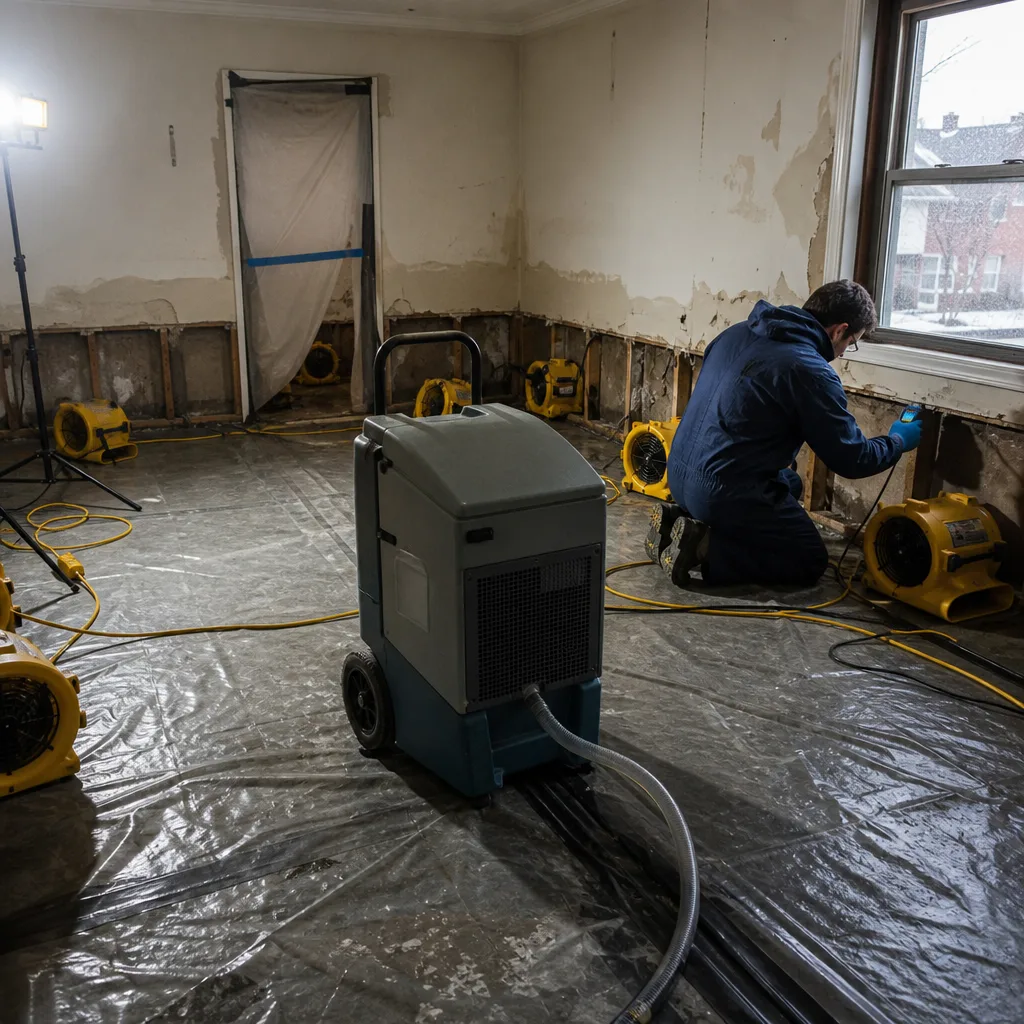
- 45-minute response commitment to Financial District addresses, with crews carrying board-up materials and emergency extraction equipment on every truck.
- 24/7 live answer - a real person, never an automated system or voicemail tree, picks up every call to our emergency line within three rings.
- IICRC-certified crews holding FSRT (Fire & Smoke Restoration Technician) and WRT (Water Damage Restoration Technician) certifications, with documented training to RIA and IFA standards.
- Free visual inspection and written scope of work delivered before any work begins, per Haven Standard, Clause 1.
- Direct insurance billing with photo-documented estimates that adjusters recognize and typically approve without revision.
- One team from emergency stabilization through final reconstruction - no handoffs to unknown subcontractors mid-project.
BeforeAfterOur Fire & Smoke Damage Restoration Process
1. Inspection & Assessment
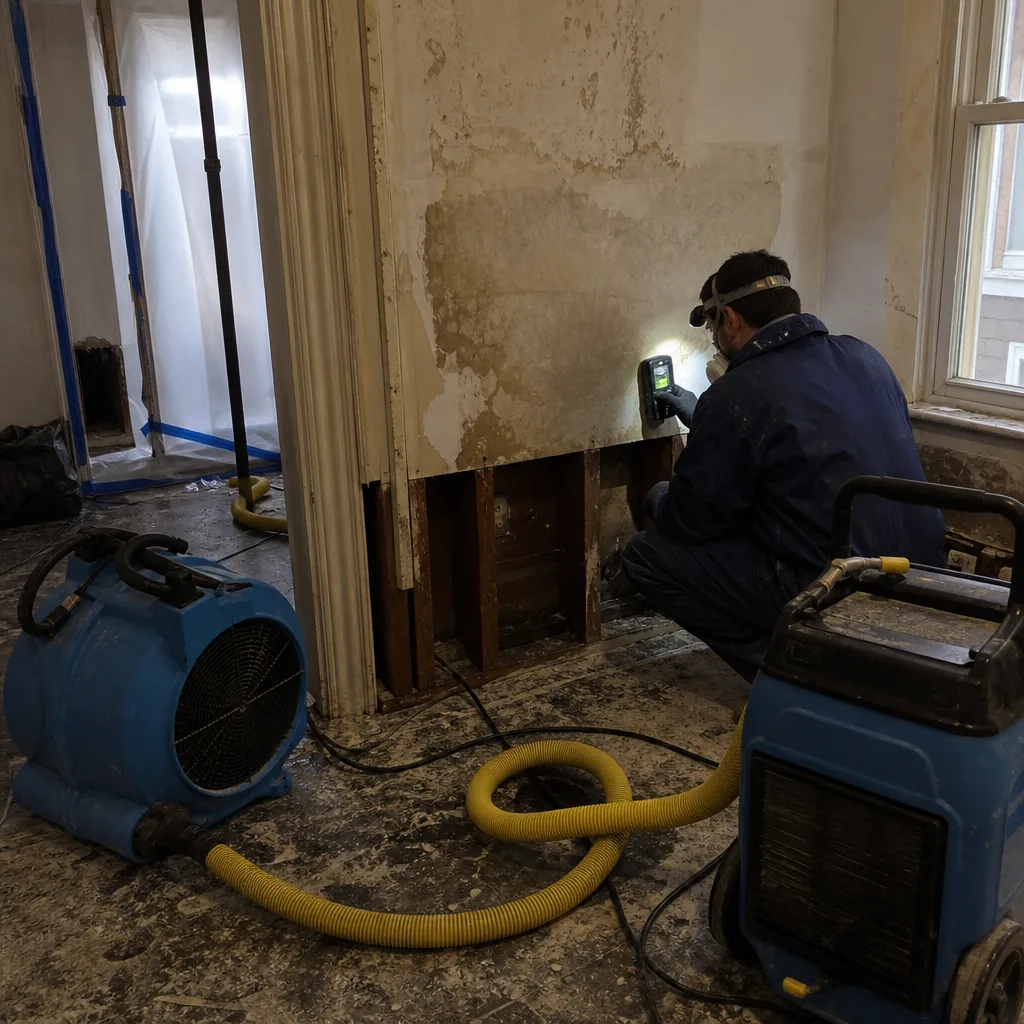
We document the full loss with thermal imaging, moisture mapping, and photo records of every affected surface. In Financial District buildings, we specifically assess whether firefighting water has reached sub-basement mechanical rooms where prior saltwater intrusion may have compromised structural metals.
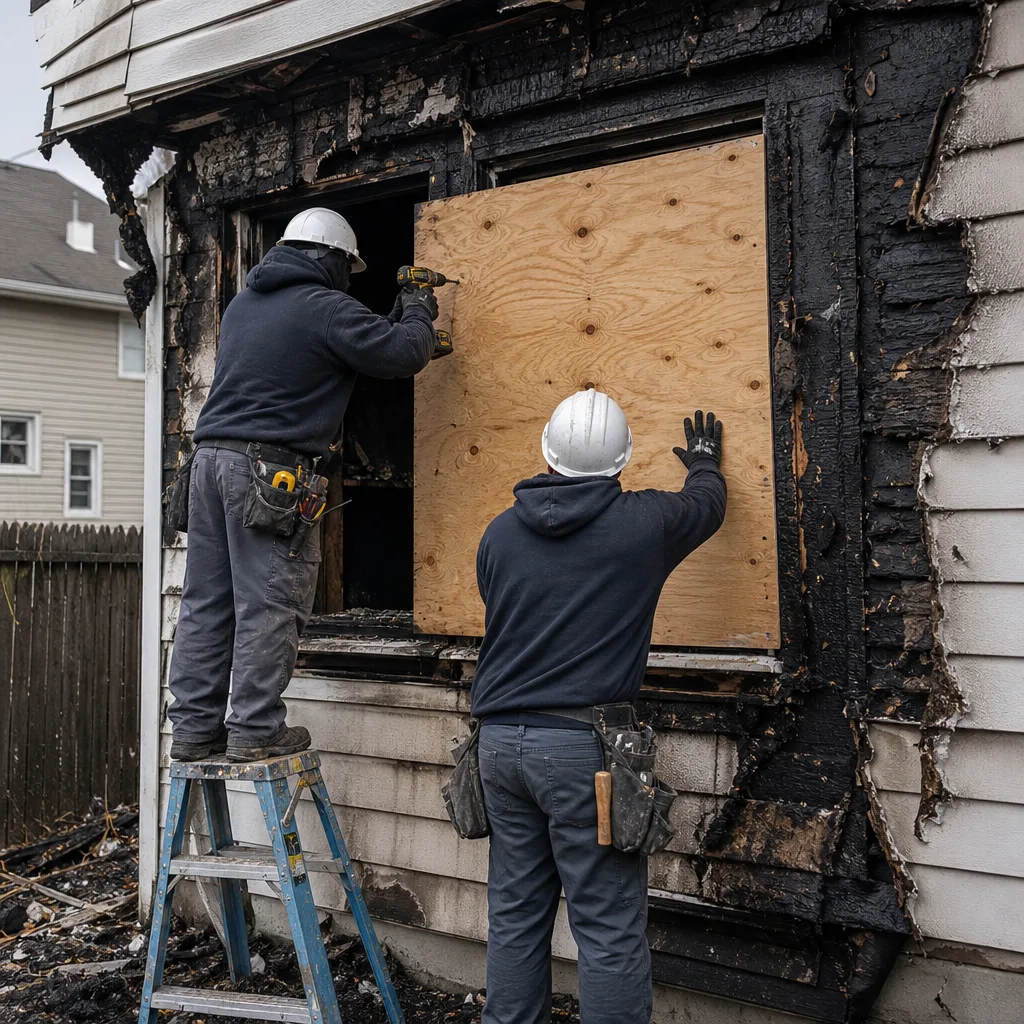
2. Emergency Board-Up & Tarping
Broken windows, compromised roof sections, and damaged entry points are secured immediately to prevent weather intrusion and unauthorized access. Our trucks carry plywood, tarps, and temporary door hardware sized for commercial-grade openings common in FiDi’s converted warehouses.
3. Water Extraction & Structural Drying
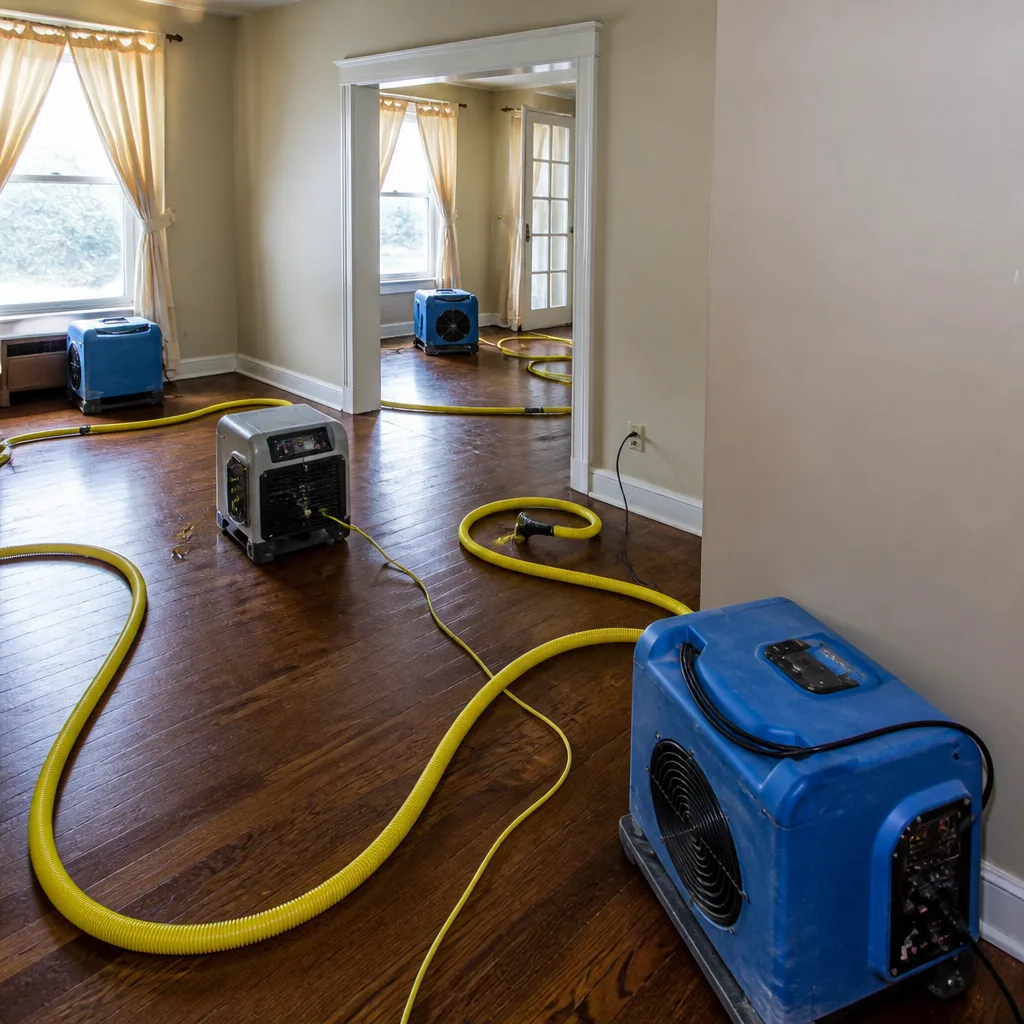
Firefighting water is extracted using truck-mounted and portable systems, followed by placement of Dri-Eaz and Phoenix dehumidifiers with air movers positioned for optimal vapor pressure differential. Daily moisture logs track progress to IICRC S500 standards.
4. Smoke & Soot Removal
HEPA vacuums, dry sponges, and solvent-based cleaning agents remove residues by type and surface sensitivity. In Financial District’s original terra-cotta tile and brick-nogged partition walls, we perform multiple cleaning passes because standard surface treatment misses porous substrates where odor recurs.
5. Odor Removal & Deodorization
Thermal fogging, ozone treatment, and hydroxyl generators neutralize odor molecules at the source rather than masking them. For deeply saturated masonry and structural materials, we seal affected substrates with specialized odor-blocking encapsulants after confirming moisture content below 16 percent.
6. Repairs & Restoration
Reconstruction follows a written scope approved by you and your insurer, with all work documented to pass NYC DOB inspection. In Financial District’s flood zones, rebuilds must comply with FEMA construction requirements that govern elevation, materials, and floodproofing of below-grade spaces.
Need Emergency Fire & Smoke Damage Restoration in Financial District Now?
Crews minutes away, answering live 24 hours a day. The sooner we start, the less it costs.
Working With Your Insurance Company
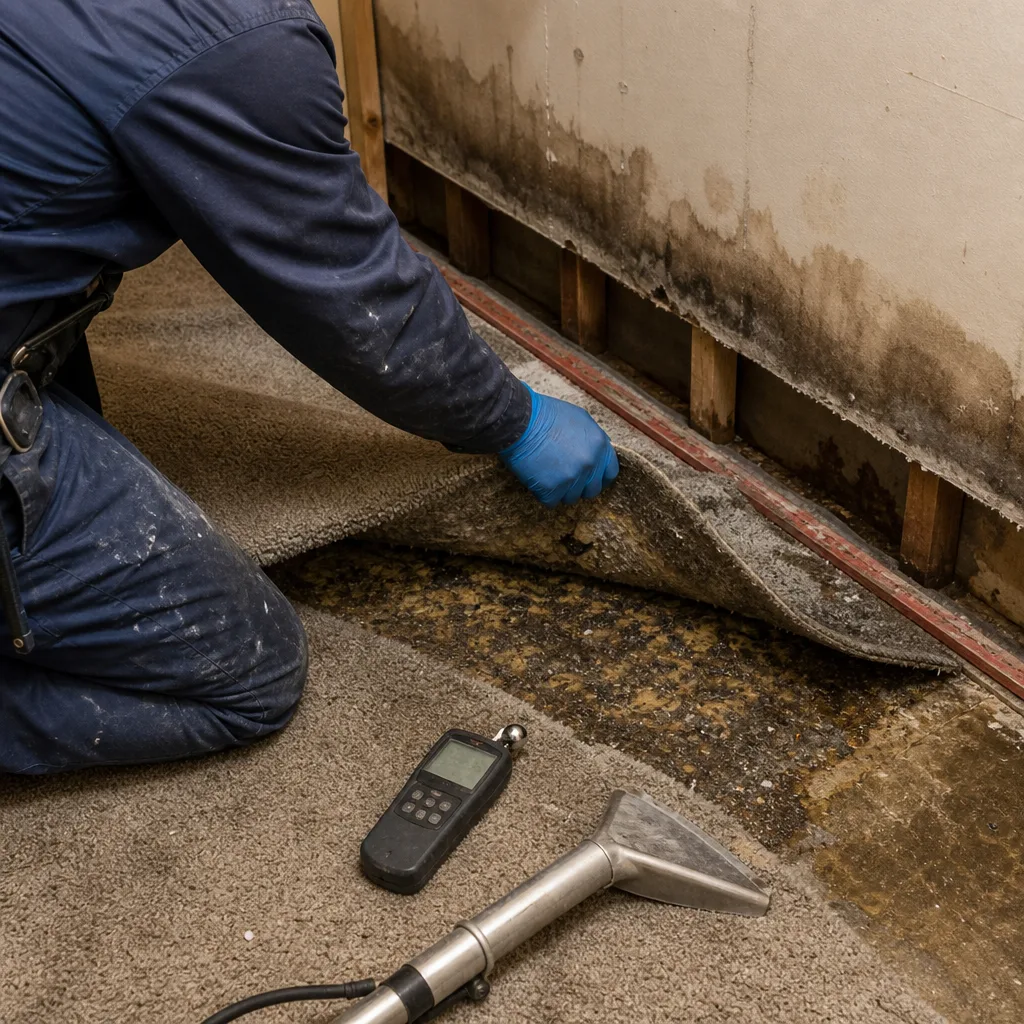
Insurance claims for fire and smoke damage succeed or fail on documentation quality. We begin photo documentation from our first site arrival and maintain a complete record through project completion. Our estimates follow Xactimate pricing standards that major carriers recognize, and we communicate directly with your adjuster to resolve scope questions without delaying your restoration.
The Haven Standard requires a written price before work begins on every job, with no scope-creep additions once our crew is inside your property. That written scope becomes the foundation of your insurance claim. Our photo records, moisture logs, and drying documentation are included as standard deliverables, never upsells.
What We Provide Your Insurer
- Thorough documentation of the loss
- Photos of all damage, room by room
- Moisture readings and drying logs
- A detailed, line-item scope of work
- Direct coordination with your carrier
Built for Financial District’s Loss Calendar
Financial District’s fire and smoke damage patterns follow a distinct seasonal rhythm shaped by its building stock and coastal position. January through March brings the highest risk of electrical fires from aging infrastructure under peak heating load - original knob-and-tube remnants, overloaded circuits in buildings never designed for residential amperage, and space heaters in drafty converted lofts with single-pane windows. Spring’s nor’easters and tropical systems arriving May through July create compound events: wind-driven rain enters through fire-damaged envelope breaches, and storm surge pushes brackish water into already-compromised below-grade spaces. Summer’s heat and humidity from July through September accelerate smoke odor activation in porous masonry that seemed clean during cooler months. October through December’s holiday cooking and decorative lighting spikes kitchen and electrical fires, while early cold snaps stress heating systems that have sat idle since spring.
The critical local factor: Financial District’s position at the southern tip of Manhattan between the Hudson and East Rivers means even moderate coastal storms push water through bulkheads into elevator pits, boiler rooms, and electrical vaults. Post-fire restoration here almost always involves water damage assessment alongside smoke and soot remediation, and the water is frequently Category 2 or 3 due to contact with below-grade contaminants.
Fire & Smoke Damage Restoration Across Financial District’s Neighborhoods
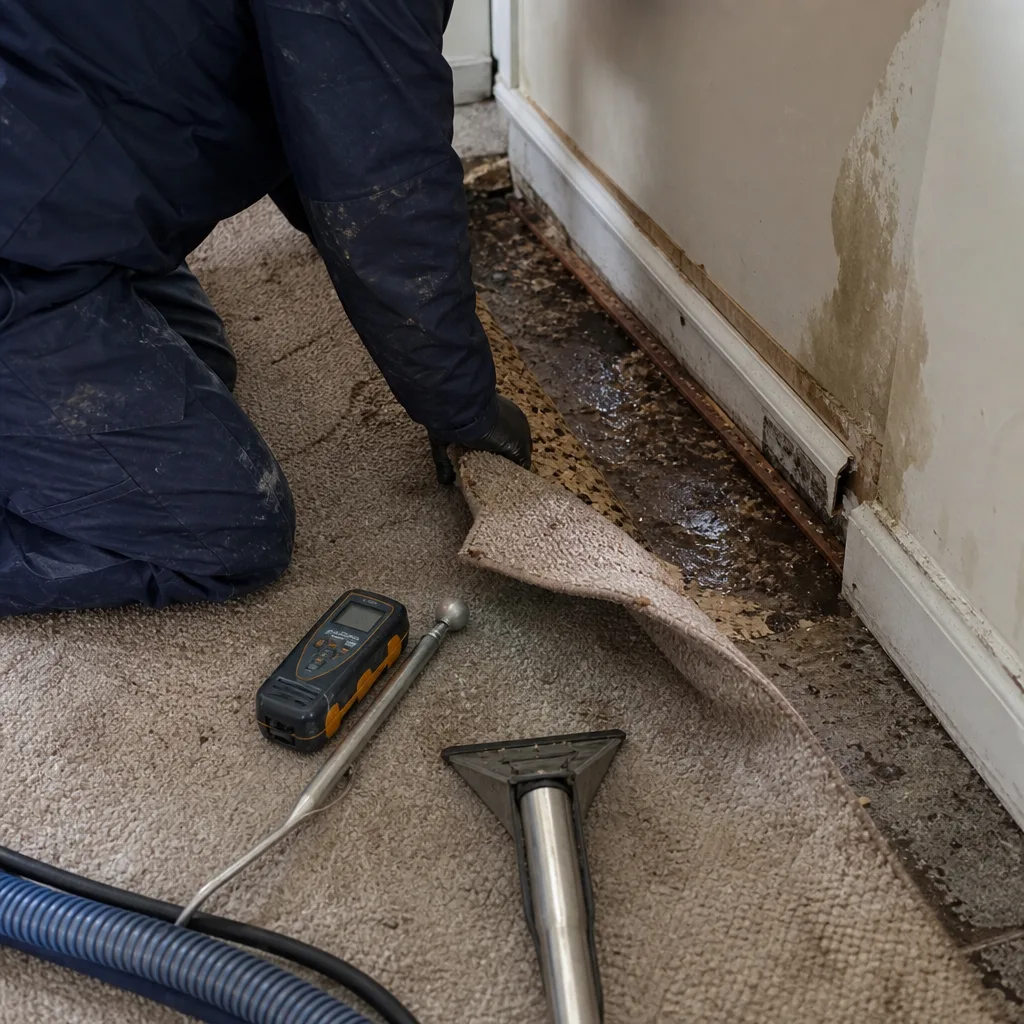
Our crews serve the full Financial District footprint with response routes optimized for its street grid and building access constraints. Near Bowling Green, the cluster of early-20th-century office conversions around Beaver Street and Broad Street presents classic loft-restoration challenges: high ceilings, minimal original compartmentalization, and HVAC systems that distribute smoke throughout vertically connected floors. The residential towers near Battery Park City, though newer construction, sit on the same reclaimed landfill and share the sub-basement flood exposure that complicates any fire event involving sprinkler activation or firefighting water.
Pearl Street and the corridors around Stone Street contain some of the oldest converted warehouse stock, where original cast-iron structural elements and terra-cotta tile finishes require specialized cleaning chemistry that won’t etch historic surfaces. The Seaport District’s 19th-century commercial buildings, now largely residential, feature the most labyrinthine plumbing riser configurations we’ve encountered in Manhattan - a single upper-floor incident routinely affects eight to twelve units through gravity-fed migration. Water Street’s high-rise residential towers present the opposite challenge: contained fires with extensive smoke migration through central HVAC and pressurized elevator shafts, requiring floor-by-floor air-quality testing before reoccupancy.
Specialized Fire & Smoke Damage Restoration Services We Offer in Financial District
Emergency Board-Up & Tarping
Fire-damaged envelope breaches in Financial District’s commercial-grade openings require materials sized for the job. Our trucks carry plywood to 3/4-inch thickness, commercial tarpaulins, and temporary door hardware that secures historic cast-iron frames without causing additional damage. Board-up happens within the first hour of our arrival.
Smoke & Soot Removal
We match cleaning chemistry to residue type and substrate sensitivity. Dry smoke residues on painted drywall respond to HEPA vacuuming and dry sponging. Wet smoke on original terra-cotta tile requires solvent-based cleaning with controlled dwell time to prevent glaze damage. Protein residues from kitchen fires demand enzyme cleaners that break down the source material rather than pushing odor deeper into porous substrates.
Odor Removal & Deodorization
Surface cleaning alone fails in Financial District’s converted buildings because smoke odor penetrates unsealed brick-nogged partition walls and original masonry that was never waterproofed during conversion. Our protocol includes thermal fogging to penetrate matching pathways, followed by sealing of affected substrates once moisture content and odor levels confirm treatment success. The 365-Day Done Right Promise covers odor recurrence - if smell returns, we return.
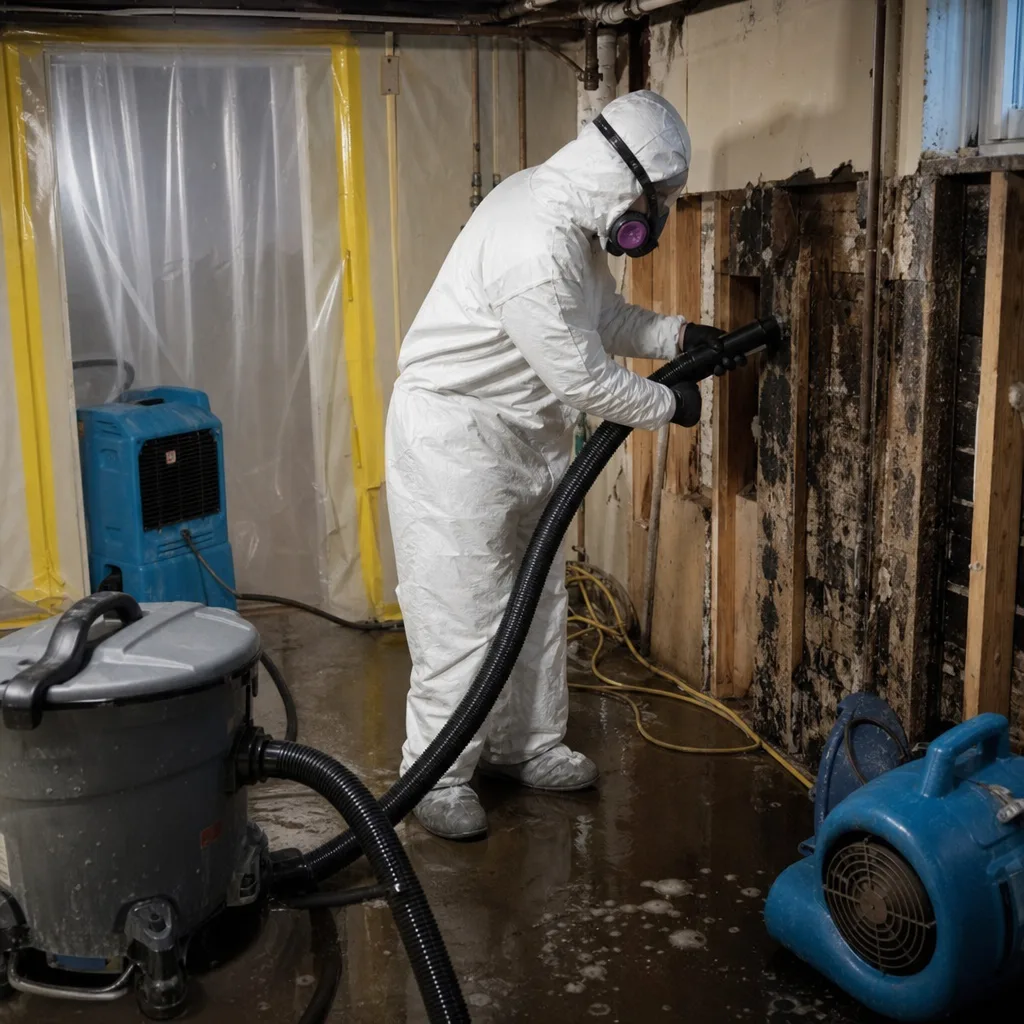
Contents Cleaning & Pack-Out
Fire-damaged contents are inventoried, photographed, and packed to our cleaning facility or secure storage. In Financial District’s compact lofts with limited staging space, pack-out often proceeds room by room while restoration continues, with detailed chain-of-custody documentation for insurance replacement valuation.
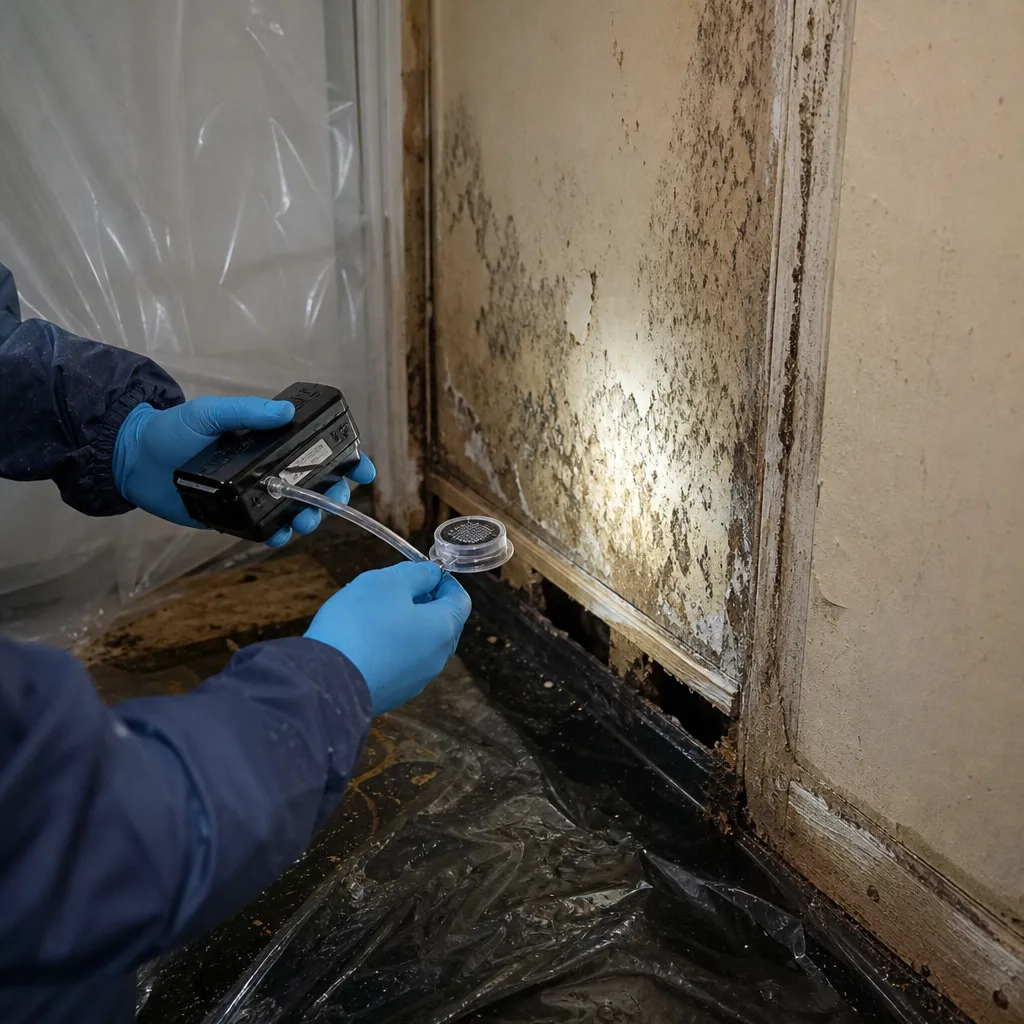
Structural Fire Repair
Charred or heat-compromised structural elements require engineering assessment before rebuild. In Financial District’s flood zones, any structural repair must also evaluate whether prior saltwater intrusion has initiated chloride-driven corrosion in embedded steel - a condition that standard fire scopes miss and that will fail NYC DOB flood-zone inspection if not addressed.
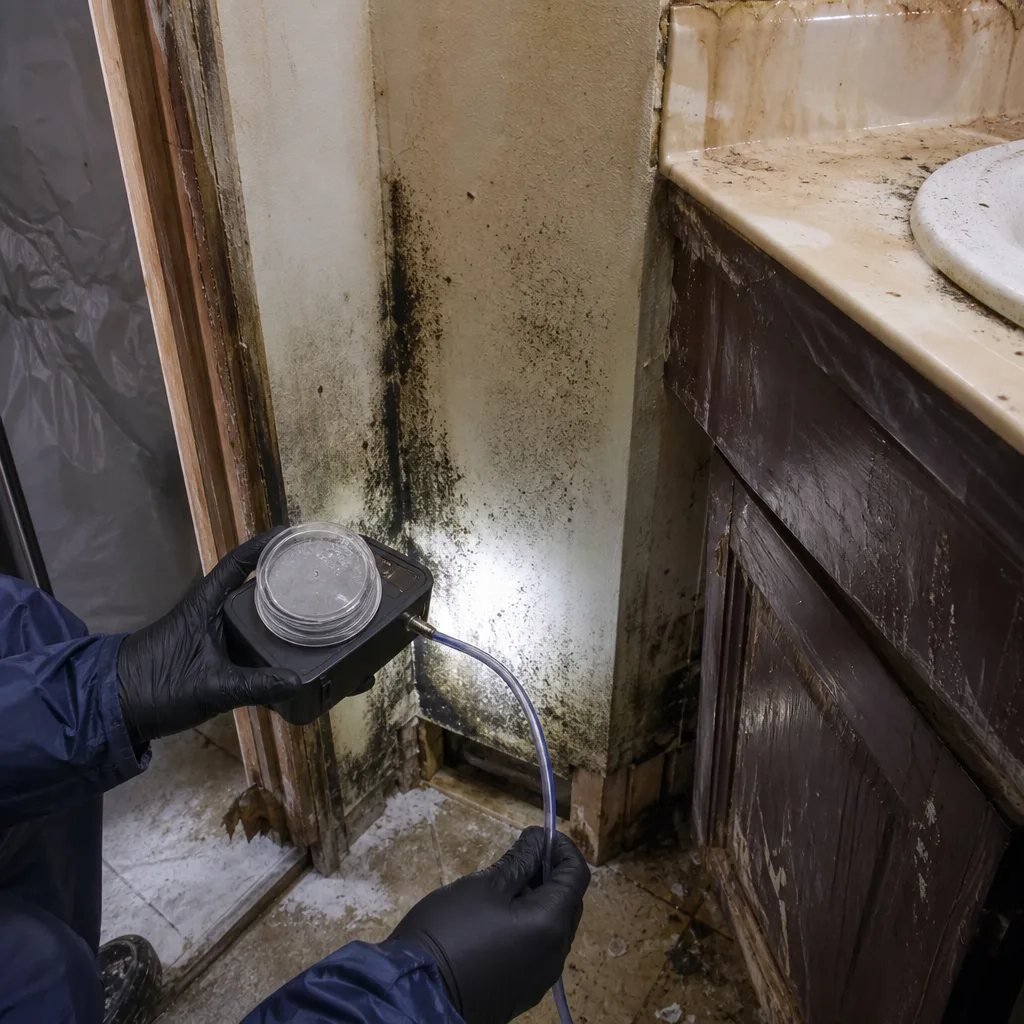
What happens when you call
- 1
A real person answersNo phone trees - you reach a local pro.
- 2
You get an upfront price rangeHonest numbers before anyone is dispatched.
- 3
A background-checked tech heads outLicensed & insured, dispatched right away.
- 4
You approve before work beginsNothing starts until you say go.
Fire & Smoke Damage Restoration Costs in Financial District, NY
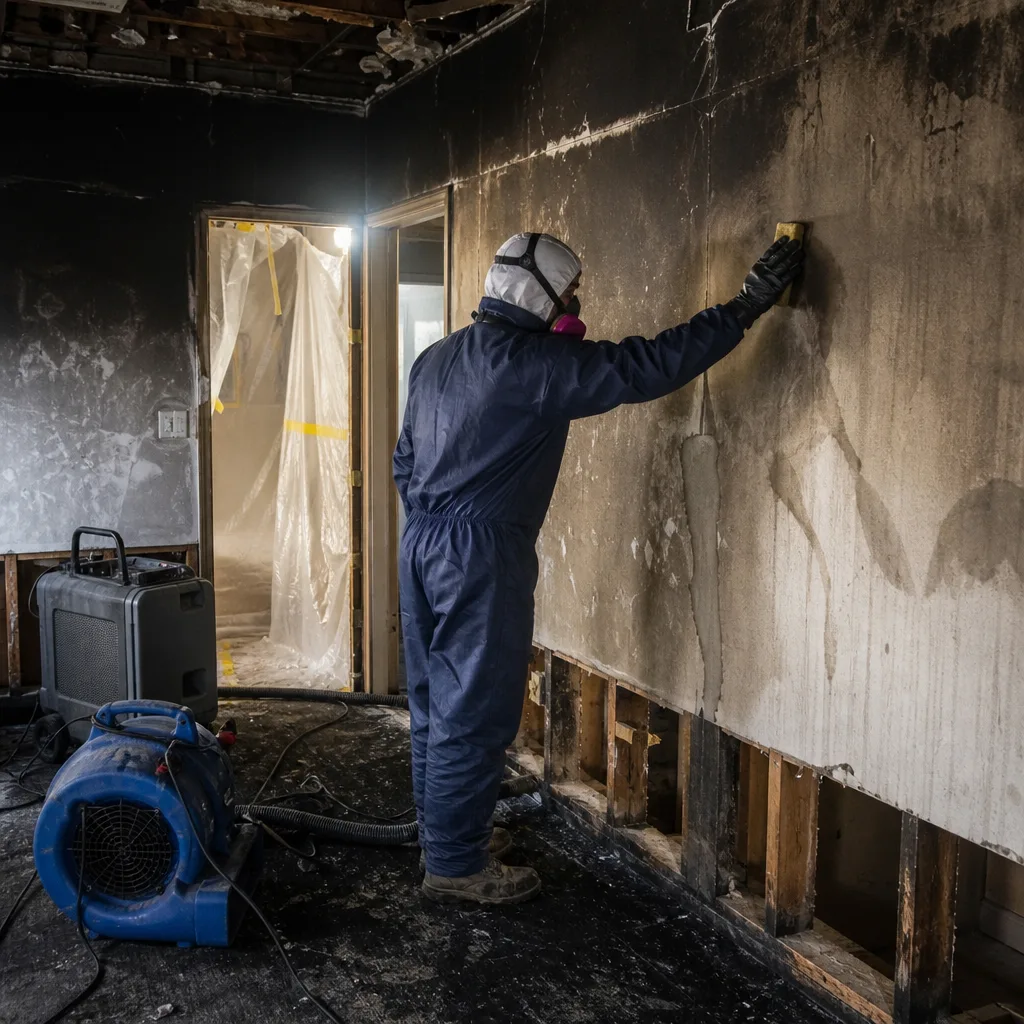
Typical fire and smoke damage restoration in Financial District runs $4,200 for limited single-room smoke damage with no structural compromise, to $18,500 for multi-room events with water migration, contents pack-out, and odor remediation in porous masonry. Emergency board-up and tarping typically falls between $800-$2,400 depending on opening count and height access. Smoke and soot removal for a standard loft unit runs $2,800-$6,500. Odor removal and deodorization adds $1,200-$3,800 when thermal fogging and substrate sealing are required. Contents cleaning and pack-out ranges $1,500-$5,000 based on volume and contamination level.
What moves the price: fire class and residue type, square footage affected, whether firefighting water migrated to additional units or sub-basement spaces, presence of historic materials requiring specialized cleaning, and whether structural repairs trigger NYC DOB flood-zone compliance requirements. Insurance typically covers direct fire and smoke damage plus water damage from firefighting; our written scope documents every line item for carrier review. Call (862) 281-7710 for a free visual inspection and firm written estimate - Haven Standard, Clause 1, always.
We Also Serve Cities Near Financial District
Our New York City office dispatches crews throughout the metro area, with regular response to Financial District neighbors including Astoria, Upper East Side, Long Island City, and Jackson Heights. Each area receives the same documentation-first protocol: written price before work begins, photo record on every visit, and the 365-Day Done Right Promise backed by The Haven Standard.
Serving Financial District, NY - Our Local Coverage Area
We’re based in the Financial District area and know this community well. Use the map below to see our service coverage - if you’re nearby, we can almost certainly help.
Financial District Fire & Smoke Damage Restoration Questions, Answered
After a fire in a Financial District loft, do we need to worry about water damage from the fire hoses too?
Yes, absolutely - and in Financial District’s converted pre-war buildings, firefighting water damage often exceeds the fire damage itself. A single FDNY hose line can introduce hundreds of gallons per minute, and in buildings with original cast-iron risers and sub-basement mechanical rooms at or below sea level, that water migrates through multiple floors before reaching the street. We classify this water as Category 2 or Category 3 depending on what it contacts in below-grade spaces, and we document it separately for insurance as water damage secondary to the fire loss. Call (862) 281-7710 for immediate assessment.
Why does smoke smell come back weeks after a fire in an old Financial District building?
Smoke odor recurrence happens because surface cleaning never reached the porous substrate where odor molecules are trapped. Financial District’s converted lofts contain original terra-cotta tile and brick-nogged partition walls that were never waterproofed during the 1980s-2000s residential conversion - these materials absorb smoke odor like a sponge, and standard cleaning only addresses the outer millimeter. Our protocol tests porosity, performs deep cleaning or sealing as indicated, and confirms odor elimination with third-party verification before we sign off. The 365-Day Done Right Promise means if smell returns, we return at no charge.
Is a fire in a Financial District high-rise treated differently because of the flood zone?
Yes, and this is where Financial District restoration diverges from standard fire protocols. Buildings here occupy FEMA Special Flood Hazard Zones on reclaimed landfill, so post-fire assessment must evaluate whether earlier saltwater intrusion has compromised structural metals that are now exposed by fire damage. Chloride contamination from prior flooding, combined with heat exposure, accelerates corrosion in embedded steel lintels and cast-iron elements that standard fire scopes don’t catch. Any rebuild must pass NYC DOB flood-zone inspection, which requires documentation of structural integrity and compliance with FEMA construction requirements for below-grade spaces. We perform this assessment as standard, not as an upsell.
How quickly does mold become a problem after a fire is put out in a FiDi loft?
Mold colonization begins 48 to 72 hours after water introduction in Financial District’s humid coastal climate, but the real risk is earlier in buildings with prior saltwater saturation. Salt-affected masonry holds residual moisture that standard moisture meters misread, creating hidden reservoirs where mold establishes before visible growth appears. Our thermal imaging and psychrometric data identify these pockets during the initial assessment, and we establish drying protocols within hours of arrival, not days. Call (862) 281-7710 for immediate moisture mapping.
After a fire in a converted Financial District building, what does a pack-out involve for our contents?
Pack-out begins with room-by-room inventory and photography, then careful packing of salvageable, cleanable, and non-salvageable items into separately marked containers. In Financial District’s compact lofts where staging space is minimal, we often pack out to our secure facility while restoration proceeds, maintaining chain-of-custody documentation for insurance replacement valuation. Cleanable items receive specialized fire and smoke restoration cleaning at our facility; non-salvageable items are documented with photos and descriptions for your adjuster. You receive a complete inventory list before anything leaves your property.
How fast can your crew actually get to a Financial District address?
We commit to 45 minutes from call confirmation to crew arrival at Financial District properties, with trucks staged for Manhattan response. Our New York City office coordinates dispatch directly; no call centers, no routing through out-of-state answering services. The live person who answers your call at (862) 281-7710 confirms crew availability and estimated arrival before you hang up.
Will insurance cover the full cost of fire and smoke restoration?
Most homeowner and commercial policies cover direct fire damage, smoke and soot removal, and water damage from firefighting, subject to your deductible and coverage limits. Where claims fail, it’s almost always due to insufficient documentation of the loss scope or failure to demonstrate that claimed work was necessary and performed. Our photo records, moisture logs, and written scopes are designed specifically to prevent these denials. We also offer a Free Second Opinion on any competitor’s written estimate if you want comparison documentation for your adjuster.
What should we do in the first 30 minutes after a fire is extinguished?
Ensure everyone is accounted for and do not re-enter until FDNY clears the structure. Call our 24/7 line at (862) 281-7710 immediately - smoke continues to damage surfaces and firefighting water continues to migrate while you wait. Do not attempt to clean or disturb anything; soot residues are often oily and will smear or drive deeper into porous surfaces with improper handling. If safe to do so from outside, photograph the exterior damage for your initial insurance notification, then leave the interior documentation to our crew.
Written by Alicia Brennan, Owner at DryMark Restoration Astoria, serving Financial District since 2011 under The Haven Standard.
Fire & Smoke Damage Restoration in Nearby Areas