
Last updated September 23, 2026
Free visual inspection and a written scope of work before any mitigation begins - photos, moisture readings, and drying logs go in your claim file
The scope we write is the scope we bill. Anything new gets shown to you, in writing, before we touch it.
Storm response
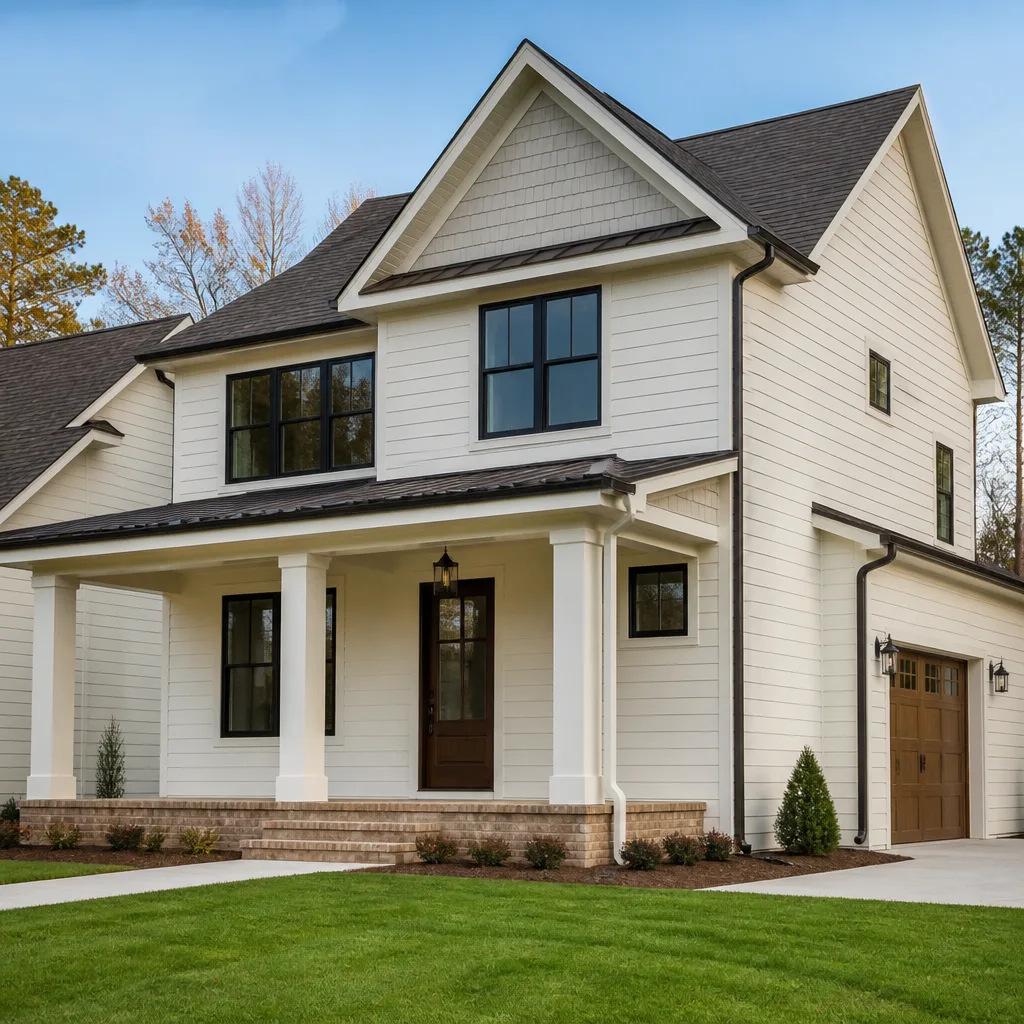
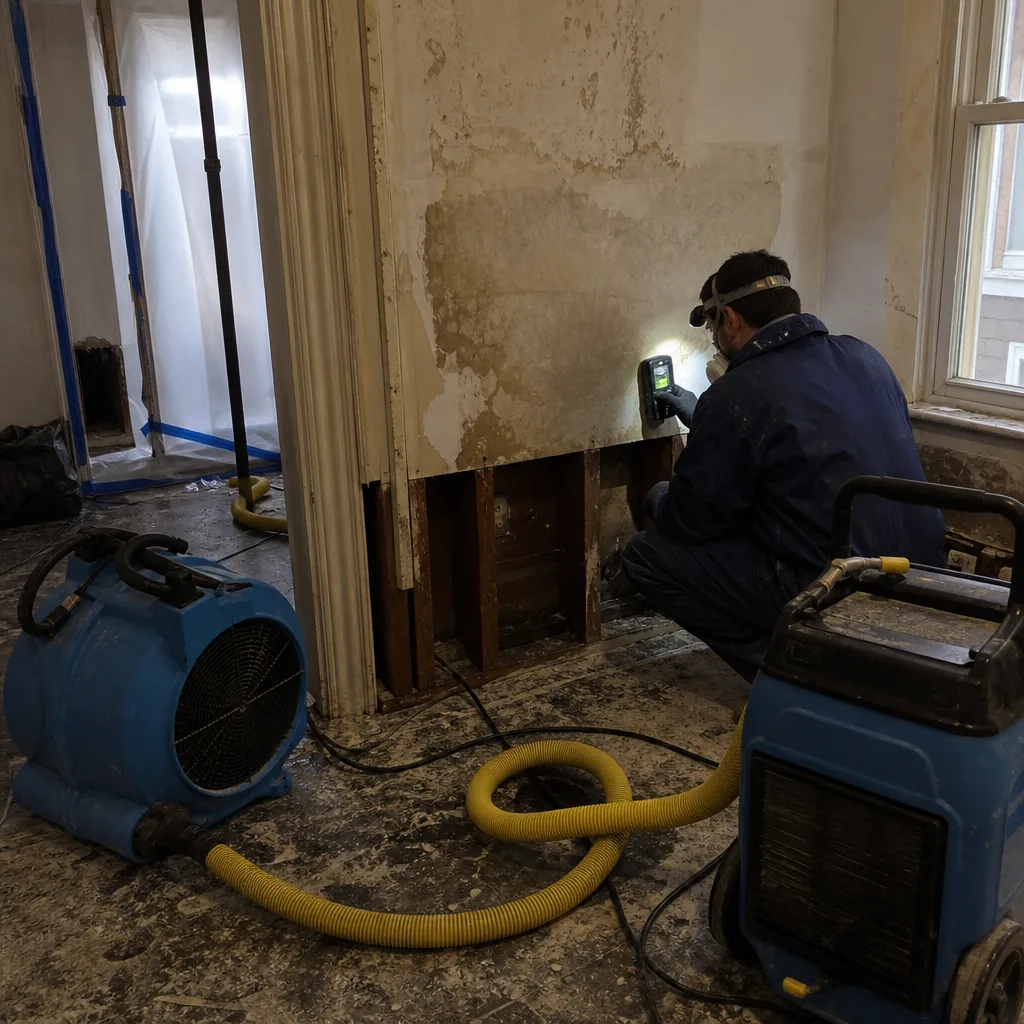 Before
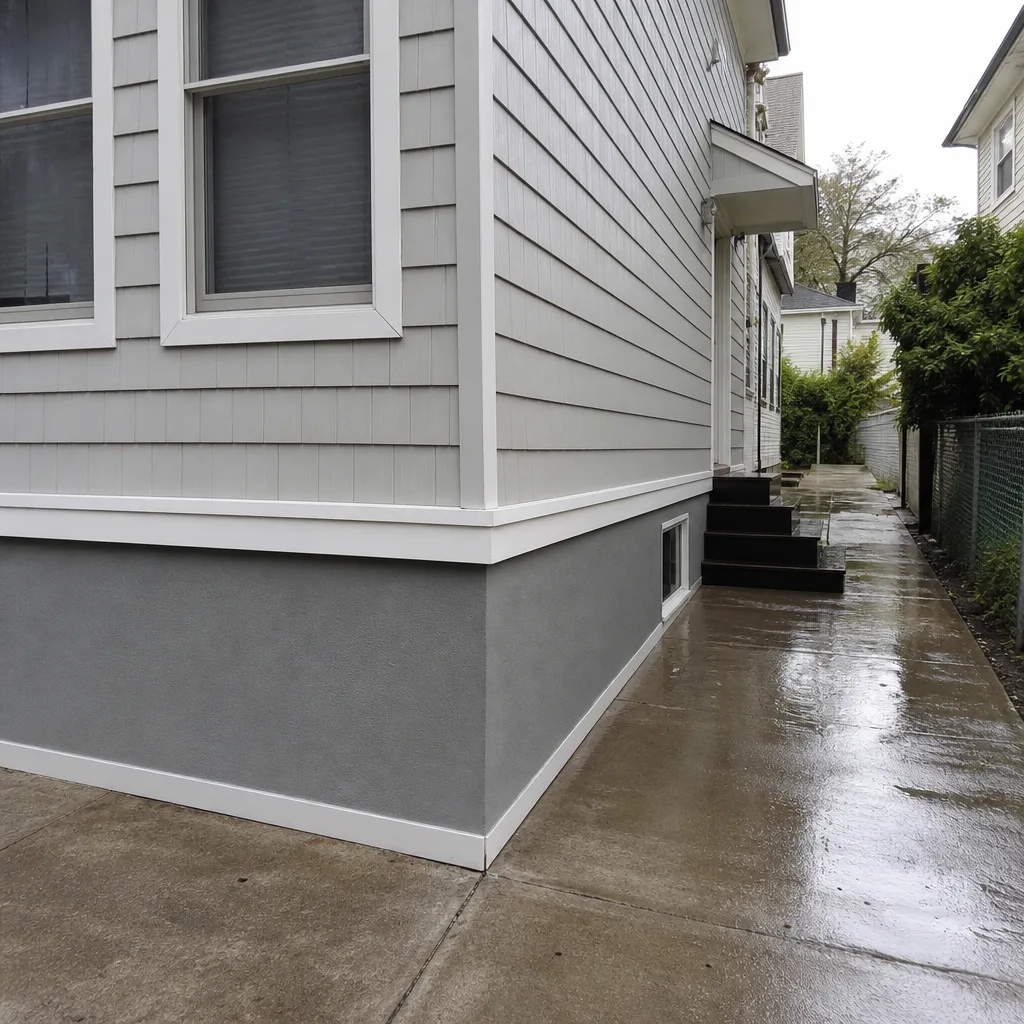 After
After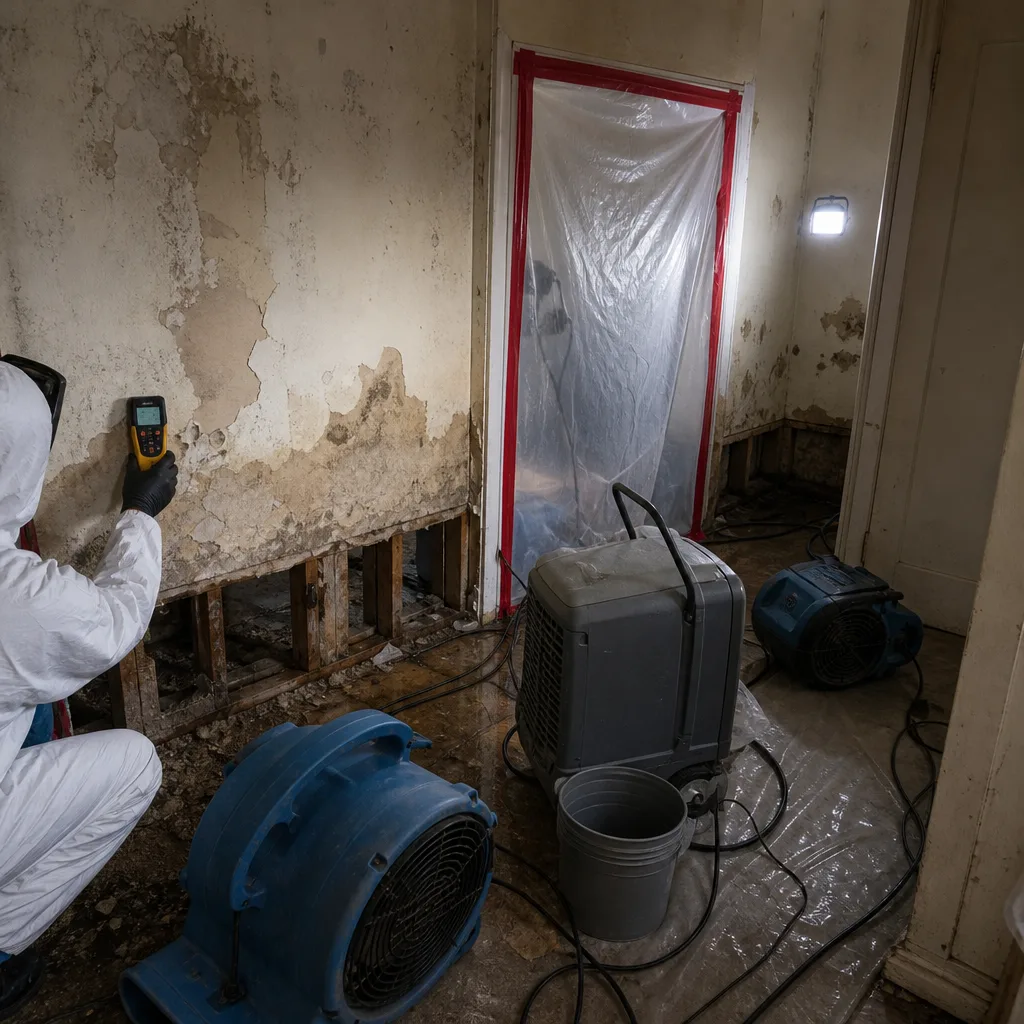 Before
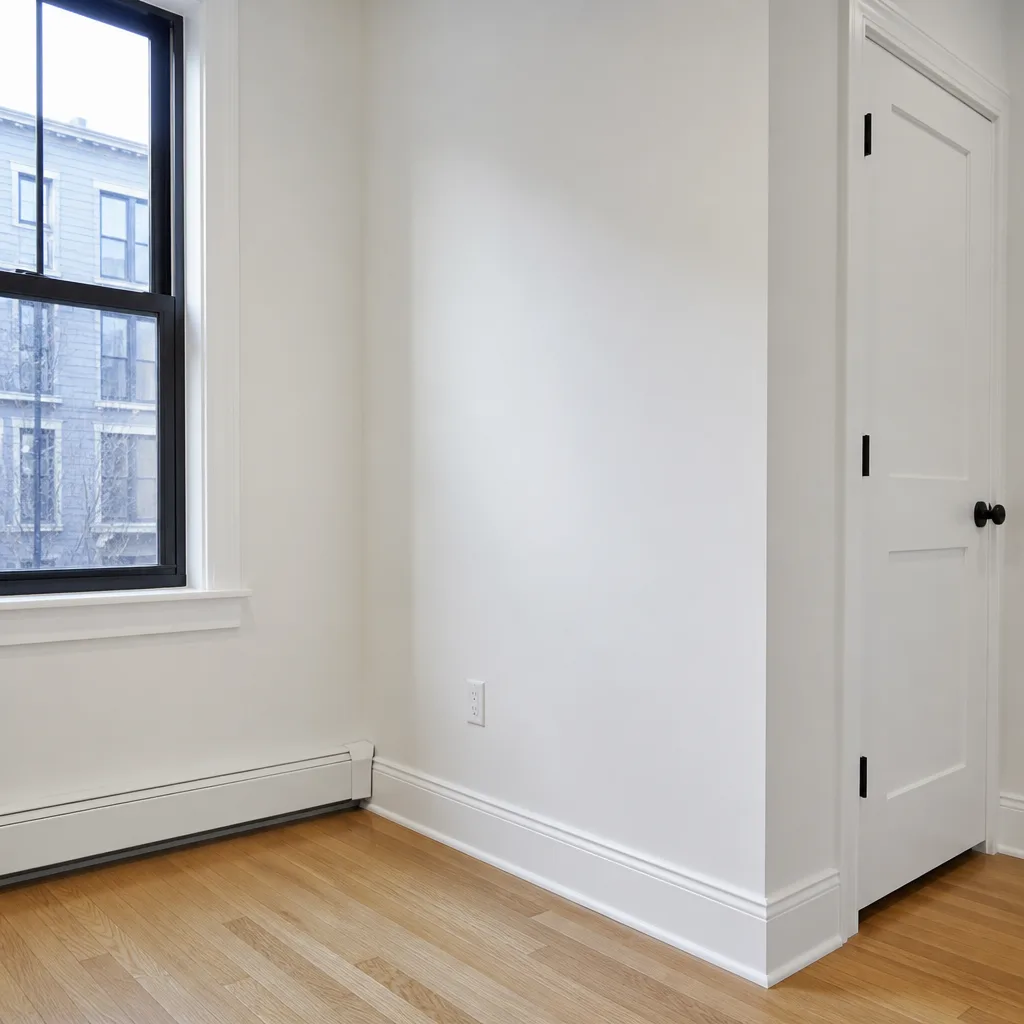 After
After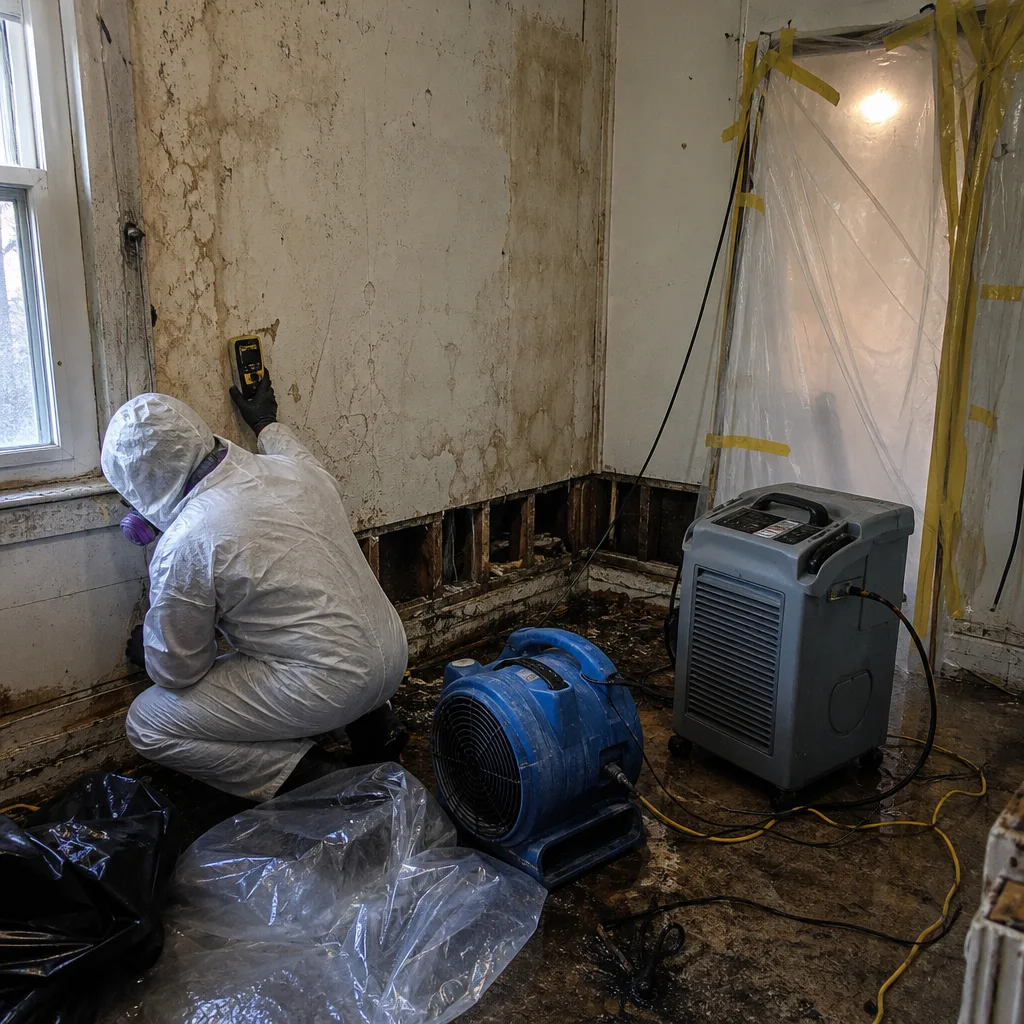 Before
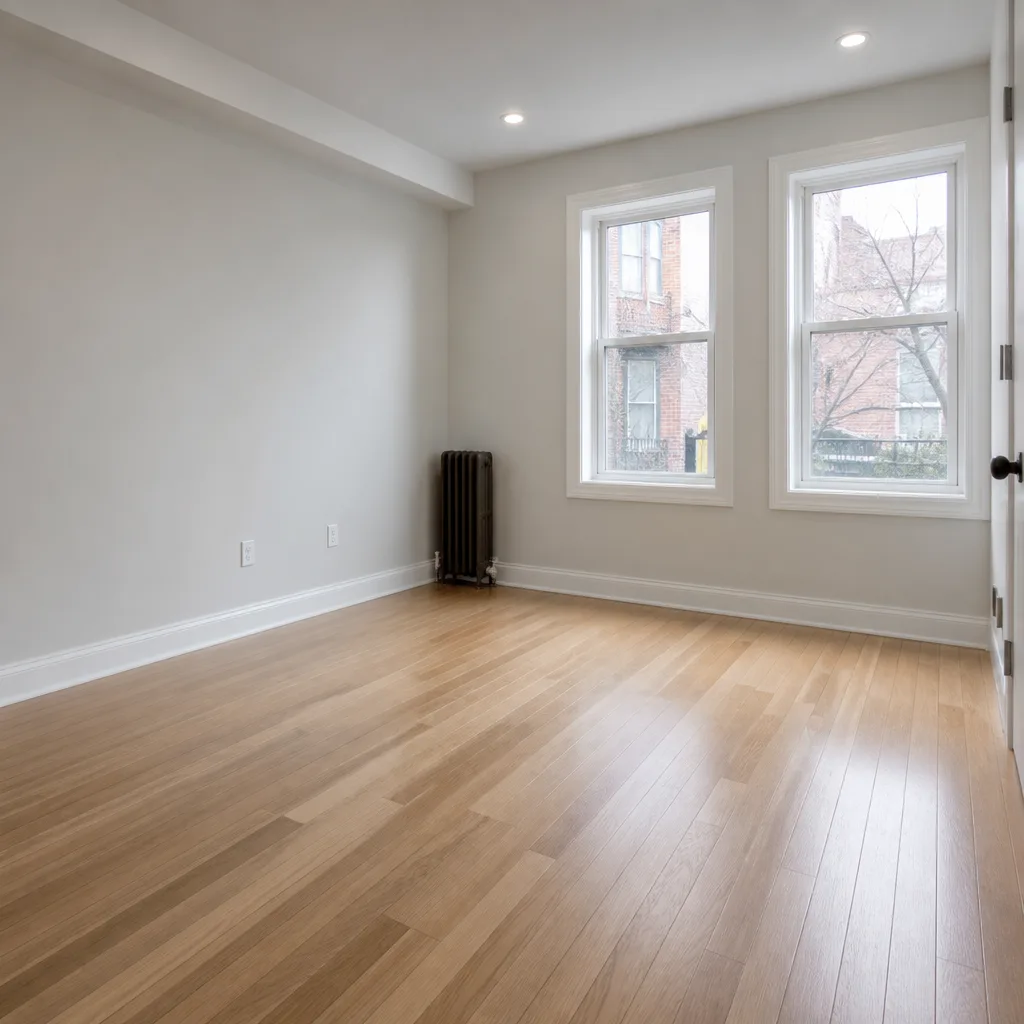 After
AfterDIY vs Professional Damage Restoration: The Astoria Homeowner’s Decision Guide
An Astoria homeowner who rents box fans and dries a flooded basement themselves can spend $200 and feel finished - until the insurer denies the subsequent mold claim on the grounds that the original water loss was never professionally mitigated and documented. We’ve seen this exact scenario at least a dozen times in Astoria’s pre-war buildings, where a Category 1 kitchen leak becomes a $14,000 mold remediation six months later, with the homeowner paying out of pocket because the initial drying produced no admissible evidence. In this guide, you’ll learn the three measurable inputs that determine whether DIY is appropriate, the specific documentation standards your insurance adjuster will use to evaluate your claim, and how New York’s anti-assignment laws and NYC’s Local Law 55 reshape the cost comparison in ways most more guides & resources ignore.
Quick Answer
DIY damage restoration is appropriate only for Category 1 water losses under 25 square feet with no wall cavity involvement and no insurance claim planned. For every other scenario in Astoria - including any loss where you’ll file an insurance claim, any Category 2 or 3 water, any fire or smoke damage, any mold contamination, or any loss affecting multiple rooms - professional restoration is necessary because DIY drying cannot produce the IICRC S500 documentation that adjusters require to approve mitigation costs and subsequent repairs.
Table of Contents
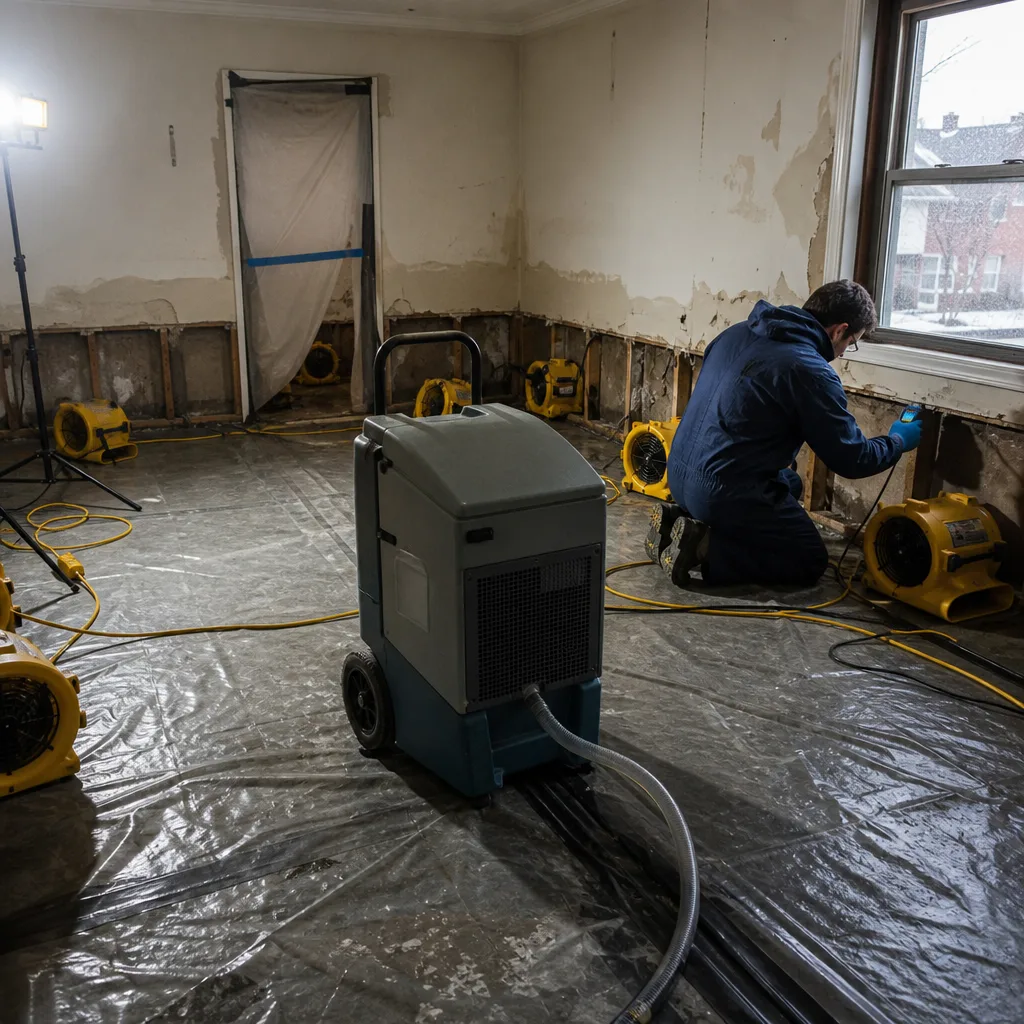
- What the DIY vs Professional Question Actually Means
- The Three Measurable Inputs That Decide Everything
- The Documentation Gap: Why DIY Drying Fails Insurance Scrutiny
- New York Anti-Assignment Law and What It Costs Homeowners
- NYC Local Law 55 and DIY Mold Disturbance in Astoria Buildings
- The True Cost Comparison: A 48-Hour Breakdown
- Equipment Reality: What Home Depot Rentals Cannot Do
- When DIY Makes Sense: Three Narrow Scenarios
BeforeAfterWhat the DIY vs Professional Question Actually Means
Most homeowners frame the DIY vs professional question around skill and money: “Can I do this myself?” and “Will I save?” That’s the wrong frame. The right question is: “Will my insurer pay for what comes next?”
Water damage in Astoria rarely ends with the initial loss. Our climate - humid summers, freeze-thaw winters, and the persistent groundwater pressure on basements in the 30th Avenue corridor - means moisture finds hidden paths, which is why we recommend our Seasonal Damage Restoration Care for Astoria: Year-Round Homeowner’s Guide. A kitchen supply line rupture on the first floor of a Ditmars Boulevard two-family can wick into plaster lath, travel along sill plates, and saturate subflooring three rooms away. The homeowner who surface-dries the visible water with a wet-dry vacuum and box fans has addressed maybe 30% of the actual moisture load.
Here’s what happens six months later. The homeowner discovers mold behind baseboards, files a claim, and the adjuster requests the mitigation documentation from the original water loss. There is none. No moisture content readings. No psychrometric data. No equipment placement logs. No daily drying records. The insurer denies the mold claim on the basis that the original loss was never properly mitigated, and the homeowner now faces a $12,000-$18,000 mold remediation that professional drying would have prevented entirely.
This is why the DIY vs professional question is fundamentally a documentation question. Professional restoration produces a paper trail. DIY produces hope. In our experience with DryMark Restoration Astoria home services, the claims that close fastest and cleanest are the ones with the thickest files - not because adjusters love paperwork, but because documentation is the only defense against the suspicion that a loss was exaggerated or incompletely addressed.
The Haven Standard, which governs every job we take, was built around this exact problem. Clause 1 requires a written price before work starts. But equally important is the documentation clause: every visit produces a photo record, every drying day produces a log, and every log contains measurable data an adjuster can verify.
The Three Measurable Inputs That Decide Everything
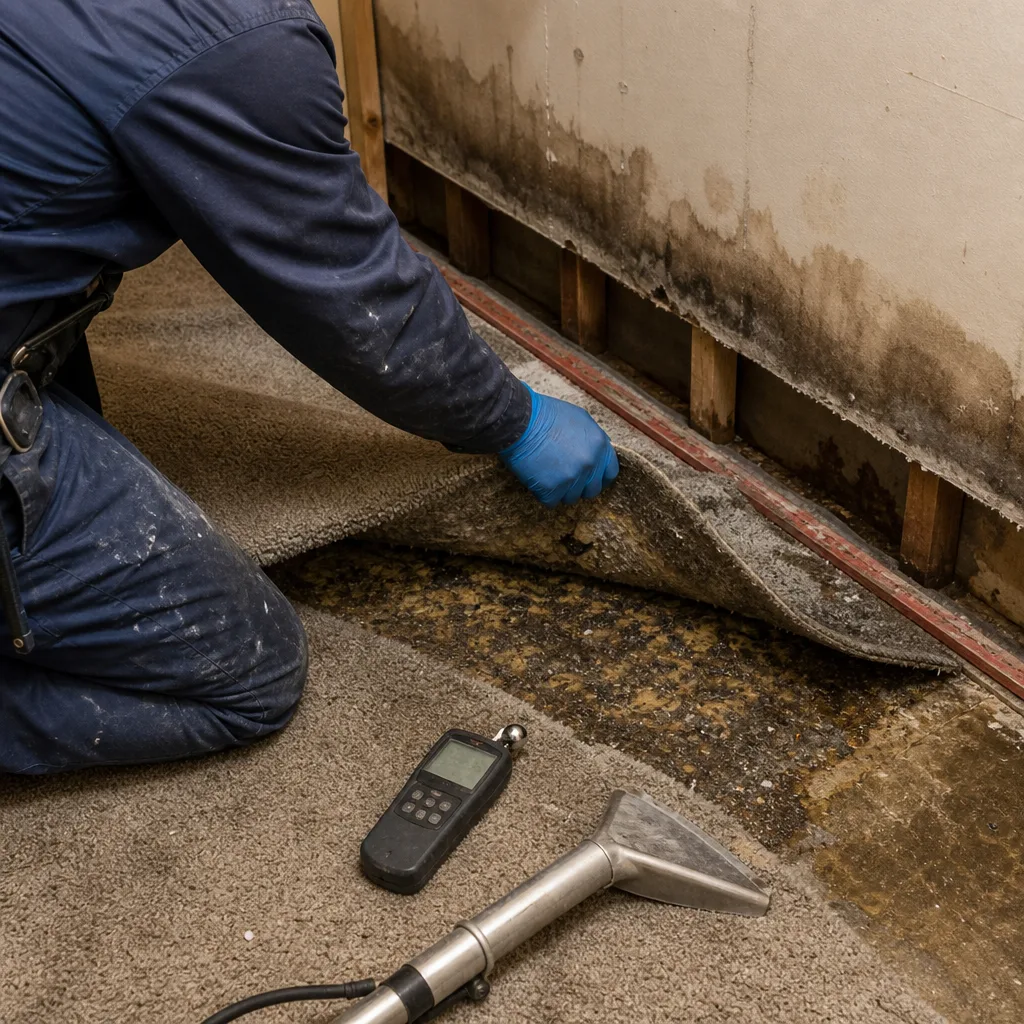
Forget online calculators that ask about your comfort level with tools or your budget. The decision framework that actually protects Astoria homeowners has three inputs, each objectively measurable:
- Category of water loss - IICRC S500 classification system
- Affected square footage - including concealed spaces
- Insurance claim intent - yes or no, with no middle ground
Here’s how these inputs interact:
Category 1 water (clean water from a supply line or rainwater) is the only type suitable for potential DIY response. Category 2 (gray water from dishwashers, washing machines, or sump pump failures) contains enough contaminants to require antimicrobial treatment and professional disposal. Category 3 (black water from sewage, seawater, or groundwater flooding) is legally hazardous waste in New York State and absolutely requires licensed remediation. We’ve responded to Astoria basements after heavy rains where the homeowner didn’t realize their “clean” basement flood was actually Category 3 because the water had passed through soil and contained petroleum byproducts from the building’s oil tank history.
Affected square footage must include wall cavities, ceiling spaces, and subfloor areas. A 10×10 kitchen with water that has wicked 24 inches up drywall actually affects closer to 400 square feet of material when you count both sides of the wall cavity. DIY equipment cannot generate the air movement or dehumidification capacity to dry this volume in the 48-72 hour window before mold colonization begins.
Insurance claim intent is binary. If you will file a claim, you need professional documentation. Period. New York’s anti-assignment law (which we’ll detail below) means you cannot retroactively assign your benefits to a restoration company after attempting DIY. If you DIY first and discover damage later, you’ll likely bear those costs yourself.
The Documentation Gap: Why DIY Drying Fails Insurance Scrutiny
Insurance adjusters evaluate water damage claims using specific documentation standards derived from the IICRC S500, the industry reference guide for professional water damage restoration. These standards exist precisely because moisture is invisible and its effects are delayed. Without documentation, an adjuster has no basis to distinguish between a properly mitigated loss and an incomplete one.
The S500 requires several categories of documentation that DIY drying structurally cannot produce:
- Daily psychrometric readings - measurements of temperature, relative humidity, and specific humidity at multiple points in the affected area, recorded at consistent intervals. These readings demonstrate that the drying environment was controlled and that progress was measurable. A homeowner with a hardware store hygrometer might record temperature and humidity, but without the training to interpret vapor pressure differential or grains per pound, the data is meaningless to an adjuster.
- Equipment placement logs - GPS-tagged or diagrammed locations of every air mover, dehumidifier, and specialty drying unit, with CFM (cubic feet per minute) ratings and placement rationale. Adjusters verify that equipment capacity matched the moisture load. A homeowner who “put fans everywhere” produces no verifiable record.
- Material moisture content by location - pin or pinless meter readings from specific materials (drywall, wood framing, subfloor, concrete) at specific locations, recorded daily until materials return to within 2-4 points of established dry standard. In Astoria’s pre-war buildings, dry standard for plaster might be 12% moisture content, while new construction drywall might be 5%. Without knowing your building’s baseline, you cannot establish when drying is complete.
- Tertiary drying documentation - evidence that concealed cavities (wall interiors, ceiling soffits, under cabinetry) were addressed, not just visible surfaces. This is where most DIY efforts fail catastrophically. Water follows gravity and capillary action into hidden spaces. Surface-dry materials with wet interiors will mold.
At Water Damage Restoration in Astoria, our crews document to these standards on every job. The daily drying logs we produce - with moisture readings, psychrometric data, and photo verification - are submitted directly to adjusters as evidence of completed mitigation. In our experience, claims with complete S500 documentation close 40% faster than those with partial records, and denials for “incomplete mitigation” drop to near zero.
The homeowner who DIYs has none of this. They have a receipt for fan rentals and a dry surface. When the mold appears, the insurer’s position is straightforward: the original loss was not professionally mitigated, so subsequent damage is the homeowner’s responsibility. This position is defensible in court, and we’ve seen it upheld.
New York Anti-Assignment Law and What It Costs Homeowners
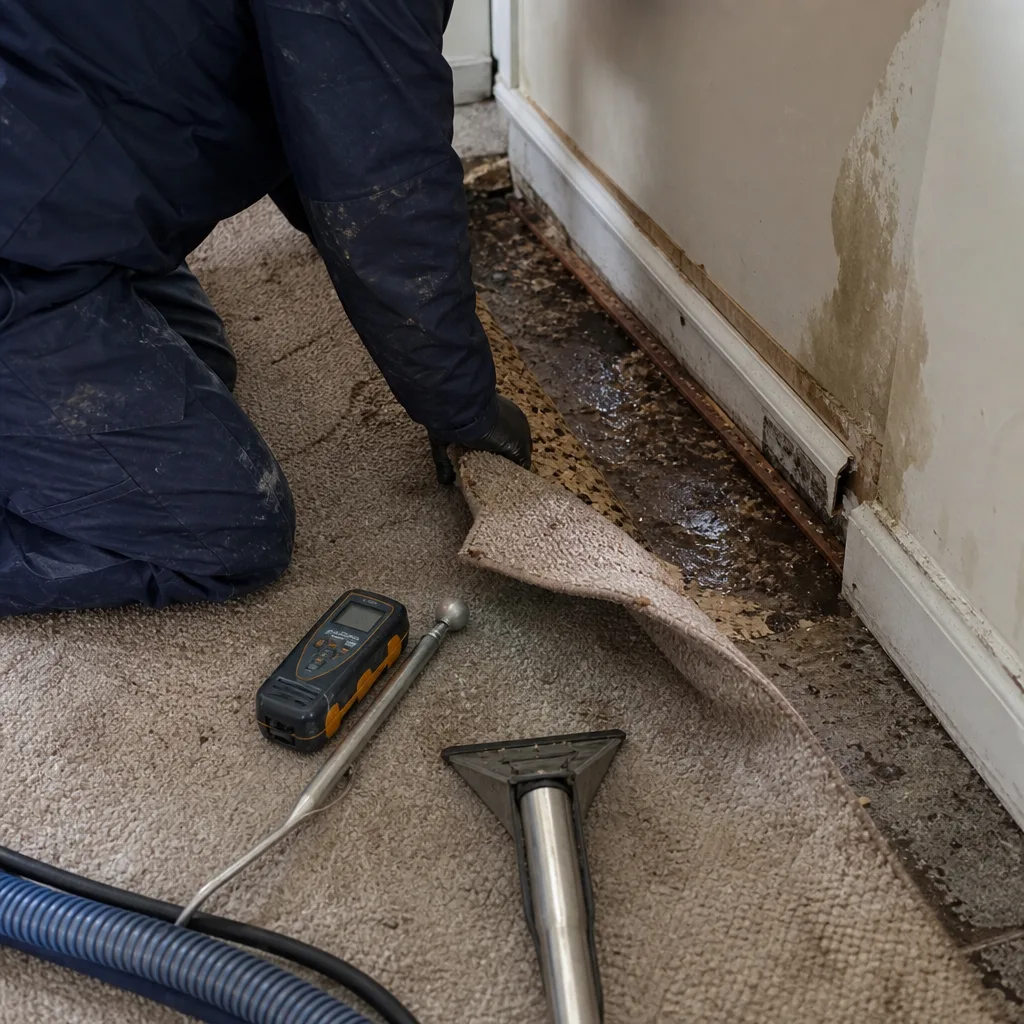
New York is one of a minority of states that prohibits the assignment of insurance benefits to third-party contractors. This law, codified in New York General Obligations Law Section 5-322.1 and reinforced by insurance regulation, means a homeowner cannot sign over their policy benefits to a restoration company in the way that is common in Florida, Texas, and other states.
Why does this matter for the DIY vs professional decision? Because in states with assignment of benefits, a homeowner can attempt DIY, fail, and then hire a professional who takes over the claim directly. In New York, the homeowner remains the claimant throughout. The restoration company invoices the homeowner, who then submits to their insurer for reimbursement. If the homeowner’s DIY attempt has compromised the documentation trail, the insurer has grounds to reduce or deny the professional remediation costs that follow.
We’ve seen this in Astoria repeatedly. A homeowner on 21st Street attempts DIY drying after a washing machine overflow, discovers mold two months later, and calls us for Mold Remediation in Astoria. We provide a written scope and price under Haven Standard, Clause 1. The homeowner submits to their carrier. The adjuster requests the original water loss documentation. There is none. The carrier approves only the mold remediation that is directly visible, denying the wall cavity work because they cannot verify the original moisture extent. The homeowner pays $4,200 out of pocket for work that professional drying would have prevented.
The anti-assignment law makes New York homeowners their own documentation custodians. Professional restoration companies serve as their documentation partners, producing the records that justify the claim. DIY removes that partnership and places the entire burden on the homeowner, who typically lacks the training, equipment, and time to meet S500 standards.
NYC Local Law 55 and DIY Mold Disturbance in Astoria Buildings
NYC Local Law 55 of 2018, the Indoor Allergen Hazard Law, creates obligations that most Astoria homeowners are unaware of until they violate them. The law requires property owners to inspect for and remediate indoor mold hazards, and it defines specific work practices for mold disturbance in buildings with multiple dwelling units.
Astoria’s housing stock is overwhelmingly multi-unit: two-family homes, three-story walk-ups, and larger apartment buildings concentrated along Steinway Street, Broadway, and the blocks between. If you own a unit in one of these buildings and attempt DIY mold removal, Local Law 55 may classify your work as a regulated activity requiring:
- Notification to adjacent units before work begins
- Containment barriers to prevent cross-contamination
- HEPA filtration during disturbance
- Proper disposal of mold-contaminated materials as regulated waste
- Post-remediation verification by a third party for areas exceeding 10 square feet
The law’s tenant notification requirement is particularly consequential. A homeowner who begins DIY mold removal without notifying neighbors may face complaints to the NYC Department of Housing Preservation and Development. We’ve been called to Astoria properties where DIY disturbance has released spores into common HVAC systems, triggering complaints from multiple units and HPD inspections that document violations.
Professional mold remediation in multi-unit buildings follows Local Law 55 protocols as standard practice. At DryMark Restoration Astoria, our containment procedures, negative air machines, and disposal documentation satisfy HPD requirements. Our post-remediation verification provides the clearance documentation that property owners need for their records.
The DIY homeowner in a single-family home faces fewer regulatory obligations, but the practical risks remain. Disturbing mold without containment spreads spores. Inadequate removal leaves viable hyphae that regrow. And without post-remediation verification, there is no documentation that the hazard was eliminated - a significant liability if tenants or future buyers raise health concerns.
The True Cost Comparison: A 48-Hour Breakdown
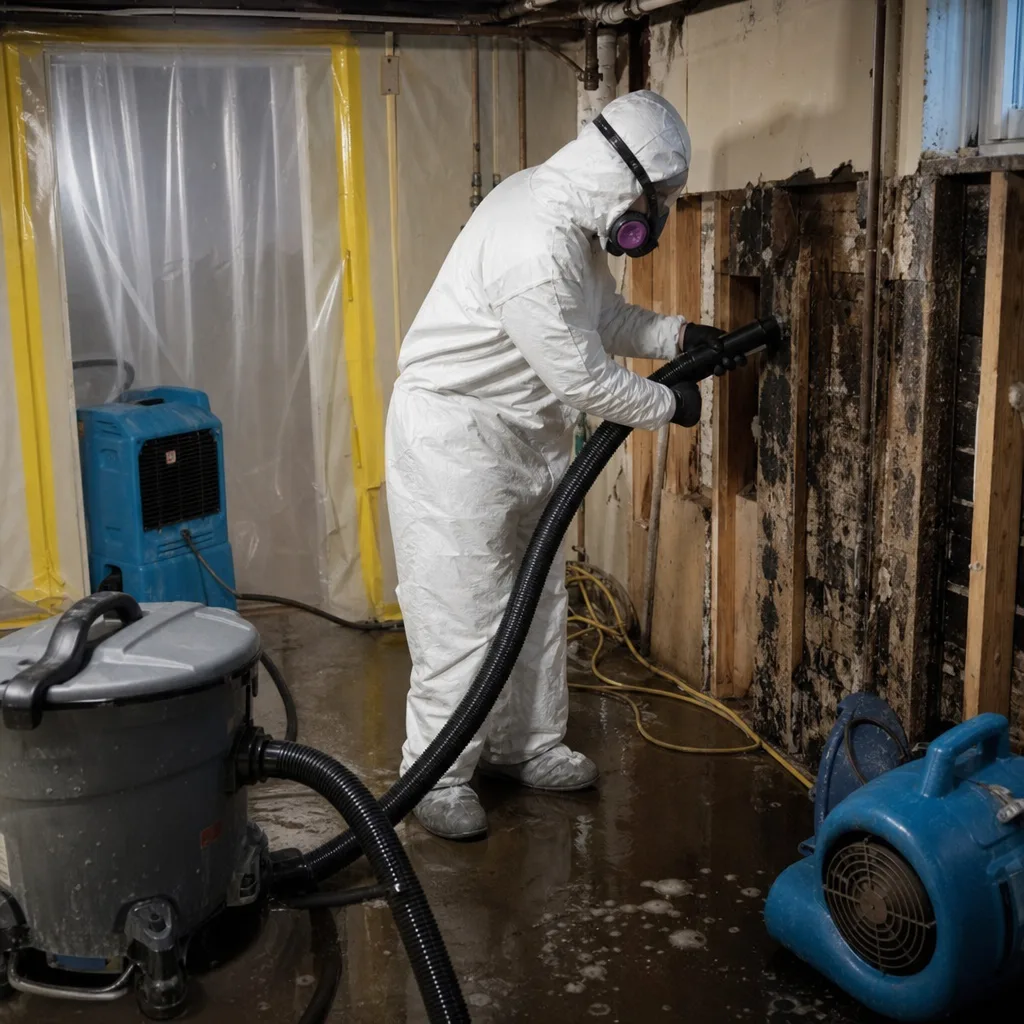
The most common DIY argument is cost savings. Let’s examine what that actually looks like over the critical first 48 hours, when mold colonization begins and documentation requirements are established, using our Water Damage Restoration Maintenance Checklist for Astoria Homeowners as a reference.
DIY Approach: Category 1 Kitchen Leak, 150 Square Feet Visible
| Item | Cost | Documentation Produced |
|---|---|---|
| Wet-dry vacuum rental | $45/day | None |
| Box fans (3) | $75 purchase | None |
| Dehumidifier rental (residential) | $65/day | None |
| Moisture meter (consumer grade) | $35 purchase | Unverifiable readings |
| Antimicrobial spray | $18 | None |
| 48-hour time investment | 16 hours | None |
| Total | $238 + 16 hours | Zero admissible documentation |
Professional Approach: Same Loss, Haven Standard Documentation
| Item | Cost | Documentation Produced |
|---|---|---|
| Emergency response and assessment | $350-$500 | Written scope, photo record |
| Water extraction | $200-$350 | Extraction log, gallons removed |
| Professional drying (48 hours) | $400-$600 | Daily psychrometric logs, moisture readings |
| Equipment: Phoenix dehumidifiers, XPOWER air movers, Injectidry cavity drying | Included | Equipment placement log with CFM ratings |
| Post-drying verification | $150-$250 | Final moisture readings, clearance documentation |
| Total | $1,100-$1,700 | Complete S500 documentation package |
The DIY approach appears to save $862-$1,462. But this comparison excludes the downstream costs that professional documentation prevents:
- Mold remediation from incomplete drying: $3,000-$8,000
- Out-of-pocket repair costs from denied insurance claims: variable, often $5,000+
- Local Law 55 violations in multi-unit buildings: fines plus mandated professional remediation
- Property value impact from undocumented moisture history: difficult to quantify, frequently raised by buyers’ inspectors
When we provide Fire & Smoke Damage Restoration in Astoria or water damage services, our written price under Haven Standard, Clause 1 includes the full documentation package. There are no scope-creep additions. The price you approve before work starts is the price you pay, and it produces the records your claim requires.
Equipment Reality: What Home Depot Rentals Cannot Do
The equipment gap between DIY and professional restoration is wider than most homeowners realize. It’s not about having “more” equipment; it’s about having the right equipment, properly configured, with the documentation to prove it worked.
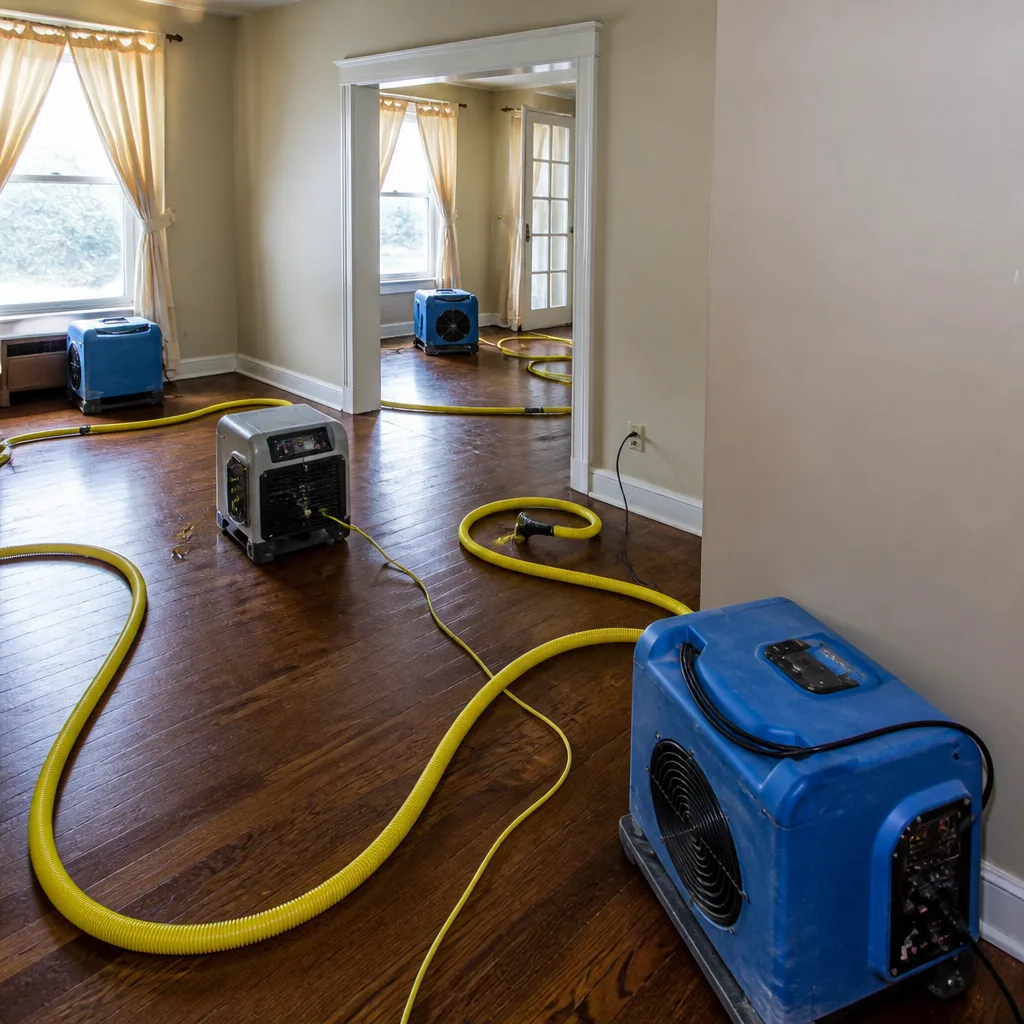
Dehumidification capacity: A residential dehumidifier from a hardware store removes approximately 50-70 pints of moisture per day under ideal conditions. A Phoenix 200 HT or Dri-Eaz LGR 7000XLi removes 130-235 pints per day, and more importantly, maintains performance at lower relative humidity levels - the range where actual structural drying occurs. By day two or three of a drying project, residential units are effectively moving air without removing meaningful moisture.
Air movement engineering: Professional air movers from XPOWER and B-Air are designed to create laminar airflow across wet surfaces at specific velocities, calculated by the square footage and material type. They are positioned to create a closed drying system with dehumidifiers, not simply “pointed at the wet spot.” The difference in drying time is often 72 hours versus 168 hours - and mold begins at 48.
Cavity drying: Injectidry systems use negative air pressure to draw moisture from wall cavities, ceiling soffits, and under cabinetry without demolition. No rental equipment performs this function. In Astoria’s plaster-and-lath construction, cavity drying is frequently the difference between saving walls and gutting them.
Psychrometric monitoring: Professional crews use meters that measure grains per pound, vapor pressure differential, and equilibrium moisture content - the variables that actually determine whether materials are drying. Consumer moisture meters give a single number without context. A reading of “15%” on drywall means nothing without knowing the dry standard, the material’s specific gravity, and the ambient conditions affecting the reading.
The equipment gap is ultimately a documentation gap. Professional equipment produces data: CFM ratings, pint removal rates, specific humidity reductions. This data populates the drying logs that adjusters accept. Rental equipment produces none of it.
When DIY Makes Sense: Three Narrow Scenarios
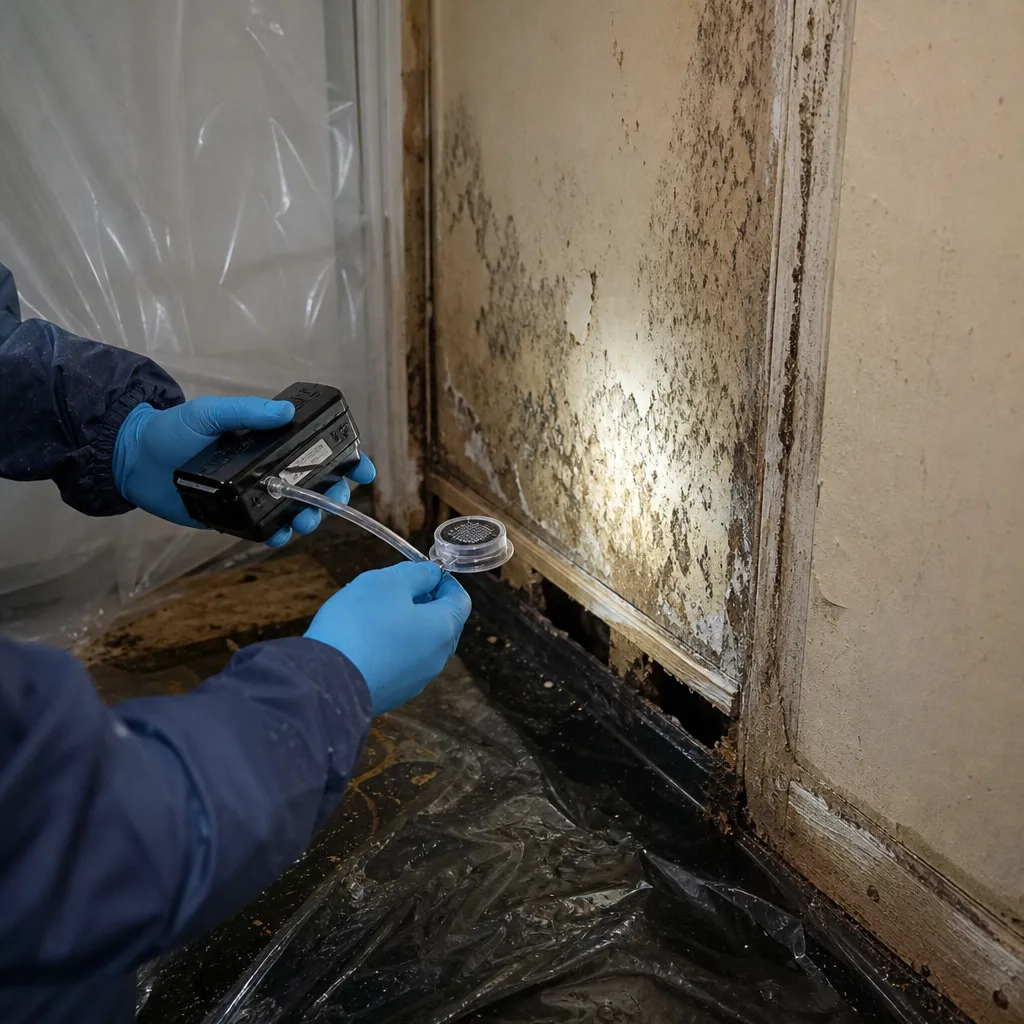
Despite everything above, there are specific circumstances where DIY response is appropriate and where professional involvement adds cost without value. We encounter these regularly in Astoria and are direct with homeowners when they apply.
Scenario 1: Category 1 water, under 25 square feet, no wall cavity involvement, no insurance claim.
A small supply line leak from a toilet tank that is caught immediately, affects only the vinyl floor and base of a powder room, and is fully extracted within hours. The homeowner has a wet-dry vacuum, can remove baseboards to verify no wall wicking, and has no intention of filing a claim. Dry the area with a residential dehumidifier for 48 hours, verify dryness with a pin meter, and monitor for 72 hours. Document with photos for your own records.
Scenario 2: Minor surface mold on non-porous materials in a single-family home, under 10 square feet, no HVAC involvement.
Bathroom tile grout with visible mold growth, addressed with proper PPE, containment of the immediate area, and an EPA-registered antimicrobial. The material is non-porous (tile, glass, sealed stone), so roots have not penetrated. No porous materials (drywall, wood, ceiling tiles) are affected. The home is single-family, so Local Law 55 tenant notification does not apply. Document with before-and-after photos.
Scenario 3: Immediate emergency response before professional arrival, to limit damage spread.
Every minute matters in a Category 2 or 3 loss. Homeowners can and should shut off water sources, extract standing water with any available equipment, remove sensitive items, and create airflow - all while calling for professional response. This is not “DIY restoration.” It is emergency mitigation that improves outcomes but does not replace professional documentation and drying.
Outside these three scenarios, professional restoration is the lower-risk, lower-total-cost choice for Astoria homeowners, as detailed in our How to Hire a Damage Restoration Contractor in Astoria: A Step-by-Step Guide. The documentation produced protects against downstream claims, satisfies regulatory requirements, and preserves property value.
Common Mistakes to Avoid
- Assuming surface dryness means structural dryness. In Astoria’s older buildings with plaster lath and multiple paint layers, surfaces can feel dry while interior materials remain above 16% moisture content - well into mold colonization range. Always verify with pin meters at multiple depths.
- Using bleach on mold. Bleach evaporates faster than it penetrates, leaving water behind that feeds deeper growth. It also discolors materials and produces no documentation of remediation adequacy. Professional antimicrobials are formulated for specific materials and applications.
- Filing an insurance claim after DIY attempts. New York’s anti-assignment law means you cannot transfer claim management to a contractor after the fact. If you’ve DIY’d and discover additional damage, consult a public adjuster before contacting your carrier - your initial statements about “handling it yourself” can be used to limit coverage.
- Ignoring multi-unit notification requirements. In Astoria’s two-family and larger buildings, Local Law 55 may require tenant notification before mold disturbance. We’ve seen HPD violations issued for work that homeowners considered minor interior maintenance.
- Renting equipment without understanding capacity calculations. A dehumidifier’s pint-per-day rating is measured at 80°F and 60% RH - conditions rarely present in actual water losses. At 70°F and 40% RH, that same unit may remove 30% of its rated capacity. Professional LGR (low-grain refrigerant) units maintain performance at much lower humidity levels.
- Discarding damaged materials before documentation. Insurance adjusters may need to inspect removed materials to verify the extent of loss. Photograph everything before disposal, and retain samples of flooring, drywall, or insulation when possible.
- Waiting for visible mold before acting. Mold begins at 48-72 hours of elevated moisture. By the time it’s visible, colonization is established and remediation costs multiply. The correct trigger is moisture duration, not visible growth.
When to Call a Professional
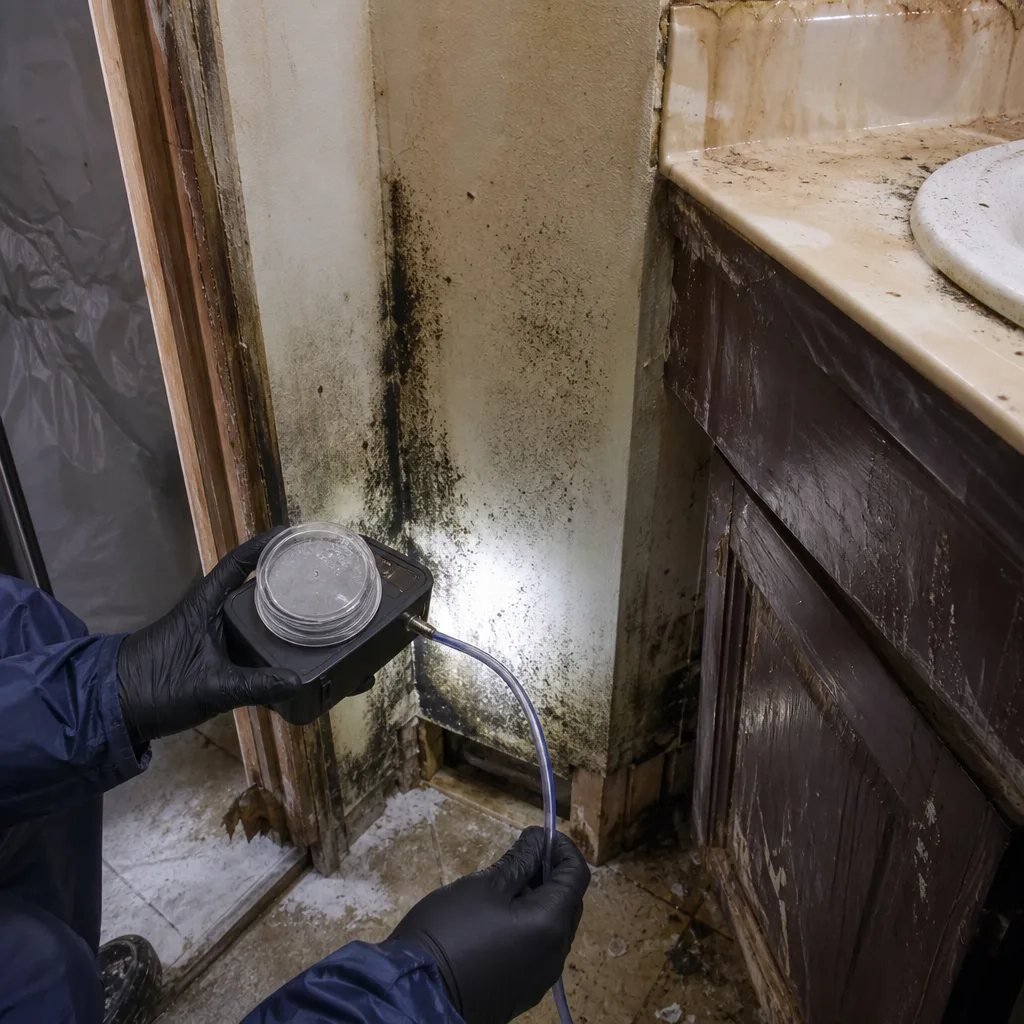
Call professional restoration immediately for: any Category 2 or 3 water loss; any loss exceeding 25 square feet of visible damage; any loss involving wall cavities, ceilings, or subflooring; any fire or smoke damage; any sewage backup; any mold contamination exceeding 10 square feet; any loss where you intend to file an insurance claim; and any loss in a multi-unit building where Local Law 55 may apply.
DryMark Restoration Astoria offers free estimates in Astoria - call (862) 281-7710. Every estimate includes a written price before work begins, a photo-documented assessment, and a clear explanation of what documentation your claim will require. Our 365-Day Done Right Promise under The Haven Standard means that if any aspect of our work requires correction, we return at no charge. We’ve produced this documentation for over 12,000 homes since 2011, and we understand what Astoria’s adjusters, building codes, and climate conditions demand.
Frequently Asked Questions
Professional water damage restoration in Astoria typically ranges from $1,100 for minor Category 1 losses with limited affected area to $6,000-$12,000 for extensive Category 2 or 3 losses involving multiple rooms, cavity drying, or pack-out of contents. Every job we perform begins with a written price under Haven Standard, Clause 1, with no additions once work starts. Call (862) 281-7710 for a specific estimate - assessments are free.
Your insurance may cover subsequent damage, but coverage limits often apply if the initial loss was not professionally mitigated to IICRC S500 standards. Adjusters evaluate whether the original drying was adequate to prevent secondary damage; without documentation, they have no basis to approve those costs. We’ve seen carriers deny mold claims entirely when homeowners cannot produce professional drying logs from the original water loss.
Live phone coverage is available 24 hours a day, 7 days a week with no voicemail on emergency lines. Emergency response times in Astoria typically range from 45 minutes to 90 minutes depending on traffic conditions and current call volume. Our crews arrive with extraction equipment, moisture detection tools, and the documentation systems to begin your claim record immediately.
Visible mold on porous materials (drywall, wood, ceiling tiles) almost always indicates established colonization that requires professional remediation with containment, negative air, and proper disposal. Surface cleaning addresses only the visible portion and frequently disperses spores. NYC Local Law 55 also requires specific work practices for mold disturbance in multi-unit buildings. For areas under 10 square feet on non-porous materials in single-family homes, DIY may be appropriate with proper precautions.
Under New York’s anti-assignment law, you remain the claimant and must submit invoices for reimbursement. However, professional restoration companies serve as your documentation partner, producing the records that support your claim. At DryMark Restoration Astoria, we provide complete S500 documentation packages - drying logs, photo records, equipment placement diagrams, and moisture content readings - formatted for direct adjuster submission. We also offer direct coordination with your adjuster to explain our scope and pricing, though all payment flows through you as the policyholder.
You receive: a written scope and price before work begins (Haven Standard, Clause 1); a photo record from every site visit; daily drying logs with psychrometric data and moisture content readings; equipment placement logs with CFM ratings and location diagrams; a final report with post-drying verification readings; and a signed 365-Day Done Right Promise warranty. This documentation package is yours to submit with your claim and to retain for property records.
Yes. Back to Dry Restoration, led by Alicia Brennan, offers a Free Second Opinion on any competitor’s written estimate. Bring us their scope and pricing, and we’ll review it at no charge. This service exists because we’ve seen homeowners in Astoria accept inflated scopes that include unnecessary demolition, or underscoped work that omits critical cavity drying. A second opinion costs nothing and frequently saves thousands.
The Bottom Line
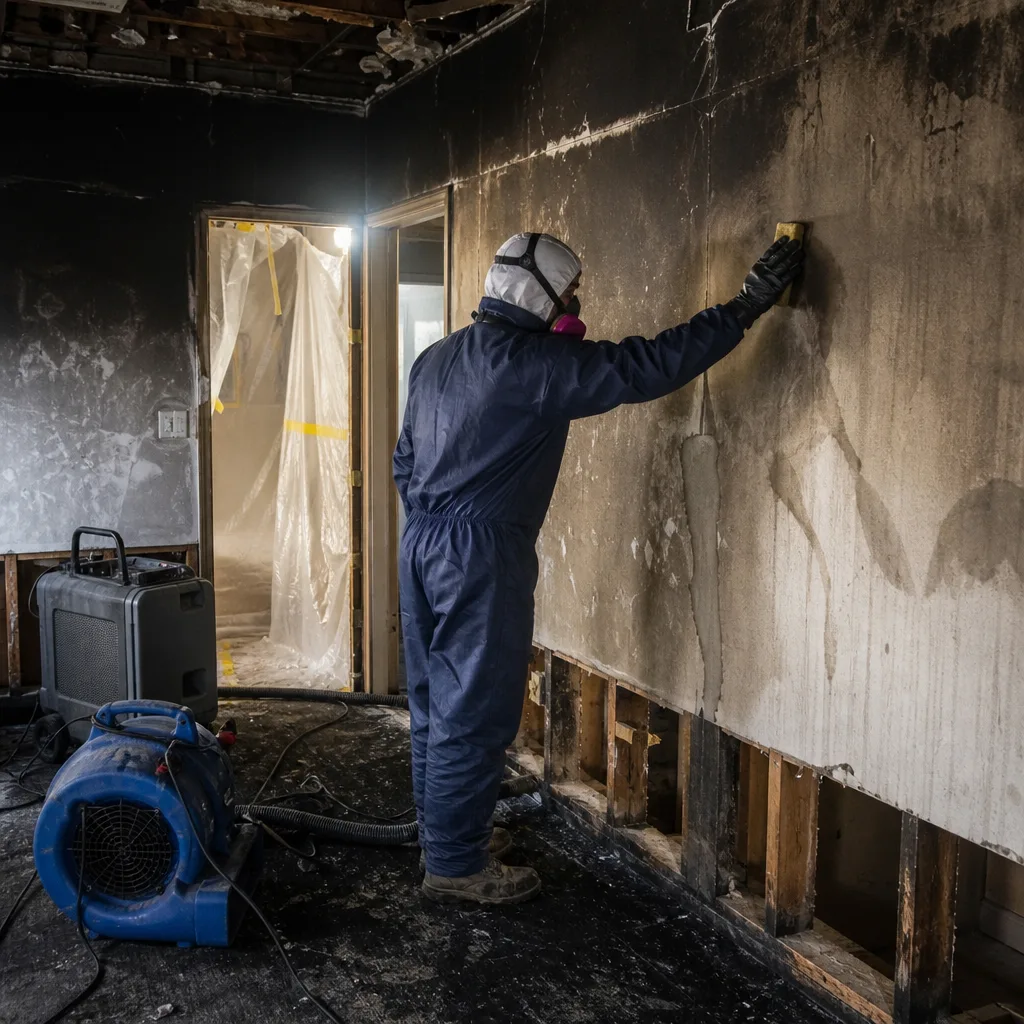
The DIY vs professional restoration question for Astoria homeowners resolves to a single test: will this loss generate an insurance claim? If yes, professional restoration is mandatory because DIY produces no documentation that adjusters accept. If no, DIY is appropriate only for Category 1 water under 25 square feet with no concealed damage, or minor surface mold on non-porous materials in single-family homes. Every other scenario - Category 2 or 3 water, fire damage, mold in multi-unit buildings, losses involving wall cavities or subflooring - requires professional response with documented equipment, trained technicians, and the S500 records that protect your claim and your property value. The apparent cost savings of DIY evaporate when downstream damage, denied claims, and regulatory violations are counted. Documentation is not an extra service. It is the service that makes every other service defensible.
Written by Alicia Brennan, Owner at DryMark Restoration Astoria, serving Astoria since 2011.