
Free visual inspection and a written scope of work before any mitigation begins - photos, moisture readings, and drying logs go in your claim file
The scope we write is the scope we bill. Anything new gets shown to you, in writing, before we touch it.
Storm response
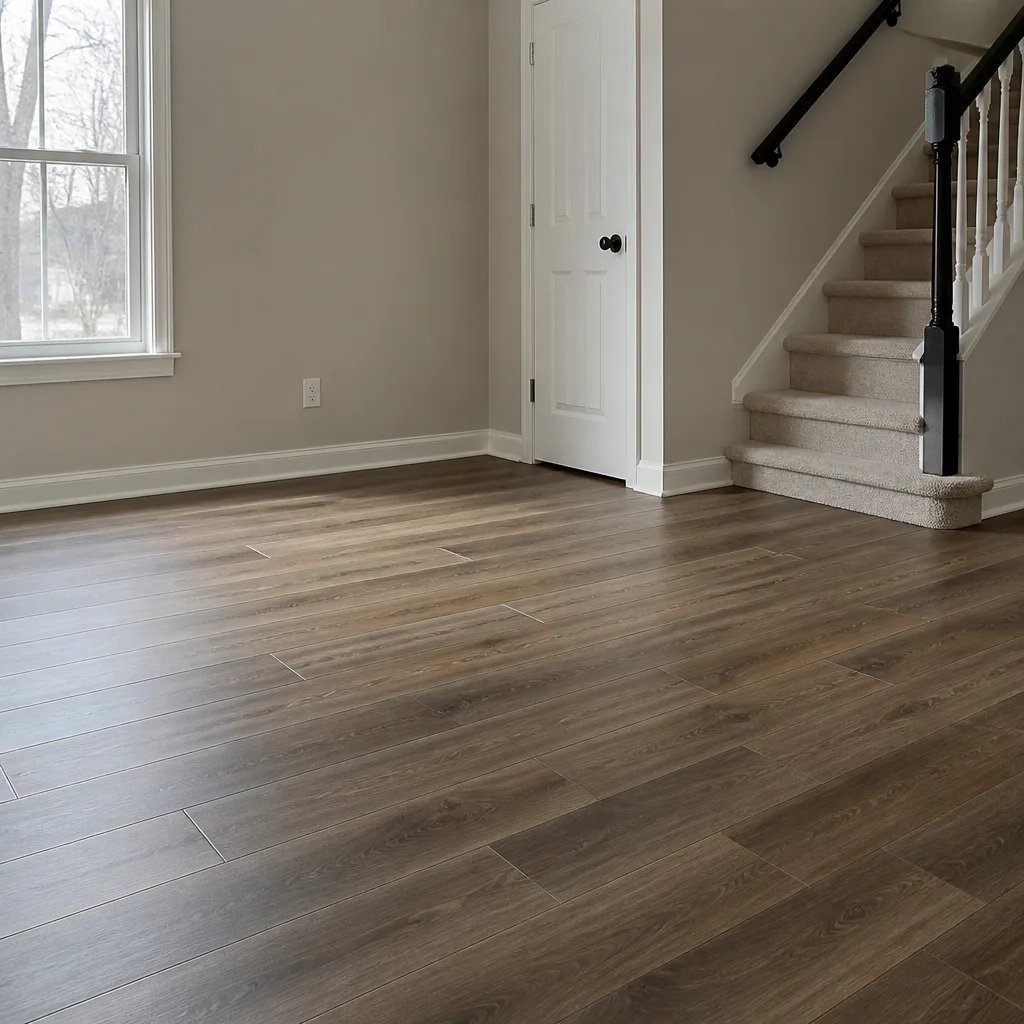
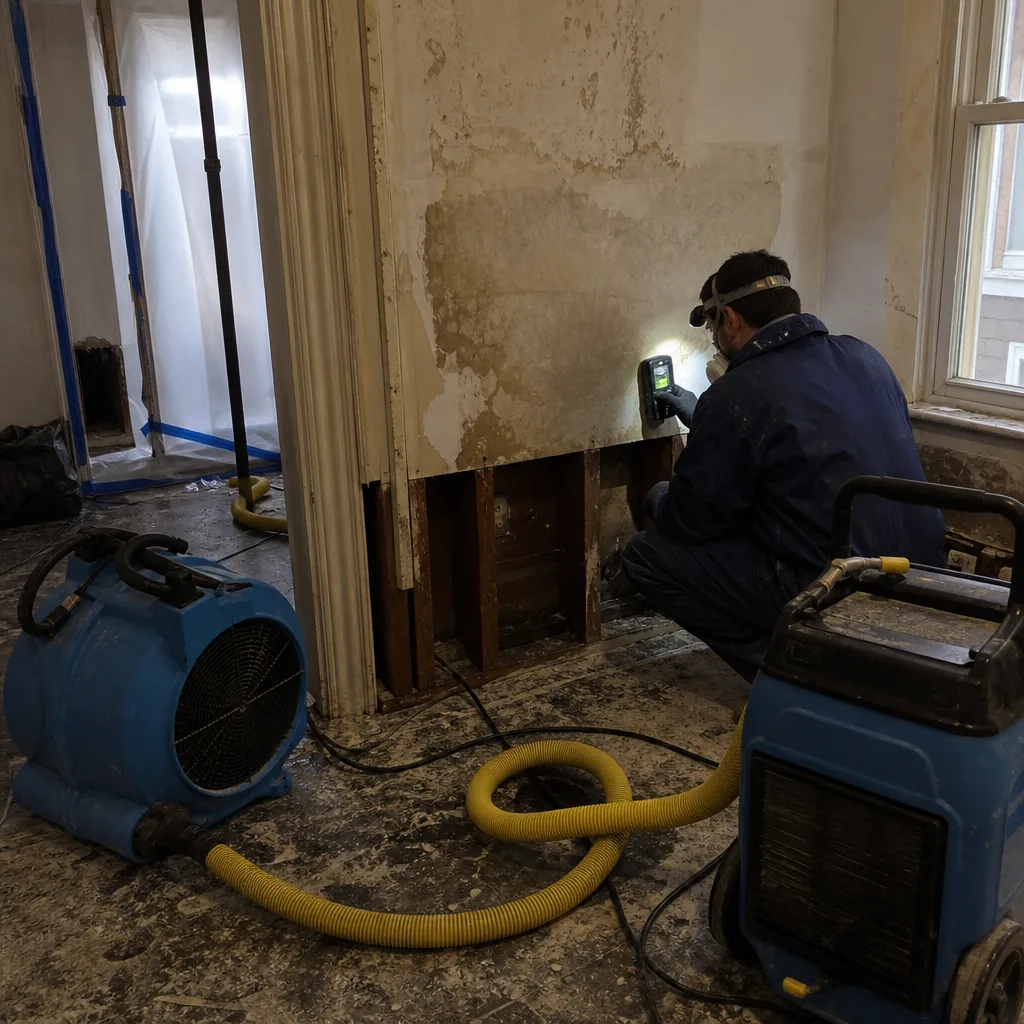 Before
 After
After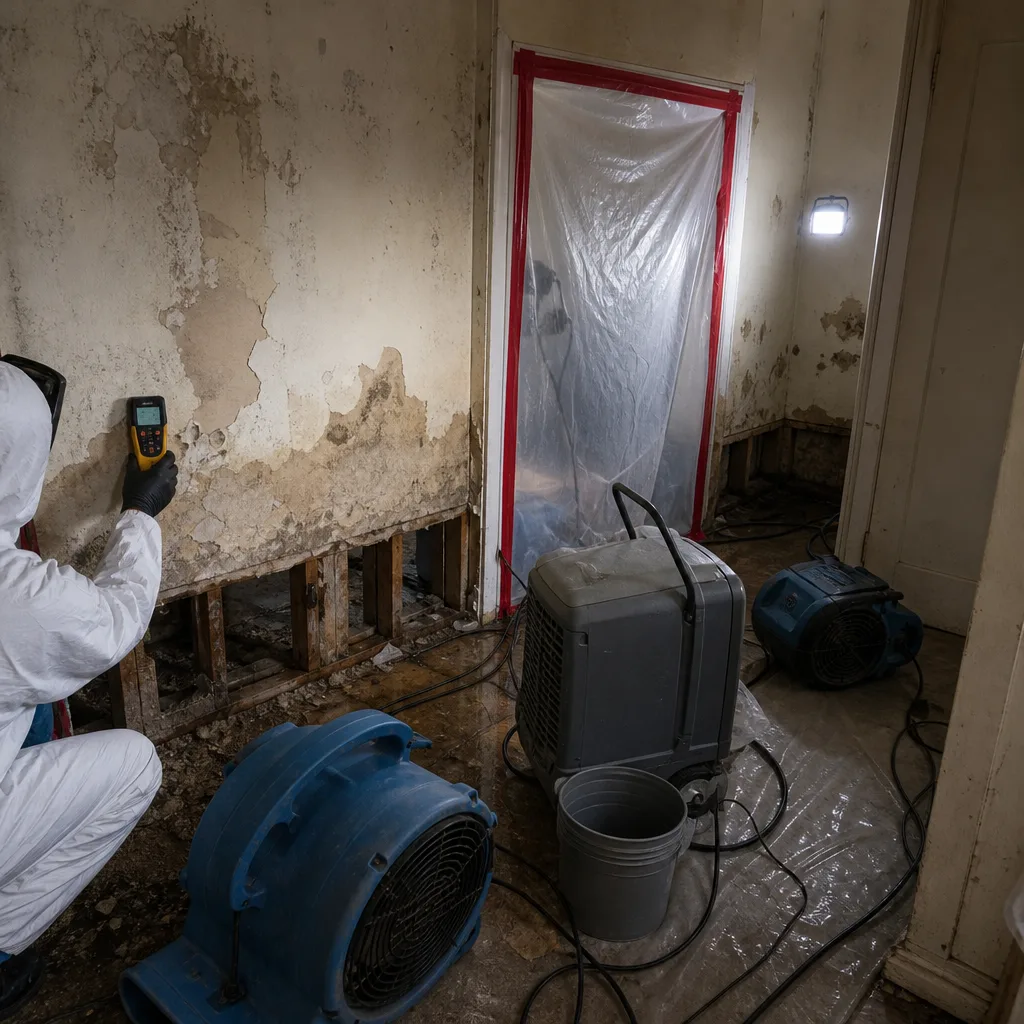 Before
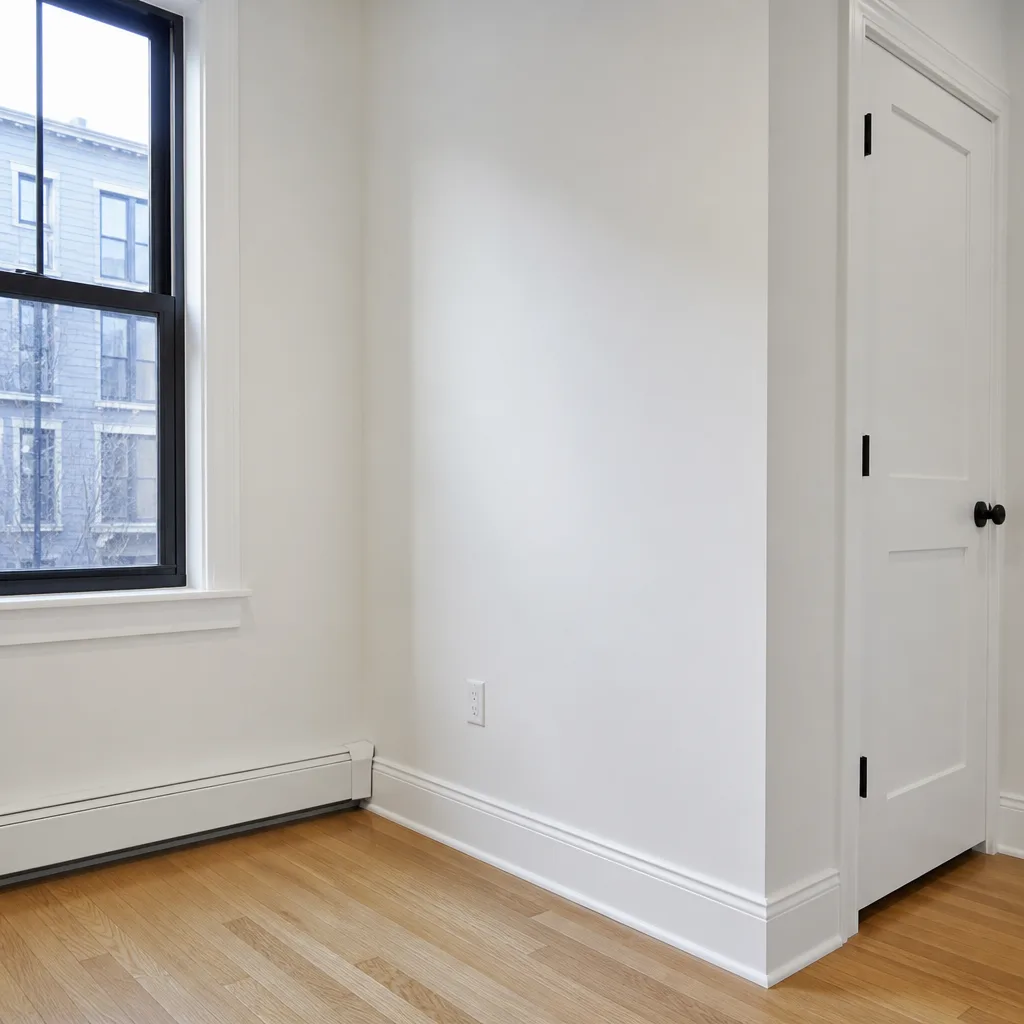 After
After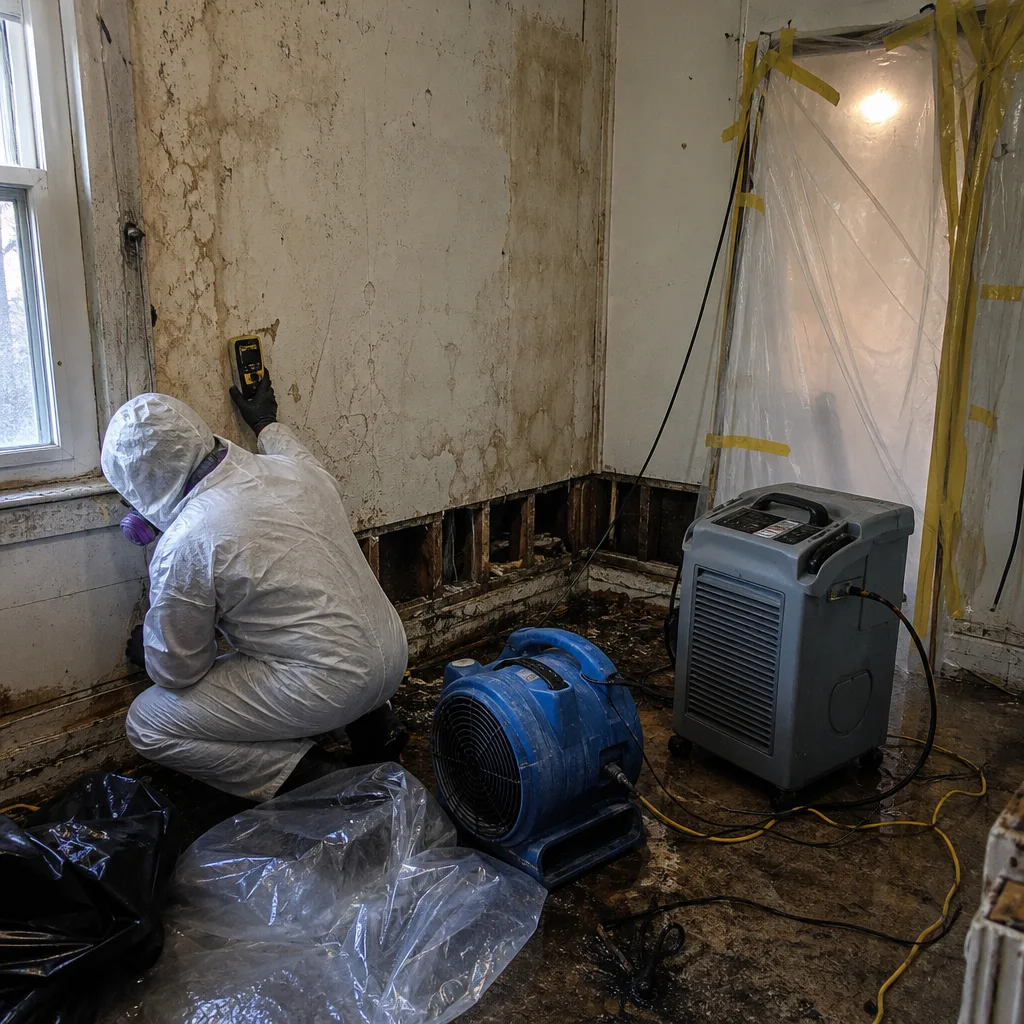 Before
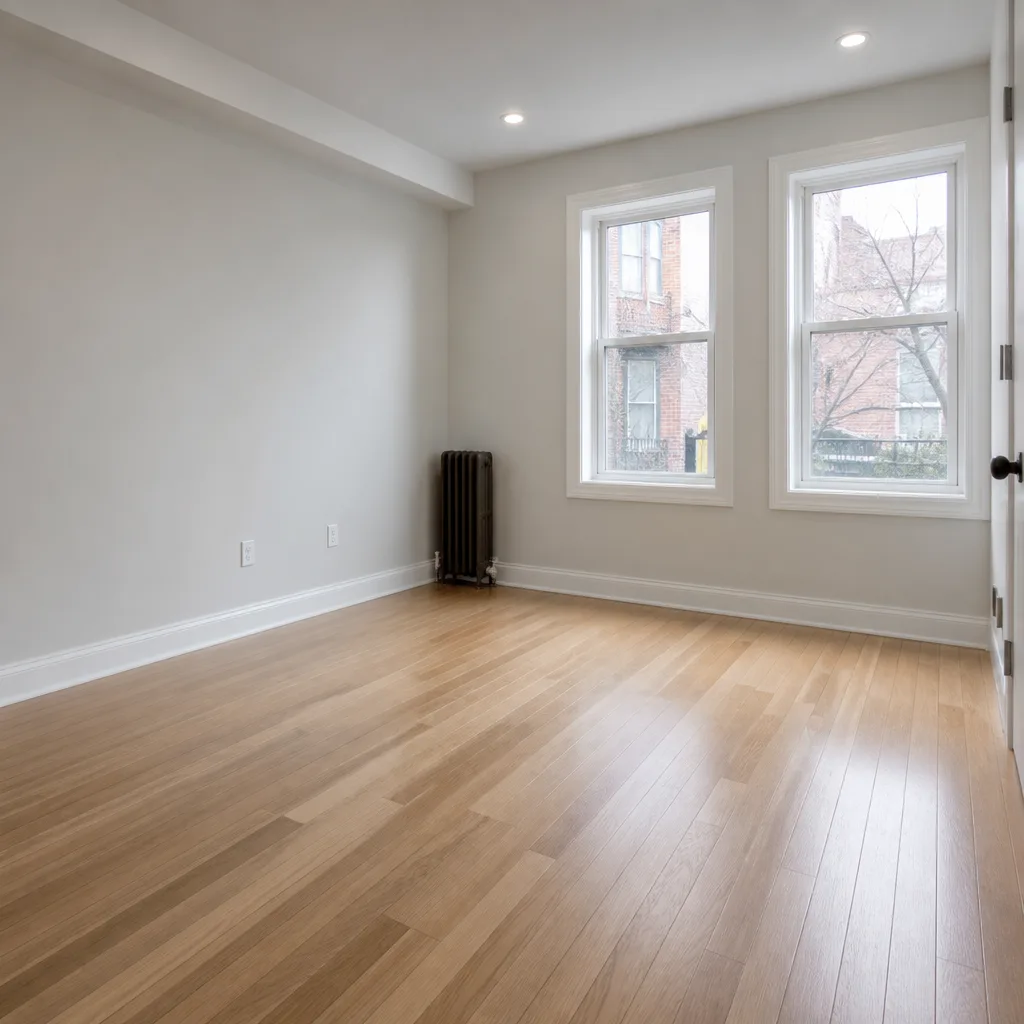 After
After24/7 Emergency Fire & Smoke Damage Restoration in Long Island City
A fire in your Long Island City property, whether a kitchen flare-up in a Court Square loft or electrical damage in a Hunter’s Point high-rise, demands same-day response to stop smoke from settling into structural materials. Our crews answer live at (862) 281-7710, 24 hours a day, with no voicemail trees or next-business-day callbacks. We dispatch throughout Long Island City, from the waterfront towers near Gantry Plaza to the converted warehouse blocks along Jackson Avenue, and we arrive with containment gear, HEPA air scrubbers, and the inspection tools to document your loss before soot has time to etch glass or stain plaster. The first hour determines how much of your structure can be restored versus replaced. Every minute smoke sits in heavy-timber joists or centralized HVAC chases, it migrates deeper. That’s why we don’t quote over the phone for fire damage - we perform a free visual inspection, take photos, and deliver a written scope and price before any work begins, Haven Standard, Clause 1.
Understanding Fire & Smoke Damage Restoration Severity in Long Island City Properties
Fire damage in Long Island City doesn’t sort neatly into one category. The neighborhood’s split personality - pre-WWII industrial conversions against post-2010 glass towers - creates two entirely different loss profiles.
In converted timber-and-brick lofts near Court Square and the Hunter’s Point historic district, we’re dealing with dry smoke residue from fast-burning synthetic contents, wet smoke from slow-burning structural timber, and the wild card: legacy asbestos fireproofing and lead paint that smoke penetration has disturbed. Soot types matter. Dry smoke, from high-heat fires, powders and brushes off hard surfaces. Wet smoke, from low-oxygen smoldering, is sticky, acidic, and bonds to porous material. Protein residue, nearly invisible but pungent, comes from kitchen fires and embeds in unfinished wood. In these older buildings, we test for asbestos and lead before aggressive cleaning begins - a step that protects both occupants and the structural integrity of your claim documentation.
Post-2010 high-rises present the opposite problem: smoke migration through centralized HVAC and plumbing chases that can carry residue ten floors from the fire origin. Tertiary smoke damage - odor and particulate that traveled through mechanical systems - often exceeds the primary damage in the fire unit itself. We map smoke migration with thermal imaging and borescope inspection of chases, then scope the full affected area, not just the room with the burn mark.
Why Long Island City Property Owners Choose DryMark Restoration Astoria
- 45-minute response commitment to any Long Island City address, from the Queensboro Plaza corridor to the Newtown Creek waterfront.
- 24/7 live answer - a real person picks up every call, never an automated system, because fire damage doesn’t wait for business hours.
- IICRC-certified crews holding FSRT (Fire & Smoke Restoration Technician) and WRT (Water Damage Restoration Technician) credentials, with AMRT (Applied Microbial Remediation Technician) certification for the antimicrobial phase of charred-wood treatment.
- Free visual inspection with photo documentation before any work or billing starts.
- Direct insurance billing and adjuster coordination - we speak the same language as your carrier because our founder, Alicia Brennan, built this company after working claims from the other side of the desk.
- One team from emergency board-up through final reconstruction - no handoffs between subcontractors that fragment your documentation and delay your settlement.
BeforeAfterOur Fire & Smoke Damage Restoration Process
1. Inspection & Assessment
We arrive with moisture meters, thermal imaging cameras, and borescope tools to trace smoke migration beyond the visible burn area. In Long Island City’s converted warehouses, we collect bulk samples for asbestos and lead screening before disturbing any legacy fireproofing. You receive a written scope and firm price before we start - Haven Standard, Clause 1.
2. Emergency Board-Up & Tarping
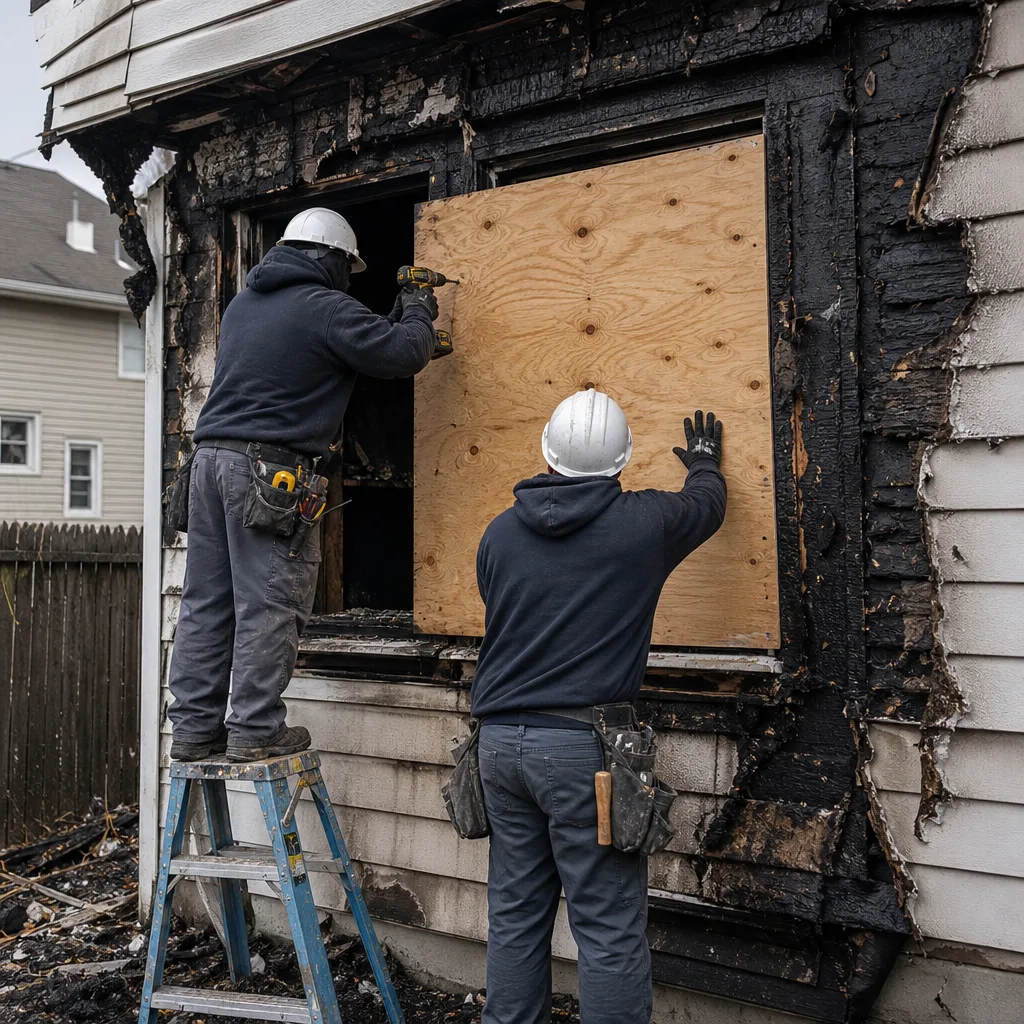
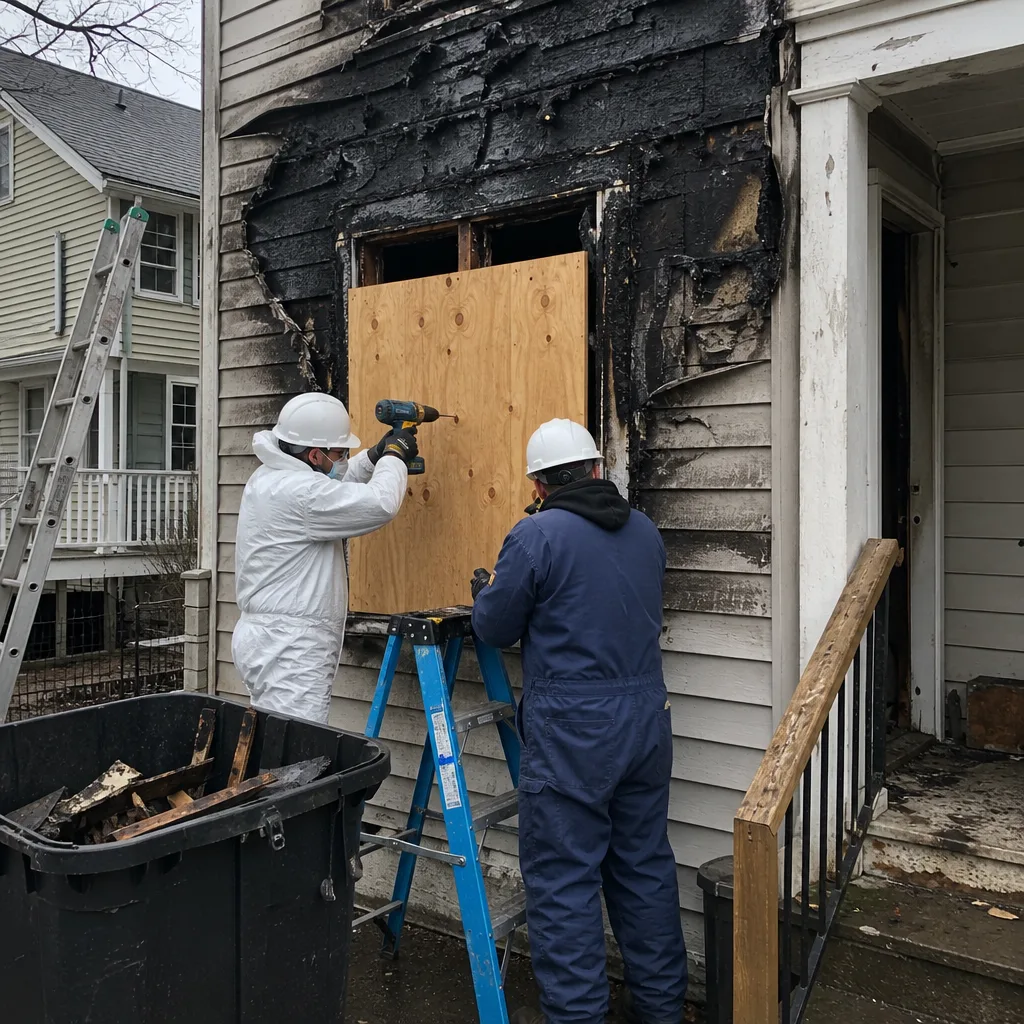
Broken windows, compromised roofs, and damaged entryways get secured immediately. For Long Island City’s alley-load buildings and townhome-style doors, we carry custom board-up materials sized for openings that standard franchise vans don’t stock. Security stays intact; no gaping holes left overnight.
3. Smoke & Soot Removal
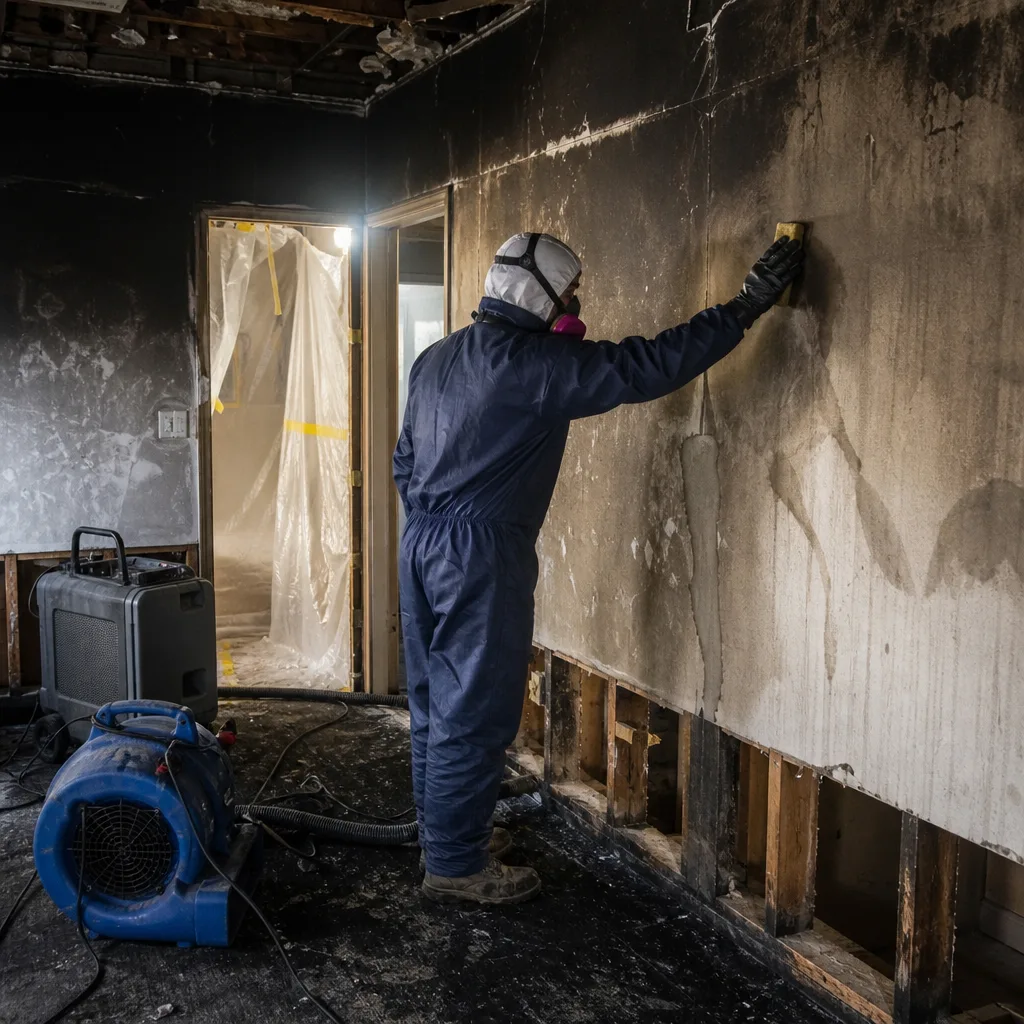
We match cleaning chemistry to soot type: dry sponges for dry smoke, alkaline cleaners for wet smoke, enzyme treatments for protein residue. In heavy-timber lofts, we work joist-by-joist with HEPA vacuums and contact vacuuming before any liquid cleaning touches charred structural wood. Post-2010 high-rises get chase-by-chase inspection and duct cleaning.
4. Odor Removal & Deodorization
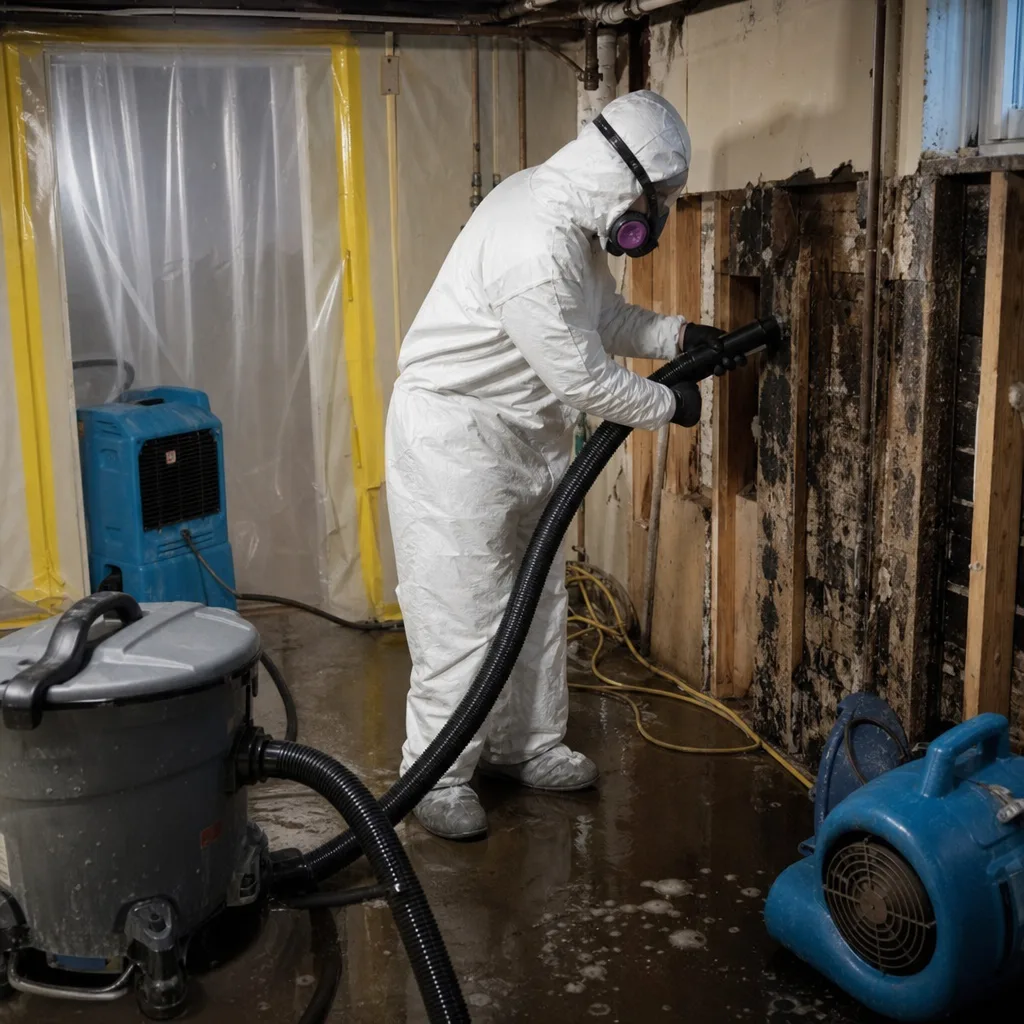
Surface cleaning doesn’t remove embedded odor. We deploy thermal fogging for porous structural materials, ozone treatment for unoccupied spaces, and hydroxyl generators for occupied areas - each chosen based on your building’s access, occupancy, and insurance timeline. In LIC’s tight loft spaces, we sequence treatments to keep residents in place when possible.
5. Contents Cleaning & Pack-Out
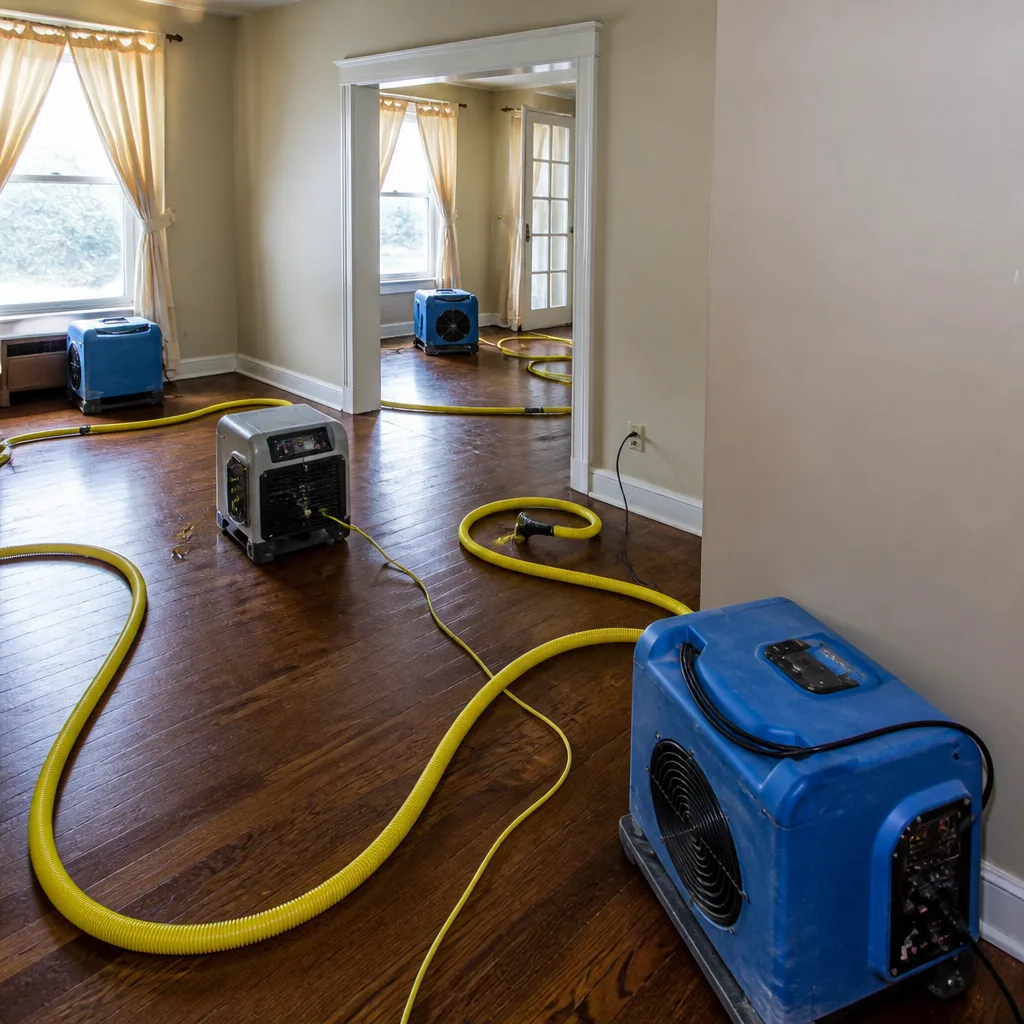
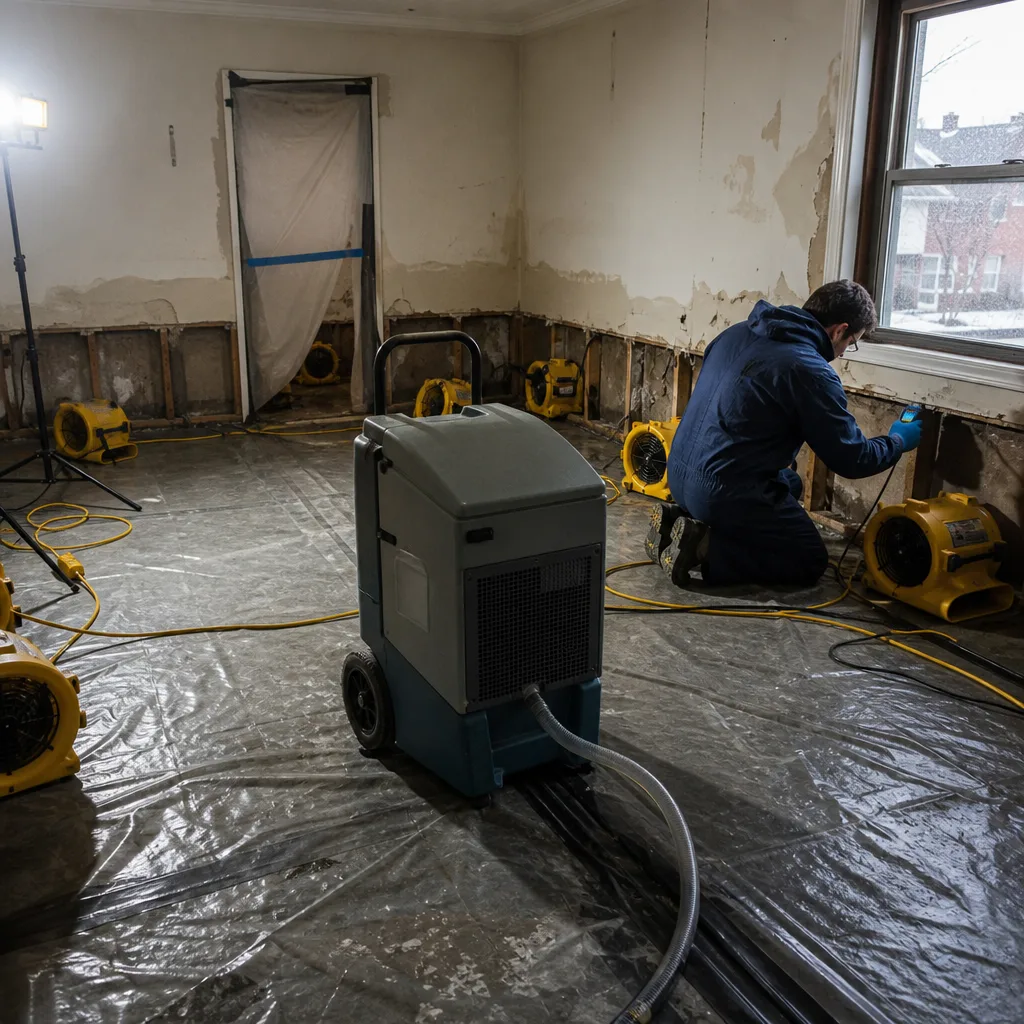
Textiles, electronics, and documents get inventoried, photographed, and transported to our facility for ultrasonic, Esporta, or specialized fire-line cleaning. In a converted timber-and-brick loft off Court Square, a kitchen fire sent smoke through original cast-iron columns and heavy-timber joists, so our tech set up containment before running HEPA air scrubbers and applying antimicrobial treatment to the charred structural bays. Because the alley-load entrance off the side street only fits a 48-inch roll-up door, we staged XPOWER air movers and a Phoenix dehumidifier in the freight hallway and rotated gear through the lobby’s rolling-code entry, keeping the building’s security intact the whole job.
6. Structural Repairs & Restoration
Charred studs, compromised drywall, and damaged flooring get replaced to code. We coordinate permits through the NYC Department of Buildings and match finishes to pre-loss condition. Every repair is photo-documented and added to the claim file your adjuster receives.
Need Emergency Fire & Smoke Damage Restoration in Long Island City Now?
Crews minutes away, answering live 24 hours a day. The sooner we start, the less it costs.
Working With Your Insurance Company
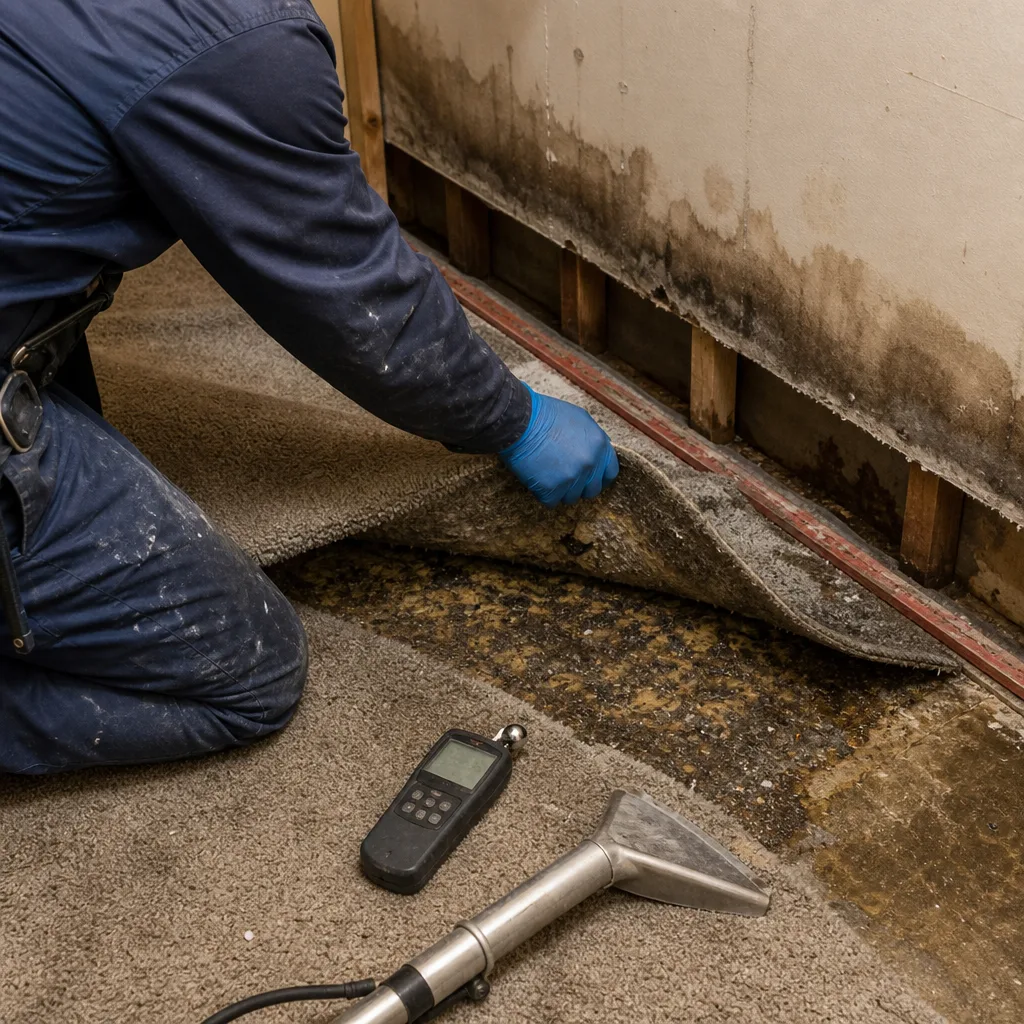
Fire claims fail when documentation gaps let adjusters dispute the scope. We close those gaps from hour one. Alicia Brennan founded Back to Dry in 2011 after watching homeowners lose legitimate claims to sloppy paperwork, and every process we run exists to prevent that outcome.
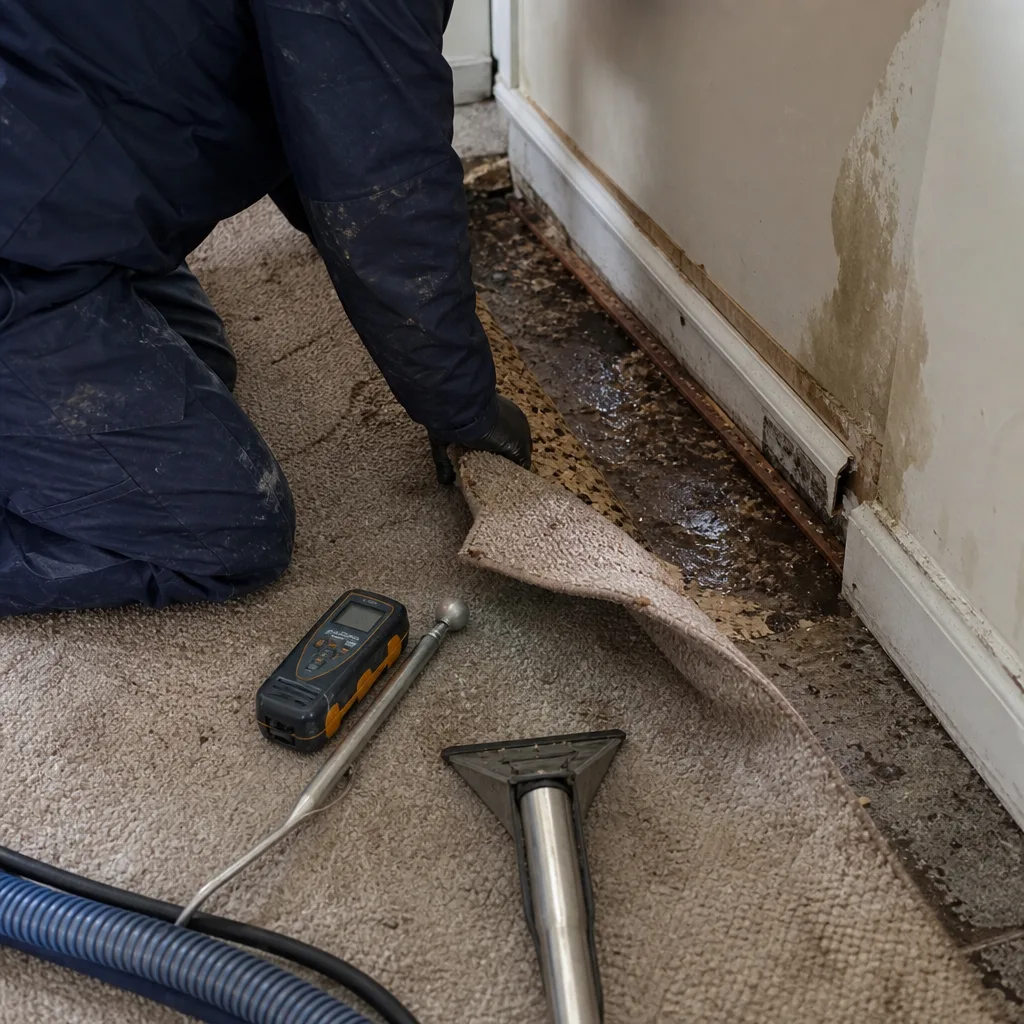
Our techs photo-document every room on every visit, not just the burn area. We record moisture readings in adjacent spaces to prove secondary damage. Drying logs track psychrometric data - temperature, relative humidity, vapor pressure differential - in plain language your adjuster can read. The written scope we deliver before work starts becomes the estimate your carrier reviews, with line-item detail that matches industry-standard estimating platforms.
We coordinate directly with your adjuster, attend inspections when requested, and provide the backup documentation that turns a questioned invoice into a paid claim. Our Fire & Smoke Damage Restoration team has handled thousands of fire losses; we know what documentation each major carrier expects.
What We Provide Your Insurer
- Thorough documentation of the loss
- Photos of all damage, room by room
- Moisture readings and drying logs
- A detailed, line-item scope of work
- Direct coordination with your carrier
Built for Long Island City’s Loss Calendar
Long Island City’s fire and smoke damage follows patterns tied to its building stock and climate. January through March, heating-system failures in pre-WWII conversions cause electrical fires and puff-backs from aging boilers, sending oily soot through original ductwork. Summer months bring kitchen fires in high-rise units where residents cook in compact kitchens with inadequate ventilation, and the resulting protein smoke migrates through centralized chases to neighboring floors. Hurricane season and nor’easters stress electrical infrastructure in FEMA AE flood zones along the waterfront, where basement and ground-floor electrical rooms have flooded before and will flood again. The 2012 Sandy surge flooded basements, electrical rooms, and ground-floor units throughout Hunter’s Point - a risk that repeats with climate-driven nuisance flooding. Any electrical fire in a below-grade mechanical room carries the additional complication of historically contaminated groundwater from Newtown Creek, the nation’s most contaminated Superfund site, which requires environmental screening before standard restoration protocols apply.
Fire & Smoke Damage Restoration Across Long Island City’s Neighborhoods
We respond to Long Island City as a set of distinct micro-markets, each with its own access constraints and typical loss patterns.
Court Square - the densest concentration of converted early-20th-century warehouses. Alley-load entries off 44th Drive and 23rd Street fit 48-inch roll-up doors at best. Freight elevators built for industrial loads, not residential furniture. Fires here trigger asbestos screening before any soot removal starts, and pack-outs require building management coordination for freight-hallway access.
Hunter’s Point - split between historic low-rise brick buildings and the 2010s glass tower wave along Center Boulevard. The waterfront towers sit in FEMA AE flood zones; ground-floor and below-grade fires often start with electrical damage from prior flooding. Smoke migration through centralized HVAC is the dominant loss pattern in towers like those near Gantry Plaza State Park.
Dutch Kills - industrial-to-residential conversions along 36th Avenue and the northern edge near the Queens-Midtown Tunnel. Tighter street frontage, more townhome-style entries, less lobby security infrastructure. Board-up here means working with standard door and window dimensions, not the custom systems of luxury towers.
The waterfront corridor from Anable Basin to Newtown Creek - new development on remediated industrial land, but with the persistent risk of contaminated groundwater in any below-grade fire or flood event. Environmental screening is standard protocol, not an upsell.
Specialized Fire & Smoke Damage Restoration Services We Offer in Long Island City
Fire Damage Cleanup
From contained kitchen fires to full-structure burns, we remove charred material, test structural integrity, and document every square foot for your claim. In Long Island City’s timber lofts, this means working around heavy-timber columns and cast-iron structural elements that can’t be replaced, only cleaned and treated.
Smoke & Soot Removal
We identify soot type - dry, wet, or protein - before selecting cleaning chemistry. In LIC’s converted warehouses, wet smoke from slow-burning timber requires alkaline cleaners and careful sequencing to avoid driving residue deeper into porous brick and century-old plaster.
Odor Removal & Deodorization
Thermal fogging, ozone, and hydroxyl generators each address different odor profiles and occupancy constraints. Post-2010 high-rises with centralized HVAC demand chase-by-chase treatment; surface deodorizing alone leaves smoke particulate recirculating through the building’s mechanical system.
Contents Cleaning & Pack-Out
Electronics, textiles, and documents get transported to our facility for specialized fire-line cleaning. We inventory every item with photo documentation - your insurer receives the list, you receive the peace of not wondering what happened to your belongings.
Emergency Board-Up & Tarping
Broken windows and compromised roofs get secured immediately with materials sized for your building’s openings. For Long Island City’s alley-load entries and townhome-style doors, we carry custom board-up stock that standard vans don’t. Security stays intact; weather stays out.
What happens when you call
- 1
A real person answersNo phone trees - you reach a local pro.
- 2
You get an upfront price rangeHonest numbers before anyone is dispatched.
- 3
A background-checked tech heads outLicensed & insured, dispatched right away.
- 4
You approve before work beginsNothing starts until you say go.
Fire & Smoke Damage Restoration Costs in Long Island City, NY
Fire restoration pricing in Long Island City runs higher than outer-borough averages due to access complexity, hazmat screening requirements, and the premium finishes common in post-2010 construction. Here’s what we see in this market:
| Service | Typical Range in Long Island City |
|---|---|
| Emergency board-up (standard residential) | $350 - $850 |
| Smoke & soot removal (single room, no hazmat) | $1,200 - $2,800 |
| Smoke & soot removal with asbestos/lead screening | $2,500 - $5,500 |
| Odor removal & deodorization (whole-unit thermal fogging) | $800 - $1,800 |
| Contents pack-out with inventory & cleaning | $1,500 - $4,000 |
| Structural repairs & reconstruction (per affected room) | $3,500 - $12,000 |
What moves the price: hazmat screening adds 20-40% when legacy asbestos or lead is present; high-rise access with freight elevator coordination adds labor hours; smoke migration beyond the fire unit multiplies the affected square footage; and below-grade fires near Newtown Creek may require environmental testing that standard jobs don’t. Most residential fire claims in Long Island City are insurance-covered; we provide the documentation that keeps your claim moving. Call (862) 281-7710 for a free visual inspection and written scope - estimates are free, and Haven Standard, Clause 1 means the price you approve is the price you pay.
We Also Serve Cities Near Long Island City
Our crews dispatch throughout western Queens from our New York City office. We regularly respond to Fire & Smoke Damage Restoration in Long Island City and the surrounding area, including Astoria to the north, Maspeth to the east, Jackson Heights to the southeast, and Elmhurst just beyond. Each neighborhood has its own building stock and access patterns; we adjust our staging and protocols accordingly.
Serving Long Island City, NY - Our Local Coverage Area
We’re based in the Long Island City area and know this community well. Use the map below to see our service coverage - if you’re nearby, we can almost certainly help.
Long Island City Fire & Smoke Damage Restoration Questions, Answered
Does a small kitchen fire in a Long Island City loft really need a full pack-out?
Not always, but the smoke profile determines the scope, not the flame size. Protein smoke from kitchen fires is nearly invisible and bonds aggressively to unfinished wood - exactly what fills a converted Court Square loft. We inspect with UV light and moisture meters to trace residue migration, then scope only the affected contents. A written price before any pack-out starts, every time. Call (862) 281-7710 for a free inspection.
Can you board up after a fire if my LIC building only has alley-load or townhome-door access?
Yes - we carry custom board-up materials for the 48-inch roll-up doors and standard residential entries common in Long Island City’s converted industrial blocks. Our crews have secured properties through freight hallways, side-street alleys, and lobby security desks without compromising building access protocols. The right materials for the opening, not one-size-fits-all plywood sheets.
What does smoke odor removal look like in a post-2010 LIC high-rise with centralized HVAC?
We inspect the full chase route with borescopes, clean or replace ductwork as needed, and run hydroxyl generators in occupied spaces or ozone in vacant units. Surface deodorizing alone fails because the HVAC system recirculates particulate. We document the chase inspection with photos for your insurer. Call (862) 281-7710 to schedule.
Do you screen for asbestos or lead on fire jobs in older LIC warehouse conversions?
Always, before aggressive cleaning begins. Smoke penetration disturbs legacy fireproofing and paint; disturbing it without screening violates EPA RRP rules and voids your documentation for insurance. We collect bulk samples, await lab results, and adjust protocols accordingly. The screening is built into our scope, never hidden.
How fast can you get to a fire-damaged unit near the LIC waterfront?
Our 45-minute response commitment covers all Long Island City addresses, including Hunter’s Point and the waterfront corridor. Live answer at (862) 281-7710, 24 hours a day. Crews stage from our New York City office with equipment sized for high-rise freight elevators and alley-load entries.
Will insurance cover the full cost of fire restoration in Long Island City?
Most residential fire policies cover structural restoration, contents cleaning, and additional living expenses. The claim succeeds or fails on documentation. We provide photo records, moisture logs, line-item scopes, and direct adjuster coordination from day one. Bring a competitor’s estimate and we’ll review it free - our Second Opinion service.
How long does fire and smoke restoration typically take in Long Island City?
Board-up and emergency stabilization: same day. Smoke and soot removal: 2-5 days for a single unit, longer for hazmat-screened timber lofts. Odor removal: 1-3 additional days. Structural repairs: scheduled and scoped in writing, typically 2-6 weeks depending on permit timing with the NYC Department of Buildings. We provide a written timeline with the scope.
What should I do in the first 30 minutes after a fire in my Long Island City property?
Ensure everyone’s safety and don’t re-enter until the FDNY clears the structure. Then call (862) 281-7710. Don’t touch soot-covered surfaces - skin oils drive residue deeper. Don’t run HVAC systems - circulation spreads smoke. Don’t attempt to assess structural damage yourself. We arrive with containment gear, documentation tools, and the protocols to stop further damage while your claim takes shape.
Written by Alicia Brennan, Owner at Back to Dry Restoration, serving Long Island City since 2011.